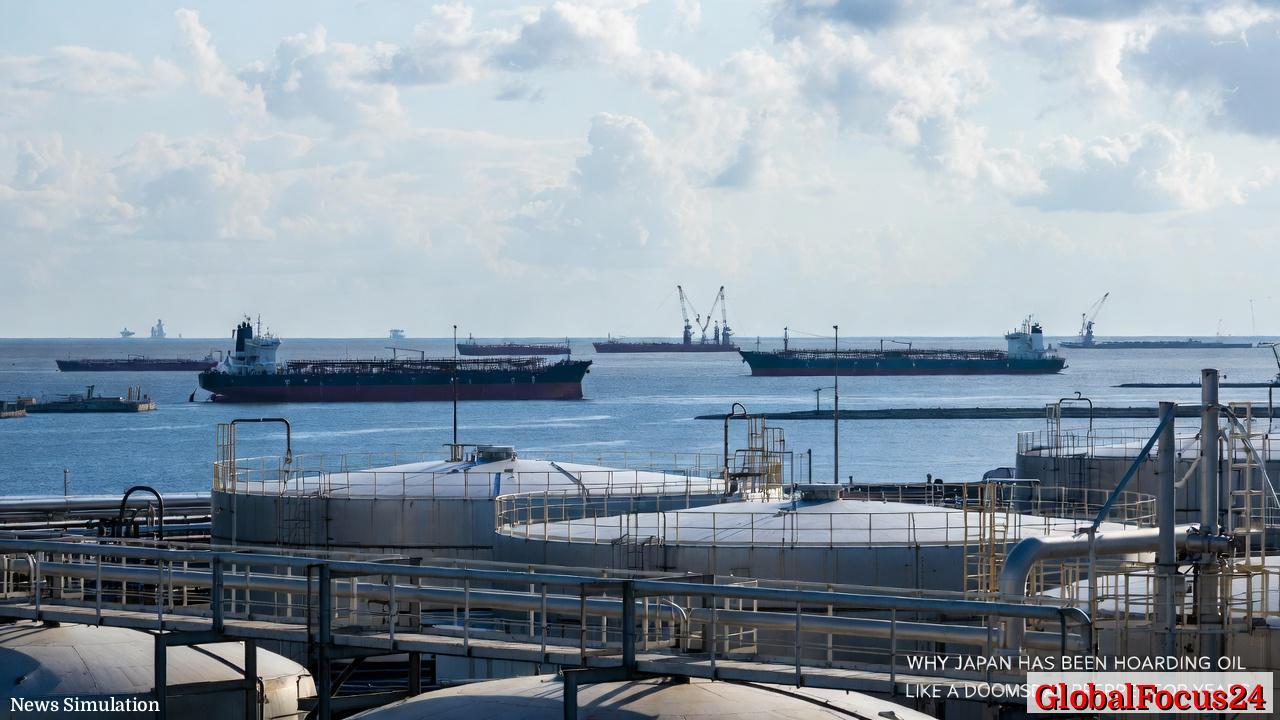
Japan to Release Oil from Strategic Reserves Amid Middle East Tensions
Rising Geopolitical Risks Trigger Strategic Action
Japan has announced plans to release oil from its vast strategic petroleum reserves in response to growing instability in the Middle East and disruptions threatening crude shipments through the Strait of Hormuz. The decision underscores Tokyo’s long-standing strategy of safeguarding energy security in a nation that imports nearly all of its oil and gas. Officials said the release aims to temper market volatility, stabilize domestic prices, and support global supply continuity as tensions heighten in a region responsible for over one-fifth of the world’s oil exports.
The Ministry of Economy, Trade and Industry (METI) confirmed that the move is precautionary but significant, given Japan’s heavy reliance on imported fossil fuels. Nearly 90 to 95 percent of the country’s primary energy comes from abroad, and much of it travels through the narrow strait between Iran and Oman. Recent naval incidents and political escalation in the surrounding region have reignited fears of potential shipping blockades or attacks on tankers that could disrupt global supply chains and drive up energy costs worldwide.
A Nation Built on Energy Resilience
Japan’s decision draws upon one of the most meticulously developed strategic reserve systems in the world. The country maintains the third-largest stockpile of crude oil globally, after the United States and China. Unlike many peers, Japan’s reserves are structured across three interlocking layers—government-owned strategic reserves, private corporate stockpiles, and joint storage programs conducted with foreign producers such as Saudi Arabia and the United Arab Emirates.
This three-tier structure has been refined over decades since the oil crises of the 1970s, when Japan’s dependence on Middle Eastern energy imports first became a major vulnerability. Following the 1973 Arab-Israeli war and the subsequent oil embargo, Japanese policymakers institutionalized energy security as a central tenet of national strategy. The government mandated minimum stockpile levels, set up the Japan Oil, Gas and Metals National Corporation (JOGMEC) to manage reserves, and incentivized private refiners to maintain their own buffers.
Today, those efforts allow Japan to sustain its economy for several months even if imports are halted completely. Government data show that the country’s combined reserves—both public and private—can meet more than 200 days of national demand, far exceeding the 90-day minimum required by the International Energy Agency (IEA).
Market Stability and Global Coordination
The timing of Japan’s release reflects not only regional anxiety but also global coordination among major importers and producers. Market analysts note that the move complements actions under discussion among IEA member countries, which periodically coordinate emergency releases to prevent sharp price spikes or supply disruptions.
In recent weeks, crude oil prices have surged amid reports of armed clashes and shipping delays in the Gulf. Benchmark Brent and West Texas Intermediate futures each climbed above previous monthly highs, prompting concerns from energy-dependent economies and transport industries. Japan’s contribution to the collective effort is designed to calm trader sentiment, bolster international stockpiles, and reassure investors that adequate supply remains available despite regional turbulence.
Japanese officials have not disclosed the exact volume to be released, citing operational sensitivity, but emphasized that it would represent a limited draw aimed at stabilizing market perceptions rather than offsetting a large-scale production shortfall. Analysts expect the release to come from state reserves rather than private inventories, allowing refiners to continue normal operations without commercial disruption.
Vulnerability Through the Strait of Hormuz
Few nations are as exposed as Japan to disruptions in the Strait of Hormuz, a narrow maritime chokepoint through which an estimated 20 percent of the world’s oil supply passes daily. Nearly 80 percent of Japan’s imported crude originates from Gulf producers, making uninterrupted passage essential for the country’s power generation, manufacturing, and transportation sectors.
The strait has long been a geopolitical pressure point. In past decades, incidents such as the Iran-Iraq War’s “Tanker War” of the 1980s and more recent confrontations between Iran and Western navies have periodically threatened to choke the route. Any sustained conflict or closure could send shockwaves through global energy markets.
Japanese energy planners have repeatedly cited the strait as the nation’s “lifeline.” To mitigate risks, Japan has diversified import routes and stockpiling locations, including offshore facilities and on-land tanks spread from Okinawa to Hokkaido. Some joint reserves are even located in exporting countries themselves, ensuring bilateral cooperation and faster deployment during crises.
Economic Implications for Japan and Beyond
Economists estimate that even minor disruptions in oil supply can have a disproportionate impact on Japan’s economy. As the world’s fourth-largest consumer of crude, Japan’s industrial base, logistics networks, and residential sectors remain deeply tied to imported fossil fuels. A sudden price surge could increase costs for airlines, shipping companies, and manufacturers while eroding consumer purchasing power through higher electricity and transportation bills.
Past episodes of global energy turbulence—such as the Gulf War in 1991 and the 2011 Arab Spring uprisings—demonstrated how quickly Japan’s trade balance and inflation outlook can shift. Though the yen has historically gained as a safe-haven currency during global crises, the benefits are often overshadowed by the inflationary pressure of expensive fuel imports.
By releasing oil now, Tokyo seeks to prevent that cycle from taking hold. At the same time, the initiative offers indirect support to allied economies, particularly in Asia, where supply chains remain intertwined. South Korea, Taiwan, and several Southeast Asian nations are also vulnerable to shipping disruptions in the Gulf. Coordinated reserve use could therefore serve as a stabilizing mechanism across the broader regional economy.
A Historical Perspective on Preparedness
Japan’s energy policy has evolved through repeated crises and lessons learned. In the aftermath of the Fukushima Daiichi nuclear disaster in 2011, the country shuttered most of its nuclear reactors, sharply increasing reliance on imported fossil fuels. This sudden shift once again exposed the nation to global price swings and reinforced the strategic importance of the petroleum reserve system.
Over the past decade, Japan has also pursued diversification through renewable energy and liquefied natural gas (LNG) contracts. However, oil still accounts for roughly one-third of total primary energy use, particularly in sectors such as transportation and petrochemicals. Policymakers often describe the reserve system as both a “shield and a bridge”—a safeguard against immediate shocks and a transitional measure as the economy shifts toward low-carbon energy sources.
These policies have occasionally required costly maintenance and logistical upgrades. Stored oil must be periodically rotated and tested, and the facilities demand continuous investment. Nonetheless, public support remains strong, rooted in the collective memory of past shortages and price spikes.
Global Energy Market Reactions
Early reactions from commodity traders and analysts indicate cautious optimism that Japan’s decision could help lower spot prices and reduce speculative volatility. Oil futures briefly retreated following Tokyo’s announcement, though analysts warned that sustained stability would depend on political developments in the Middle East over the coming weeks.
Some economists view the release as part of a broader trend among consuming nations preparing for an era of heightened supply risk and geopolitical competition. The overlapping effects of climate change, energy transition policies, and regional conflicts have created a more unpredictable global oil landscape than at any point in recent decades.
In this environment, strategic reserves are increasingly regarded not only as emergency tools but as instruments of market diplomacy—signals that major importers can act collectively to moderate shocks and deter speculative price surges.
Building Long-Term Energy Security
Looking ahead, Japan continues to balance the immediate need for energy stability with the long-term goal of reducing dependency on imported crude. Government plans under the Green Growth Strategy aim to expand hydrogen and ammonia fuels, increase offshore wind capacity, and promote next-generation battery storage systems.
Still, experts agree that physical reserves of oil will remain critical for decades as the global energy transition unfolds unevenly. Geopolitical uncertainty ensures that strategic stockpiles will continue to play a dual role—protecting domestic consumers while reassuring global markets of continued supply resilience.
A Signal of Steadiness in an Unsteady World
As the Middle East navigates another period of rising tension, Japan’s release of strategic reserves stands as both a pragmatic economic decision and a symbol of measured foresight. By acting early, Tokyo aims to dampen market panic, protect consumers, and reinforce its reputation as a responsible global energy stakeholder.
In a world where energy security remains intertwined with geopolitics, Japan’s methodical approach—rooted in decades of planning, partnership, and simulation—offers a case study in resilience. The move may not eliminate supply risks, but it sends a clear signal that the nation is prepared to manage them with calm precision, ensuring the lights—and the factories—stay on no matter what turbulence lies beyond the Strait of Hormuz.