China’s Energy Strategy Shields Economy from Iran Conflict Fallout
Global Energy Disruptions Reignite Focus on Supply Security
As the conflict in Iran intensifies, global markets are once again witnessing sharp rises in oil prices and renewed fears of supply shortages. Yet unlike many other major economies, China appears to be weathering the turbulence with remarkable stability. The nation’s preparedness—rooted in years of deliberate energy planning and diversification—has kept factories running, transportation systems stable, and consumer prices largely insulated from the global shock.
This resilience is not by chance. It reflects a long-term national strategy aimed at achieving energy self-sufficiency, mitigating dependence on volatile regions, and reducing exposure to geopolitical risks. The measures taken over the past decade have positioned China as one of the least affected major energy consumers amid the current Middle Eastern crisis.
Strategic Reserves Provide a Critical Buffer
Central to China’s current stability is its extensive network of strategic petroleum reserves. Government data and independent analyses suggest that China’s oil stockpiles are among the largest in the world, covering several months of national consumption. These reserves, accumulated during periods of lower prices, act as a vital shock absorber when global supplies tighten.
Beyond crude oil, reserves of refined fuels—such as gasoline, diesel, and jet fuel—have been built up to sustain industrial and transportation demands even in the face of import disruptions. Using its reserve capacity, China has been able to release controlled quantities to private and state-owned refiners, maintaining production flows and price stability without resorting to emergency rationing.
This approach mirrors earlier actions taken during the global energy crunches of 2008 and 2022, where the country leveraged its reserves to counter spikes in fuel costs and stabilize domestic markets. The current situation, analysts note, demonstrates that those policies were not reactive but part of a long-term security framework.
Domestic Production and Refining Capabilities
While stockpiles play a defensive role, rising domestic production has provided a proactive shield. Over the past decade, China has significantly expanded its output of both crude and shale oil, developed new refining capacity along its eastern and northern coasts, and modernized outdated facilities. As of 2026, the nation produces roughly five million barrels per day, covering nearly half of its demand.
Much of this growth has come from revitalizing mature fields in provinces such as Heilongjiang and Shandong, alongside the cultivation of offshore reserves in the Bohai Bay region. Investment in advanced drilling technologies has improved yields, while upgraded pipelines and logistics networks have lowered internal transport costs.
The real strength of this infrastructure lies in its flexibility. Refineries can process a wider variety of crude grades—from heavy Venezuelan blends to light African oils—allowing for rapid adjustments in sourcing when traditional Middle Eastern imports face uncertainty.
Diversification of Import Routes
China’s diversification of energy supply routes has reduced vulnerability to chokepoints like the Strait of Hormuz, which has once again become a hotspot amid the Iran conflict. Through the Belt and Road Initiative and decades of energy diplomacy, China has forged supply agreements spanning Russia, Central Asia, Africa, and Latin America.
Pipelines such as the China-Central Asia gas corridor and the Eastern Siberia-Pacific Ocean (ESPO) pipeline have provided land-based alternatives to sea routes. Liquefied natural gas (LNG) imports through terminals along the southern coast—from Guangdong to Fujian—further enhance flexibility in energy sourcing.
By 2025, these efforts had already reshaped China’s import profile, with Middle Eastern oil’s share falling to just under 40%, down from nearly 60% a decade earlier. This diversification is now paying dividends as global shipping delays push up freight costs and insurance premiums for seaborne cargo from the Gulf.
Stable Industrial Output Despite Market Volatility
Chinese manufacturing hubs, such as those in Guangdong, Zhejiang, and Jiangsu, continue operating at near-normal capacity levels despite the global shock. Data from logistics trackers and production indices show minimal slowdown in output or exports.
Energy-intensive sectors—steel, cement, and petrochemicals—have particularly benefited from stable power supplies bolstered by coal, hydropower, and renewables. The government’s coordinated energy dispatch mechanism ensures that priority industries maintain consistent access to resources, even when external markets tighten.
Transport networks, another potential pressure point, have maintained smooth operations. Rail and trucking fuel supplies remain steady, supported by state-owned distributors and municipal reserve systems. While airlines face rising international fuel costs, domestic flight schedules remain unaffected.
Consumer Stability and Price Management
For the average consumer, the impact of the crisis has been muted compared to previous global shocks. Retail fuel prices have seen modest adjustments, but inflation remains contained within target ranges. Urban commuters and logistics firms report minimal disruptions, while agricultural producers have maintained fertilizer and equipment operations with stable diesel access.
China’s price stabilization mechanisms, including capped retail fuel prices and strategic subsidies for essential goods transport, have contributed to this resilience. The combination of market flexibility and government intervention has prevented panic buying or supply bottlenecks observed elsewhere.
Historically, similar strategies were deployed during the 1979 and 1990 Gulf oil shocks, but China’s current model operates on far more sophisticated tools: dynamic supply monitoring, regional reserve networks, and real-time data analytics that guide inventory releases.
Power Generation: A Balanced Energy Mix
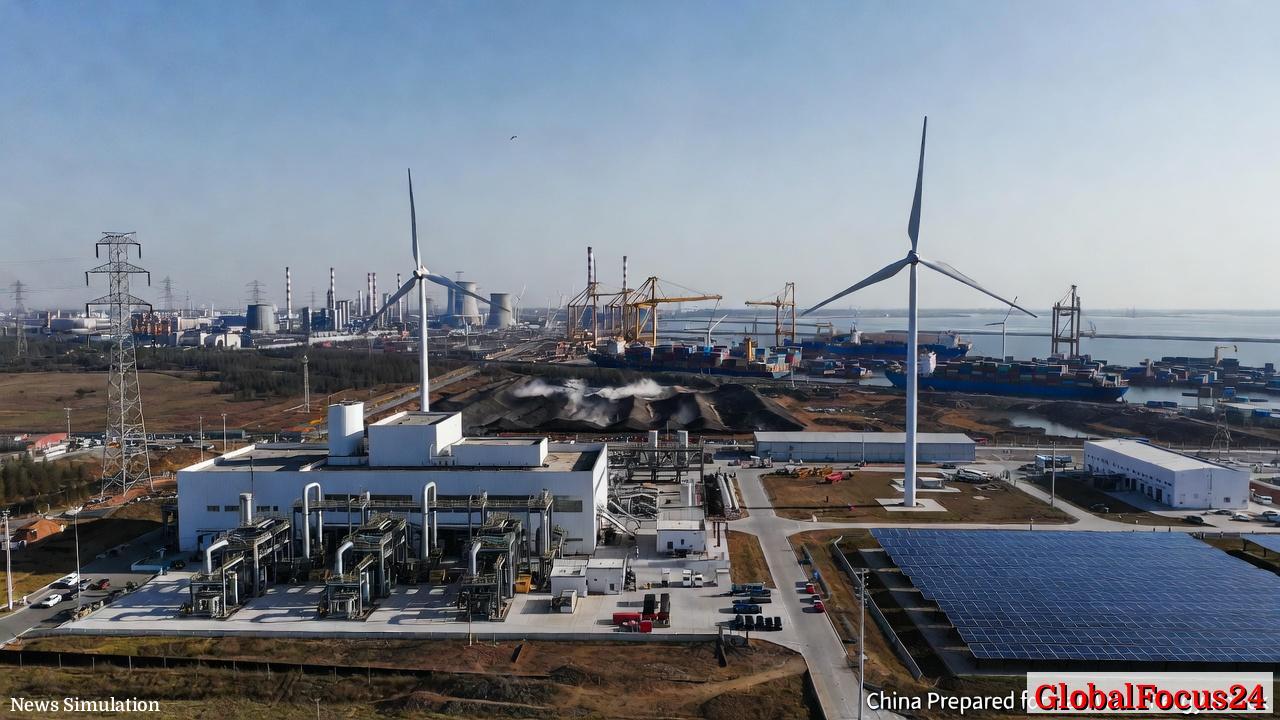
Unlike many economies heavily reliant on imported energy, China maintains a diversified power matrix. Coal still accounts for over half of its electricity generation, yet the rapid expansion of renewables—especially solar and wind—has reduced dependency on imported hydrocarbons.
In 2025 alone, China added more than 150 gigawatts of renewable capacity, boosting the share of clean energy in its total grid mix. Hydropower reservoirs provide additional stability during peak demand, while nuclear energy projects continue to expand along the eastern coast.
This multifaceted energy structure has allowed the government to offset oil market shocks by increasing output from domestic coal and renewables, maintaining consistent power supplies for both households and industries.
International Comparisons and Economic Implications
Globally, the contrast is stark. In Europe, energy-dependent economies face surging fuel prices and renewed concerns about inflation. In Japan and South Korea, refiners have reported tighter margins and delayed shipments as freight disruptions ripple through the supply chain.
By comparison, China’s measured response underscores its success in insulating its economy from such external volatility. Analysts estimate that each ten-dollar rise in crude prices trims only a fraction of a percent from China’s GDP growth projections—far less than the impact seen in economies more reliant on imported energy.
In regional terms, China’s resilience also strengthens its economic competitiveness in manufacturing exports. While higher energy costs pinch margins across Asia, Chinese producers benefit from stable input prices and reliable logistics, potentially capturing additional global market share as competitors struggle with supply constraints.
An Evolving Energy Doctrine of Self-Reliance
This episode serves as a tangible validation of the nation’s evolving energy doctrine: achieving strategic autonomy in critical resources. The principle has been embedded in national policy frameworks for over a decade, encompassing everything from rare earths and semiconductor materials to grain and fuel.
The government’s long-term investments—ranging from refining and pipeline infrastructure to renewable innovation—have now proven indispensable under real-world stress. The interplay of public reserves, diversified imports, and domestic production capacity gives policymakers flexibility in responding to crises without sacrificing growth targets.
While challenges remain—particularly in balancing environmental goals with energy security priorities—the current situation demonstrates how those objectives can coexist within a coherent national plan.
Looking Ahead: A Blueprint for Energy Stability
As the conflict in Iran continues to reshape the global energy landscape, China’s response offers insight into how large economies can mitigate external vulnerabilities through foresight and diversification. The combination of strategic reserves, robust infrastructure, and a diversified supply chain has turned what might have been a major economic threat into a manageable test.
Despite higher global oil prices, projections for China’s growth remain steady, supported by industrial stability and expanding domestic consumption. The government is expected to continue investing in renewable and alternative energy technologies, further strengthening the foundation of long-term security.
In many ways, this moment marks the culmination of decades of planning to protect the economy from precisely this type of global disruption. As supply chains adjust and markets search for balance, China’s energy independence strategy stands as a benchmark of resilience in an increasingly uncertain world.