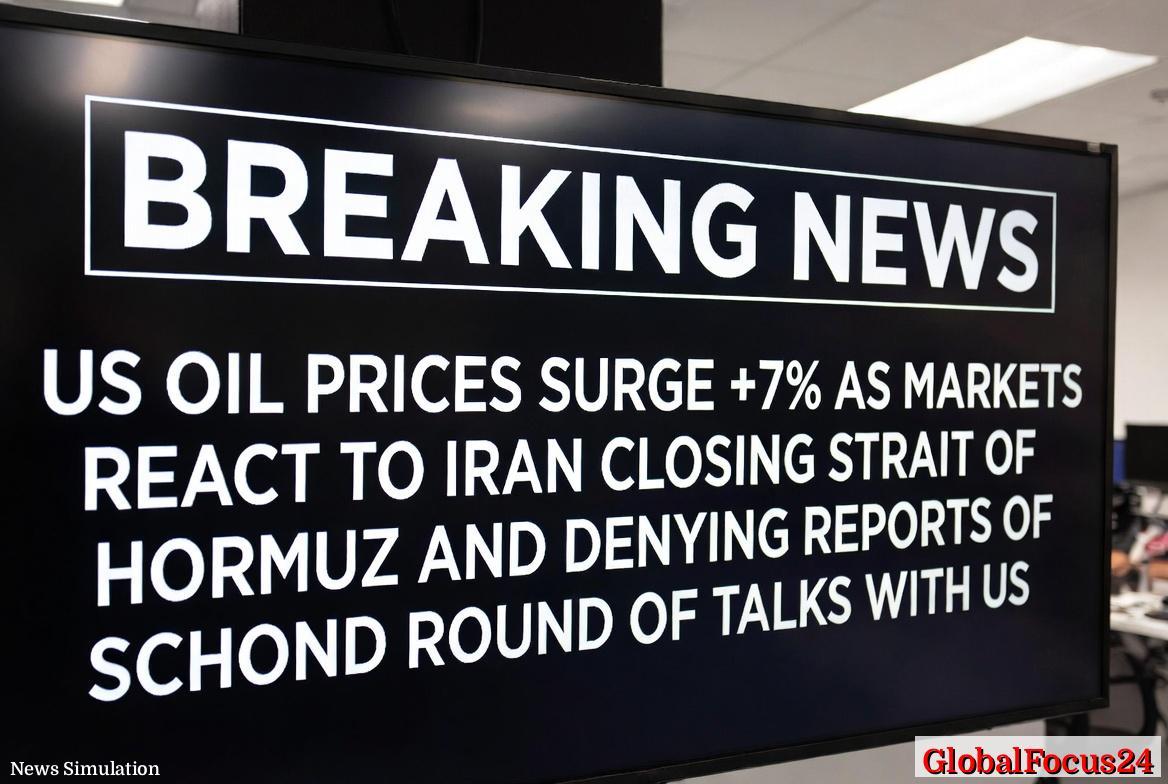
Oil Prices Surge Above $89 as Strait of Hormuz Closure Sparks Global Supply Fears
Sudden Spike in Crude Prices Jolts Energy Markets
U.S. oil prices surged more than 7% on Sunday, climbing above $89 per barrel in a sharp move that has rattled global energy markets and renewed concerns over supply disruptions. The abrupt increase follows reports that Iran has closed the Strait of Hormuz, one of the world’s most critical oil transit chokepoints, while simultaneously denying claims of a second round of talks with the United States.
The price spike reflects immediate fears of constrained oil flows through the narrow waterway, which handles a significant portion of the world’s seaborne crude exports. Traders reacted swiftly to the developments, pushing benchmark prices higher in early trading as uncertainty spread across global markets.
Strategic Importance of the Strait of Hormuz
The Strait of Hormuz sits between Iran and Oman, linking the Persian Gulf with the Arabian Sea. At its narrowest point, it is only about 21 miles wide, yet it carries roughly one-fifth of global oil consumption. Major producers including Saudi Arabia, Iraq, the United Arab Emirates, and Kuwait rely heavily on this route to export crude to international markets.
Any disruption in this corridor can have immediate and far-reaching consequences. Even temporary interruptions can trigger volatility, as energy markets are highly sensitive to supply risks in the region.
Historically, tensions in the Strait of Hormuz have repeatedly influenced oil prices. During past geopolitical confrontations, including tanker incidents and military escalations, crude prices have surged in response to perceived threats to shipping lanes. Sunday’s developments echo those earlier episodes, underscoring the strait’s enduring strategic importance.
Market Reaction and Investor Sentiment
Energy traders responded quickly to the reports, with futures contracts reflecting heightened concern about supply availability. The more than 7% increase represents one of the largest single-day gains in recent months, signaling the severity of market anxiety.
Investor sentiment shifted toward risk aversion, with many participants anticipating potential supply shortages if the closure persists. Analysts note that even the perception of restricted flow can lead to speculative buying, further amplifying price movements.
Oil companies and refiners are also closely monitoring the situation, as higher crude costs can ripple through the entire energy supply chain. The immediate effect is often seen in fuel prices, which may rise in tandem with crude benchmarks.
Economic Impact Across Key Regions
The surge in oil prices carries significant implications for both oil-importing and oil-exporting countries. For major importers such as the United States, Japan, and many European nations, higher crude prices can translate into increased fuel costs, elevated inflationary pressures, and potential strain on economic growth.
In contrast, oil-exporting nations may experience short-term revenue gains from higher prices. However, prolonged instability in supply routes can offset these benefits by disrupting export volumes and increasing shipping risks.
In Asia, where demand for energy remains strong, the price increase could affect manufacturing costs and consumer prices. Countries heavily dependent on Middle Eastern oil supplies are particularly vulnerable to disruptions in the Strait of Hormuz.
Meanwhile, in Europe, where energy markets have already faced volatility in recent years, the latest spike adds another layer of uncertainty. Governments and industries may need to reassess energy strategies to mitigate potential shortages or price shocks.
Historical Context of Oil Price Volatility
Oil markets have long been shaped by geopolitical events, particularly in the Middle East. Past crises, such as the 1973 oil embargo and the Gulf War in the early 1990s, demonstrated how quickly supply disruptions can drive prices upward.
More recently, tensions involving Iran have periodically influenced oil markets. Sanctions, military incidents, and diplomatic disputes have all contributed to price fluctuations over the past decade.
The current situation reflects a familiar pattern: when geopolitical tensions intersect with critical infrastructure, oil prices respond swiftly. However, the scale and duration of the impact depend on how long the disruption persists and whether alternative supply routes can compensate.
Alternative Routes and Supply Adjustments
While the Strait of Hormuz is a vital artery for global oil shipments, some producers have invested in alternative export routes to reduce reliance on the chokepoint. Pipelines that bypass the strait, such as those in Saudi Arabia and the United Arab Emirates, can partially offset disruptions.
However, these alternatives have limited capacity compared to the volume that typically passes through the strait. As a result, a full closure would likely lead to significant supply constraints, even with contingency measures in place.
Strategic petroleum reserves held by major economies could also be tapped to stabilize markets in the short term. These reserves are designed to cushion against sudden supply shocks, though they are not a long-term solution.
Impact on Consumers and Businesses
The immediate effect of rising oil prices is often felt at the pump, as gasoline and diesel prices tend to follow crude trends. Consumers may see higher transportation costs, which can influence household budgets and spending patterns.
Businesses, particularly those in transportation, logistics, and manufacturing, may face increased operating costs. Airlines, shipping companies, and trucking firms are especially sensitive to fuel price fluctuations, which can affect pricing strategies and profitability.
In addition, higher energy costs can contribute to broader inflation, influencing everything from food prices to industrial goods. Central banks and policymakers may need to consider these dynamics when assessing economic conditions.
Regional Comparisons and Global Ripple Effects
The impact of the price surge varies across regions. In North America, domestic oil production provides some insulation against global supply disruptions, but prices are still influenced by international benchmarks.
In contrast, regions with limited domestic production, such as parts of Asia and Europe, are more directly exposed to global price swings. These regions may experience sharper increases in energy costs and greater economic sensitivity to supply disruptions.
Emerging markets, which often have less capacity to absorb price shocks, could face additional challenges. Higher energy costs can strain government budgets, particularly in countries that subsidize fuel prices.
Uncertainty Surrounding Diplomatic Developments
Compounding the market reaction is the uncertainty surrounding diplomatic relations. Iran’s denial of reports about a second round of talks with the United States has added to the sense of unpredictability.
Diplomatic engagement often plays a key role in stabilizing markets, as negotiations can reduce tensions and restore confidence. The absence of clear progress in talks has contributed to the current volatility.
Market participants are closely watching for any signs of de-escalation or confirmation of the situation in the Strait of Hormuz. Official statements and developments in the coming days are likely to influence price movements.
Outlook for Oil Markets
The trajectory of oil prices will depend largely on how the situation evolves. If the closure of the Strait of Hormuz is temporary and quickly resolved, prices may stabilize or retreat. However, prolonged disruption could lead to sustained higher prices and increased volatility.
Energy analysts emphasize that the global oil market remains interconnected, with supply and demand dynamics influenced by a wide range of factors. Geopolitical developments, production levels, and economic conditions all play a role in shaping price trends.
For now, the sharp rise above $89 per barrel highlights the market’s sensitivity to geopolitical risks and the critical importance of key transit routes in maintaining global energy stability.
As the situation continues to unfold, governments, businesses, and consumers alike are bracing for potential ripple effects across the global economy.