China’s Crude Oil Imports Surge 15.8% in February as Refiners Prepare to Draw Record Stockpiles
Strongest Monthly Gain Since 2023 Signals Strategic Stockpile Shift
China’s crude oil imports jumped 15.8% year-on-year in February, marking the strongest monthly surge since August 2023. The increase reflects a decisive shift in the world’s largest oil importer’s energy strategy amid global supply instability following the onset of the Iran War in early March.
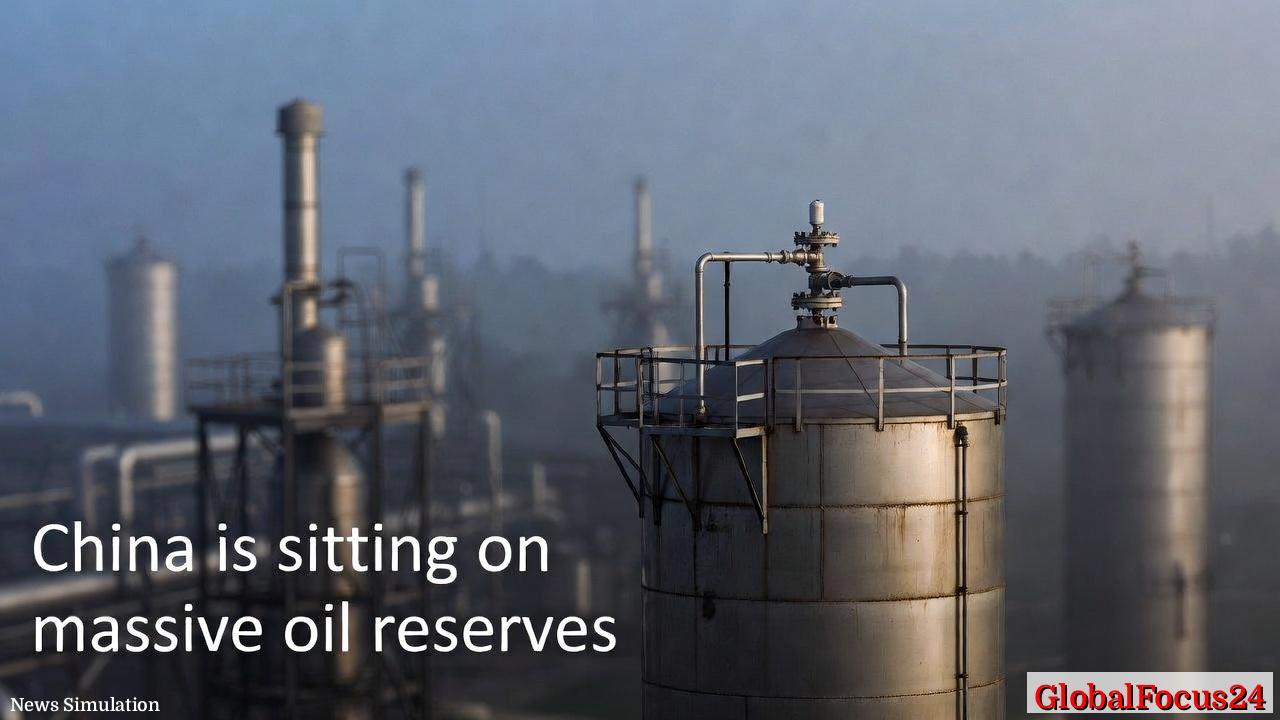
Beijing’s energy planners and refiners appear to be transitioning from more than a year of aggressive stockpiling toward gradual drawdowns, a move that could influence global oil demand and pricing trends throughout the spring. With an estimated 1.2 billion barrels now in reserve, including approximately 851 million barrels in commercial inventory, analysts suggest that refiners could begin drawing up to 1 million barrels per day in the next four to six weeks.
Strategic Reserves Reach Historic Highs
Over the past 18 months, China has steadily built its crude reserves to unprecedented levels. This stockpiling push, driven by a combination of pandemic recovery planning and geopolitical caution, created both a buffer against external shocks and a lever for domestic economic management.
In the final quarter of 2025, imports briefly slowed as refineries neared storage capacity, but officials maintained high purchase volumes despite softening demand. That cycle now appears to be entering a new phase. According to regional energy consultancies, February’s sharp import rebound stems from contracted cargoes arranged late in 2025, alongside opportunistic spot purchases when Brent crude briefly dipped below 80 USD per barrel in January.
The balance between strategic and commercial reserves has become a defining characteristic of China’s energy management strategy. The strategic petroleum reserve (SPR), believed to hold roughly one-third of the national total, remains largely untapped. Instead, energy analysts say commercial inventories will likely supply refiners as the government signals controlled use of its emergency reserves only under sustained pressure or price spikes.
Refiners’ New Mandate: Prioritize Domestic Fuel Production
Following the outbreak of hostilities between Iran and neighboring states, Beijing acted swiftly to stabilize domestic fuel markets. In the first week of conflict, China’s largest refining groups—Sinopec, PetroChina, and CNOOC—were directed to cap fuel exports and focus on gasoline and diesel production over petrochemicals.
This guidance reflects a dual priority: safeguarding internal energy supply while reducing exposure to export volatility. Recent refiners’ output data show a pivot toward higher short-term throughput focused on transportation fuels, anticipating seasonal surges in domestic demand as industrial and travel activity accelerates in the second quarter.
Industry sources report that refinery utilization rates are now near 82%, up from about 76% in December. That increase, while modest, follows the government’s call for “energy resilience and continuity” in national supply chains after the Iran conflict’s inception disrupted Middle Eastern shipping lanes and raised insurance costs for crude transported through the Strait of Hormuz.
Global Oil Market Ripple Effects
China’s renewed demand surge has occurred against a volatile global backdrop. Brent crude futures have fluctuated between 85 and 92 USD per barrel through March, reflecting conflicting pressures—reduced supply from Persian Gulf exporters and shifts in Asian import strategies.
With China alone accounting for nearly 17% of global crude consumption, any sustained uptick in Chinese demand can reverberate across commodity markets. Analysts warn that if large-scale drawdowns meet continued import activity, global demand signals could tighten rapidly, driving prices upward despite slower consumption in Europe and Japan.
For comparison, during a similar import acceleration in late 2022, a one-month rise in Chinese intake of 1 million barrels per day contributed to a 10% increase in global benchmark prices within six weeks. While circumstances differ now—given elevated inventories and more flexible global trade flows—the scale of February’s increase remains significant.
Market observers also note the possibility that Beijing’s planned drawdowns could later transition into export flows of refined fuels once domestic demand stabilizes. Historically, China has adjusted exports of diesel and gasoline to manage refinery margins and offset domestic slowdowns, affecting regional competition in Asia-Pacific markets from South Korea to Singapore.
Historical Context: From Import Restraint to Energy Leverage
China’s pattern of oil import management has transformed over the past decade. In the early 2010s, the government emphasized supply diversification—forging partnerships in Russia, West Africa, and South America—to reduce dependency on Middle Eastern producers. After 2015, with domestic consumption booming, the nation focused on capacity building, adding several mega-refineries such as the Zhejiang Petrochemical and Yulong complexes to process heavier, cheaper crudes.
The pandemic era introduced yet another phase: strategic accumulation. Taking advantage of record-low prices in 2020 and subsequent volatility, China effectively built one of the world’s largest onshore crude storage networks. Policy adjustments in 2024 and 2025 further encouraged public refiners to maintain elevated inventories in anticipation of potential trade disruptions tied to U.S. sanctions regimes or regional conflicts.
This broad approach—part defensive hedge, part economic stabilizer—has given Beijing greater flexibility to smooth out domestic price spikes or secure advantage in long-term crude contracts. February’s surge thus represents less a new trend than a recalibration of existing strategy under new geopolitical conditions.
Economic Impact Inside China
Domestically, the February import expansion provides both an industrial stimulus and a fiscal challenge. Higher throughput rates bolster refinery employment and activity in associated sectors such as shipping, storage, and chemicals. Yet increased oil imports also bear costs: narrowing trade surpluses, raising local fuel inventories, and pressuring the yuan amid elevated dollar settlements.
Downstream markets have already felt early effects. Retail gasoline prices in major Chinese cities rose by roughly 3% month-on-month, reflecting both higher input costs and seasonal consumption patterns. For trucking and logistics companies, this has translated into modest adjustments to freight rates, particularly along coastal industrial corridors around Shanghai and Guangdong.
However, analysts view these short-term increases as manageable. With over a billion barrels in total reserves, Chinese refiners possess enough flexibility to sustain supply without aggressive new import commitments if prices climb above 95 USD. Economic planners appear confident that controlled reserve drawdowns can cushion inflationary pressures while supporting steady manufacturing recovery through midyear.
Regional Comparisons: Diverging Paths in Asia
China’s import surge contrasts sharply with patterns elsewhere in Asia. Japan and South Korea have both reduced crude intake in early 2026, citing ample inventories and cautious demand forecasts linked to slower export orders. India, by contrast, has maintained a steady upward trend, but its growth rate—around 4% year-on-year in February—remains far below China’s double-digit expansion.
This divergence underscores China’s unique position: with its vast refining capacity and government-directed coordination, it can adjust national import behavior on a scale unmatched by neighboring economies. While others respond reactively to market fluctuations, Beijing’s energy apparatus often acts strategically, preempting global shifts in supply and demand.
As one industry analyst noted, “China doesn’t just buy oil—it manages oil.” That orientation, visible again in February’s numbers, reinforces the country’s role as both the stabilizer and potential disruptor of Asian energy balance.
Outlook: Controlled Drawdowns Ahead
Looking ahead, energy experts anticipate a measured release of up to 1 million barrels per day from commercial inventories through April and May. Such drawdowns would maintain refinery throughput even if import schedules taper slightly due to logistical constraints in the Persian Gulf or tightening maritime insurance.
If the Iran War continues to destabilize shipping routes, Beijing may accelerate the use of stored crude to protect refineries from supply interruptions. Conversely, if global prices soften, refiners could revert to opportunistic buying, replenishing stocks before summer demand peaks.
Either scenario highlights China’s deepened resilience within global oil markets. While February’s surge marks the end of a lengthy accumulation cycle, it also illustrates a new phase of strategic deployment—leveraging colossal reserves not simply for security but for market influence.
A Defining Moment for Global Energy Markets
China’s February import surge captures a pivotal moment for global energy trade. The combination of geopolitical tension, vast stockpiles, and a disciplined domestic energy policy positions the nation as a central force shaping both near-term price trajectories and the longer-term stability of oil supply chains.
With refiners poised to draw from reserves while maintaining strong inflows, the coming months may reveal whether this strategy rebalances global markets—or amplifies volatility. Either outcome will underscore China’s enduring role as the world’s most influential crude oil consumer and its most deliberate energy strategist.