South Korea Weighs Resumption of Russian Oil Imports Amid Middle East Tensions
Seoul Seeks to Protect Energy Security as Global Supply Pressures Mount
SEOUL, March 19 — South Korea’s government is in talks with domestic refiners and petrochemical companies to explore the possibility of importing Russian crude oil and naphtha, according to the Ministry of Trade, Industry and Energy. The move comes as the country faces growing concerns over energy security amid escalating instability across the Middle East, which threatens vital oil shipping lanes.
The ministry confirmed that preliminary discussions are ongoing and are linked to recent signals of softened economic sanctions on Russia. Officials emphasized that no formal decisions have been made, but acknowledged that diversification of energy sources has become a strategic priority as supply risks heighten.
South Korea, the world’s fifth-largest crude importer, halted Russian oil purchases in December 2022 following Moscow’s invasion of Ukraine. Before the suspension, Russian crude made up around 5.6% of South Korea’s total oil imports. The ban was part of a coordinated international response supporting sanctions led by the United States and European Union.
Now, with new geopolitical shocks emerging in the Middle East, Seoul faces a dilemma: balancing international alignment with ensuring reliable domestic fuel supplies.
Rising Risks in the Strait of Hormuz
More than 70% of South Korea’s imported crude oil and nearly half of its naphtha shipments pass through the Strait of Hormuz, a narrow maritime chokepoint between Oman and Iran. Recent attacks on vessels and tensions between regional powers have raised the specter of supply disruption, prompting renewed debate in Seoul over the country’s heavy dependency on Middle Eastern energy.
Naphtha plays a crucial role in South Korea’s industrial base. As a core feedstock for petrochemicals, it is used to manufacture plastics, synthetic fibers, and resins—materials that underpin industries such as automobile manufacturing, electronics, construction, and textiles. Local companies including LG Chem, Lotte Chemical, and Hanwha Solutions rely on stable naphtha supplies to maintain production lines.
If shipments were delayed or prices spiked, analysts warn that South Korea’s export-oriented manufacturing sector could face higher production costs and weakening profit margins, potentially slowing the broader economy.
Government Measures to Ease Supply Pressures
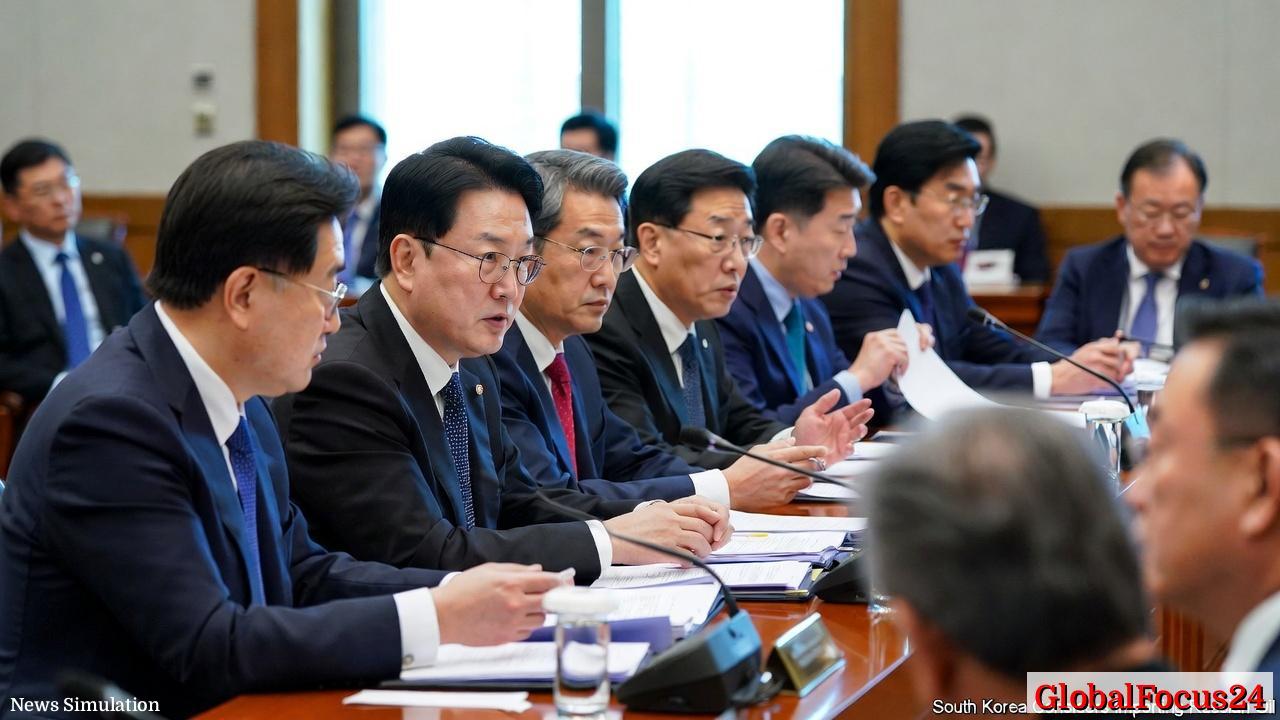
Finance Minister Koo Yun-cheol announced Wednesday that the government will temporarily classify naphtha as a “supply-chain economic security item”—a designation intended to prioritize procurement and provide support for import diversification. The ministry is also preparing to restrict naphtha exports to preserve domestic inventory levels in case of emergency shortages.
In tandem, energy authorities are expanding coordination with state-run oil companies and private refiners to assess the feasibility of bringing Russian crude back into the import mix. Such imports could provide cost advantages due to short transport routes from Russia’s Far East ports and potentially lower spot prices compared to Middle Eastern crude benchmarks.
A senior ministry official noted that “the issue is under careful review due to both economic and diplomatic considerations.” The official added that any decision would align with international regulations and sanctions still in effect.
Historical Context: Energy Diversification Efforts
South Korea’s vulnerability to external energy shocks is not new. The country experienced severe disruptions during the global oil crises of the 1970s, which spurred long-term efforts to diversify its energy portfolio. Since then, the government has invested heavily in strategic oil reserves, renewable energy initiatives, and nuclear power programs to mitigate overreliance on imports.
However, despite decades of diversification policies, fossil fuels still form the backbone of South Korea’s energy infrastructure. According to the Korea Energy Economics Institute, crude oil, natural gas, and coal accounted for over 80% of the nation’s total energy consumption in 2024, with renewable sources only gradually increasing their share.
In 2021, Russian crude offered Seoul a relatively flexible supply alternative, particularly from the Sakhalin project in Russia’s Far East, which supplied low-sulfur crude ideal for refining into high-value petrochemical feedstocks. The suspension of those imports in 2022 forced domestic refiners to turn more intensely toward suppliers in Saudi Arabia, Kuwait, and the United Arab Emirates.
Economic Implications and Industry Reactions
South Korea’s petrochemical industry has voiced cautious support for revisiting Russian supply channels, noting that competitive pricing would help offset rising input costs. Benchmark naphtha prices in Asia have surged intermittently over the past year amid increased global demand for plastics and refining cuts in Europe.
For refiners such as SK Innovation and GS Caltex, reinstating access to Russian crude could improve feedstock flexibility, enabling diversification between Middle Eastern heavy crude and lighter Siberian grades. However, the companies remain constrained by compliance obligations linked to international sanctions, which complicate financial transactions and insurance coverage for shipments.
Energy economist Lee Jun-ho of Kyung Hee University noted, “South Korea’s challenge is fundamentally about balance — maintaining solidarity with international partners while responding pragmatically to supply threats in real time. Any return to Russian oil imports would be primarily a tactical move, not a political signal.”
Regional Comparisons: Asia’s Varied Approaches
Across Asia, several economies have pursued distinct strategies in response to the global reshuffling of energy flows since the Ukraine conflict. India has become one of Russia’s largest crude customers, capitalizing on discounted rates after Western sanctions reduced Moscow’s traditional markets. China, too, has expanded purchases of Russian energy, integrating imports into long-term energy security plans.
Japan, by contrast, reduced its exposure to Russian oil but retained stakes in key energy projects such as Sakhalin-2, emphasizing the importance of maintaining stable regional supply lines. South Korea’s position lies between Tokyo’s cautious diversification and New Delhi’s assertive opportunism, constrained by its limited domestic resources and heavy dependence on imported feedstocks.
This regional divergence underscores how energy policy increasingly reflects national economic structures and diplomatic alignments. For South Korea, with its export-driven economy and limited natural reserves, achieving a sustainable equilibrium between cost, supply stability, and international credibility remains a complex task.
Domestic Political and Public Considerations
While the government maintains that economic and security factors drive the current discussions, public opinion remains divided. Some citizens and analysts argue that resuming Russian imports could undercut Seoul’s image as a supporter of international sanctions and democratic norms. Others see the move as pragmatic, given South Korea’s acute vulnerability to supply shocks.
Public discourse has also intertwined with broader concerns about inflation. Rising fuel and utility prices have been key contributors to cost-of-living pressures over the past two years. Cheaper energy imports, some experts argue, could offer relief to consumers and manufacturers alike, potentially stabilizing inflation expectations.
Future Outlook: Balancing Strategy and Diplomacy
Looking ahead, the government is expected to hold additional consultations with major trade partners and domestic refiners before finalizing any decisions. Analysts forecast that even if Russian imports resume, they are likely to represent only a small portion of total crude inflow — enough to buffer against volatility but not to upend existing supplier relationships.
South Korea’s broader energy strategy continues to prioritize diversification, energy efficiency, and the gradual reduction of fossil-fuel dependency. Efforts to expand renewable capacity, particularly offshore wind and hydrogen projects, have intensified under national carbon transition programs. However, such initiatives will take years to reshape the energy landscape.
In the short term, Seoul’s immediate challenge is navigating a rapidly evolving global market marked by conflict, sanctions, and shifting alliances. Policymakers must weigh the potential economic gains of restoring Russian oil imports against the diplomatic complexities and moral considerations tied to such a move.
Conclusion: Energy Security Under Strain
The discussions over Russian crude imports highlight South Korea’s precarious position in a global energy system increasingly defined by fragmentation and unpredictability. With Middle Eastern supply routes under strain and regional demand rising, the pressure to secure stable and affordable inflows is intensifying.
For now, Seoul appears intent on keeping its options open—balancing geopolitical caution with economic necessity. Whether these negotiations lead to renewed Russian shipments or simply reinforce South Korea’s resolve to diversify, one fact remains clear: energy security has once again emerged as one of the defining challenges for the country’s industrial and diplomatic strategy in 2026.