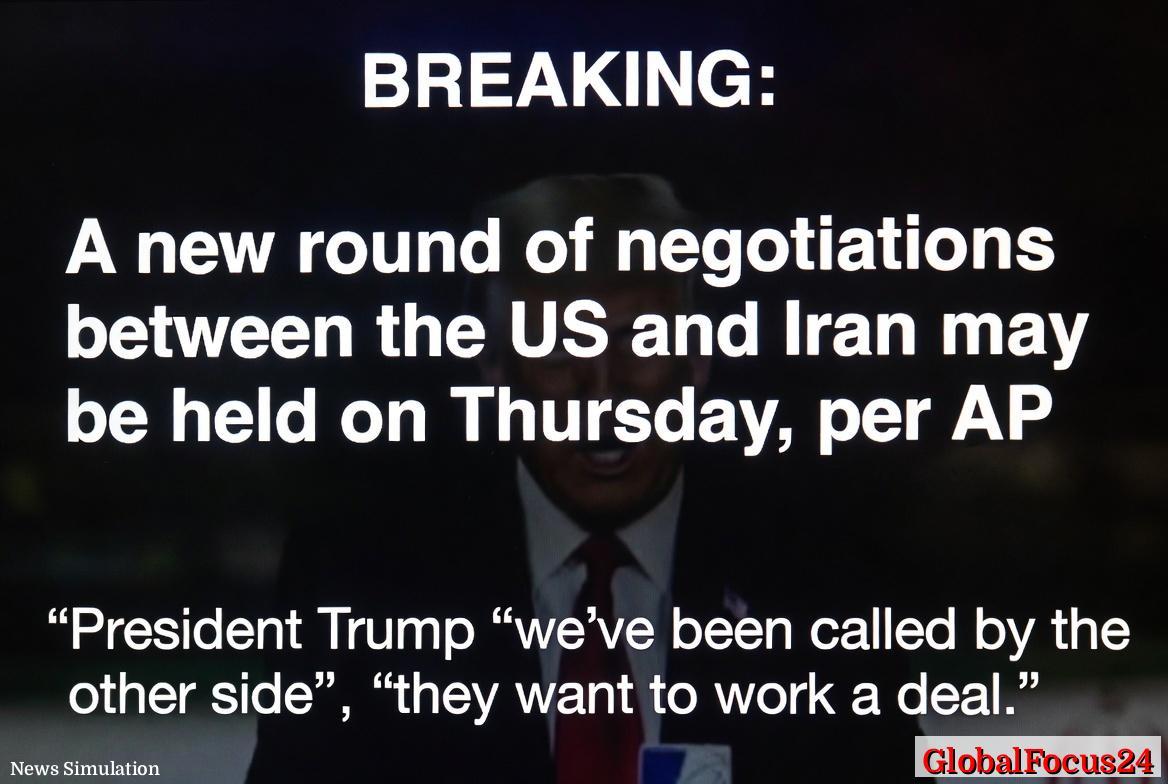
The United States and Iran are poised to enter a new phase of diplomatic engagement this Thursday, marking the latest chapter in a long and turbulent bilateral history. President Donald Trump confirmed that Tehran had reached out to Washington with an expressed desire to “work out a deal,” suggesting that both sides may be prepared to reopen talks after years of strained relations.
Renewed Contact Signals Possible Policy Shift
Details of the forthcoming meeting remain guarded, but multiple sources have indicated that preliminary arrangements are underway for in-person discussions. According to President Trump, “the other side called,” emphasizing that Iranian officials initiated the diplomatic outreach. The comment suggests a potential recalibration in Iran’s foreign strategy, especially amid sustained economic pressure and shifting geopolitical dynamics across the Middle East.
If confirmed, the talks would represent the first formal high-level negotiation between US and Iranian representatives in several months. Analysts view the timing as deliberate, coming amid renewed scrutiny of Iran’s nuclear activities and its regional alliances. Both nations have emphasized their openness to “constructive dialogue,” though officials have cautioned that expectations should remain tempered given the entrenched policy disagreements that have defined their relationship.
Historical Context: A Relationship Defined by Volatility
Diplomatic relations between the United States and Iran have been marked by decades of mistrust. Following the 1979 Iranian Revolution, Washington ceased formal diplomatic ties with Tehran, responding to the seizure of the US Embassy and the prolonged hostage crisis. The years that followed saw episodic attempts at engagement, including limited cooperation during international crises and indirect negotiations coordinated through European intermediaries.
The most significant breakthrough occurred in 2015 with the signing of the Joint Comprehensive Plan of Action (JCPOA), commonly known as the nuclear deal. The agreement, brokered between Iran and major world powers, aimed to curb Tehran’s nuclear program in exchange for sanctions relief. However, in 2018, President Trump withdrew the United States from the accord, citing concerns over its limitations and enforcement mechanisms. The withdrawal reignited tensions, leading to a series of economic sanctions that severely constrained Iran’s oil exports and foreign investments.
Thursday’s scheduled negotiation is therefore seen as a potential opportunity to revisit some of those earlier frameworks, though under vastly different circumstances.
Economic Pressures Driving Diplomatic Movement
Iran’s outreach to Washington comes as its economy faces formidable challenges. Sanctions imposed by the US have curtailed access to international banking systems, restricted petroleum sales, and contributed to a sharp depreciation of the national currency. According to regional economists, inflation has reached record levels, while unemployment continues to climb across urban centers.
Meanwhile, the United States maintains strategic interest in ensuring that Iran’s activities do not destabilize global energy markets or undermine maritime security in the Persian Gulf. With oil prices fluctuating amid global supply concerns, analysts note that renewed dialogue could help mitigate future economic shocks and encourage regional energy cooperation.
The diplomatic thaw, if realized, may also carry significant implications for European and Asian markets, many of which depend on Middle Eastern crude exports. A more stable relationship between Washington and Tehran could ease pressure on transport routes such as the Strait of Hormuz, a chokepoint for nearly one-fifth of the world’s oil supply.
The Regional Dimension: Allies and Adversaries React
While Washington and Tehran prepare for possible talks, regional governments are watching closely. Saudi Arabia, a longstanding US ally with deep strategic interests in counterbalancing Iranian influence, has signaled cautious approval of renewed diplomacy, emphasizing the need for “peaceful solutions” to prevent further conflict escalation.
Israel has taken a sterner tone, reiterating concerns that any concessions could enable Iran to expand its nuclear capabilities. Meanwhile, Gulf states like Qatar and Oman—often serving as intermediaries in US-Iran exchanges—may again play an active logistical role in facilitating communication channels.
From a broader geopolitical standpoint, Thursday’s negotiations could influence regional power dynamics stretching from Baghdad to Beirut. Iran’s network of alliances with proxies and affiliated militias throughout the Middle East has long been a focal point of US foreign policy. Any potential agreement addressing those networks will likely shape subsequent discussions about sanctions relief, regional security guarantees, and humanitarian access.
Public Reaction and Domestic Implications
Within both countries, public opinion regarding reconciliation remains mixed. In the United States, administration officials have defended engagement as a pragmatic effort to reduce risk rather than a concession. Some lawmakers have expressed skepticism, arguing that previous attempts at negotiation yielded limited tangible outcomes.
In Iran, however, many citizens view renewed discussions as a potential lifeline for an economy in distress. Small business owners and urban workers alike have endured years of inflation and purchasing-power erosion. Reports from Tehran’s central districts depict cautious optimism, with local traders expressing hope that international agreements could reopen access to foreign currency and exports.
The Iranian government, meanwhile, faces internal pressure to demonstrate diplomatic success amid growing domestic discontent. While official statements have avoided specifics, sources close to senior officials suggest that Tehran may be willing to revisit certain terms of nuclear compliance in exchange for partial sanctions relief.
Comparing Regional Diplomacy Efforts
A look at broader regional diplomacy offers perspective on the potential outcomes of US-Iran talks. In recent years, similar negotiations between Western powers and Middle Eastern governments—such as those involving Saudi Arabia and Yemen, or Israel and several Arab states under the Abraham Accords—have illustrated both the promise and the fragility of peace-building efforts in the region.
Unlike those agreements, however, US-Iran diplomacy carries global economic consequences that extend well beyond the Middle East. The reemergence of Iranian oil on international markets could reshape trade routes, lower energy costs, and prompt economic realignment among major producers such as Russia and Saudi Arabia. The involvement of European partners, if revived, could also restore confidence in multilateral diplomacy as a mechanism for conflict resolution.
The Road Ahead: Opportunities and Hurdles
Despite cautious optimism, experts warn that any progress will depend on both sides’ political will and ability to manage domestic opposition. Washington continues to seek assurances regarding Iran’s nuclear transparency, missile programs, and regional military activities. Tehran, for its part, demands credible guarantees that sanctions will not be reinstated once compliance measures are completed.
The complexity of those parallel demands has derailed previous efforts and may again complicate Thursday’s meeting. Still, diplomatic observers believe that even a symbolic breakthrough—such as agreement on future technical talks—could mark a tangible step toward rebuilding trust.
For the United States, diplomatic engagement serves dual purposes: maintaining global energy stability and reinforcing its strategic presence in the Middle East. For Iran, it offers potential relief and reintegration into international commerce. These shared incentives may provide the narrow but vital foundation for possible de-escalation.
Conclusion: Signs of a Turning Point
As both nations prepare for Thursday’s pivotal meeting, the world watches to see whether rhetoric can translate into action. The US-Iran relationship has weathered decades of confrontation, sanctions, and missed opportunities. Yet the current moment—marked by economic urgency and shifting strategic interests—presents conditions under which dialogue may succeed where previous efforts faltered.
If both sides sustain their commitment to negotiation, Thursday could become a defining moment in one of modern diplomacy’s most enduring rivalries. The stakes extend beyond bilateral grievances; they encompass global economic stability, regional security, and the precedent of whether adversaries long locked in hostility can find common ground through renewed engagement.