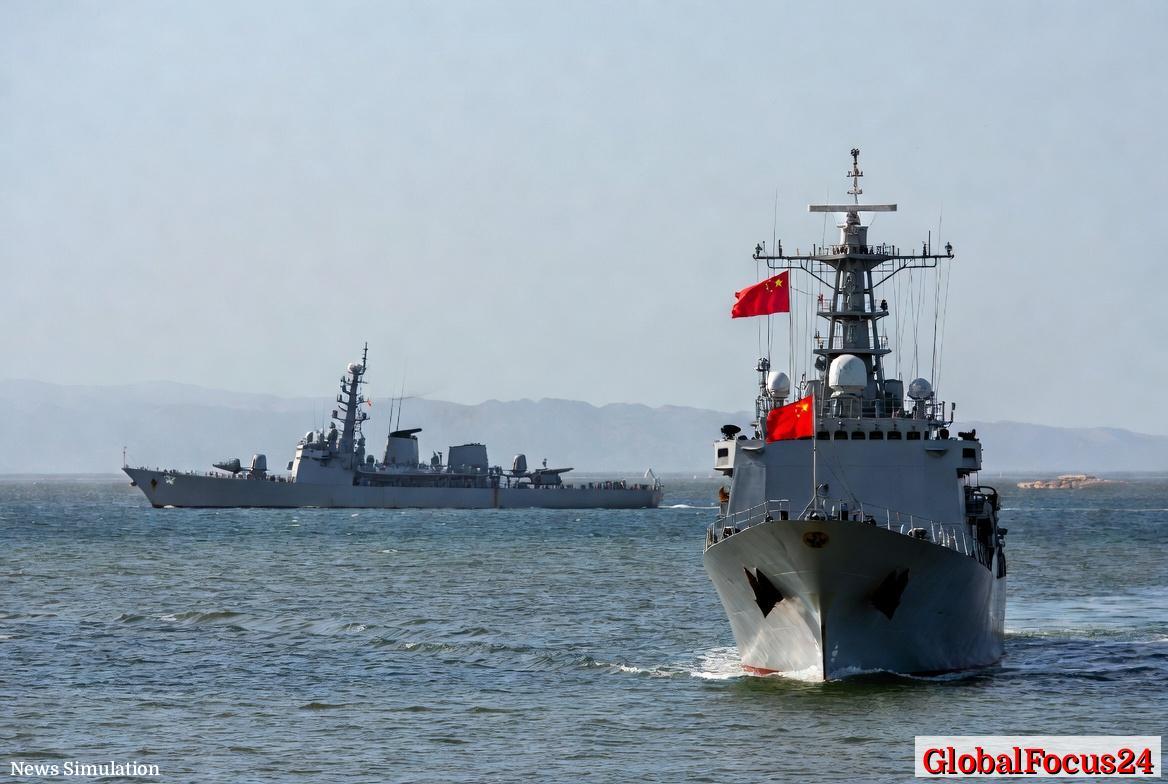
China Condemns U.S. Naval Blockade of Iranian Ports, Warning of Global Trade Disruptions
Beijing Denounces Washington’s Military Move in Strait of Hormuz
China has sharply criticized the United States’ decision to enforce a naval blockade around Iranian ports, calling the action “irresponsible and dangerous” and warning that it undermines fragile regional stability. The blockade, which came into effect Monday, marks a dramatic escalation in tensions between Washington and Tehran following the collapse of peace talks in Pakistan over the weekend.
According to the Chinese Foreign Ministry, the move threatens maritime security through the Strait of Hormuz — a narrow passage critical to global oil shipments — and could further destabilize the Middle East. “This action jeopardizes the hard-won ceasefire and endangers international trade and energy markets,” Foreign Ministry spokesman Guo Jiakun told reporters in Beijing. He called on both sides to renew dialogue and restore normal maritime operations.
The U.S. measure, announced by President Donald Trump, is aimed at pressuring Iran to abandon its nuclear ambitions and reopen the strait, which Tehran had closed in retaliation for U.S.-Israeli airstrikes. Iran’s ambassador to the United Nations described the blockade as a “grave violation” of Iranian sovereignty, accusing Washington of economic aggression.
The Strait of Hormuz: A Historical Flashpoint
Often described as the world’s most strategic oil chokepoint, the Strait of Hormuz connects the Persian Gulf to global markets and handles roughly one-fifth of the world’s seaborne petroleum. Historically, disruptions in the strait have sent shockwaves through energy markets and triggered geopolitical crises.
In the late 1970s and 1980s, the region saw repeated confrontations during the Iran-Iraq War, when tankers and merchant ships came under fire from both sides. The “Tanker War” period forced Western nations to increase their naval presence in the region, leading to decades of uneasy military balance.
Today’s blockade evokes memories of those turbulent years. Analysts say any extended interruption of shipping through the strait could have sweeping effects, not just for Iran but for major oil-importing nations including China, Japan, South Korea, and India.
Economic Fallout for China and the Global Market
China, currently the largest buyer of Iranian oil, faces immediate economic risks from the blockade. Beijing depends on Persian Gulf energy supplies to power its manufacturing and industrial base. A prolonged disruption would likely force Chinese state-owned energy firms to diversify rapidly toward African and Russian suppliers, raising overall import costs.
Economists in Shanghai and Singapore warn that if Iranian oil exports remain trapped for weeks, oil prices could surge past recent highs despite Tuesday’s brief dip below $100 per barrel. That volatility, they say, would undermine global recovery efforts and could slow manufacturing output across Asia.
“China’s energy security is directly linked to free navigation through the Strait of Hormuz,” said energy analyst Liang Shuhong. “Any military confrontation in that corridor threatens the lifeblood of industrial economies worldwide.”
Guo Jiakun rejected speculation that China might respond by supplying advanced air defense systems to Iran, calling reports of such plans “completely fabricated.” He added that further escalation — especially involving trade sanctions — would prompt a “firm and proportional” response from Beijing. His remarks appeared to be a warning to Washington amid rumors of new tariffs targeting Chinese exports if the confrontation deepens.
U.S. Strategy and Intentions
President Trump has characterized the blockade as a defensive measure aimed at forcing Iran to comply with international nuclear restrictions and cease destabilizing regional actions. The administration insists it is not seeking armed confrontation but rather intends to choke off Iran’s revenue until Tehran agrees to reopen the strait.
Vice President JD Vance described Iran’s closure of the Strait of Hormuz as “economic terrorism” and defended Washington’s decision to “respond in kind.” American officials argue that by blocking Iranian vessels, the U.S. is applying economic pressure equivalent to Iran’s own blockade of regional shipping lanes.
The Pentagon confirmed that several aircraft carrier strike groups are stationed in proximity to Iranian waters to enforce the blockade. Naval experts say the operation represents one of the largest coordinated deployments in the region since the early 2000s, reflecting how swiftly the U.S. has shifted from diplomacy to deterrence in its dealings with Tehran.
Fragile Ceasefire Under Threat
A ceasefire between the United States and Iran, brokered just two weeks earlier, is now visibly fraying. That truce was intended to prevent further military strikes following weeks of cross-border tension and drone attacks. However, with Washington’s new maritime restrictions and Tehran’s retaliatory rhetoric, diplomats fear the agreement may collapse entirely.
“The ceasefire was never stable,” said a regional envoy involved in mediating talks. “Once the strait became a bargaining chip, the risk of renewed hostilities increased sharply.”
Guo Jiakun urged both sides to “recommit to peace, avoid provocation, and resume negotiations.” He warned that continued clashes in the strait could drag neighboring Gulf nations into the dispute, upsetting the broader balance of security across the Middle East.
Global Shipping and Trade Concerns
Beyond oil markets, international shipping companies are bracing for delays and higher insurance premiums on vessels rerouted around the Arabian Peninsula. The maritime industry experienced similar disruptions in past regional flare-ups, where tensions led to reduced cargo volumes and slower delivery times for essential commodities.
Singapore-based Atlas Shipping Lines confirmed that several container ships destined for Persian Gulf ports were forced to seek alternative routes, extending travel times by several days. “This blockade creates immediate logistical uncertainty,” said a company spokesperson. “Every additional day at sea translates to higher costs and slower delivery schedules.”
Experts note that prolonged military enforcement could also impede humanitarian shipments to Iranian civilians, aggravating shortages in essential goods and medicines. Previous sanctions campaigns against Iran demonstrated how quickly economic isolation can translate into domestic strain.
Regional Comparisons: Lessons from Past Maritime Disputes
The Horn of Africa and the South China Sea have seen similar maritime stand-offs that disrupted trade and escalated regional tensions. In both cases, multilateral diplomacy eventually helped restore order and reopen sea lanes, though only after months of negotiation.
Observers suggest that applying those lessons to the current crisis could help defuse tensions in the Persian Gulf. Regional players such as Oman and Qatar may prove instrumental in restarting talks, given their historical role as intermediaries between Tehran and Western powers.
Meanwhile, European leaders have expressed concern that rising instability could undermine their energy diversification strategies, especially if Middle Eastern supplies become unreliable. With the war in Ukraine reshaping global energy routes, Europe remains sensitive to any shock that might stall its shift away from Russian oil and gas.
Energy Markets React to Mounting Uncertainty
Oil futures fluctuated sharply in the hours following confirmation of the blockade. Brent crude briefly fell before rebounding above $99 per barrel, as traders processed conflicting signals from Washington and Tehran. Analysts attribute Tuesday’s dip to short-term optimism about diplomatic intervention but predict renewed volatility if neither side backs down.
The International Energy Agency warned that renewed conflict in the Strait of Hormuz would “directly endanger global energy security,” urging restraint and cooperation. Financial analysts also noted that uncertainty extends beyond oil: natural gas prices, shipping insurance stocks, and supply-chain investment indices have all reacted negatively since the blockade took effect.
Call for Multilateral Diplomacy
China has made clear that it will oppose unilateral military actions and encourage a return to multilateral negotiation. Foreign Ministry spokesman Guo Jiakun reiterated Beijing’s support for a collective diplomatic process aimed at securing a comprehensive ceasefire. “Only through dialogue can regional stability and global trade be preserved,” he said.
So far, efforts to convene a new round of peace talks have stalled, with neither Washington nor Tehran signaling readiness to compromise. Beijing’s appeal underscores the growing sense of urgency across world capitals as the ramifications of the blockade ripple through financial and energy markets.
Outlook: A Region on the Edge
The confrontation over the Strait of Hormuz encapsulates the fragile intersection of energy, sovereignty, and global security. What began as a dispute over nuclear policy has evolved into a test of navigation rights — one that threatens to drag the world’s major economies into a cycle of retaliation.
As oil tankers idle offshore and diplomatic channels narrow, the international community watches warily for signs of de-escalation. Whether the blockade proves a short-lived show of force or the start of a sustained embargo could determine not only the future of U.S.–Iran relations but also the stability of the global energy market in months to come.
For now, Beijing’s warning serves as a reminder: actions at sea seldom remain contained to their shores.