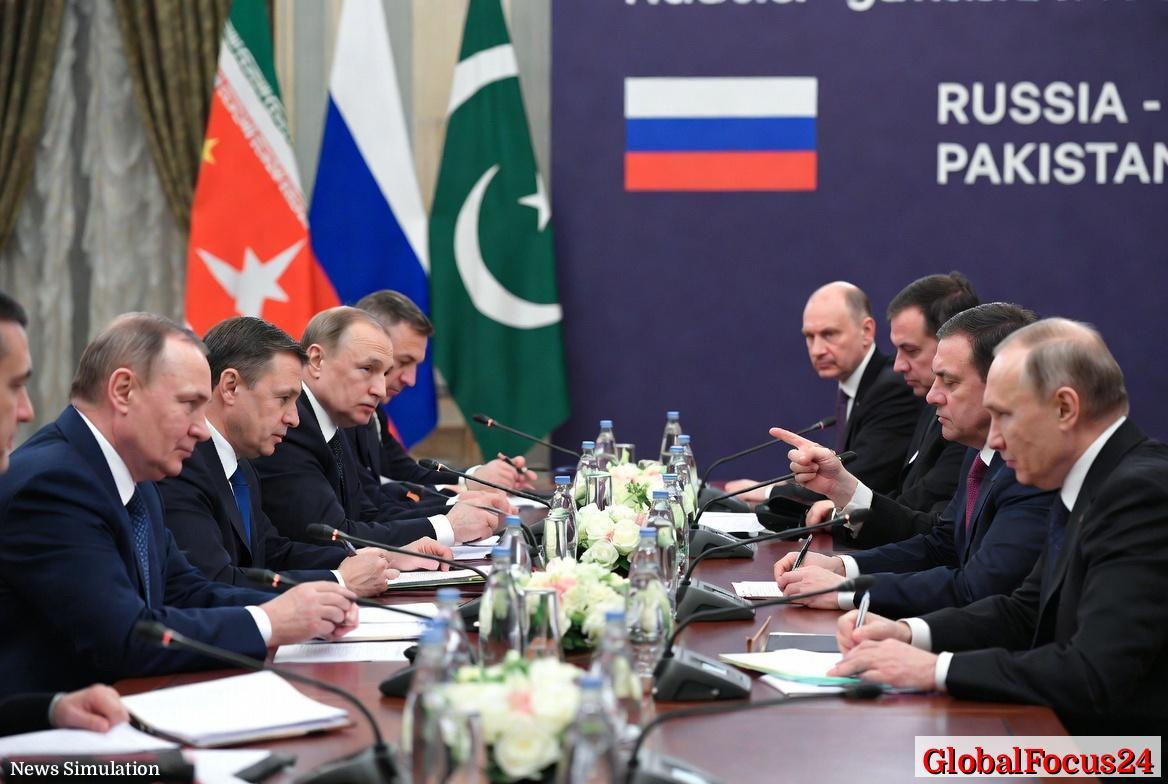
Russia Urges U.S. and Iran to Keep Talking in Pakistan as Regional Tensions Rise
Russia has called on the United States and Iran to continue negotiations in Pakistan, reinforcing a fragile diplomatic opening at a moment when Middle East tensions remain high and the economic stakes are widening. The appeal comes as Islamabad again emerges as a possible venue for indirect or direct engagement between Washington and Tehran, with regional governments watching closely for any sign that talks can prevent a broader crisis.
Pakistan’s Role as an Intermediary
Pakistan has become an important diplomatic channel in the latest effort to keep U.S.-Iran negotiations alive. Reports indicate that both sides have been weighing a second round of talks in Islamabad after an earlier session in the Pakistani capital drew international attention for its length and the seriousness of the issues under discussion. Pakistan’s willingness to host the dialogue reflects its long-standing position as a bridge between competing regional interests, even when the political atmosphere around it is unsettled.
That intermediary role is not new. Pakistan has often been drawn into mediation efforts because of its geographic location, its ties with Gulf states, its relationship with China, and its need to balance security concerns along its western frontier. In moments of crisis, that combination can make Islamabad one of the few places where adversaries are willing to meet, even if only indirectly. The latest talks underscore how diplomacy in South Asia can quickly become intertwined with security and energy issues stretching from the Persian Gulf to the Indian Ocean.
Russia’s Diplomatic Message
Russia’s call for continued negotiations fits a broader pattern of international powers encouraging dialogue rather than escalation. Moscow’s position is significant because it signals support for a diplomatic track at a time when military tensions and economic disruption have made the cost of failure much higher. The appeal is also consistent with the view that a negotiated process is the most realistic path to easing pressure across the region.
The timing matters. The talks are unfolding amid a fragile ceasefire that has created only a narrow window for diplomacy, with analysts warning that the opportunity could close quickly if negotiations stall. Russia’s message, then, is less about ceremony than about urgency: keep the channel open before battlefield dynamics, sanctions pressure, or maritime risks make compromise even harder.
Why These Talks Matter
The U.S.-Iran relationship has been shaped for decades by distrust, sanctions, nuclear disputes, and regional proxy conflicts. That long history helps explain why even modest diplomatic progress attracts close attention. When negotiations resume after breakdowns, observers often see them not as a final breakthrough but as a test of whether the two sides still believe agreements are possible.
The current round of talks is especially important because it comes at a moment when regional conflict has already imposed heavy human and strategic costs. The broader confrontation has raised alarm across the Middle East and beyond, particularly because maritime routes near the Strait of Hormuz remain vulnerable to disruption. Any interruption in that corridor can quickly affect energy markets, shipping costs, insurance rates, and supply chains reaching Europe and Asia.
Historically, periods of U.S.-Iran dialogue have tended to emerge after moments of sharp tension. The pattern is familiar: confrontation hardens positions, third-party mediators create a narrow opening, and both sides seek a face-saving way to test compromise. Pakistan’s current involvement places it in the same tradition of shuttle diplomacy that has often been used when direct engagement is politically difficult.
Economic Stakes Across the Region
The economic implications of U.S.-Iran negotiations extend well beyond the two countries. Oil markets, freight routes, and insurance premiums can all react quickly to news of escalation or de-escalation. Even the perception that the Strait of Hormuz may become unstable can ripple through global energy pricing and raise costs for import-dependent economies in Asia and Europe.
For Pakistan, the diplomatic role carries both risk and opportunity. Hosting talks can raise its profile as a regional mediator, but it also places the country closer to the center of a crisis that could affect trade and security. Pakistan’s own economy remains sensitive to external shocks, including higher fuel prices and reduced stability in nearby markets. A successful diplomatic process would likely ease some of that pressure, while a collapse could deepen uncertainty across South Asia.
The broader region also has reasons to prefer restraint. Gulf states depend heavily on open shipping lanes, and many Asian economies rely on steady energy flows from the Middle East. In that sense, negotiations in Pakistan are not just a bilateral affair. They are part of a wider effort to protect regional commerce from the consequences of military escalation.
Regional Comparisons With Other Mediation Efforts
Pakistan’s current role can be compared with other mediation hubs in the region. Oman has long been known for quiet diplomacy and indirect U.S.-Iran contacts, while Qatar has frequently served as a channel in hostage, ceasefire, and conflict-resolution talks. Pakistan differs because of its proximity to several security flashpoints and its deeper exposure to the strategic competition unfolding between Gulf states, Iran, and global powers.
Compared with those other venues, Islamabad brings a stronger South Asian dimension to the process. That matters because instability in the Gulf does not remain confined there; it affects Pakistan through trade routes, migrant labor markets, and energy dependence. It also matters because Pakistan’s own foreign policy has to account for relationships with the United States, China, Saudi Arabia, and Iran at the same time. Few countries have that many overlapping interests, and fewer still can host talks under such pressure.
Historical Context And Diplomatic Pattern
The U.S. and Iran have spent much of the past several decades in a cycle of confrontation punctuated by intermittent talks. That history includes nuclear negotiations, sanctions disputes, maritime incidents, and recurring accusations over regional influence. Each phase has made the next round of diplomacy more difficult, while also increasing the importance of third-party mediation when direct communication becomes politically sensitive.
Pakistan’s involvement fits this pattern of cautious, often back-channel diplomacy. In high-stakes negotiations, the venue can matter almost as much as the agenda. A neutral or trusted location can reduce the symbolic burden of meeting, lower the political cost of engagement, and give both sides room to explore limited agreements without committing to a full reset. That is why even partial progress in Islamabad would be watched closely by governments and markets alike.
At the same time, history also counsels restraint in expectations. Diplomatic openings in the region have often been narrow, fragile, and vulnerable to outside shocks. The latest effort may prove no different. Still, even short-lived talks can be valuable if they prevent miscalculation, delay escalation, or clarify where compromise might begin.
What Comes Next
The immediate question is whether both sides will agree to keep the Islamabad channel open. Reports suggest that a second round of talks has been under consideration, though the outcome remains uncertain. The fact that multiple intermediaries are still active indicates that neither Washington nor Tehran has fully abandoned the diplomatic track.
For now, Pakistan remains at the center of an unusually delicate effort to keep dialogue alive. Russia’s public encouragement adds another layer of international pressure in favor of negotiation. Whether that pressure is enough to produce concrete progress will depend on how much room remains for compromise on security concerns, regional influence, and the terms of any longer-term understanding.
What is clear is that the stakes are larger than a single meeting. A successful round of talks could help calm markets, reduce military risk, and ease pressure on a region already burdened by conflict. A failure could do the opposite, hardening positions and making the next diplomatic opening even harder to find.