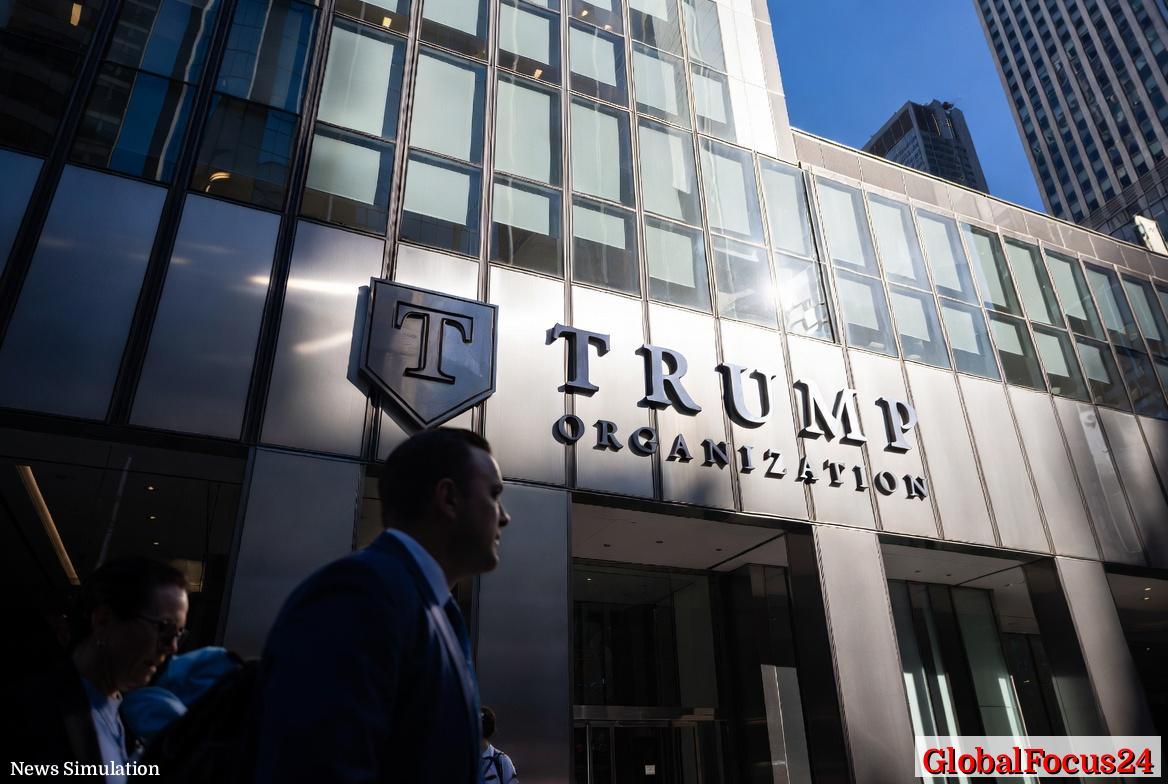
World Liberty Financial fallout: WLFI token controversy tests crypto investors and project governance
Historical backdrop and rapid rise World Liberty Financial emerged in a crowded crypto landscape as a high-profile attempt to blend digital assets with a political-financial storyline. The project attracted attention not only for its token economics but also for its association with prominent political figures and networks. In late 2024, the project launched a token sale aimed at broad participation, with an ambitious target and an explicit roadmap to governance-driven token utility. The initial fundraising drive faced skepticism typical of early-stage token ventures, but a late surge in investor interest helped push total sales beyond a revised target. By the end of 2024, World Liberty Financial had become a case study in how political branding can intersect with crypto markets, fundraising dynamics, and governance design.
Key players and roles Central to the narrative are Justin Sun, a well-known crypto entrepreneur with a history of high-profile investments and strategic moves in the crypto space, and the leadership team behind World Liberty Financial. The Trump family’s digital asset venture also figures prominently in this story, given the strategic alliances, endorsements, and financial arrangements that shaped WLFI’s market activity. Liabilities and incentives within these relationships have seeded a complex web of governance decisions, token unlocks, and collateralization that investors and observers continue to dissect.
Token unlocks and liquidity dynamics A pivotal moment occurred in September, when WLFI token unlocks unlocked 20% of the total token supply for trading. This move generated significant realized or paper gains for certain participants, including parties closely associated with the project’s backers. Yet, a substantial portion of the holder base—retail and institutional alike—faced a contrasting reality: a large portion of WLFI tokens remained locked, limiting the ability to realize gains or manage risk. The tension between unlocked supply and locked holders has become a focal point in discussions about liquidity, market depth, and investor trust.
Backdoor governance and accusations of blacklisting Allegations have circulated regarding the presence of a backdoor mechanism intended to influence token transferability and trading eligibility. Claims that a hidden function could blacklist certain addresses or freeze tokens without standard due process have intensified scrutiny of WLFI’s governance framework. Supporters of the project contend that protective measures are necessary to combat malicious activity, protect the community, and maintain market integrity. Critics argue that opaque controls undermine decentralization principles and expose investors to unexpected counterparty risk.
Collateralization and liquidity risk In a notable escalation, World Liberty Financial pledged WLFI tokens as collateral to borrow more than $75 million in stablecoins from a lending platform. The loan arrangement, which involved a key figure connected to the Dolomite ecosystem, raised concerns about liquidity and withdrawal risk among users. Some participants reported partial or full difficulties in withdrawing deposited funds, fueling perceptions that the project’s capital structure could be fragile if market conditions deteriorate or collateral quality deteriorates.
Retail investor sentiment and market reaction Retail investors have voiced frustration as they watch large-scale token movements and governance-related actions unfold. A striking feature of the ongoing situation is the disparity between what is happening at the top levels of the project and the day-to-day experience of ordinary token holders. While the project has transferred billions of WLFI tokens in connection with various deals designed to create equity value, a large share of tokens remains untappable for individual investors. This mismatch has intensified calls for greater transparency, fair liquidity pathways, and robust accountability mechanisms for decision-makers.
Project responses and assurances World Liberty Financial has defended its governance approach and asserted confidence in WLFI’s long-term value. The project’s leadership has emphasized ongoing buybacks, noting that more than $65 million worth of WLFI tokens have been repurchased. A representative stated that the plan is not liquidation-oriented and that the project remains committed to its strategic roadmap. The firm has also pledged to provide additional collateral if market conditions worsen, signaling a readiness to adjust capital strategies to preserve the ecosystem’s stability.
Legal and regulatory considerations The dispute has unfolded within a broader context of regulatory scrutiny surrounding crypto tokens tied to political branding and fundraising activities. The unfolding legal dialogues between involved parties underscore the importance of clear governance, disclosure, and compliance practices in token projects that seek to blend political and financial narratives. For investors, the case highlights the need to evaluate not only token economics and potential upside but also the governance rights, dispute resolution mechanisms, and contingency plans embedded in a project’s whitepaper and smart-contract code.
Comparative regional context Looking at comparable scenarios in other regions and markets helps illuminate potential trajectories. In regions with mature crypto ecosystems, governance tokens frequently come under intense scrutiny for transparency and investor protections. Meanwhile, in markets with evolving regulatory frameworks, projects that couple political branding with token sales may face heightened calls for governance audits, independent third-party assessments, and standardized disclosure practices. The WLFI episode, in this light, serves as a case study in how governance design, investor protection, and capital management intersect in a high-profile crypto venture.
Economic impact and broader implications The WLFI story reverberates beyond one project and a single token sale. It raises important questions about the economics of token-driven fundraising in politically connected ventures, including how token unlocks affect price dynamics and market confidence. It also spotlights the potential effects of collateralized lending on token markets, particularly when large holders or affiliated entities optimize leverage against volatile assets. For the broader crypto economy, the situation underscores the ongoing need for resilient liquidity architectures, transparent governance mechanisms, and clear dispute-resolution pathways to protect retail participants while enabling strategic flexibility for project teams.
Historical context and lessons for investors Historically, crypto ventures that intertwine political branding with token sales have faced a delicate balance between narrative-driven momentum and the practical realities of trading liquidity and governance accountability. Investors who joined WLFI as early backers often did so seeking upside aligned with a broader political-economic vision. The current dispute emphasizes the importance of diversifying holdings, assessing counterparty risk, and scrutinizing the provenance of token rights—such as voting power and dividend-like distributions—within a project’s tokenomics design. These lessons remain relevant for any investor evaluating governance tokens or politically affiliated crypto opportunities in the future.
Regional comparisons and outlook
- North America: Market participants emphasize regulatory clarity and investor protections, with increasingly rigorous standards for token disclosures, governance structures, and risk disclosures. Projects rooted in political branding may face heightened scrutiny but also benefit from robust financial and legal infrastructures to support ongoing operations.
- Europe: Many jurisdictions prioritize consumer protection and market integrity, encouraging transparent treasury management and third-party audits. Governance tokens here often emphasize open-source governance processes and verifiable on-chain disclosures to quell concerns about centralized control.
- Asia-Pacific: The region shows a spectrum of approaches, from stringent regulatory regimes to more permissive environments that spur experimentation. For projects with global ambitions, aligning governance and risk controls with international standards remains a key strategic imperative.
What this means for audiences and the market For readers and market participants, the WLFI episode underscores the ongoing evolution of crypto governance and the interplay between high-profile backers, token economics, and liquidity management. The incident highlights the importance of accessible, well-documented governance frameworks and proactive communication about risk management. As markets mature, investors will increasingly seek transparent disclosures, independent audit assurances, and enforceable dispute-resolution mechanisms that safeguard participation rights and foster trust in digital asset ecosystems.
Final thoughts The ongoing dispute around WLFI tokens—spanning liquidity constraints, alleged backdoor controls, collateralized lending, and the broader governance architecture—illustrates both the opportunities and risks intrinsic to politically affiliated crypto ventures. While supporters argue that protective measures help maintain market integrity and deter malicious activity, critics emphasize the need for greater transparency and decentralization. As stakeholders continue negotiations and the legal process unfolds, observers should watch for shifts in token liquidity, governance reforms, and the project’s ability to demonstrate sustainable value creation for its community. The outcome will likely influence not only WLFI’s trajectory but also how similar ventures design governance, manage liquidity, and communicate with a broad base of investors in an increasingly interconnected digital asset ecosystem.