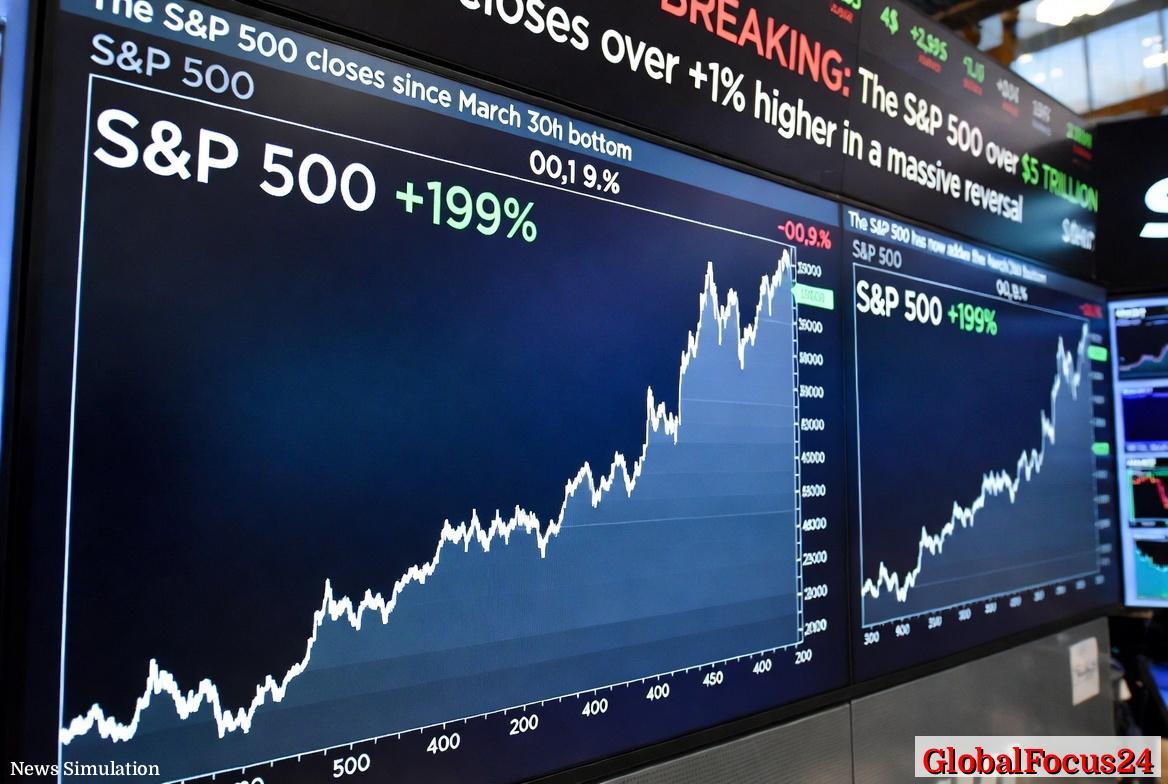
S&P 500 Rallies Over 1% to Highest Level Since Onset of Iran War, Adding $5 Trillion in Market Value Since March Low
Market Rebound Signals Renewed Investor Confidence
The S&P 500 surged more than 1 percent on Monday, closing at its highest level since the outbreak of the Iran War, a conflict that has shaken global markets since its start earlier this year. The benchmark index’s upswing marks a striking turnaround from the turbulence that defined late March, when fears of escalating geopolitical instability triggered a broad sell-off. Since hitting its low on March 30, the S&P 500 has recovered sharply, adding more than $5 trillion in market capitalization and restoring much of the confidence that had evaporated amid rising energy prices and global uncertainty.
Analysts attributed Monday’s rally to a combination of easing tensions in the Middle East, stabilizing oil prices, and unexpectedly robust corporate earnings reports that painted a more resilient picture of the U.S. economy. The recovery places the index on track for one of its strongest months since mid-2023, when markets last experienced a comparable wave of optimism following a bout of macroeconomic volatility.
Tech and Energy Lead Market Gains
Much of Monday’s momentum came from large-cap technology and energy companies, two sectors that have remained focal points in this year’s volatile trading environment. Shares of leading semiconductor manufacturers and artificial intelligence firms rebounded after several weeks of underperformance, as investors appeared to rotate back into growth-driven assets amid signs that supply disruptions tied to the conflict may be easing.
Meanwhile, the energy sector also saw strong gains as crude oil prices stabilized after their steep rise earlier in the year. Major oil producers were buoyed by reports that diplomatic progress could lead to more predictable supply conditions, reducing the risk of further price shocks. The combined uptick helped push the broader market to its strongest close in weeks, while the tech-heavy Nasdaq Composite also gained more than 1 percent and the Dow Jones Industrial Average rose by nearly 350 points.
Historical Context Amid Market Uncertainty
The rally carries echoes of previous market recoveries during geopolitical crises. In the early 1990s, for instance, the U.S. stock market staged a similar rebound following the first Gulf War, as military events reached a turning point and investor fears began to recede. Likewise, during other major conflict-driven downturns — such as the 2003 invasion of Iraq or the 2014 oil price collapse amid Middle East instability — markets tended to reprice rapidly once the strategic and economic implications became clearer.
However, while the current rebound has been broad, some analysts caution that the war’s long-term implications for global trade, commodity flows, and inflationary pressures remain uncertain. The initial market damage from the Iran conflict was severe, with defense and energy stocks surging but sectors exposed to global supply chains — such as manufacturing, autos, and technology hardware — suffering steep declines in the prior weeks.
Economic Resilience Underpins Optimism
The latest rebound underscores the underlying strength of the U.S. economy, which has thus far proven remarkably resilient despite global headwinds. Data released earlier this month showed continued job growth, steady consumer spending, and sustained expansion in the services sector — factors that have helped cushion the blow from higher energy costs and ongoing disruptions in global freight routes. The Federal Reserve’s latest statements suggested that policymakers remain attentive to inflation risks but see little sign of an imminent slowdown in economic activity.
Economists noted that this combination of stable fundamentals and moderating inflation expectations has given investors renewed confidence that corporate earnings will remain robust through the second quarter. The market’s collective repricing of risk has been swift, as investors shift focus from geopolitical concerns to the prospect of continued economic momentum at home.
Global Comparisons Highlight U.S. Market Strength
While U.S. equities have rebounded strongly, markets in Europe and Asia have shown a more mixed trajectory. The Euro Stoxx 50 index rose modestly in Monday trading, held back by lingering concerns about energy imports and uneven industrial demand across the continent. In Asia, benchmark indices in Japan and South Korea remained steady, but Chinese equities continued to struggle under the weight of slower domestic consumption and ongoing export restrictions tied to regional tensions.
This divergence underscores how the U.S. market has maintained its leadership position among global equities, bolstered by deep capital markets, investor diversification, and continued foreign inflows. Analysts point out that while geopolitical risks remain high, the dollar’s relative stability and the strength of the U.S. corporate sector have reinforced the perception that American equities may continue to outperform their global peers in the near term.
Investor Sentiment Turns Amid Improved Outlook
The swift turn in sentiment stands in contrast to the anxiety that dominated trading just two weeks ago. On March 30, the S&P 500 hit its lowest point of the year, capping an 8 percent correction that erased hundreds of billions in shareholder value. At the time, investors fled to safe-haven assets such as U.S. Treasury bonds and gold amid fears that the conflict could destabilize global oil markets and reignite inflation.
That narrative began to shift in early April, as both diplomatic channels and coordinated efforts by key oil-producing nations signaled a tentative path toward de-escalation. As crude oil retreated from its mid-March highs, market volatility subsided, allowing portfolio managers to selectively re-enter equities, particularly in technology, health care, and financial sectors that had been oversold. The swift market recovery reflects both this shift in macroeconomic perception and renewed appetite for growth-oriented investments in anticipation of stable interest rates later this year.
Energy, Inflation, and the Fed’s Balancing Act
Energy prices remain a critical variable for markets, even as short-term supply fears ease. West Texas Intermediate crude fell back below $85 per barrel, offering some relief to consumers and industries hard hit by recent spikes. Economists warn, however, that the macroeconomic ripple effects of the Iran War could still take months to fully play out, particularly if future energy disruptions or sanctions alter global commodity patterns.
The Federal Reserve faces its own delicate challenge: ensuring that inflation stays on a downward path without undermining the recovery. Market participants widely expect the central bank to maintain its cautious stance, keeping interest rates steady through midyear before considering potential adjustments later in the fall. Fed officials have reiterated their commitment to price stability while acknowledging that external shocks — particularly those linked to the conflict — could complicate their timeline.
Corporate Earnings Season Provides Tailwind
Adding to investor optimism, early earnings reports from major U.S. firms have surpassed expectations, suggesting that corporate America remains well-positioned despite international volatility. Strong results from leading banks, consumer technology firms, and industrial manufacturers have reinforced the view that domestic demand continues to provide a solid foundation for growth.
Strategists note that companies which adapted early to supply chain realignments and energy market volatility have proved the most resilient. Businesses with significant cash reserves and flexible sourcing strategies have been able to shield profit margins even as input costs fluctuated. This dynamic has reassured investors that the broader economy possesses the flexibility to absorb further external shocks should they occur.
Looking Ahead: Markets Navigate a Fragile Recovery
While Monday’s rally represents a significant milestone, it also highlights the precarious balance now facing global investors. The Iran War remains an unpredictable element, with the potential to reshape trade routes, currency dynamics, and defense spending priorities across multiple regions. Market volatility could resurface quickly if tensions escalate or diplomatic progress stalls.
Still, many analysts see reasons for cautious optimism heading into the second half of the year. As corporate earnings hold steady, inflation gradually eases, and supply conditions stabilize, the U.S. economy appears better positioned than many expected just weeks ago. If current trends endure, the S&P 500’s latest surge may mark not just a short-term rebound, but the early stages of a broader recovery that reaffirms the U.S. market’s role as a global anchor of stability.
Investor Outlook: From Fear to Vigilance
The return of risk appetite reflects more than just relief over recent developments; it underscores the adaptability of investors in navigating complex global conditions. Portfolio managers remain vigilant, rebalancing allocations toward sectors that can weather volatility while maintaining exposure to long-term growth opportunities. For many, the rally serves as a reminder that geopolitical crises, while disruptive, rarely derail the long-term trajectory of capital markets built on innovation, productivity, and consumer resilience.
As of Monday’s close, the S&P 500’s surge represents more than a statistical recovery — it’s a testament to the underlying faith investors continue to place in the U.S. economy’s capacity to endure shocks and emerge stronger. While challenges ahead remain formidable, the latest turn in the market suggests that resilience, once again, may prove to be its most powerful asset.