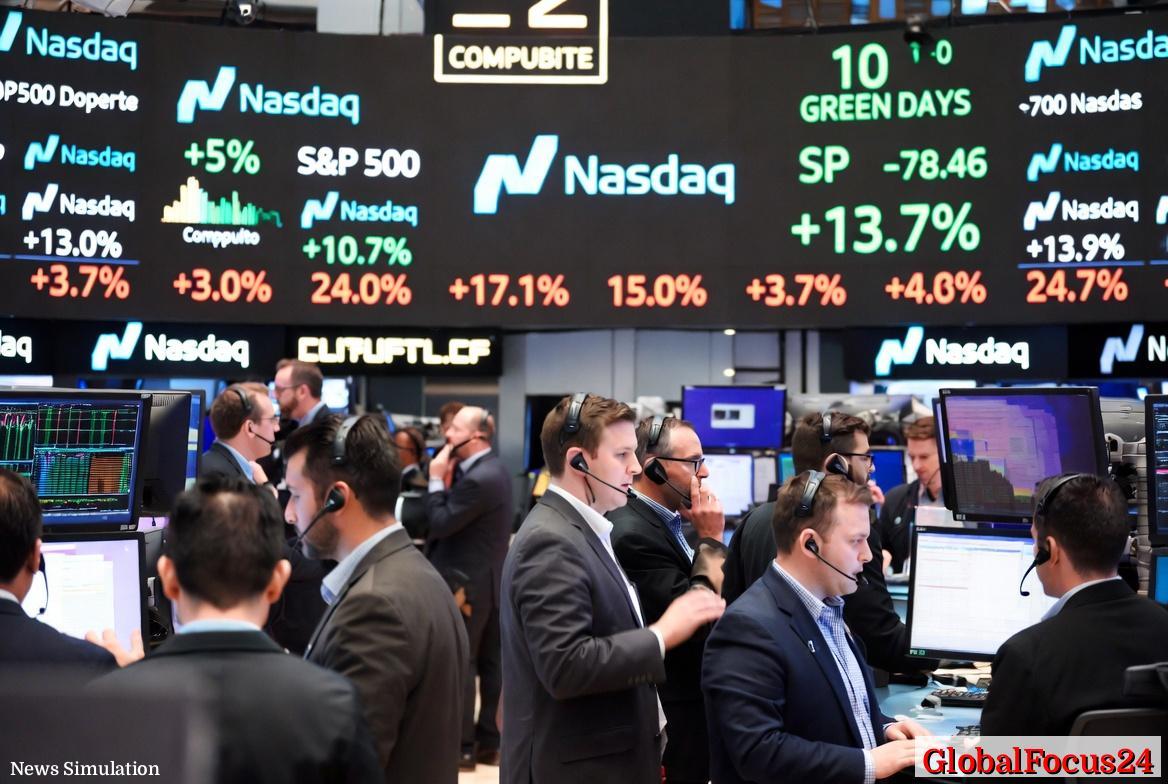
Nasdaq Composite Hits Historic 10-Day Winning Streak Amid Strong Market Recovery
The Nasdaq Composite has notched its longest winning streak in nearly five years, closing higher for 10 straight trading sessions as of April 14, 2026. This remarkable run has propelled the tech-heavy index up 13.7 percent over the period, marking one of the most powerful recoveries in recent market history.
In a market that had grappled with volatility just weeks earlier, this surge signals renewed investor confidence and a pivot toward growth-oriented assets. The streak, the longest since November 2021, underscores the resilience of U.S. equities amid evolving economic signals.
Nasdaq's 10-Day Rally: A Milestone in Modern Market History
The Nasdaq Composite's achievement stands out in the annals of stock market performance. Prior to this run, the index last saw a 10-day winning streak during the post-pandemic boom of late 2021, when optimism around vaccine rollouts and stimulus measures fueled a broad rally. That period saw the Nasdaq climb as technology stocks rebounded from pandemic lows, much like the current momentum driven by cooling inflation data and de-escalating geopolitical risks.
Going further back, the third-largest 13.7 percent gain over a similar 10-day span since 2009 places this rally in elite company. The 2009 recovery followed the global financial crisis, when central bank interventions and fiscal stimulus ignited a multi-year bull market. More recently, 2022's volatile environment tested investor patience, but shorter bursts of gains paled in comparison to today's sustained climb. If the streak extends to 11 sessions, it would eclipse all runs since 2019, potentially rivaling the momentum of pre-pandemic highs.
This isn't just a numerical feat; it's a reflection of shifting market dynamics. The index closed at 23,639.08 on April 14, having started the rally on April 1 amid news of potential peace talks in the Middle East. What began as a relief bounce has evolved into a full-fledged momentum play, with daily gains averaging over 1.3 percent.
S&P 500 Joins the Surge with Steady Gains
The broader market has kept pace, as the S&P 500 posted gains in nine of the past 10 sessions, contributing to one of the strongest collective recoveries this century. This broad-based strength across major indices highlights a synchronized upswing, with the S&P 500 touching 6,886.24 recently after climbing above key technical levels like its 200-day moving average.
Unlike the Nasdaq's tech-dominated rally, the S&P 500's performance draws from diverse sectors, including financials buoyed by solid bank earnings and cyclicals benefiting from economic expansion forecasts. Analysts note that earnings per share growth projections of 12 percent for 2026 provide a sturdy foundation, even as valuations remain elevated. This rally pauses only briefly amid lingering uncertainties, but the nine-out-of-10 win rate mirrors the Nasdaq's tenacity.
Economic Catalysts Fueling the Nasdaq Rally
Several factors have converged to power this Nasdaq winning streak. Cooler-than-expected inflation readings have eased pressures on the Federal Reserve, allowing markets to price in potential rate stability or even cuts later in 2026. Coupled with de-escalating tensions—such as U.S.-Iran hostilities cooling and diplomatic overtures in Pakistan—these developments have lifted the "war discount" that weighed on equities in March.
Artificial intelligence remains a cornerstone narrative, with AI adoption expected to boost productivity and corporate earnings across the board. Healthy GDP growth forecasts, corporate re-leveraging, and a resurgence in IPOs and dealmaking further underpin the rally. Mid-cycle acceleration in cyclical sectors, tied to middle-income consumers and non-residential construction, adds breadth to the recovery.
The economic impact ripples beyond Wall Street. A surging Nasdaq lifts retirement portfolios, bolsters consumer confidence, and supports job growth in tech hubs like Silicon Valley. With U.S. stocks projected for a fourth straight year of gains, this momentum could enhance household wealth effects, spurring spending and investment nationwide.
Historical Context: Recoveries That Shaped Markets
To grasp the significance of the current Nasdaq 10-day streak, consider past benchmarks. The 2021 streak came amid a post-COVID rebound, where the index gained over 20 percent in months as remote work and digital transformation accelerated. Earlier, the 2009 rally—post-financial crisis—saw the Nasdaq surge as quantitative easing flooded markets with liquidity, laying groundwork for a decade-long expansion.
Comparisons to 1999 are apt too, during the dot-com bubble's peak, when tech euphoria drove 10-day streaks amid internet stock mania. Yet today's environment differs: valuations, while stretched, are supported by tangible AI-driven revenue growth rather than speculation alone. The 13.7 percent gain ranks as the largest since 2022's bear market lows and third since 2009, outpacing many historical counterparts in speed and scale.
This recovery echoes global patterns post-2009 recession, where swift rebounds followed aggressive policy responses. Emerging markets like those in Asia grew robustly—over 50 percent in some regions—while North America lagged initially but caught up through innovation-led gains. The Nasdaq's current path suggests a similar trajectory, blending policy tailwinds with sector-specific catalysts.
Regional Comparisons Highlight U.S. Market Strength
While U.S. indices like the Nasdaq Composite shine, regional peers offer context. Europe's markets have trailed, with GDP growth averaging under 10 percent since 2009 amid structural challenges and slower recoveries. Eastern Europe faced sharper contractions before rebounding modestly, underscoring the U.S.'s relative stability.
Asia, conversely, has been a growth engine. Excluding powerhouses like China and the Asian Tigers (Hong Kong, Singapore, South Korea, Taiwan), the region posted 52.87 percent GDP expansion since 2009, fueled by exports and manufacturing. China alone grew 65 percent from 2008 to 2014, pulling commodity suppliers in Africa, Latin America, and Australia along. Japan's inclusion in the Tigers group tempers some figures, but continuous growth without deep recession scars highlights resilience.
North America's 20 percent-plus growth since 2009 positions it solidly, though behind Asia's pace. The Nasdaq's rally amplifies this, as U.S. tech dominance contrasts with Europe's caution and Asia's manufacturing focus. Investors globally eye this streak for cues, with cross-border flows potentially amplifying U.S. gains.
Broader Economic Impacts of the Market Rally
The Nasdaq's 10-day winning streak carries weighty economic implications. Wealth effects from rising equities could add hundreds of billions to consumer spending power, stimulating retail, housing, and services sectors. Pension funds and 401(k)s benefit directly, enhancing retirement security for millions.
Corporate America stands to gain too. With leverage rising from low levels, firms are poised for buybacks, dividends, and expansions—prioritizing strong free cash flow generators. AI investment, even as capex growth moderates, promises productivity lifts, echoing post-2009 EMDE rebounds where output surpassed pre-crisis peaks by 2010.
Regionally, tech-heavy states like California feel the pulse most acutely. Job creation in AI, semiconductors, and software surges, while venture capital flows rebound. Nationally, this rally offsets earlier war-related drags, stabilizing supply chains disrupted by Middle East tensions.
Public reaction has been electric, with social media buzzing over "Nasdaq streak" milestones and retail investors piling in via apps. Short-sellers, caught off-guard, face mounting losses, recalibrating strategies amid the momentum.
What Lies Ahead for Nasdaq and S&P 500
Sustaining the streak won't come easy. An 11th consecutive gain would mark the longest since 2019, testing technical levels and investor stamina. Upcoming bank earnings and inflation data loom large, with any hawkish Fed signals potentially capping upside.
Yet fundamentals align favorably. Double-digit EPS growth, AI tailwinds, and easing monetary policy forecast a 12 percent S&P 500 return for 2026, building on 18 percent last year and 25 percent in 2024. The Nasdaq, with its growth bias, could outperform if tech innovation accelerates.
Investors watch closely as this historic rally unfolds, a testament to markets' capacity for swift turnarounds. From March lows to April highs, the Nasdaq Composite exemplifies recovery's power, blending historical echoes with forward momentum.
This surge not only rewrites recent records but reinforces U.S. equities' global leadership. As sessions tick by, the streak's legacy—whether 10 days or beyond—will shape narratives for months to come.
(Word count: 1,248)