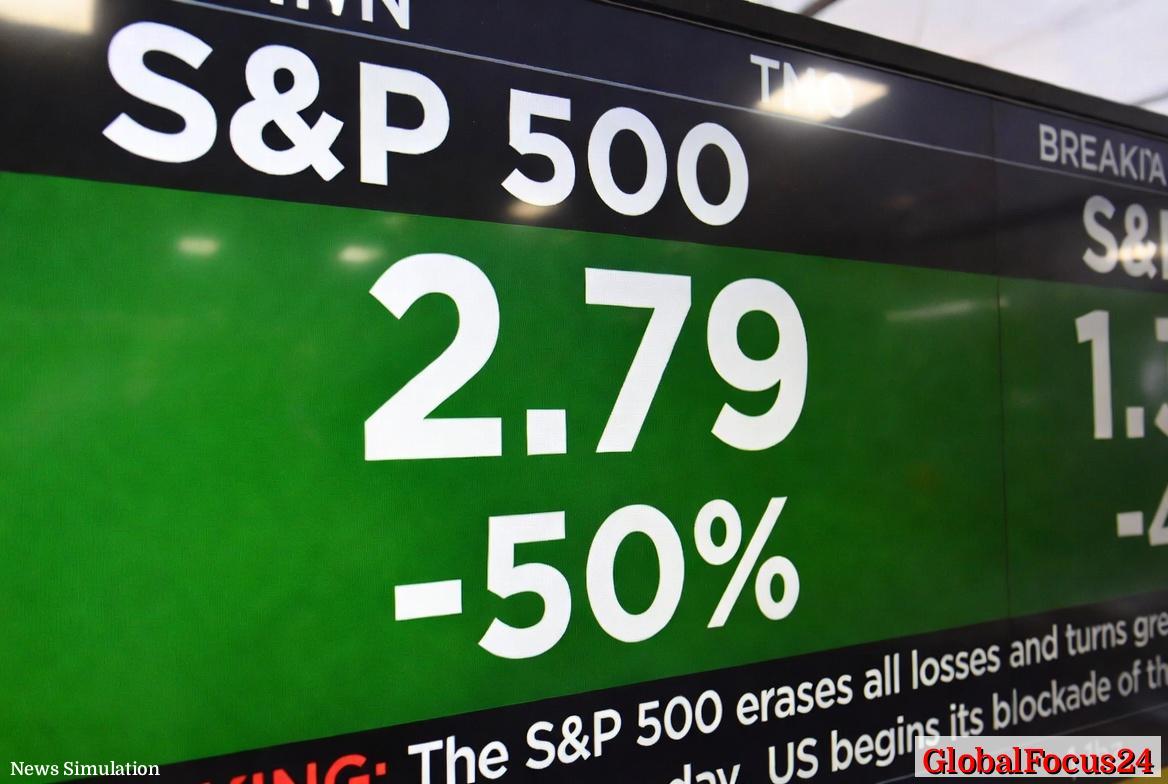
S&P 500 Turns Positive as U.S. Enforces Naval Blockade in Strait of Hormuz
The U.S. stock market showed surprising resilience on Monday after Washington began enforcing a naval blockade restricting maritime traffic to and from Iranian ports in the Strait of Hormuz — one of the world’s most critical oil chokepoints. The benchmark S&P 500 erased earlier losses and closed in positive territory, signaling investor confidence despite escalating tensions in the Persian Gulf.
U.S. Naval Blockade Begins in the Strait of Hormuz
The blockade took effect at 10 a.m. Eastern Time, marking a significant escalation in U.S. maritime enforcement operations in the region. According to defense officials, the restrictions apply to vessels entering or leaving Iranian ports along the Arabian Gulf and the Gulf of Oman. Ships traveling through the Strait to and from non-Iranian destinations are permitted to proceed under “freedom of navigation” rules.
The U.S. Navy’s Fifth Fleet, based in Bahrain, is coordinating the enforcement operation with allied navies to monitor all traffic through the approximately 21-mile-wide waterway. The Strait of Hormuz handles roughly one-fifth of global petroleum consumption, making it one of the most strategically sensitive maritime corridors in the world. Any disruption can ripple rapidly through global energy markets.
While details remain limited, the U.S. Department of Defense emphasized that the blockade is intended to “preserve international stability” and ensure that Iranian exports do not violate ongoing sanctions. Analysts note that the decision follows months of heightened security alerts after reports of harassment of commercial tankers and drone strikes near the Gulf region.
Market Reaction: From Early Shock to Measured Confidence
Equity markets initially opened lower on the news, with the S&P 500 dropping more than 0.6% in early trading. Energy companies surged as oil prices spiked, offsetting broader market weakness. By midday, however, investor sentiment shifted. The index erased intraday losses and turned positive, closing modestly higher as traders assessed the potential long-term consequences.
The Dow Jones Industrial Average and Nasdaq Composite also rebounded from morning sell-offs. Energy and defense stocks led gains, while transportation, technology, and industrial shares saw modest recoveries. Crude oil prices climbed over 4% in intraday trading before retreating slightly in the afternoon, reflecting investors’ uncertainty over whether shipping disruptions could severely constrain global supply.
Market analysts attributed the late-session rally to a combination of algorithmic buy programs, resilient corporate earnings outlooks, and the perception that the U.S. government’s swift military mobilization reduced the likelihood of a prolonged conflict. Treasury yields dipped slightly as traders sought safety in government bonds, while the dollar strengthened against major currencies on safe-haven inflows.
Global Oil Markets Brace for Supply Disruptions
The Strait of Hormuz is the world’s busiest oil transit chokepoint, with daily shipments accounting for about 30% of all seaborne-traded crude. Even minor interruptions can trigger significant price volatility. Monday’s blockade announcement immediately drew attention from oil-importing nations across Asia and Europe, many of which depend heavily on Gulf producers.
Brent crude futures briefly traded above $100 per barrel, the highest level since early 2025, before settling around $97. West Texas Intermediate, the U.S. benchmark, hovered near $94. Energy traders said the market was reacting to both physical supply concerns and speculative positioning, as refiners and commodity funds rushed to hedge exposure.
The International Energy Agency (IEA) issued a statement calling for restraint and coordination among maritime powers to safeguard commercial transit lanes. “The global energy economy relies on freedom of navigation,” the agency said, warning that interruptions to tanker routes could “reverberate across supply chains from fuel refining to industrial manufacturing.”
Historical Context: A Flashpoint of Geopolitical Risk
The Strait of Hormuz has long been a focal point of geopolitical tension. During the 1980s “Tanker War,” conflict between Iran and Iraq led to targeted attacks on commercial vessels, prompting U.S. naval escorts under Operation Earnest Will. Periodic confrontations have erupted since, including incidents involving the seizure of foreign tankers and drone reconnaissance operations.
What makes the current situation different, analysts say, is its timing within a global energy landscape already adjusting to reduced Middle Eastern exports and expanding North American production. The U.S. has emerged as the world’s largest oil producer, with energy exports playing a growing role in economic stability and diplomatic leverage. Nevertheless, any instability in Hormuz threatens not only crude markets but also global shipping routes for liquefied natural gas (LNG), petrochemicals, and fertilizers.
Regional observers in the Gulf state that shipping insurers have moved swiftly to raise premiums for tankers transiting near Iranian waters. Historically, wartime surcharges have added millions of dollars to each voyage’s cost, feeding into higher consumer energy prices worldwide.
Economic Ripple Effects Beyond Energy
While energys dominated trading desks, broader economic implications are also taking shape. Rising fuel costs could add renewed inflationary pressure at a time when central banks worldwide are seeking to maintain stable prices after years of monetary tightening. Transportation and airline industries, both sensitive to fuel costs, are likely to face headwinds if oil remains elevated.
In manufacturing, higher input costs for petrochemical-based products — including plastics, fertilizers, and industrial resins — could filter through supply chains. Agricultural sectors may also face indirect effects, as fertilizer production depends heavily on natural gas and energy derivatives.
In the United States, economists cautioned that sustained price shocks could complicate the Federal Reserve’s path for interest rate policy. The Fed’s last meeting emphasized maintaining vigilance on inflation, and analysts now predict that potential energy-driven cost pressures may delay any consideration of rate cuts in the coming quarters.
Global Diplomatic Response
International response to the U.S. blockade was swift but measured. European foreign ministers convened emergency consultations to assess the implications for shipping insurance, trade corridors, and energy security. Asian importers from Japan, South Korea, and India urged immediate dialogue through multilateral maritime frameworks to prevent escalation.
China, which imports a significant share of Iranian crude under various exemption arrangements, called for “restraint and stability in the Gulf region,” urging all parties to respect international maritime law. The United Nations Security Council scheduled a closed-door session on the matter for later this week.
Defense analysts highlight that such blockades carry legal and logistical complexities. Under international law, blockades are typically considered acts of war if they impede neutral parties, yet the U.S. described the operation as a “targeted enforcement action” to prevent sanctions violations rather than a comprehensive embargo. That linguistic nuance could determine whether global allies support or oppose the maneuver diplomatically.
Investor Sentiment: Balancing Risk with Opportunity
Despite the turmoil, investor sentiment showed remarkable steadiness. Market strategists suggested that the S&P 500’s rebound reflected both structural optimism in U.S. equities and confidence in the domestic economy’s insulation from global supply shocks. The energy sector’s outperformance provided a cushion against declines in non-energy industries, underscoring the market’s shift toward resource-focused investments during geopolitical crises.
Some investment managers pointed to historical parallels: during previous Middle East tensions — such as the 1990 invasion of Kuwait, the 2003 Iraq conflict, and the 2019 tanker incidents — markets experienced temporary volatility followed by stabilization once shipping routes normalized. While each event carried unique characteristics, the pattern suggests that investors often recalibrate quickly once immediate risk premium is priced in.
Regional Comparisons and Strategic Implications
In contrast to the Gulf region’s exposure, other major shipping lanes such as the Suez Canal, Bab el-Mandeb, and the Malacca Strait remain unaffected for now, though shipping companies are reportedly assessing contingency routes. Many carriers are exploring rerouting options to ports in the eastern Mediterranean and through alternative pipelines that bypass the Arabian Gulf entirely.
Comparatively, the Hormuz choke point remains irreplaceable in scale — no other waterway handles comparable daily tanker volume. For example, the Suez Canal transports less than half the volume of oil that passes through Hormuz. This asymmetry highlights the strategic fragility of global energy logistics concentrated in a narrow marine corridor bordered by rival powers.
Outlook: Markets Remain Watchful as Tensions Simmer
As the U.S. blockade continues, financial markets are bracing for further updates from defense and energy agencies. Investors will watch closely for indications of Iranian retaliation or diplomatic overtures that could defuse the situation. Futures markets, shipping insurers, and commodity exchanges are likely to remain volatile as traders reassess global risk premiums.
Despite the sudden escalation, analysts caution against assuming an immediate economic downturn. The U.S. economy remains fundamentally strong, buoyed by solid corporate earnings, steady consumer spending, and a resilient labor market. However, sustained energy volatility or prolonged disruptions to Gulf shipping could test that confidence in coming weeks.
For now, the S&P 500’s rebound serves as a reminder of market adaptability even amid geopolitical tension. As the world monitors developments in the Strait of Hormuz, investors, policymakers, and shipping companies alike are preparing for a complex period of heightened uncertainty — one in which economic resilience and geopolitical strategy will intersect on the world’s most vital waters.