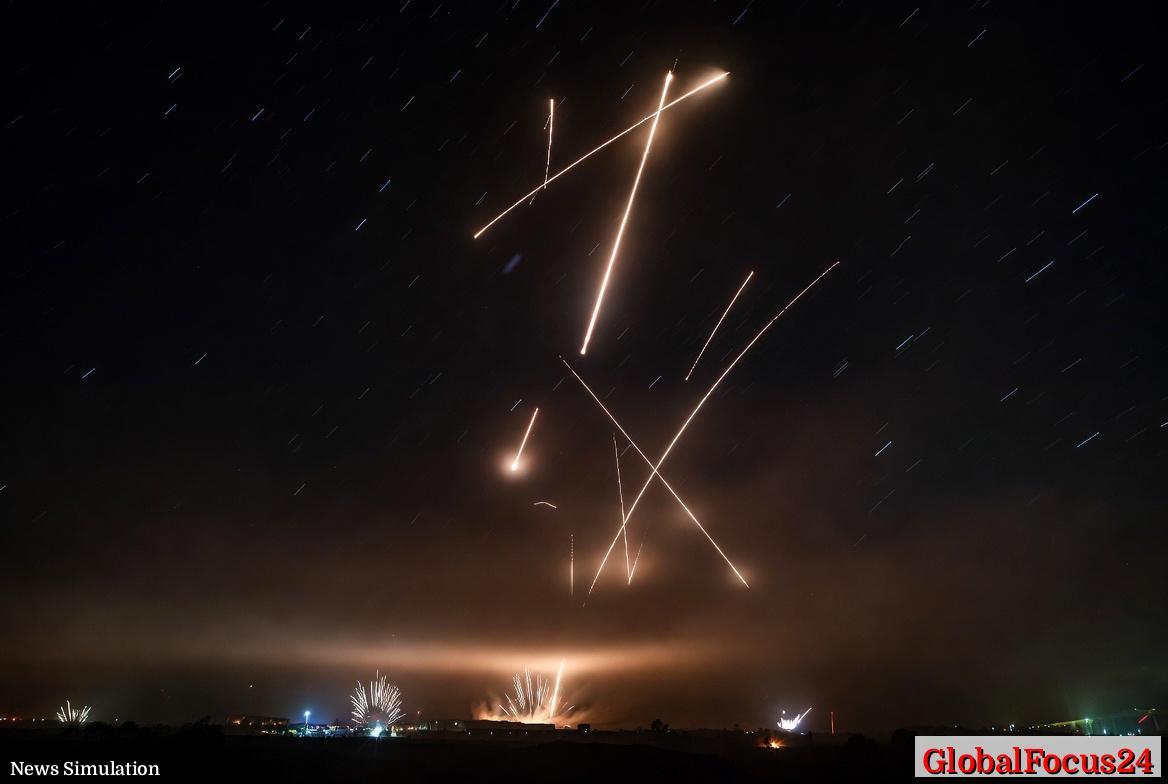
Israel’s Missile Defenses Hold Firm as Iran Maintains Output Pace: A Regional Analysis
In the wake of intensified exchanges across the Middle East, Israel’s defensive systems have continued to notch high interception rates against incoming missiles, helping to limit casualties and physical damage to relatively modest levels. Yet observers note a persistent tension: Iran’s forces appear undeterred, maintaining a sustained pace of missile launches and launcher deployments that underscores Tehran’s ongoing inventory and production capabilities. The dynamic creates a complex security landscape for regional partners and global markets alike, raising questions about the durability of defense architectures, the resilience of supply chains, and the broader economic footprint of ongoing hostilities.
Historical Context: A Continuum of Conventional Deterrence and Asymmetric Warfare
To grasp the present moment, it helps to situate it within a broader historical arc. Since the late 20th century, the region has oscillated between periods of escalated conventional tensions and phases of deterrence reinforced by air defense networks, precision strike capabilities, and layered missile defense architectures. Israel’s multi-tiered defense—combining early warning systems, interceptor missiles, and networking between ground-based batteries and aerial platforms—has evolved through successive rounds of conflict and real-time operational feedback. The result is a defense posture calibrated to intercept missiles at varying altitudes and velocities, designed to reduce both immediate casualties and long-term economic disruption from attack waves.
On the Iranian side, the strategic calculus has emphasized sustaining an arsenal of missiles and launchers while pursuing incremental improvements in range, accuracy, and deployability. Iran’s approach—often characterized by decentralized launch capabilities, mobile batteries, and regional proxies—has routinely tested adversaries’ readiness to respond, measure collateral risk, and protect critical civilian and industrial infrastructure. Over decades, the mutual escalation has driven a regional arms dynamic in which defensive success does not automatically translate into strategic obscurity for Tehran’s strategic objectives, and vice versa for Israeli and allied forces.
Current Defensive Performance: Interceptions and Civilian Resilience
Defensive records indicate a robust interception rate that has helped minimize casualties and limit damage to infrastructure attributed to incoming salvos. Analysts highlight several factors contributing to this performance:
- Layered defense architecture: Early warning sensors, networked command-and-control systems, and a mix of short-, medium-, and long-range interceptors create redundancy that improves the probability of neutralizing threats before they reach population centers.
- Industry and civilian readiness: Urban planning that integrates shelter access, reinforced facilities, and emergency response protocols helps communities absorb sporadic attack waves with reduced disruption to daily life and economic activity.
- Technical progress and maintenance: Ongoing maintenance cycles, stockpile management for interceptor missiles, and rapid-fire alert capabilities ensure that defense systems can respond to sustained attack rates over extended periods.
Despite these strengths, military observers caution against complacency. The Iranian side has continued to fire missiles and deploy launchers at a sustained pace, signaling a concerted effort to exploit any potential gaps in coverage or timing between defense cycles. This persistent activity keeps security planners on a continuous footing and underscores the need for ongoing investments in interoperability, maintenance, and upgrade paths for defense infrastructure.
Economic Impact: Costs, Resilience, and Market Signals
The defense dynamics described above carry tangible economic implications across multiple layers:
- Government expenditure and fiscal strain: Sustained investment in missile defense, warning networks, and related infrastructure contributes to government outlays, potentially influencing budget allocations across health, education, and public works. In a broader sense, defense spending signals a commitment to deterrence, which can affect investor confidence and macroeconomic planning.
- Insurance and risk pricing: Regions exposed to repeated attack waves experience elevated risk premiums on insurance for critical facilities, industrial plants, and logistics networks. This, in turn, influences the cost structure of energy, manufacturing, and technology sectors that rely on secure operational environments.
- Trade and energy flows: The security environment shapes shipping routes, port infrastructure readiness, and energy export logistics. Any disruption—whether through localized strikes, cyber-physical disturbances, or heightened security checks—can impact regional freight costs and downstream pricing for consumers and manufacturers.
- Domestic industry adaptation: Local defense industries may benefit from sustained demand for missiles, radars, sensors, and training services, while civilian industries work to diversify supply chains, enhance resilience, and incorporate risk-mitigating technologies into operations.
Regional Comparisons: Lessons from Adjacent Markets and Shared Challenges
Looking beyond Israel and Iran, several neighboring corridors illustrate how defense dynamics intertwine with economic and strategic outcomes:
- The Eastern Mediterranean: Countries in this space have increased investments in air and missile defense collaborations, weathering volatility in energy markets and diversifying suppliers for critical components. The defensive posture here has supported a degree of regional stability that underpins continued exploration and production activities in offshore fields.
- The Persian Gulf corridor: States allied with or adjacent to Iran have intensified security coordination, including maritime domain awareness and ballistic-missile defense initiatives. The economic ripple includes heightened readiness costs but also opportunities for defense tech exports and technological transfer, reinforcing broader industrial diversification.
- North Africa and Levantine belt: While not the primary theater for this current round of exchanges, the region experiences indirect effects through global commodity markets, shipping insurance, and the need for robust civil-defense frameworks that protect manufacturing zones and logistics hubs.
Operational Realities: Force Posture, Readiness, and Strategic Implications
Experts emphasize that the ability to intercept a high percentage of incoming missiles does not automatically translate into a definitive strategic end-state. Several operational realities shape the ongoing situation:
- Persistence of Iranian capabilities: Tehran’s demonstrated ability to replenish and deploy missiles without clear constraint indicates a durable stock and production capacity, which complicates efforts to achieve decisive neutralization through isolated campaigns or attritional strikes.
- Countermeasures and counter-deployments: Adversaries may adapt by altering launch patterns, deploying decoys, or dispersing missiles to complicate tracking and interception. This cat-and-mouse dynamic keeps defense systems vigilant and reinforces the value of continuous upgrades to sensors and interceptors.
- Civil defense as a force multiplier: Public preparedness, rapid notification, and sturdy infrastructure amplify the effectiveness of technical defense systems, reducing casualty risk and enabling economic continuity during periods of elevated threat.
Technology Trajectories: Innovation as a Shield for Economic Activity
The interplay between defense technology and civilian economic performance is a central theme in today’s security discourse. Key developments include:
- Sensor fusion and data-driven defense: Advances in data analytics, real-time intelligence fusion, and cross-domain coordination enhance the speed and accuracy of threat assessment, enabling more timely responses and reducing false alarms.
- Mobility and survivability: Modern systems increasingly prioritize mobility and rapid redeployment, improving resilience for critical facilities, energy hubs, and manufacturing clusters that underpin regional economies.
- International collaboration: Joint development programs, standardization efforts, and knowledge-sharing initiatives help spread best practices, potentially lowering the cost of defense modernization while boosting interoperability among allied forces.
Public Reaction: Communities, Businesses, and Local Leaders
Public sentiment in affected regions has varied from heightened vigilance to measured confidence in ongoing defenses. Local leaders emphasize the importance of continuity for schools, hospitals, and small businesses, highlighting the resilience of communities when protective measures and emergency responses are well-coordinated. Business associations warn against complacency, urging continued investment in risk management, redundancy in supply chains, and contingency planning to mitigate disruption from any future escalation.
Historical Precedent and Future Outlook
Historical patterns suggest that defensive success often influences strategic calculations but does not erase underlying incentives for escalation when a rival seeks to influence regional balance. The present crisis, as it unfolds, will likely shape future procurement cycles, defense modernization programs, and regional security frameworks for years to come. Observers expect a gradual shift toward more integrated defense architectures, enhanced cross-border security arrangements, and a continued emphasis on civilian resilience as a foundation for economic stability.
Conclusion: Navigating Uncertainty with Preparedness and Prudence
As Israel’s defenses maintain high interception rates against a backdrop of sustained Iranian missile activity, the regional security equation remains tightly balanced between deterrence and continuous threat. The economic implications are multifaceted—ranging from government spending and insurance markets to energy logistics and industrial diversification. In this environment, the importance of resilient infrastructure, diversified supply chains, and adaptive defense capabilities cannot be overstated. The coming months are likely to test not only military readiness but also the capacity of regional economies to absorb shocks, sustain growth, and protect civilians amid ongoing strategic competition.