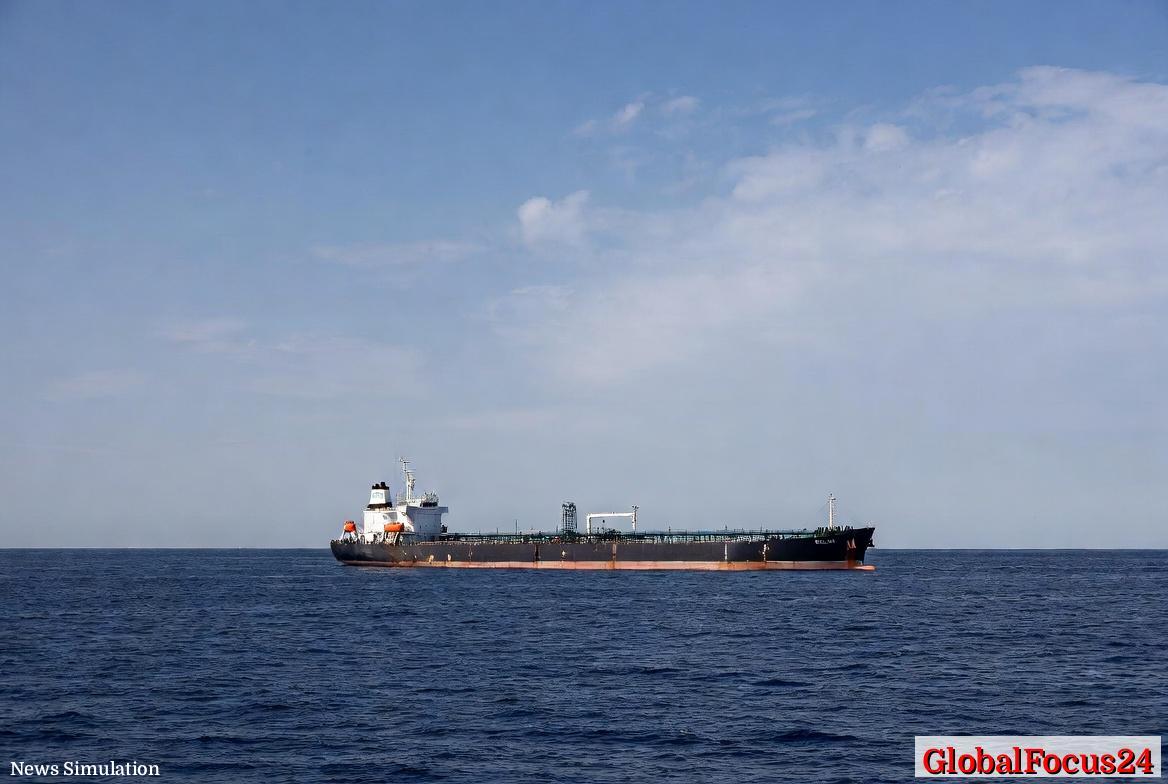
Iranian Supertanker Delivers First Crude Shipment to India in Seven Years Amid U.S. Naval Blockade
A Historic Arrival in Indian Waters
An Iranian supertanker carrying two million barrels of crude oil arrived at India’s western coast late Sunday, marking the first such delivery since 2019 under a rare U.S. sanctions waiver. The shipment, which docked near the port of Jamnagar, Gujarat, signals a cautiously renewed energy connection between Tehran and New Delhi at a time of heightened geopolitical tension in the Persian Gulf.
The delivery comes just one day after the United States announced the enforcement of a naval blockade on the Strait of Hormuz, a critical conduit for nearly a fifth of global oil supplies. The unprecedented timing has drawn global attention, raising questions about the fragility of international energy routes and the future of Iran’s oil exports amid one of the most volatile shipping environments in recent years.
Context of U.S. Sanctions and Energy Diplomacy
Since Washington reimposed sanctions on Iran in 2018 following its withdrawal from the nuclear agreement, most buyers—including India—curbed or halted imports of Iranian oil. The sanctions targeted Iran’s energy, banking, and shipping sectors, effectively isolating its petroleum trade from global markets. By early 2020, Iran’s crude exports had plunged from more than 2.5 million barrels per day to less than 200,000, largely routed through informal channels or humanitarian exemptions.
The current waiver granted to India represents a significant diplomatic exception, reportedly allowing for one cargo under strict humanitarian and economic conditions. Though details of the waiver have not been publicly disclosed, analysts suggest it may be part of a broader U.S. initiative to stabilize global oil prices amid increased volatility stemming from the blockade announcement.
The Strait of Hormuz blockade, declared Saturday, was described by U.S. officials as a “security enforcement measure,” aimed at intercepting illicit Iranian shipments and preventing “unauthorized maritime transfers.” However, the timing of the Iranian tanker’s safe passage has raised questions regarding the precise scope and enforcement terms of the blockade itself.
India’s Energy Imperatives and Strategic Balancing
India, one of the world’s largest oil importers, has long maintained a delicate balance between securing affordable energy supplies and managing diplomatic relations with Washington and Tehran. The country sources roughly 85 percent of its crude oil from abroad, and the Iranian grades have historically complemented Indian refinery configurations due to their favorable sulfur content and pricing.
Between 2016 and 2018, before the sanctions tightened, Iran was among India’s top three oil suppliers. In those years, Indian refiners such as Bharat Petroleum and Indian Oil Corporation processed millions of barrels monthly, benefitting from discounts and extended credit terms offered by Tehran. When imports ceased, India diversified toward suppliers in Saudi Arabia, Iraq, and the United States, often at higher logistical costs.
The newly arrived shipment reopens the question of whether India might gradually restore trade channels with Iran under limited or conditional waivers. Officials have not indicated that future deliveries are planned, but industry sources report that refiners in Gujarat and Maharashtra have already prepared units to process the cargo immediately, citing favorable refining yields.
The Strait of Hormuz Blockade and Global Supply Risks
The U.S. naval blockade represents one of the most dramatic Gulf developments since the tanker wars of the late 1980s. The Strait of Hormuz, only 21 miles wide at its narrowest point, serves as the principal artery for crude exports from six major producers—Saudi Arabia, Iraq, the United Arab Emirates, Kuwait, Qatar, and Iran. Any disruption at this chokepoint risks sending shockwaves through global energy markets, as roughly 17 million barrels of oil transit the waterway daily.
Following the blockade announcement, crude prices experienced immediate volatility, with Brent futures briefly spiking 6 percent before stabilizing on Monday morning. Traders signaled uncertainty over whether the blockade would impede traffic beyond Iranian vessels. Several European maritime insurers have already raised premiums for tankers traversing the Gulf.
The arrival of the Iranian supertanker despite the blockade underscores both the complexity of the enforcement and the resilience of regional logistics under pressure. Satellite tracking indicated that the vessel entered Indian waters through the Arabian Sea without incident after departing from Iran’s Kharg Island terminal two weeks earlier.
Historical Parallels and Market Reactions
The moment evokes historical parallels with previous episodes of energy diplomacy under sanctions. Between 2012 and 2015, India continued limited Iranian imports through barter arrangements and local currency settlements, circumventing banking restrictions while maintaining strategic ties. That period saw considerable diplomatic maneuvering between New Delhi, Washington, and Tehran, ultimately shaping India’s energy diversification policy.
Economists note that the renewed Iranian cargo could help ease short-term supply anxieties triggered by the blockade. Global crude inventories remain thin, while geopolitical tensions across maritime transport lanes—from the Red Sea to the South China Sea—have recently intensified shipping risks. India’s decision to accept the cargo, even under waiver conditions, may reflect a pragmatic calculation aimed at cushioning domestic fuel inflation, which has climbed steadily since late 2025.
On Monday, India’s Ministry of Petroleum issued a cautious statement confirming receipt of the shipment but refrained from commenting on future engagement with Iranian suppliers. “India continues to diversify its energy sourcing to ensure market stability and supply security,” the statement said.
Regional Comparisons and Economic Consequences
Across Asia, major oil importers are watching closely. China, which resumed scaled-up Iranian imports under its own arrangements last year, remains Iran’s largest buyer by a wide margin. South Korea and Japan have largely adhered to U.S. sanctions since 2019, relying instead on Middle Eastern and U.S. crude. India’s sanctioned exemption now places it in a unique position—potentially offering the nation short-term cost advantages, yet exposing it to renewed diplomatic scrutiny.
From Tehran’s perspective, the delivery is more than symbolic. Iran’s economy continues to rely heavily on crude exports for foreign currency earnings, and even one large sale can inject hundreds of millions of dollars into its strained financial system. Analysts estimate the shipment’s value at roughly $140 million based on prevailing market rates. With the Strait of Hormuz under U.S. blockade, Iran may seek to divert limited cargoes to willing buyers via waivers, humanitarian channels, or alternate maritime routes.
For India, the economic impact will unfold on multiple fronts. Refinery managers anticipate slight improvements in profit margins due to discounted crude pricing, while consumers may benefit from moderated fuel cost pressures. The broader implications, however, hinge on whether the waiver proves singular or indicative of an emerging realignment in Middle Eastern energy trade.
Diplomatic and Strategic Outlook
The confluence of the waiver and blockade has pulled global diplomacy into a moment of acute uncertainty. In Washington, officials continue to stress that the blockade will remain “in full force” for all Iranian exports not explicitly authorized. Meanwhile, naval operations across the Gulf are intensified, with reports of several U.S. destroyers positioned near Oman’s coastal waters monitoring tanker traffic.
India’s receipt of the cargo illustrates the fine line between compliance and necessity in energy geopolitics. Its long-standing defense and technology partnerships with the United States complicate decisions involving Iranian trade, yet its domestic growth trajectory and fuel demand make supply security an overriding concern.
Energy analysts in Mumbai and Singapore predict that if the blockade persists beyond a few weeks, other nations may request similar waivers to prevent disruptions in regional refinery output. Conversely, a tightening of enforcement could prompt rapid price escalations in Asian spot markets.
A Turning Point for Global Energy Dynamics
As the supertanker’s cargo is unloaded and refined into fuel destined for Indian industries and households, its arrival reverberates far beyond Gujarat’s shores. It highlights how economic pragmatism can intersect with international pressure points, reshaping traditional alliances and supply channels.
The episode also underscores a broader truth about global energy security: as long as strategic chokepoints like the Strait of Hormuz remain vulnerable, market stability will rest less on production volumes and more on geopolitical maneuvering. The coming weeks are likely to determine whether this delivery marks a singular exemption or the start of a cautious recalibration in the world’s approach to sanctioned oil trade.
For now, India stands at the crossroads of necessity and diplomacy, navigating one of the most complex energy environments in recent memory while the world watches the Strait of Hormuz with growing apprehension.