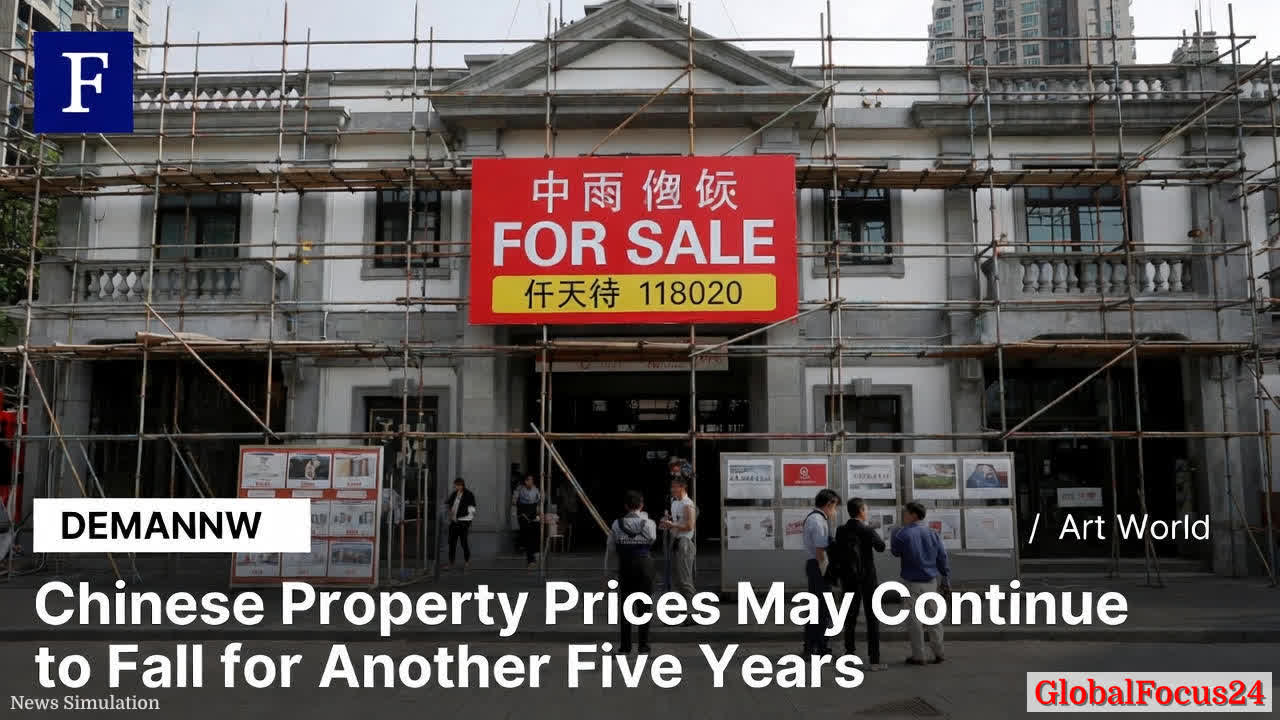
Chinese Property Slump Reverberates Through the Art World, Drafting a Five-Year Financial Void
The art market in China stands at a crossroads as projections for property prices point toward a continued decline over the next five years. This forecast, grounded in a complex mix of debt distress, regulatory tightening, and shifting consumer confidence, is reshaping the financial underpinnings of galleries, museums, and private collections. With real estate often serving as both a wealth indicator and a cultural patron, the anticipated downturn has broad implications for art funding, artist livelihoods, and the sector’s long-term growth trajectory.
Historical Context: Real Estate as Patron, Real Economy as Barometer
China’s modern art ecosystem has long been intertwined with the country’s housing market and broader financial climate. In the 2000s and 2010s, a buoyant real estate sector contributed to a surge in affluence among urban residents, many of whom turned to collecting as a form of cultural capital. High-rise skylines and luxury development projects became the backdrop for gallery openings, auction shuffles, and museum fundraising galas. The real estate market’s health often paralleled the art market’s vitality, with capital mobility flowing between property investments and contemporary art transactions.
The present forecast—property prices expected to fall for another half-decade—reflects a more cautious macroeconomic milieu. Authorities have pursued measures to deleverage corporate and household balance sheets, addressing financial risk in shadow banking and local-government debt. While these efforts aim to stabilize the economy over the medium term, they also constrain discretionary spending on luxury goods, including high-value art acquisitions. That dynamic is particularly consequential for mid-tier and emerging artists who rely on a dashboard of patrons, corporate sponsorship, and private collectors to sustain galleries and exhibitions.
Economic Impact: From Studios to Streets, A Ripple Effect
- Gallery financing and operations: A sustained property downturn can compress the wealth effect that previously spurred collectors to diversify portfolios with significant art purchases. Galleries that once banked on strong annual sale cycles may need to recalibrate by expanding rental incomes, seeking alternative sponsorships, or embracing more accessible pricing to attract a broader buyer base.
- Artist livelihoods and careers: Individual artists—especially those at the early to mid-career stages—frequently rely on a mix of commissions, gallery contracts, and scholarship programs. An extended softness in major acquisitions could tighten demand for new works, influence residency opportunities, and affect public funding allocations for the arts. In some cases, artists may respond by integrating cross-disciplinary collaborations, seeking international partnerships, or exploring digital and experiential formats that lower production costs while expanding audience reach.
- Public institutions and cultural infrastructure: Museums and cultural centers often depend on philanthropic giving and corporate endowments to finance curatorial programs, conservation efforts, and temporary exhibitions. A slower art market can influence donor willingness to support high-profile shows, prompting institutions to prioritize essential conservation work and community-oriented programming as a means of sustaining relevance and public engagement.
- Secondary market dynamics: Auction houses and brokers watch closely as market liquidity shifts. A prolonged real estate downturn could redirect capital toward more liquid and diversified portfolios, including contemporary art with more flexible price points. The secondary market may experience a bifurcation: high-demand, established artists sustaining robust price levels, while mid-career and emerging artists face greater price sensitivity and longer hold periods.
Regional Comparisons: China Versus Global Trends
- Asia-Pacific peers: In neighboring markets with robust tourism and cultural ecosystems, galleries and institutions have diversified revenue streams, leveraging international collaborations and local cultural initiatives to offset domestic market fluctuations. While these markets can offer a comparative buoyancy, they are not immune to global demand cycles for luxury collectibles and the cross-border capital flows that often accompany major art sales.
- Europe and North America: Globally, the art market has shown resilience in certain segments during economic soft patches, with institutions and collectors recalibrating to new realities. However, regional differences in tax policies, inheritance regimes, and philanthropic cultures shape how much impact a local downturn in property prices will have on art patronage and museum endowments. Chinese collectors who previously channeled a portion of property wealth into Western art ecosystems might adjust their portfolios toward domestic platforms, sparking increased demand for local artists and galleries.
- Domestic urban centers vs. regional markets: Tier-1 cities with established art districts—beijing, Shanghai, Guangzhou, and others—have traditionally attracted more significant patronage and institutional backing. Yet, as property markets cool, these centers may experience greater strain given higher absolute price levels and concentrated wealth. Conversely, regional hubs with growing cultural programming might absorb some of the demand shift by courting new audiences and developing more cost-effective exhibition formats.
Supply Chain and Operational Considerations
The art world’s supply chain is not purely financial; it also hinges on logistics, conservation infrastructure, and talent pipelines. A five-year property-price decline could influence:
- Logistics and handling costs: If wealth concentration softens, buyers may become more price-conscious, prompting galleries to optimize shipping, framing, and insurance arrangements to remain competitive.
- Conservation and restoration priorities: Institutions facing tighter budgets may defer nonessential conservation projects, potentially risking the long-term integrity of certain collections. This risk underscores the importance of strategic partnerships and public funding to safeguard cultural heritage during economic fluctuations.
- Talent development: Galleries and museums may reassess hiring, residencies, and educational outreach to maximize impact with constrained resources. This can manifest as more joint programs, community partnerships, and cost-sharing models with universities or cultural organizations.
Public Reaction and Cultural Implications
Public sentiment toward art and culture often shifts in response to broader economic news. In cities where property values are a daily reference, residents may frame art purchases and attendance as discretionary, even when cultural access benefits the community. However, public reaction is not monolithic. Many stakeholders—curators, artists, educators, and municipal leaders—view the arts as essential infrastructure for creative industries, urban vitality, and tourism. As such, there is a growing emphasis on accessibility, with galleries and cultural centers exploring pay-what-you-can programs, rotating exhibitions, and partnerships that make art more affordable for local populations.
Institutional responses to market cycles frequently center on resilience and adaptability. Museums may pursue diversification of funding streams, including government grants, corporate sponsorships, and philanthropic campaigns designed to weather asset- and market-induced fluctuations. Galleries might accelerate the adoption of digital platforms and virtual exhibitions to reach global audiences while controlling overhead costs. Collectors, too, may recalibrate their strategies, emphasizing quality and longevity of works, rather than speculative acquisitions, and seeking artists with clear, investable trajectories.
Strategic Outlook: Navigating the Next Five Years
- Diversification of revenue: Institutions and private venues may increasingly pursue mixed-income models, combining ticketed exhibitions, public programming, licensing, and partnerships with corporate sponsors to reduce dependence on a single revenue source.
- Focus on domestic talent and accessibility: The Chinese art market could see renewed emphasis on nurturing local artists and expanding access to regional audiences. This shift may foster a more sustainable ecosystem that values cultural production across a broader geographic footprint.
- Digital and experiential offerings: Online catalogs, augmented reality experiences, and immersive installations offer cost-efficient ways to engage audiences without the same level of physical space requirements. These approaches can help institutions reach international collectors and enthusiasts while mitigating domestic market constraints.
- International collaboration: Strategic partnerships with foreign museums, galleries, and educational institutions can expand opportunities for exchange programs, loans, and co-curated exhibitions. Such collaborations may help stabilize attendance and sales despite domestic economic headwinds.
- Policy considerations: Local and national authorities may implement targeted incentives to sustain the arts during housing market downturns, recognizing the sector’s role in urban development, tourism, and cultural diplomacy. Effective policy measures could include tax relief for collectors, grants for mid-sized galleries, and funding for public art programs that stimulate local economies.
Conclusion: A Transforming Landscape with Long-Term Implications
The projection of falling property prices over five years presents a consequential backdrop for China’s art world. While immobiliary declines can exert downward pressure on art acquisition and patronage, they also catalyze resilience through diversification, innovation, and renewed emphasis on domestic talent. History suggests that cultural ecosystems adapt to financial stress by recalibrating business models, expanding educational and public-facing programs, and leveraging digital technologies to reach broader audiences. The next half-decade is likely to see a more nuanced art market in which galleries, museums, and artists respond with creativity and strategic partnerships, ensuring that art remains accessible, relevant, and vital to China’s cultural landscape even amid economic headwinds.