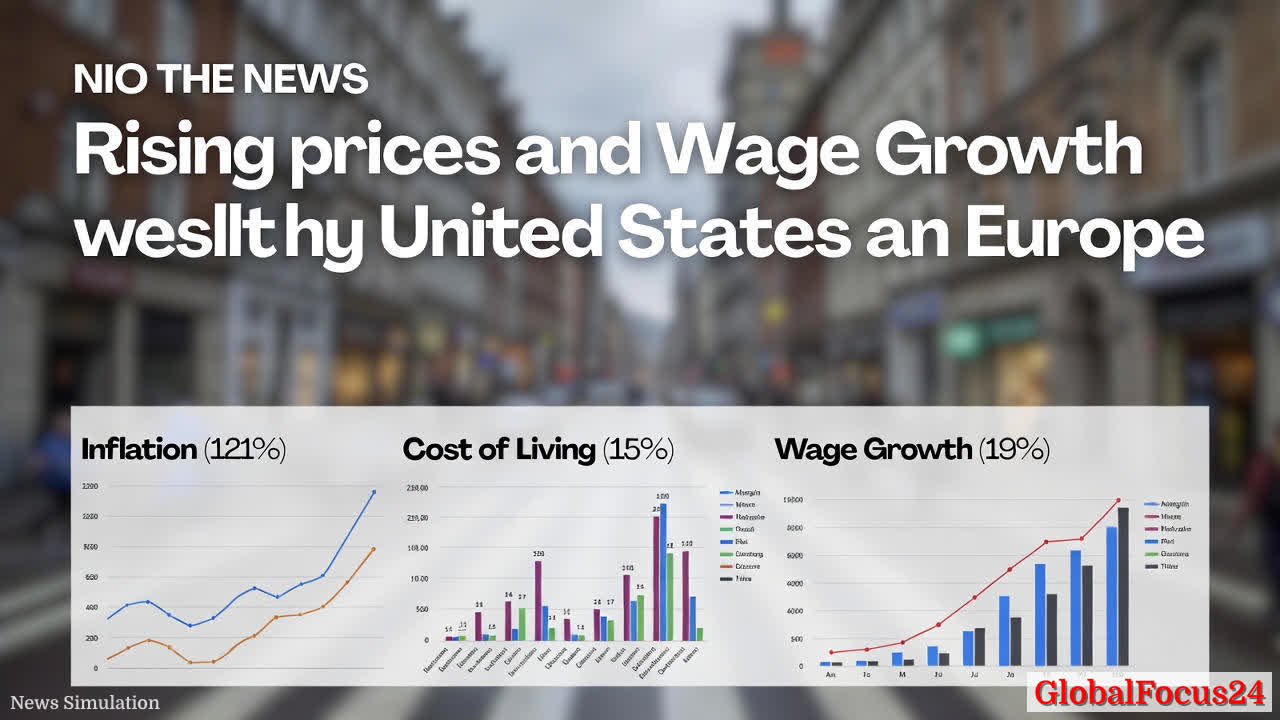
The Reality Behind Affordability Concerns in Wealthy Nations
In many prosperous economies, voters are voicing frustration over rising prices and a sense that daily living costs are spiraling beyond what incomes alone can comfortably support. Across the United States and Europe, discussions of an affordability or cost-of-living crisis have emerged as powerful drivers of political conversation and public sentiment. Yet a careful, data-informed examination reveals a more nuanced picture: prices are up in some sectors, wage growth has kept pace or even outpaced inflation in many groups, and the overall trajectory of living standards remains firmly positive relative to a generation ago. Understanding where pressures come from requires a balance of historical context, economic structure, and regional variation.
Historical context: how affordability became a public concern
To understand current worries, it helps to look back at the longer arc of modern economic development. Post-war prosperity set a backdrop where steady wage growth and rising homeownership created a broad middle class in many advanced economies. Yet the late 20th and early 21st centuries brought sharper price signals in certain sectors—healthcare, housing, education, and some services—paired with changes in global supply chains, technology, and financing that altered how households allocate budgets.
In the United States, for example, inflation spiked in the 1970s and early 1980s before central banks established credibility in anchoring inflation expectations. The subsequent decades saw price growth diverge across categories. Durable goods prices, once a dominant share of household expenditures, have fallen in real terms due to productivity gains and global competition, while services—particularly healthcare, housing, and childcare—have grown faster than average wages, contributing to perceived affordability pressures for many families. In Europe, rigid labor markets, housing constraints, and regulated services have produced different but equally meaningful affordability dynamics, with long wait times and access challenges in some sectors amplifying the perception of scarcity even when nominal prices do not always rise at the same pace.
Economic structure and consumer behavior: why the picture looks different by sector
Two broad trends help explain why affordability feels different from one country to another—and even within regions of the same country.
First, consumption patterns have shifted as economies become richer. In many advanced economies, households devote a smaller share of spending to physical goods and a larger share to services. This shift has several consequences. Services often require more labor input and face slower productivity growth than manufacturing, making them relatively more expensive over time. Conversely, the price of many physical goods has fallen or remained stable due to global competition, supply chain improvements, and scale economies. This divergence can create an impression of rising overall cost even when the inflation rate for consumer prices remains within a moderate range.
Second, asset prices and housing play outsized roles in perceived affordability. When real estate and financial assets appreciate rapidly, households that own homes or investments experience a boost in wealth, while younger or renter households may feel economically constrained by higher rents and higher down payments. The United States, where urban centers have long been engines of economic activity, illustrates how asset markets can produce a bifurcated experience: high-income households accumulate substantial gains in equities and real estate, while households with limited savings face tighter housing markets and higher living costs in core cities.
Regional comparisons: where pressures are most acute
- United States: In many large metropolitan areas, housing costs and services inflate the cost of living, even as wage growth outpaces inflation for higher earners and certain sectors. The resulting divergence can magnify feelings of scarcity among first-time homebuyers and households renting in expensive markets. Yet broader national indicators show that real wages and overall living standards have improved over the longer horizon, aided by productivity gains in technology, finance, and other tradable sectors.
- Eurozone: The experience varies widely across member states. In some countries, regulated services such as healthcare and rental housing present access challenges and wait times more than outright price spikes. In others, productivity gaps, housing supply constraints, and policy frictions—such as zoning rules and licensing regimes—tend to push up service costs or restrict availability. Across the region, pension systems and social safety nets interact with labor markets to shape material living standards, making regional comparisons essential to understanding affordability.
- Other wealthy economies: Nations with robust welfare states and high investment in public infrastructure may experience different pressures. For example, healthcare and education costs can be shielded from sharp price increases through public provision or subsidies, altering the household budget equation. In markets with higher property values but strong wage growth, assets can cushion affordability concerns for some families while leaving others exposed to rent and down payment challenges.
Wages, prices, and the tug-of-war over value
An important finding in many advanced economies is that real wages have risen over time, even as households report concerns about price levels. The relationship between wage growth and inflation is nuanced. In some periods, wages grow faster than consumer prices, increasing purchasing power; in others, asset prices—such as housing and stock markets—outpace wage gains, altering the perception of wealth and cost even when typical consumer prices are controlled.
Furthermore, price changes do not occur uniformly across everything households buy. Essentials like energy and food can show different dynamics than leisure, entertainment, or durable goods. The data often show that while some consumer prices rise, others fall or stabilize, creating a mixed, rather than uniformly grim, affordability picture. Policymakers face the challenge of addressing sectors with genuine bottlenecks—such as housing stock shortages or skilled-service labor markets—without triggering unintended consequences elsewhere.
Policy options and policy risks
What, then, should be done to address genuine affordability constraints without compromising long-run growth? The answer rests on targeted, practical reforms that improve supply, reduce frictions, and increase productive capacity.
- Expand housing supply through streamlined permitting and zoning reform. Reducing regulatory bottlenecks can unlock new housing, moderating rents and down payments in overheated markets. While political resistance is strong in many regions, evidence suggests that measured liberalization paired with community planning can yield meaningful supply responses.
- Increase productive capacity in services through investment and innovation. Sectors such as childcare, eldercare, and healthcare could benefit from automation, process improvements, and workforce development. Enhancing productivity in these areas helps contain costs while maintaining quality.
- Reassess licensing and regulatory barriers. Occupational licensing often raises service costs and reduces competition. Careful reform can expand access to skilled services without compromising safety or quality.
- Carefully calibrate trade and tariffs. In some scenarios, reducing tariff barriers can lower prices for imported goods and inputs, supporting consumer purchasing power. However, policymakers must balance domestic industry concerns, labor standards, and strategic considerations.
- Protect against policy missteps with evidence-based incentives. Price controls, broad subsidies, or large, unfocused stimulus can distort markets and create shortages or inflationary pressures. Historically, targeted tax relief or direct payments can provide temporary relief, but they require careful design to avoid long-run distortions.
Public sentiment, media narratives, and the risk of misdiagnosis
Public discourse often conflates rising prices with systemic decline, a narrative reinforced by partisan framing, sensationals, and selective data points. This can push policymakers toward broad remedies that may not address structural bottlenecks. A careful approach emphasizes transparency about what is driving price changes in specific categories and how policy choices influence incentives for investment, construction, and productivity.
In economies with high asset ownership disparities, the perception of affordability can hinge on wealth effects rather than everyday costs alone. A $1 million inheritance invested in broad-market equities, for example, can dramatically alter households’ sense of security and opportunity, even if the actual day-to-day expenses remain stable for many. Recognizing this distinction helps avoid conflating overall prosperity with universal affordability.
Measurement and data considerations
Assessing affordability requires robust, nuanced data. Key indicators include:
- Real wages versus consumer prices by income decile and region
- Housing costs and rental affordability indices
- Health, education, and childcare price trends
- Asset prices and wealth distribution
- Productivity growth across sectors, especially services versus goods
For policymakers, tracking these measures over time helps differentiate between voluntary shifts in consumption patterns due to rising living standards and genuine shortages or price pressures that require targeted interventions.
Public reaction and the sense of urgency
Even if data show mixed or modest declines in affordability, the public mood can still tilt toward concern, especially when stories of housing scarcity or service delays are prominent in local media or personal networks. The emotional component of affordability often centers on a future outlook—whether households expect rising costs to outpace future wage growth or whether assets like a home or a retirement portfolio will remain within reach.
In major metropolitan areas, residents frequently attribute cost-of-living pressures to housing markets and urban services. In more rural or suburban zones, concerns may center on access to affordable health care or dependable public services. The regional variance underscores the need for context-specific policy design rather than one-size-fits-all solutions.
What the data imply for 2026 and beyond
Looking ahead, affordability pressures will likely persist in some form, but the nature of the pressures is evolving. The most effective responses will be surgical rather than sweeping: policies that unlock supply (especially in housing and essential services), improve productivity in high-demand sectors, and guard against policies that unintentionally raise costs or distort markets. The risk of loud but misguided interventions—such as broad price controls or indiscriminate tariff reductions without accompanying domestic capacity building—could trap economies in suboptimal growth patterns and limit long-run improvements in living standards.
Regional lessons and transferable insights
- Open, competitive energy and services markets contribute to lower consumer costs over time. When regulatory barriers are reduced and competition is fostered, households benefit from lower prices and better service quality.
- Persistent supply constraints in housing and certain services require coordinated approaches that combine policy reforms with private investment incentives. Public-private partnerships and targeted subsidies can help bridge gaps without distorting incentives.
- Economic resilience comes from diversified growth, robust labor markets, and strong social safety nets. Nations that balance growth with inclusive access to housing, healthcare, and education tend to maintain a steadier trajectory in affordability metrics.
Conclusion: diagnosing affordability with care
The affordability conversation in wealthy nations is best understood as a mosaic of pressures, benefits, and regional realities. While pockets of genuine shortage and cost pressures exist—particularly in housing and certain services—there is also broad evidence of rising real wages and improving purchasing power in many segments of the population. Misdiagnosing the core drivers risks policy errors that hinder growth, reduce incentives for investment, or amplify volatility through ill-considered interventions.
A measured, data-informed approach that targets supply-side constraints, modernizes service delivery, and preserves the incentives for productive investment offers the most plausible path toward sustainable improvements in affordability. As governments consider fiscal and monetary options in the coming year, the emphasis should remain on clarity, precision, and a clear-eyed assessment of which levers move prices and which merely shift them, so that households can plan with confidence in an economy that continues to evolve.