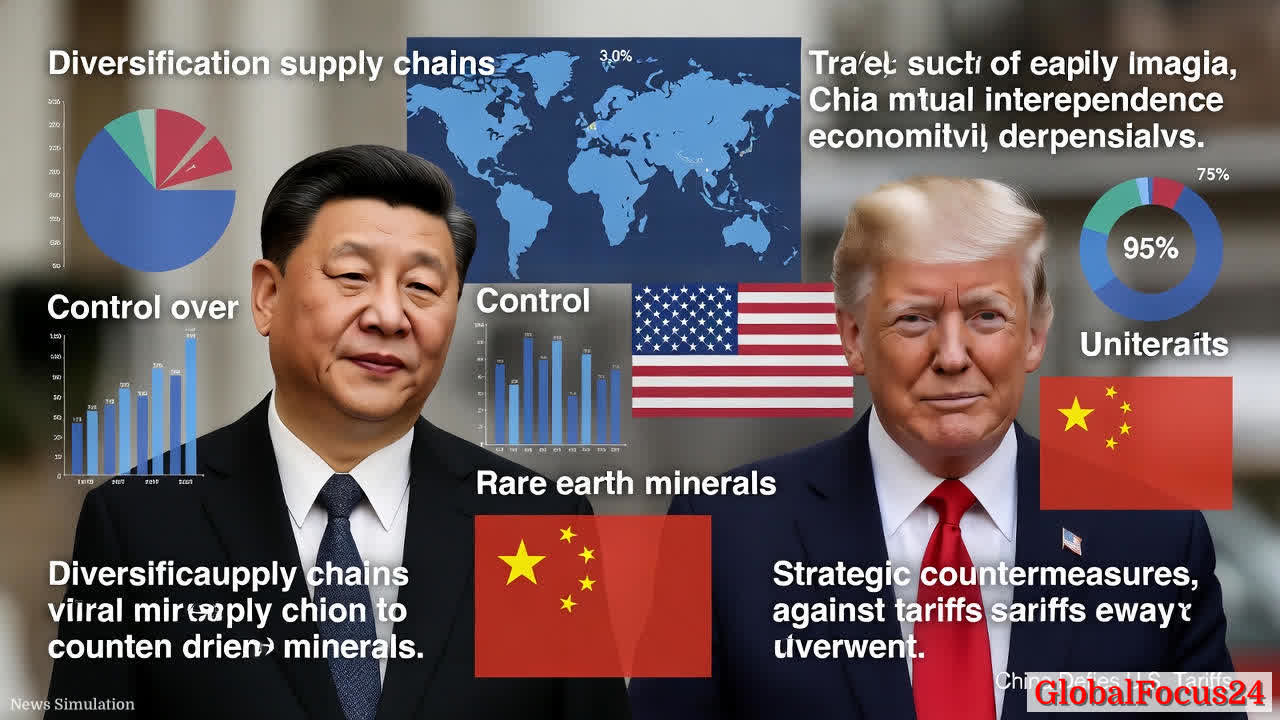
China, U.S. Tariffs, and the Deepening Economic Interdependence: A 2025 Perspective
In 2025, trade tensions between the world’s two largest economies persisted, yet the landscape of economic power shifted in subtle, consequential ways. China’s response to U.S. tariffs, originally designed to press Beijing on intellectual property, forced technology transfer practices, and currency policy, revealed a strategic tolerance for disruption while accelerating a longer-term project: reshaping global supply chains to reduce exposure to policy shocks from Washington. The result is a complex narrative of resilience, adaptation, and mutual dependence that will influence policy decisions for years to come.
Historical Context: From Tariffs to Trade Realignment
To understand today’s dynamics, it helps to revisit the arc of the last decade. The imposition of tariffs on Chinese goods by successive U.S. administrations aimed to recalibrate the terms of trade, address perceived imbalances, and incentivize greater domestic innovation. China’s reply was not a simple counter-tariff escalation; it was a multi-pronged strategy that leveraged what it does best: scale, access to essential materials, and capabilities in high-tech manufacturing.
Over the years, China’s policy toolkit expanded beyond tariffs. The government prioritized self-reliance through industrial plans that aligned public resources with private enterprise, especially in strategic tech sectors like semiconductors, green energy, and advanced manufacturing. The concept of “Made in China 2025” became a banner for accelerating domestic innovation, upgrading infrastructure, and integrating national champions into global supply networks. While critics argued that such policy directions amounted to state-led intervention, supporters emphasized how strategic planning could foster resilience against external shocks.
Economic Impact: The Real Costs and Hidden Benefits
The tariff era created immediate pain points for many U.S. manufacturers, particularly those dependent on imported components and intermediate goods. Yet, the longer-term effects were more nuanced. On one hand, tariffs infused price pressures into consumer electronics, automotive supply chains, and industrial equipment. On the other hand, they catalyzed reinvestment in domestic capabilities and supplier diversification, a transformation that carried both benefits and risks.
China’s response compounded these dynamics. By diversifying its export markets and deepening its domestic market ecosystem, China reduced the vulnerability of its economy to any single policy shock from abroad. The country’s control over critical resources, including rare earth minerals and essential manufacturing inputs, allowed Beijing to shape supply considerations more effectively. In sectors such as semiconductors and rare materials, this leverage created frictions for U.S. producers that relied on predictable access to Chinese supply chains.
From a macroeconomic perspective, the results were mixed. U.S. import volumes from China remained substantial, underscoring the depth of economic integration even in the face of tariff barriers. At the same time, U.S. exports to China grew modestly, reflecting a environment of retaliatory measures and a more cautious market for American goods in some sectors. The broader takeaway is that tariffs alone were insufficient to sever the underlying economic ties between the two economies. A more durable resolution, many economists argue, requires negotiated agreements that address structural concerns rather than punitive tariffs alone.
Regional Comparisons: How Markets Respond Across Asia and the Americas
The 2025 picture is not limited to a bilateral lens. Regional dynamics illuminate how different economies managed trade frictions and adapted to shifting geopolitics.
- East Asia: China’s manufacturing spine remained robust, supported by a vast network of suppliers and a well-developed logistics ecosystem. Regional competitors, including South Korea and Taiwan, benefited from the demand for high-tech components while also considering diversification away from any single market dependency. The broader region continues to invest in capacity to serve global customers beyond China, signaling a broader trend toward diversified manufacturing hubs.
- Southeast Asia: With shifting investment patterns, Southeast Asian economies attracted production relocations and new supply chain configurations. Countries in this region benefited from policy incentives, lower labor costs, and growing infrastructure investment, broadening their role as alternative manufacturing bases and regional trading partners.
- Americas: The United States and Mexico, along with other North American and Latin American economies, navigated tariff exposure by strengthening regional supply chains and pursuing trade facilitation. In some cases, manufacturers pursued onshoring or nearshoring strategies to reduce transit times and inventory risks, while governments collaborated on standards and regulatory alignment to support integrated production networks.
- Europe: While not the central focus of U.S.-China tariff tensions, European economies monitored the course of these policies. European manufacturers and policymakers sought to preserve open trade while ensuring competitive manufacturing capabilities, often looking to diversified sourcing and stronger ties with regional partners.
Industry-Specific Impacts: Semiconductors, Rare Earths, and Automotive Supply Chains
- Semiconductors: Access to silicon, advanced materials, and lithography equipment remained a critical bottleneck in the global system. China’s role as a producer of a wide range of semiconductor components and its continuing push to boost domestic chip design and manufacturing capacity influenced pricing, lead times, and technology standards across the world.
- Rare Earths and Critical Materials: Control over materials essential for electronics and defense applications gave China a strategic edge in shaping global supply reliability. Diversification efforts in the United States and allied regions accelerated, with investments in alternative supply chains, stockpiling strategies, and recycling initiatives to reduce vulnerability.
- Automotive and EV Batteries: The electric vehicle ecosystem depends heavily on battery supply chains, many of which intersect with Chinese manufacturers and suppliers. Tariff dynamics and export controls influenced battery pricing, component availability, and the pace of EV adoption in both domestic and international markets.
Public Reaction: Business, Labor, and Consumer Voices
Public reaction to tariff-related shifts varied by stakeholder group. Businesses faced higher costs and shifted procurement strategies, but many welcomed the more predictable policy horizon that could emerge from negotiated settlements. Labor groups remained concerned about short-term dislocations in workforce demand, particularly for workers within import-dependent industries, while governments weighed the balance between protecting domestic industries and maintaining open markets for consumer choice.
Communication from authorities stressed resilience, adaptability, and strategic planning. In many regions, industry associations published guidance on risk management, urging firms to diversify suppliers, invest in automation to reduce labor intensity, and optimize inventory management to cushion against tariff volatility.
Supply Chain Resilience: The Push Toward Diversification
One enduring lesson from the tariff era is the value of resilience in supply chains. Firms increasingly pursued multi-sourcing strategies, regional hubs, and stronger supplier qualification processes to reduce exposure to policy shifts. Governments responded with investments in logistics infrastructure, digital trade platforms, and customs modernization to streamline cross-border movement of goods.
This resilience drive intersected with broader economic priorities, including innovation, productivity growth, and sustainable development. As firms continued to integrate digital technologies, they leveraged data analytics, supplier risk scoring, and automated manufacturing to improve responsiveness to market changes. The result was a more agile global economy, capable of weathering policy surprises while sustaining international trade flows.
Policy Trajectories: Negotiation Over Decoupling
Analysts signaling the path forward emphasize negotiation and careful calibration. Decoupling two deeply interwoven economies presents not only economic costs but also geopolitical risks. The favorable path, according to researchers and policymakers, lies in negotiated agreements that address core concerns around intellectual property, market access, subsidies, and transparency, while preserving the benefits of intertwined supply networks.
In 2025, discussions indicated a potential de-escalation phase, with some policymakers exploring incremental confidence-building measures and targeted concessions. The aim is to reduce friction in high-stakes sectors—technology, energy, and critical minerals—without undermining the global system that supports both economies and their trading partners.
Key Takeaways for Businesses and Investors
- Expect continued, albeit more predictable, volatility in pricing and lead times as supply chains adjust to policy signals.
- Prioritize supplier diversification, nearshoring opportunities, and strategic stock management to mitigate disruption risks.
- Monitor technological and regulatory developments in key sectors such as semiconductors, batteries, and advanced materials, which will shape competitive dynamics.
- Maintain awareness of regional shifts in production and demand, especially in East and Southeast Asia, as well as in the Americas and Europe, where investment flows may reallocate quickly in response to policy changes.
Conclusion: Interdependence Defines a New Normal
The narrative of 2025 is not one of simple triumph or defeat in the tariff wars. It is a story of adaptive economies recognizing that the most significant leverage in a globally connected world often lies not in the blunt instrument of tariffs but in the balancing act of collaboration and competition. China’s strategy to cushion the impact of U.S. tariffs by enhancing domestic innovation, expanding export markets, and securing critical materials demonstrates a mature approach to risk management in a complex global system.
For the United States, the experience underscores the limits of unilateral pressure when confronting a partner with vast manufacturing capabilities and integrated supply networks. The evolving dialogue points toward negotiated agreements that address structural concerns, with a focus on protecting intellectual property, leveling the playing field, and ensuring transparent trade practices. As 2025 closes, both nations appear to be moving toward a more nuanced equilibrium—one that preserves the benefits of global commerce while seeking to resolve persistent tensions through dialogue and cooperative governance.
Public markets, policymakers, and industry stakeholders will watch closely as the year ends and new negotiations begin. The ultimate challenge will be to translate the lessons of this period into policies and business strategies that sustain growth, spur innovation, and maintain economic stability in an era characterized by rapid technological change and interconnected prosperity.