US Gas Prices Fall to 2025 Lows: A National Look at the 2026 Dip, Regional Variances, and Economic Ripples
The United States is experiencing a notable shift at the pump as average gasoline prices decline to levels not seen since the early days of 2021. As of early January 2026, the national average stands at $2.81 per gallon, marking a sustained drop that economists and industry analysts say could reshape consumer spending, transportation behavior, and regional economic dynamics through the year. While the decline is welcome news for many households facing rising costs across multiple sectors, observers caution that regional variations will influence the concrete benefits felt by drivers and businesses alike. This article provides historical context, economic implications, and regional comparisons to illuminate what the current fuel landscape means for everyday Americans and the broader economy.
Historical Context: A Long View on Gas Prices in America
Gasoline prices in the United States have long fluctuated with global crude markets, refinery outages, seasonal demand, and policy shifts. The recent downward move to the $2.81 average retraces a path that included both steep surges and sharp rallies during the 2010s and early 2020s. After the pandemic-era disruption in 2020, prices rebounded sharply in 2021, driven by global demand normalization and production adjustments. Since then, prices have followed a roller-coaster trajectory shaped by geopolitical events, U.S. shale production dynamics, and seasonal patterns.
The current price tier—roughly two to three dollars per gallon in many regions—fits within a broader historical envelope where gas costs swing with the balance of supply and demand, the strength of the dollar, and the strategic posture of major oil producers. Policymakers and market observers have repeatedly noted that even small shifts in crude benchmarks can echo through regional price points due to differing state taxes, distribution costs, and local competition among retailers. The present moment is thus best understood as part of a multi-year arc in which structural supply factors, refinery capacity, and global market conditions interact with domestic consumer resilience.
Regional Variations: A Patchwork of Prices Across the United States
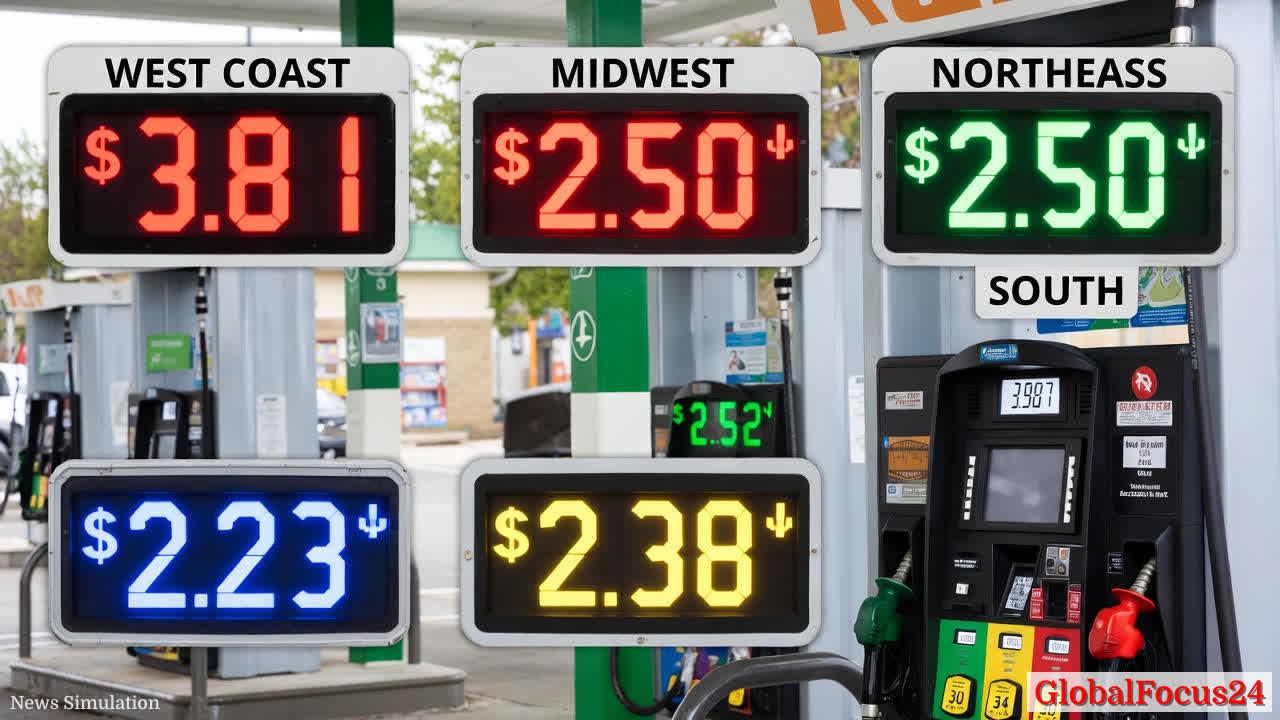
Even as the national average declines, regional patterns remain pronounced. The West Coast states—California, Washington, Oregon, Nevada, Alaska, and Hawaii—continue to show higher average prices, with regional figures ranging from about $3.03 to $4.42 per gallon. Several factors help explain this disparity: higher state fuel taxes, environmental regulations that shape refinery configurations, and comparatively higher living costs that influence retail margins. Additionally, the West Coast’s reliance on imports and its unique fuel product specifications can contribute to elevated pump prices relative to many inland markets.
The Northeast presents a more mixed picture. States such as New York, Pennsylvania, New Jersey, Massachusetts, Connecticut, Rhode Island, New Hampshire, Vermont, Maine, Delaware, Maryland, and the District of Columbia report averages in a narrower band around $2.81 to $3.02 per gallon. In this region, dense commuter networks, aging infrastructure, and a commuter-heavy economy can amplify the impact of even modest price shifts. Tax structures and environmental programs in several Northeastern states often interact with wholesale market dynamics to produce the observed range.
Midwest and South show the broadest relief for drivers. In many of these states—Texas, Oklahoma, Louisiana, Mississippi, Arkansas, Missouri, Kansas, Nebraska, Iowa, Alabama, Wisconsin, Michigan, Indiana, and Illinois—the average price hovers below $2.50, with some markets dipping as low as $2.24 per gallon. The combination of robust refining capacity, competitive retail markets, and lower living costs contributes to these relatively cheaper prices. The Midwest’s central location also curtails transportation costs to major population centers, which can help sustain lower retail prices.
Other states—Florida, Georgia, North Carolina, Ohio, West Virginia, Montana, Idaho, South Dakota, North Dakota, Wyoming, Colorado, Utah, New Mexico, Kentucky, Tennessee, South Carolina, and Virginia—display mid-range averages, typically between about $2.49 and $2.81 per gallon. These states reflect a mix of regional supply constraints, tax structures, and seasonal demand patterns that collectively shape their prices.
Economic Implications: What a Lower Gas Price Signal Means
For households, a lower gas price translates into real consumption flexibility. Transportation costs are a perennial household budget line item, influencing choices from daily commutes to discretionary travel and tourism. When gas costs retreat from peaks seen in prior years, households may reallocate funds toward other categories—groceries, housing, or services—potentially nudging consumer spending patterns toward sectors that benefit from higher discretionary income.
From a macroeconomic perspective, the price dip can act as a modest tailwind for consumer sentiment and retail activity. Economists often model the pass-through of lower fuel costs into broader inflation metrics and consumer purchasing power. If savings from gas are saved or redirected into other consumption, retail sectors—auto parts, consumer electronics, dining, and entertainment—could experience incremental demand. The net effect on inflation, however, depends on the broader price environment, including energy, goods, and services across the economy.
Businesses that rely on trucking and logistics may see reduced operating costs, contributing to lower freight bills and potentially more competitive pricing domestically. This could support export-oriented sectors indirectly by preserving margins in domestic supply chains. Conversely, sustained low prices can influence investment signals in energy infrastructure, potentially slowing the incentive for long-term capacity expansions if prices remain persistently subdued.
Regional Economic Considerations: Winners and Cactors
- Energy-intensive industries: Sectors with higher fuel exposure, such as manufacturing and distribution networks, benefit from lower transport costs. In states with large logistics hubs and interstate freight movement, the cost relief can be magnified through supply chains that are sensitive to diesel and gasoline margins.
- Tourism and travel: Lower gas prices may incentivize more road trips, weekend getaways, and inland tourism. Regional tourism boards could see upticks in short-term demand, particularly in areas within reasonable driving distance of major metro centers.
- Public transit and policy shifts: Some municipalities may respond to gas price dynamics with adjustments to transit subsidies or promotions to encourage alternate transportation modes. While policy shifts are influenced by many factors, fuel costs remain a salient variable in the transportation mix.
- Tax and municipal revenue: Gasoline taxes contribute to state and local budgets. As pump prices fall, per-gallon tax collections may dip modestly, affecting road maintenance funds and infrastructure initiatives. States with a heavy reliance on fuel taxes may experience a slower revenue cadence, prompting budgetary recalibrations.
Inventory and Market Dynamics: Why Prices Are Changing
The current price relief emerges from a confluence of supply-side and demand-side factors. Global crude prices have seen stability and modest declines at times, easing wholesale costs for refiners. In addition, refiners have improved utilization rates and operational efficiency after years of modernization post the 2020 disruptions. U.S. crude production levels remain robust, with ongoing shale output contributing to a more balanced domestic supply. Those market conditions tend to dampen wholesale gasoline prices, which in turn relieves retail margins.
Seasonality plays a role as well. The winter heating season can affect crude demand patterns and refinery throughput differently from summer seasonality, when demand for gasoline typically rises due to vacations and road trips. If winter demand remains muted and refinery runs are optimized, motorists can benefit from lower per-gallon costs.
Global geopolitics, too, can influence price direction. Any disruption in major exporting regions or changes in sanctions regimes can quickly ripple into wholesale gasoline costs. The current environment appears less volatile than some past spikes, but market watchers continue to monitor for any shifts that could interrupt the price relief.
Public Response: Consumer Reactions and Behavioral Trends
Public sentiment toward gas price movements tends to cluster around affordability and mobility. As prices dip, consumer confidence can gain a lift, particularly among households with less flexible budgets. For many, the drop translates into a tangible easing of monthly expenses and a potential reallocation of spending toward other goods and services. In the short term, this can support local economies—gas stations, convenience stores, and nearby retailers—through increased consumer foot traffic.
At the same time, drivers often adjust travel plans in response to price volatility. A sustained period of lower prices might encourage longer road trips and weekend getaways, especially in regions where driving distances to attractions or natural sites are feasible. Regional tourism operators could see incremental business from the shift in consumer behavior, with related impacts on hotels, restaurants, and entertainment venues.
Infrastructure and Policy Context: Where the States Stand
State-level policy choices continue to influence local gasoline costs. Road tax structures, environmental mandates, and regulatory frameworks interact with wholesale market conditions to shape final prices at the pump. Some states maintain higher taxes or more stringent fuel formulations, contributing to regional disparities. Others implement tax holidays or exemptions, altering the effective price for drivers.
Moreover, infrastructure funding initiatives, funded in part by fuel revenues, can be affected indirectly by price movements. If prolonged price declines compress revenue streams, states may revisit funding for road maintenance, bridge projects, and public transit investments. On the federal side, ongoing discussions about energy policy, environmental standards, and resilience investments may influence longer-term supply and demand dynamics.
Regional Comparisons in Focus
- West Coast: Elevated pump prices reflect the combination of higher state taxes, stringent environmental requirements, and regional supply logistics. While travelers may seek alternates to minimize costs, the broader economy benefits from the region’s high-value economy and diverse transportation networks.
- Northeast: The price range here emphasizes resilience in urban centers, commuter systems, and a dense network of retailers. While the region often bears higher living costs, the current price trajectory remains favorable for consumers, particularly those who rely on daily commutes.
- Midwest and South: The bulk of lower prices is driven by competitive retail markets and refinery infrastructure centered in the interior U.S. This configuration supports stronger consumer discretionary capacity and can bolster domestic demand in non-energy sectors.
- Mid-Atlantic and Mountain States: The mid-range prices reflect geographic and policy diversity, with economies that span manufacturing, energy, and services. These states may experience variable responses to ongoing shifts in fuel costs as supply chains adapt.
Looking Ahead: What Could Change in 2026
Analysts caution that the price dip, while welcome, is not guaranteed to persist in perpetuity. A return to higher wholesale costs due to geopolitical tensions, refinery outages, or shifts in global demand could reintroduce upward pressure on prices. Conversely, continued improvements in refining efficiency, sustained domestic production, and stabilization of international markets could maintain a favorable price environment for motorists.
Several scenarios could shape the 2026 trajectory:
- Sustained domestic production: If shale production remains robust and refinery utilization stays high, wholesale gasoline costs may stay favorable, supporting continued consumer savings at the pump.
- Seasonal dynamics: As driving seasons and travel activity evolve, seasonal demand could push prices higher during peak months if supply tightens correspondingly.
- Policy and tax changes: State or federal policy adjustments related to energy, transportation, or environmental programs could indirectly influence pump prices through tax policy and regulatory costs.
- Global energy mix: The role of alternative fuels, electrification, and evolving energy portfolios may affect long-term demand for gasoline, though the near-term impact on pump prices may be more muted.
Public Health and Environmental Considerations
Fuel prices intersect with broader public health and environmental goals. Lower gasoline costs can reduce barriers to mobility, supporting access to essential services, healthcare, and employment opportunities for rural and underserved communities. However, policy makers also monitor emissions and air quality, recognizing that higher vehicle usage tied to lower prices could influence local pollution levels. Balancing affordability with environmental stewardship remains a key dimension of energy policy and urban planning discussions.
Investment and Market Momentum
Energy markets are highly interconnected with investment cycles in refining capacity, distribution networks, and alternative energy projects. A period of lower gasoline prices can influence investment strategies by reducing near-term margins but potentially spurring efficiency upgrades and automation to preserve profitability. Market participants watch inventory levels, refinery throughput, and crude input costs to gauge how long price relief might persist and what signals are most likely to trigger a shift.
Regional Sensitivities: Practical Takeaways for Consumers and Businesses
- For households: Budget planning benefits from a predictable fuel cost floor. With the national average at $2.81, households can plan for a portion of their monthly expenditures to be allocated to transportation, enabling more flexibility in discretionary spending.
- For drivers and commuters: The price environment may influence decisions about vehicle use, commute mode, and travel timing. In regions with already low prices, incremental reductions may have diminished marginal impact, while in higher-cost regions, the savings could be more pronounced in daily budgeting.
- For small businesses: Local fleets, delivery services, and service providers may adjust routes, scheduling, and personnel allocation in response to fuel price movements. Savings on fuel could be redirected toward wage growth, equipment upgrades, or service expansion.
- For policymakers: Fuel price trends provide input into transportation funding strategies and consumer affordability programs. Authorities may consider balancing revenue needs with consumer relief and investing in public transit alternatives to moderate long-term dependence on fossil fuels.
Conclusion: A Quiet Yet Meaningful Shift
The drop to a national average of $2.81 per gallon marks a meaningful shift in the U.S. energy and transportation landscape. While not a blanket solution to all economic pressures, lower gas prices offer immediate relief for households and a catalyst for shifting consumer behavior and regional economic dynamics. The implications stretch beyond individual wallets, touching supply chains, regional competition, and public policy considerations as the year unfolds. As markets continue to respond to evolving energy fundamentals, observers will keep a close watch on how regional price differences, refinery capacity, and global developments shape gasoline costs in 2026 and beyond.