)
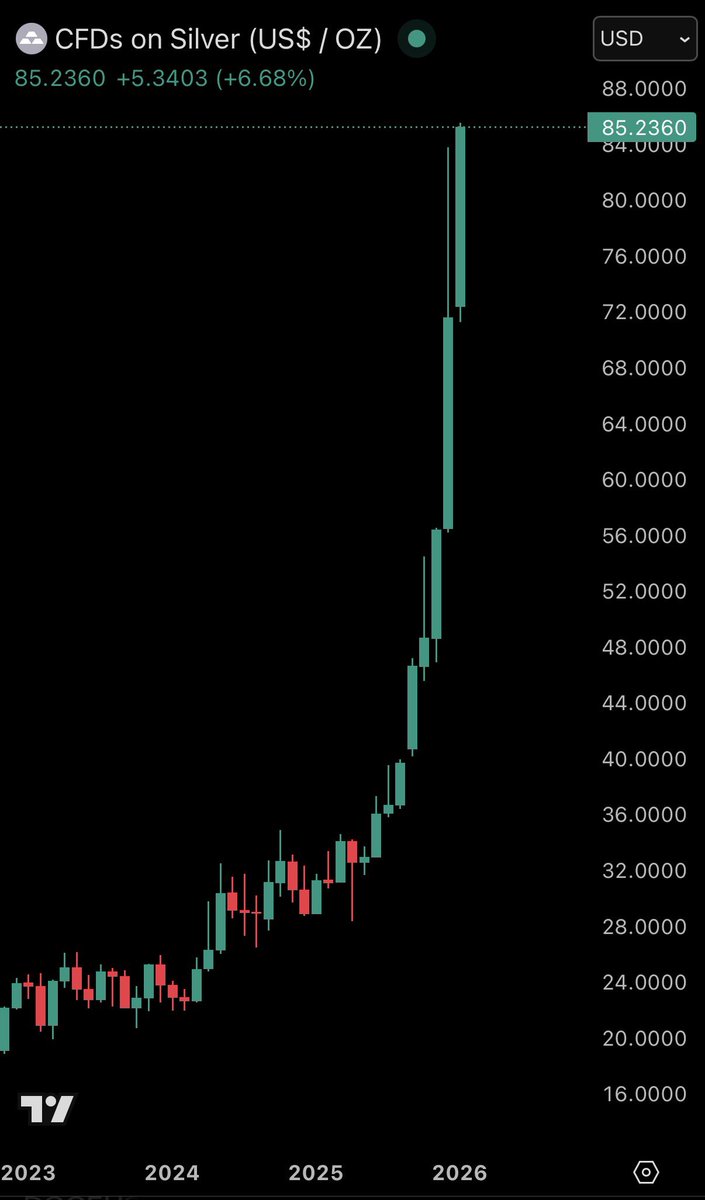
SILVER SURGE: RECORD BREAKER AS PRICES SPIRAL PAST $85 AN OUNCE
A new chapter in precious metals markets opened as silver breached the $85 per ounce threshold for the first time in history, marking a dramatic ascent that has already lifted prices by about 19 percent in 2026. The move underscores shifting investor sentiment, evolving industrial demand, and a broader reallocation into safe-haven assets amid a complex global backdrop. This article provides historical context, examines the potential economic impact, and offers regional comparisons to place the development in a broader perspective.
Historical context of silver markets
- A long arc of volatility and resilience: Silver has historically traded as both an industrial metal and a monetary asset, with its price sensitive to a mix of mine supply, jewelry demand, solar and electronics manufacturing, and macroeconomic risk appetite. The current milestone sits within a longer pattern of sharp, sometimes abrupt, moves that occur when precious metals investors react to tightening financial conditions or upheavals in currency markets. Silver’s price history features notable spikes during periods of financial stress, followed by periods of consolidation as supply-demand dynamics reassert balance. These cycles help explain why a single-day breakout can reverberate across markets and consumer expectations.
- The role of silver as an inflation hedge and portfolio diversifier: Historically, silver has been used as a hedge against inflation and as a diversification tool within investment portfolios. When inflationary pressures intensify or geopolitical concerns rise, investors often seek the perceived safety and liquidity of precious metals. The present run to historic highs can thus be interpreted as part of a broader trend where investors reweight holdings toward assets thought to preserve value in times of monetary uncertainty. This contextual lens helps readers understand why the price reaction is notable beyond a simple supply-demand snapshot.
- Industrial demand as a stabilizing or destabilizing force: Silver’s dual nature as both a monetary instrument and a key industrial input—particularly in electronics, photovoltaics, and medical devices—means that price dynamics are influenced by global manufacturing activity. If electrical and solar industries expand rapidly, demand can support higher prices even as investment flows wax and wane. Conversely, a slowdown in manufacturing could counterbalance speculative demand. The current ascent reflects a mix of these forces, with investors watching industrial demand signals alongside monetary policy cues.
Economic implications of a high silver price
- Impacts on miners and mining economics: When silver prices rise to unprecedented levels, mining profitability often improves, potentially stimulating exploration and production activity. Higher prices can enable mid-tier producers to extend mine life, accelerate capex on extraction and processing infrastructure, and attract capital for expansion projects. However, cost pressures from energy, labor, and regulatory compliance can temper some of these benefits, creating a nuanced landscape for producers and investors alike.
- Effects on inflation perceptions and consumer pricing: Silver price movements can feed into broader inflation expectations, particularly for segments tied to solar energy, electronics, and medical technologies where silver is a component. If higher metal costs translate into more expensive finished goods or increased production costs, consumer prices could experience marginal upward pressure. Yet the indirect nature of this transmission means the overall impact on consumer inflation is likely to be limited in the near term unless the price increase persists or accelerates.
- Investment, savings, and hedging strategies: A dramatic surge in silver can prompt rebalancing among retail and institutional investors. Some may view it as an opportunistic entry point, while others may shift toward more liquid, diversified positions in precious metals or in instruments tied to precious-metal prices. The strategic responses depend on broader market conditions, including interest rates, currency stability, and expected duration of the price regime. In this context, markets watch for liquidity conditions, futures curve behavior, and hedging activity across asset classes.
Regional comparisons and market nuance
- United States and Europe: In major developed markets, silver has often traded alongside gold with a similar risk-off appeal during periods of uncertainty. A surge to above $85 an ounce is likely to attract attention from both institutional asset allocators and retail investors seeking portfolio protection. The reaction in these regions typically includes increased trading volume in futures and options markets, as well as heightened media coverage that can influence retail sentiment. The ongoing interplay between monetary policy signals and geopolitical developments will shape how long this elevated price regime persists in these regions.
- Asia-Pacific dynamics: In Asia, where solar energy deployment and electronics manufacturing remain key growth pillars, silver demand can be influenced by industrial activity and export cycles. If manufacturing momentum remains robust, higher silver prices may be absorbed by productive sectors, while any domestic currency movements and import costs can modulate price transmission. Market participants in this region monitor both global price trajectories and regional policy support for energy and technology sectors.
- Emerging markets considerations: In several emerging economies, silver serves both as an investment channel and as a component of consumer electronics supply chains. Currency fluctuations, inflation trends, and capital flow patterns during a period of rapid price ascent may influence household and business behavior, including savings choices and budget allocations for technology adoption. The broader implication is a potential reallocation of discretionary income toward tangible assets or durable goods as households respond to perceived wealth effects.
Public reaction and sentiment
- Investor mood under a spotlight: Rapid moves in silver prices tend to evoke a spectrum of reactions—from cautious optimism among speculators to consideration of risk controls by conservative investors. Public conversations around precious metals often highlight questions about long-term value, hedging effectiveness, and the timing of entry or exit. In the current environment, enthusiasm for the breakout is tempered by awareness of potential pullbacks that frequently accompany sharp price spikes.
- Media narratives and consumer optics: The emergence of a historic price level can catalyze broader media and social discourse about the reliability of precious metals as stores of value. Consumers might weigh the costs and benefits of diversifying portfolios with physical holdings versus financial instruments tied to metals. These conversations can influence short-term demand patterns and affect how households allocate savings toward retirement accounts, education funds, or other goals.
Strategic considerations for stakeholders
- For investors: A record run in silver underscores the importance of disciplined risk management, diversified exposures, and clear hedging strategies. Investors may consider a combination of futures, exchange-traded products, and physical holdings while remaining mindful of roll costs, contango or backwardation in futures markets, and liquidity conditions. Establishing predefined entry and exit criteria can help manage volatility and align positions with long-term objectives.
- For policymakers and regulators: Sharp movements in precious metals markets can prompt reviews of market integrity, price discovery mechanisms, and the potential spillover into consumer markets. Regulatory scrutiny may focus on market transparency, clearinghouse risk, and the resilience of financial infrastructure that supports commodity trading. Policymakers often balance the interests of price discovery, market stability, and consumer protection in this space.
- For industry sectors relying on silver: Users in solar photovoltaic, electronics, medical devices, and jewelry sectors may reassess input cost trajectories and supplier pricing strategies. Long-duration contracts, hedging arrangements, and supplier diversification can be key tools to mitigate the impact of price volatility. Companies might also explore efficiency gains and alternative materials where viable to reduce exposure to sharp price swings.
Contextual framing with historical parallels
- Parallels with past commodity cycles: History shows that commodity markets frequently experience parabolic spikes driven by a convergence of speculative activity, supply constraints, and macroeconomic stimuli. Understanding these cycles—often punctuated by retracements—helps explain why today’s price action could be followed by periods of consolidation or adjustment. This framing supports investors and observers in distinguishing transient momentum from sustainable shifts in value drivers.
- Lessons from prior precious metal episodes: Previous episodes of rapid ascent in silver prices have demonstrated the importance of liquidity, storage costs, and market depth in determining how quickly gains translate into broader market movement. Observers examining the current surge can draw lessons about how price momentum interacts with manufacturing demand, investment flows, and currency dynamics across global markets.
The road ahead: questions and uncertainties
- How long will the high-price regime endure? Markets will weigh ongoing monetary policy developments, inflation trajectories, and global economic growth signals as central banks adjust policy and liquidity conditions. The duration of the elevated price environment will depend on whether the drivers of demand remain intact and whether supply-side constraints ease or intensify. Analysts will monitor futures curves, inventory levels, and production plans to gauge potential persistence. This uncertainty invites cautious optimism among investors while underscoring the need for balanced exposure.
- What regional shifts could reshape momentum? Regional demand patterns, currency movements, and policy incentives for energy and electronics sectors will influence how different markets contribute to or temper further price acceleration. The interconnected nature of global supply chains means developments in one region can ripple across others, affecting price trajectories and inflation expectations in multiple economies.
- What is the broader macroeconomic implication? The silver surge intersects with broader themes such as inflation expectations, real interest rates, and risk sentiment. While a single metal’s price cannot alone pivot economic outcomes, a sustained rally could contribute to wealth effects, influence investment timing, and shape the discourse around safe-haven assets in a diversified portfolio strategy. The net effect will depend on how other asset classes correlate with precious metals under evolving macro conditions.
Conclusion
- A landmark price level for silver sets a new baseline for market participants to contend with. The combination of historical context, industrial demand signals, and macroeconomic forces informs a nuanced interpretation of the move. Stakeholders across finance, industry, and policy will watch closely how this development unfolds, with attention to liquidity, supply dynamics, and global economic momentum that will determine whether this historic moment becomes a lasting inflection or a milestone within a broader trajectory of volatility and recovery. The enduring question remains: what comes next as markets digest the implications of a silver price regime that has, for now, rewritten the upper bounds of the commodity’s value.