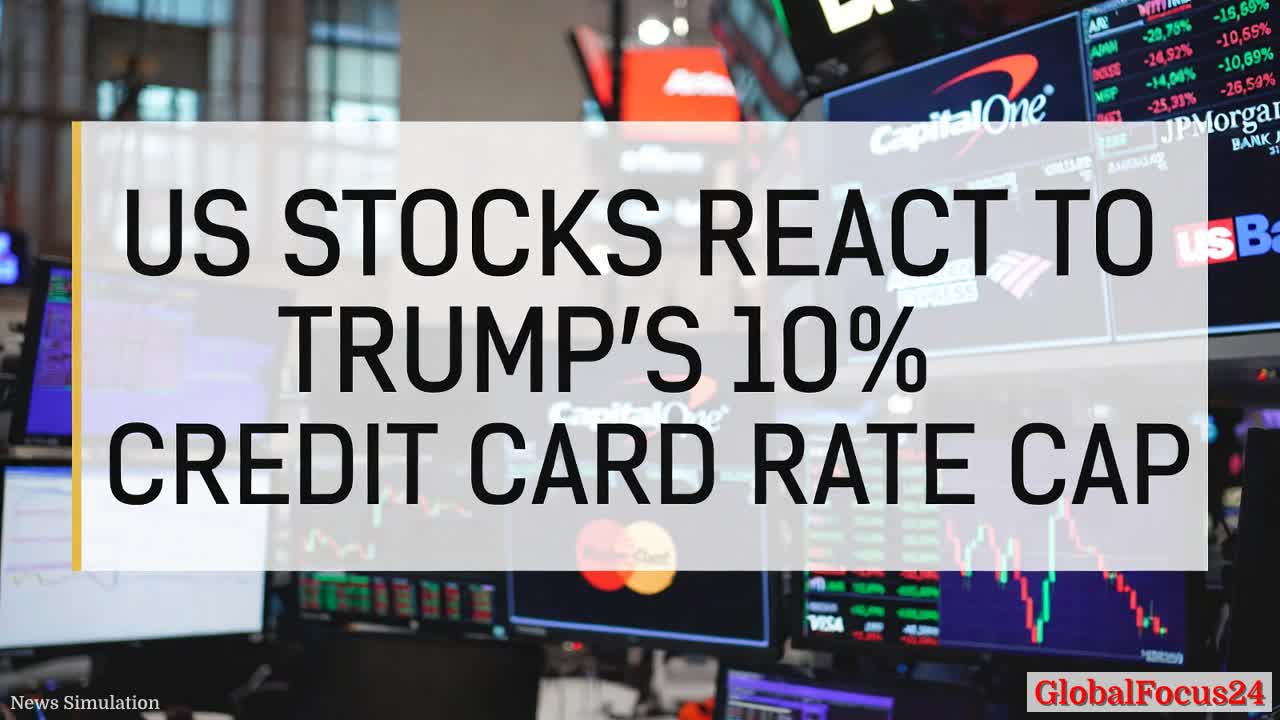
Credit Card Interest Cap Shakeup: US Financial Stocks Fall as Debate Intensifies
In a wave of market reaction that reverberated across Wall Street, major US financial stocks extended declines after news circulated about a proposed 10% cap on credit card interest rates. The move, framed by policymakers as a step toward consumer affordability and financial protection, influenced investor sentiment and sparked broader discussion about the balance between lending risk, bank profitability, and consumer access to credit. As the industry digested the implications, analysts weighed immediate market impacts against longer-term consequences for credit availability, pricing structures, and regional economic comparisons.
Context: How a Cap Could Reshape the Credit Card Landscape
A proposed cap on credit card interest rates represents a significant policy lever in the ongoing debate over affordable consumer lending. While interest rate limits are common in several international markets, the United States has historically relied on market competition, risk-based pricing, and regulatory oversight to govern card terms. The suggested 10% cap would directly constrain the annual percentage rate (APR) charged on revolving balances, potentially altering the cost of credit for tens of millions of cardholders. For lenders, the cap could compress net interest margins, necessitate adjustments in fee structures, and prompt a reevaluation of risk models, reward programs, and funding strategies.
Historical context highlights how rate caps and related consumer protections have evolved. In the post-financial-crisis era, regulators intensified scrutiny of lending practices and introduced measures intended to curb predatory pricing, late fees, and opaque terms. Over time, the balance between consumer safeguards and lender incentives has shaped product design, with many issuers expanding digital experiences, simplifying disclosures, and offering targeted promotions to retain competitive positioning. Any formal cap would add a new dynamic to this long-running policy conversation, potentially accelerating shifts in underwriting standards and product differentiation across the sector.
Economic impact: Profitability, liquidity, and the broader credit ecosystem
The immediate reaction from the market reflected investor concerns about profitability and risk management under a capped-rate regime. Major credit card issuers and payment networks experienced pronounced share price movements as investors reassessed earnings potential, cost of funds, and the durability of existing business models. In practical terms, a 10% cap could compress margins on revolving balances, influence the price elasticity of demand for discretionary credit, and affect the utilization rates of available credit lines. Lenders might respond by adjusting annual fees, annual percentage rates on new accounts, or the mix of rewards that attract or deter cardholders.
Beyond individual institutions, the broader payment ecosystem could experience collateral effects. Networks that process card transactions derive revenue from interchange fees, which may be impacted if consumer spending behavior shifts under a cap. If card usage declines due to higher overall borrowing costs or tighter credit access, merchants could experience changes in transaction volumes and the velocity of payments. In turn, consumer spending patterns, retail sector profitability, and regional employment dynamics could feel indirect influence from policy changes that shape credit availability.
Regional comparisons offer insight into potential outcomes. Historically, regions with more aggressive consumer finance regulations have demonstrated slower growth in certain high-interest credit products but often see reduced default rates and improved household balance sheets. By contrast, markets with comparatively flexible lending terms can experience more rapid credit expansion but may face higher default risk during economic downturns. A 10% cap in the US could align certain consumer lending terms more closely with international benchmarks, potentially narrowing cross-border gaps in credit pricing and underwriting practices. Observers will watch how different regions adapt—whether urban centers with dense consumer finance competition will absorb the change more quickly, or whether rural and suburban markets with fewer lenders experience a more pronounced tightening of access.
Market reaction: A snapshot of initial declines and what they signify
The day of the proposal saw notable equity movements among leading financial names. Capital One, Affirm, American Express, Citigroup, MasterCard, Visa, US Bancorp, JPMorgan Chase, Wells Fargo, and Bank of America each posted declines, signaling a broad reassessment of earnings potential under a rate-cap regime. The magnitude of losses varied by institution, reflecting differences in business mix, exposure to consumer lending, and reliance on fee-based services. When a large policy shift introduces systemic risk to profitability, investors often recalibrate expectations for capital returns, dividend sustainability, and growth initiatives tied to consumer credit products.
From a strategy perspective, banks and payment networks may respond with a multi-pronged approach:
- Adjust pricing on new credit products and refine risk-based pricing models to preserve profitability without eroding credit access.
- Rebalance product portfolios, emphasizing secured lending, co-branded partnerships, or alternative financing options that could be less sensitive to interest-rate constraints.
- Reassess non-interest income streams, including interchange revenue, premium services, and loyalty program economics, to offset potential reductions in net interest income.
- Tighten cost structures and optimize technology investments to maintain margins amid tighter pricing space and competitive pressure.
Public reaction and consumer implications
Public sentiment surrounding a credit card interest cap is nuanced. Supporters argue that lower borrowing costs can ease financial strain for households with high revolving debt and improve budget predictability for families navigating inflationary pressures. Critics raise concerns about potential reductions in credit access, fewer value-added rewards, slower innovation in lending products, or unintended consequences such as reduced rewards generosity or higher upfront fees to compensate for capped interest income.
For everyday borrowers, the practical effect hinges on the cap’s design. If the policy targets APRs on existing balances versus new balances, or provides carve-outs for promotional rates and specific categories, the outcome could differ significantly. Consumers could experience more predictable borrowing costs but might encounter trade-offs in terms of loan availability, credit line sizes, or the cost of ancillary services tied to card ownership.
Industry-by-industry context helps illuminate potential trajectories
- Banks and mega-cayers: Traditional lenders with diversified revenue streams could weather near-term pressure by leveraging scale, cross-sell opportunities, and digital acquisition channels. However, an extended period of subdued interest income might push some institutions to pursue higher fee-based revenue or diversified funding strategies.
- Payment networks and fintechs: Networks that earn from processing fees and developers of credit technologies may face a dynamic where interchange income remains sensitive to consumer spending behavior. Fintechs that rely on rapid loan growth could experience tighter funding conditions or more conservative lending practices, prompting a shift toward alternative capital sources or risk-adjusted product designs.
- Merchants and merchants’ associations: Changes in consumer credit affordability could influence purchase behavior, especially for discretionary categories. If consumers reduce revolving debt or adjust card usage, merchants may observe shifts in average ticket sizes, loyalty dynamics, and promotional responsiveness.
- Regulators and policymakers: The debate around rate caps intersects with broader themes of financial inclusion, consumer protection, and macroeconomic stability. Regulators will likely weigh empirical evidence from pilot programs, market responses, and international comparisons as they consider the most effective frameworks for balancing consumer welfare with sustainable lending ecosystems.
Historical context: Lessons from past policy experiments and market cycles
Historical echoes resonate in today’s discussions about credit pricing and consumer protections. In prior episodes where credit terms were tightened or caps were introduced, lenders often adapted by refining credit risk assessment, expanding into secured lending products, or pricing services to reflect the new risk environment. Consumers sometimes benefited from clearer disclosures and lower costs on certain products, while others faced adjustments in credit limits or eligibility criteria. Market participants monitor these cycles for signs of resilience or fragility, and for indicators of how customer behavior evolves when borrowing constraints tighten.
In economic cycles, credit availability often interacts with employment trends, inflation expectations, and monetary policy. A cap on credit card interest rates could influence consumer spending momentum during periods of rising prices or economic headwinds. If borrowers face lower interest charges, discretionary spending might either increase due to greater purchasing power or decrease if lenders tighten underwriting standards to compensate for reduced yields. The net effect depends on the balance of demand elasticity, risk controls, and the pace at which lenders can adapt their product offerings.
Global perspectives: Comparative lessons from abroad
International experience with rate caps and consumer credit pricing provides a context for evaluating potential US outcomes. Some economies have used interest rate ceilings as a tool to protect households during economic stress, while others rely on transparent disclosure rules and robust credit scoring to maintain access. A careful comparison suggests that the success of a cap will hinge on complementary policies, such as borrower education, alternative lending channels, and the availability of affordable credit options beyond traditional unsecured cards. Regions with strong consumer protection frameworks paired with competitive lending ecosystems may demonstrate more balanced outcomes, preserving access while moderating risk.
Conclusion: Navigating the transition ahead
As policymakers finalize any proposed credit card interest rate cap, lenders, investors, and consumers alike will watch for practical implications across profitability, credit access, and consumer welfare. The near-term market response highlighted the sensitivity of financial stocks to regulatory shifts that impact revenue models. Over the longer horizon, the industry’s ability to innovate responsibly—by aligning pricing, risk management, and customer experience with evolving policy landscapes—will determine how the credit card market evolves.
For households, the central question remains: how will a cap affect the affordability and availability of credit in daily life? If implemented with thoughtful design and supportive measures, the policy could contribute to more predictable borrowing costs without unreasonably obstructing access to essential credit. If not carefully calibrated, it could reshape the lending landscape in ways that alter consumer behavior, lender profitability, and the pace of innovation in financial services.
As the debate progresses, stakeholders will seek a balance that protects consumers while maintaining a robust, competitive credit market. The outcome will likely influence not only the pricing of revolving credit but also the broader structure of consumer finance in the United States, shaping how households borrow, spend, and plan for the future in a dynamic economic environment.