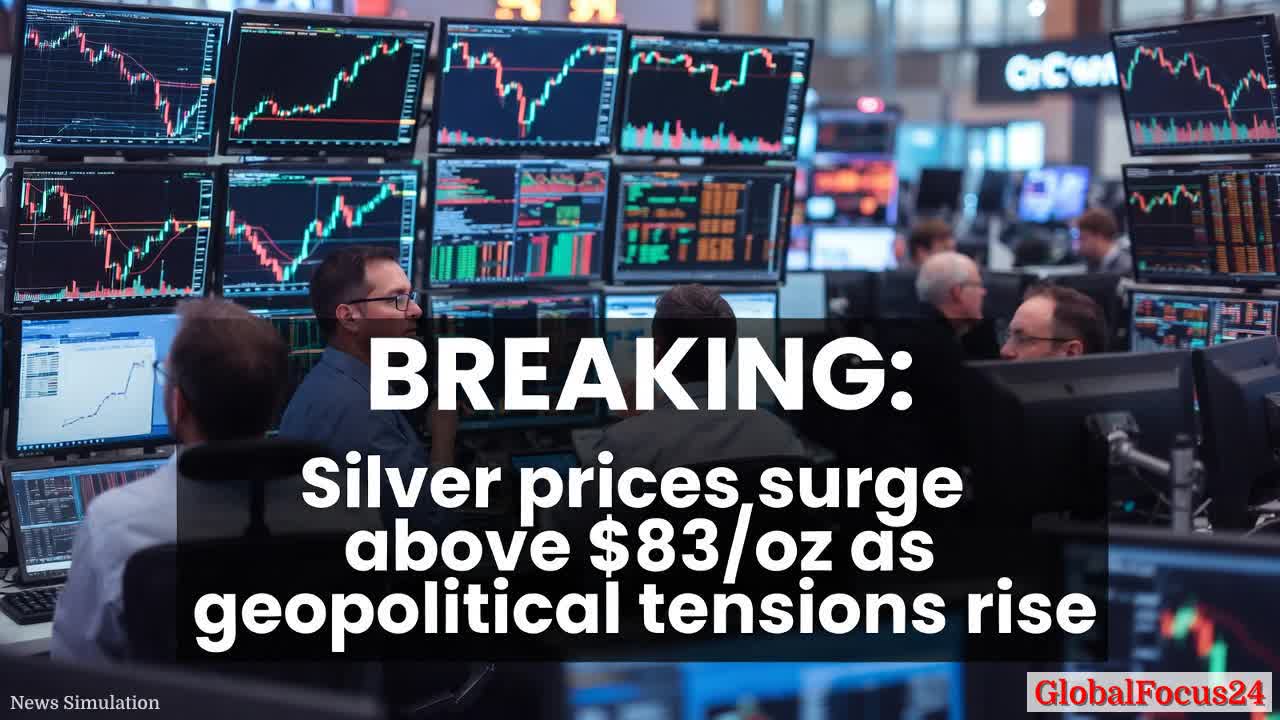
Silver Prices Surge Above $83 per Ounce Amid Rising Geopolitical Tensions
In a dramatic turn for precious metals markets, silver prices surged above $83 per ounce as geopolitical tensions intensified across multiple regions. The move underscores silver’s dual role as both an industrial metal and a traditional safe-haven asset, with traders weighing the implications for supply chains, inflation expectations, and currency dynamics. While the price trajectory remains volatile, the current rally signals renewed investor interest in tangible assets that can perform under stress when political risk and economic uncertainty rise.
Historical context and market dynamics
Over history, silver has often followed the broader trends of gold during times of crisis, yet its price path has also been shaped by industrial demand. The metal’s dual nature means it can react to both macroeconomic shifts and sector-specific developments, such as electronics production, solar photovoltaic deployment, and medical technology. The latest leg higher arrives amid a background of regional flashpoints, sanctions chatter, and shifts in global supply chains—factors that historically have heightened demand for precious metals as a hedge against potential currency depreciation and inflation.
Analysts point to several key drivers behind the current surge:
- Safe-haven demand: When geopolitical risk rises, investors frequently move into assets considered stores of value. Silver’s liquidity, combined with its lower price point relative to gold, can offer accessible exposure to risk-off trading strategies.
- Inflation expectations and real yields: Expectations for higher inflation and flatter real yields may push investors toward precious metals as a portfolio diversifier. In this context, silver benefits from its historical role as a crisis-responsive asset.
- Industrial demand resilience: As economies navigate energy transitions and digitalization, demand for silver in electronics, solar energy, and medical devices remains robust. Even during periods of market stress, structural demand for silver can provide a floor for price levels.
- Currency and monetary policy signals: Shifts in currency valuations and central bank communications often influence precious metals, with weaker fiat currencies and accommodative monetary policy historically supporting higher metal prices.
Regional comparisons and market nuances
The current price move has global reverberations, yet regional market dynamics can produce divergent short-term narratives. In North America, futures trading and exchange-traded products have seen heightened activity as traders rebalance portfolios in response to geopoliticals and domestic macro data. Across Europe, market participants weigh eurozone growth prospects against energy price volatility and geopolitical risk exposure, which can amplify safe-haven inflows into silver. In Asia, industrial users and investors alike monitor supply chains, manufacturing output, and central-bank policy stance, contributing to a mixed but generally constructive backdrop for precious metals.
Historically, regions with deep industrial bases and higher energy costs tend to hold silver as both a commodity input and a monetary hedge. Meanwhile, economies with substantial deficits or looming fiscal concerns can experience amplified reactions to global risk events, as investors seek stability in tangible assets. The current environment—marked by heightened geopolitical tensions and caution around global growth—fits within a broader pattern where silver serves as both a hedge and an opportunistic trade in times of uncertainty.
Economic impact and implications for markets
The price surge in silver carries several potential economic implications:
- Mining and exploration activity: Higher prices can incentivize additional silver production, particularly in jurisdictions with favorable mining economics. A sustained rally could lead to increased capex in the sector, potentially boosting local employment and regional development where mines operate.
- Investment and liquidity effects: Elevated prices may prompt a shift in risk sentiment, with financial institutions and retail investors adjusting portfolios to maintain diversification. Enhanced demand for silver-backed instruments may, in turn, support market liquidity and price discovery.
- Industrial cost structures: For industries that rely on silver for electrical conductivity and photovoltaic efficiency, price increases can translate into higher input costs. Manufacturers may seek hedging strategies or supply diversification to mitigate volatility, while end-user prices could reflect broader inflation pressures.
- Policy considerations: Policymakers occasionally monitor metals markets as indicators of inflation expectations and energy transition financing. A sustained run in silver prices could influence discussions around commodity supply resilience, strategic stockpiling, and investment incentives for critical materials.
Public reaction and market psychology
Public sentiment surrounding silver has oscillated withs about geopolitical risk, energy prices, and economic prospects. Investors often react not only to the level of prices but to the speed of change and the factors driving the move. In times of elevated tension, retail participation can rise as individuals seek tangible assets they perceive as less vulnerable to policy shocks. This dynamic can contribute to rapid intraday price swings, as leveraged positions and speculative flows intersect with longer-term value considerations.
Beyond the financial markets, communities tied to mining regions, supply chain nodes, and manufacturing hubs may experience tangible effects from price volatility. Local economic activity can be influenced by shifts in production schedules, mine operations, and the demand for related services. As always, the broader economic spillovers depend on the duration and magnitude of the price move, as well as the policy responses of central banks and governments.
Supply considerations and longer-term outlook
Silver’s supply side features a mix of primary mining output and recycled material. In periods of price strength, recycling can contribute to a feedback loop that supports near-term availability, although the pace of recycling is typically slower than primary mining response due to processing and regulatory constraints. Long-term supply dynamics will hinge on mining monocultures, ore grades, and capex discipline within the sector. The current price level could encourage exploration and project development in highly prospective jurisdictions, possibly altering regional supply balances over the next several years.
From a demand perspective, the silver market derives strength from both traditional and green-energy applications. Solar photovoltaic installations, which rely on silver as a critical conductor, continue to expand globally as countries pursue decarbonization goals. This structural demand supports a fundamental floor under prices, even as cyclical factors cause fluctuations in the near term. If geopolitical tensions ease, the market might attract less risk capital, potentially moderating price gains. Conversely, fresh sanctions, supply disruptions, or currency shocks could sustain elevated levels for longer.
Technical backdrop and risk factors
While fundamental drivers provide the rationale for a price level, technical analysis often highlights momentum and market sentiment. Current positioning across futures markets and exchange-traded products suggests a mix of speculative and hedging activity. Traders watch for signals such as moving average crossovers, relative strength indices, and volume spikes to gauge momentum and potential retracements. Given the metal’s volatility and the sensitivity to macros, investors are advised to maintain disciplined risk management, including position sizing and clear exit strategies.
Key risk factors to monitor include:
- Escalation or de-escalation of geopolitical conflicts: Any sudden developments could trigger rapid shifts in risk appetite and bid-ask dynamics.
- Central bank policy shifts: Changes in interest rate expectations or balance-sheet adjustments can influence real yields and asset allocation.
- Supply chain disruptions: Delays in mining operations, refining capacity, or logistics can tighten availability and affect pricing.
- Demand surprises: Accelerated adoption of solar technologies or unexpected shifts in industrial usage could alter the supply-demand balance.
Conclusion and outlook
The move above $83 per ounce marks a notable milestone in silver’s price journey, reflecting a confluence of safe-haven demand, inflation considerations, and structural industrial demand. While the path forward remains uncertain, the combination of geopolitical risk, macroeconomic dynamics, and ongoing energy transition efforts suggests that silver could retain a degree of vulnerability to shocks while benefiting from its role as a versatile, globally integrated commodity.
Analysts emphasize that price action over the coming weeks will hinge on how geopolitical developments unfold, how central banks respond to evolving inflation signals, and how supply chains navigate potential disruptions. For investors and stakeholders, the message is one of cautious vigilance: silver’s appeal as a hedge and a practical input in modern technologies remains intact, even as markets digest the latests. Regional comparisons indicate a broad-based, global response, with tailwinds likely to persist in environments where uncertainty remains elevated and demand for durable, liquid assets remains robust.