Silver Prices Rally to $83.53 as Markets Digest Demand Shifts and Supply Constraints
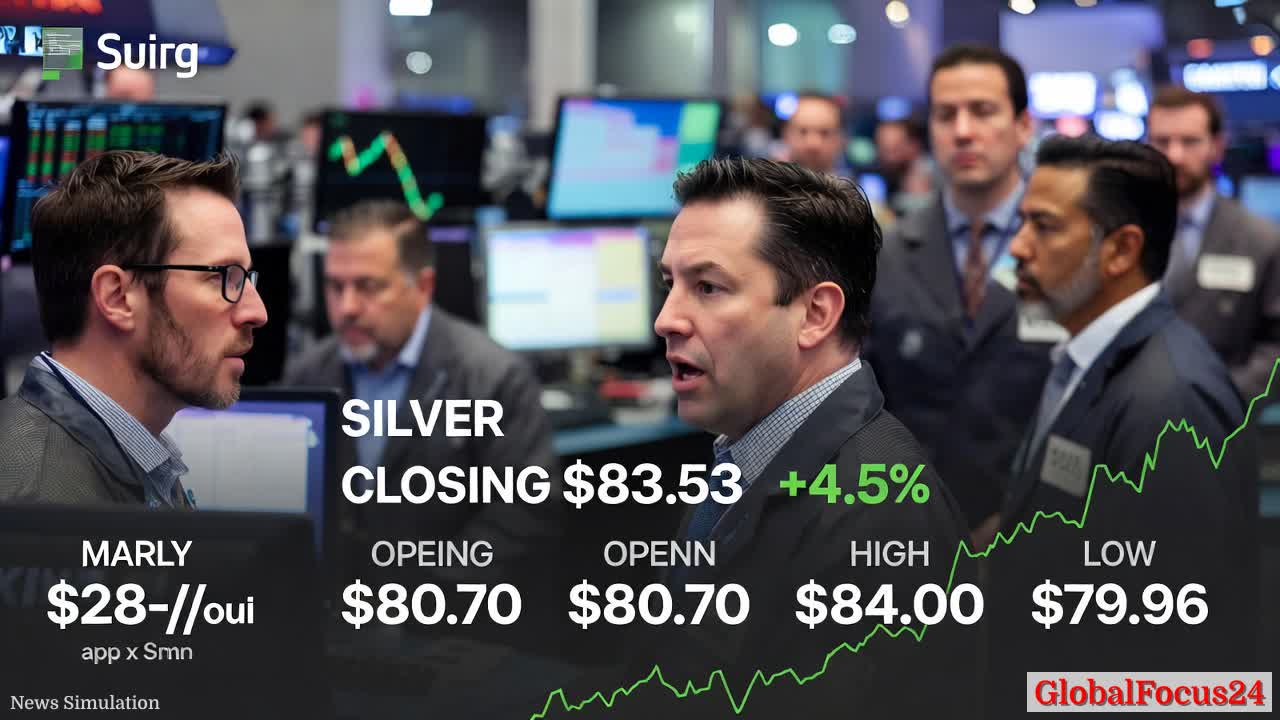
A surge in silver prices closed at $83.53 per ounce on January 12, 2026, marking a 4.5% gain or $3.63 from the prior session. The price action unfolded with an opening near $80.70, a session high of $84.00, and a low of $79.96, underscoring a day of pronounced volatility within a broader trend that has driven silver higher over the past year. From a technical perspective, the move reflects renewed interest from both investors and industrial buyers, as well as the evolving dynamics of precious metals markets in a period of rising inflation expectations and shifting monetary policy signals.
Historical context: a longer arc of value in a volatile commodity Silver’s journey over the past year has been marked by a steady ascent that stands in contrast to periods of relative stagnation observed in other precious metals. In March of the previous year, prices hovered around the $28 per ounce level, with traders weighing a mix of safe-haven demand, industrial usage, and concerns about broader inflation. Since then, silver has traversed a wide trading range, with episodes of consolidation followed by renewed rallies driven by risk-off sentiment and renewed appetite for tangible assets. This trajectory reflects silver’s dual identity as both an industrial commodity and a store of value, a combination that often translates to heightened sensitivity to macroeconomic developments.
Economic impact: how rising silver prices ripple through markets Broadly, higher silver prices influence multiple economic dimensions. For manufacturers, elevated silver costs can affect the price competitiveness of products that rely on silver-based components, including electronics, solar panels, and medical devices. In the energy sector, solar photovoltaic installations—where silver is used in photovoltaic cells—may experience marginal cost pressures, potentially affecting project economics and timelines in regions prioritizing clean energy expansion. For investors and savers, a persistent rise in silver acts as an alternative to traditional risk assets, offering diversification benefits in portfolios seeking hedge-like characteristics. Central banks and sovereign wealth funds, while historically less active in day-to-day precious metals trading, monitor silver’s momentum as part of broader asset allocation strategies and inflation hedging considerations.
Regional comparisons: where the rally is most pronounced Regional dynamics play a crucial role in how silver’s price movements translate into real-world effects. In North America, the demand environment is shaped by strong automotive and electronics manufacturing sectors, alongside steady investment interest in precious metals as a diversification tool. In Europe, energy transition initiatives and relative currency fluctuations add layers of complexity to price transmission, with silver often receiving attention as a supplemental hedge amid policy uncertainty. In Asia, technological manufacturing hubs and solar energy deployment contribute to secular demand for silver, reinforcing the metal’s role in supply chains that underpin rapid industrial growth. The current price level at $83.53 per ounce signals a global convergence of demand from both investment and industrial users, even as regional variations in currency strength and energy policy modulate the pace of price changes.
Supply and demand fundamentals: what’s behind the move A combination of supply constraints and robust demand underpins the current rally. On the supply side, mining activity, recycling rates, and geopolitical factors influence the available stock of silver. Disruptions in mining regions or labor market dynamics can tighten supply in the near term, while recycled silver continues to contribute a significant portion of the market’s available metal. On the demand side, jewelry and silverware demand, electronics and solar energy production, and institutional investment flows all contribute to maintaining price strength. Market participants monitor indicators such as mine production data, refinery throughput, and industrial usage trends to gauge the sustainability of price levels. The price action from $28 per ounce a year ago to over $80 reflects a combination of cyclical momentum and structural demand, rather than a purely speculative surge.
Investor behavior and market psychology: parsing the signals The momentum in silver markets often mirrors broader risk sentiment and inflation expectations. When investors anticipate higher consumer prices or seek shelter from potential currency depreciation, precious metals commonly attract capital as a non-correlated or low-correlation asset. In recent months, market participants have also watched for shifts in real yields, currency trajectories, and commodity stockpiles that could influence silver’s appeal relative to gold and other metals. The current close at $83.53 may reflect traders pricing in a favorable mix of inflation protection and upside potential from continued industrial demand, particularly from sectors tied to the global energy transition and electronics manufacturing.
Technological and policy drivers: how innovation shapes demand Technological progress in solar energy, electronics, and medical devices remains a core driver of silver demand. Solar panels rely on silver for their conductive properties, and as solar deployment accelerates in response to energy policy targets, silver consumption in this sector grows correspondingly. Innovations in electronics manufacturing, including high-precision sensors, imaging devices, and advanced coatings, also contribute to persistent usage of silver. Policy initiatives that incentivize clean energy, semiconductor production, and infrastructure investment can amplify silver consumption by increasing demand across multiple end markets. Conversely, technological breakthroughs in alternative materials or recycling efficiency could temper demand growth over the longer horizon.
Market infrastructure: liquidity, trading venues, and price discovery Silver markets are characterized by a broad ecosystem that includes physical bullion markets, futures contracts, and over-the-counter instruments. Liquidity in futures markets supports efficient price discovery and can amplify short-term moves when macros shift. In parallel, physical market dynamics—such as coin and bar demand from retail buyers and institutional demand from funds—help anchor prices in certain regimes, particularly during periods of heightened volatility. Market participants keep a close watch on trading volumes, open interest, and price dispersion across different delivery formats to gauge the balance between speculative positioning and genuine supply-demand fulfillment.
Global macro context: inflation, rates, and safe-haven demand The current rally in silver cannot be fully understood in isolation from broader macroeconomic conditions. Inflation expectations, central bank policy trajectories, and real interest rates all influence precious metals valuations. When real yields are low or negative, holding non-yielding assets like silver becomes more attractive as a store of value or hedge against eroding purchasing power. Conversely, if rates rise decisively and real yields improve, some investors may rotate into other assets. The price movement to the $83.53 level sits within a framework of ongoing debate about the pace and durability of inflation moderation, currency stability, and energy prices, all of which affect the risk calculus of both retail and institutional buyers.
Public reaction and market sentiment: the human dimension Public sentiment toward silver often swings between cautious accumulation and exuberant speculation. Retail buyers, motivated by a desire for tangible assets, commonly participate in periodic surges following notable price gains or media coverage of precious metals markets. At the same time, professional investors and hedge funds may reallocate strategic allocations in response to evolving macro data, commodity inventories, and geopolitical developments. In this environment, the recent close invites a mix of positive sentiment about inflation hedging and concern about potential pullbacks if market drivers shift or if profit-taking accelerates.
Outlook and risk factors: what to watch next Looking ahead, several factors could shape silver’s trajectory. Key among them are industrial demand trends, especially in solar energy and electronics, which are likely to maintain upward pressure on pricing if deployment accelerates. Mine supply projections, recycling efficiency, and geopolitical developments in major silver-producing regions will continue to influence the balance of supply and demand. Additionally, shifts in monetary policy stances and currency dynamics could alter the attractiveness of silver as a hedge or alternative investment.
In sum, the move to $83.53 per ounce on January 12, 2026, reflects a confluence of robust industrial demand, supply constraints, and macroeconomic dynamics that have kept silver in focus for investors seeking diversification and inflation protection. The broader context suggests that silver’s rally—while subject to periodic corrections—has roots in structural demand linked to the global push for energy transition technologies and digital infrastructure, alongside ongoing responses to macroeconomic uncertainty. As markets absorb new data on mine output, recycling flows, and policy developments, silver’s price path will continue to be a barometer of both industrial health and investor sentiment, with regional differences shaping how the rally translates into real-world economic effects.