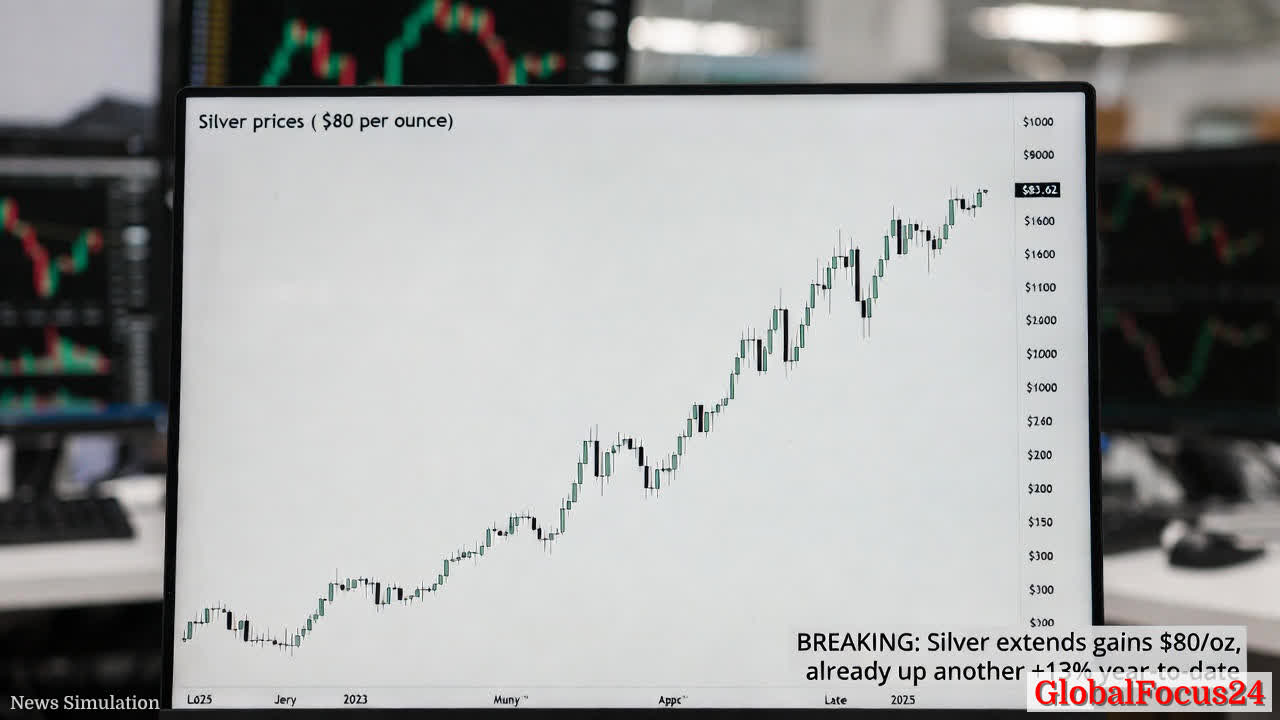
Silver Surges Beyond $80: A Deep Dive into the 2026 Rally
In early 2026, silver prices extended their impressive ascent, eclipsing the $80 per ounce mark and continuing a rally that began a year prior. Traders quoted CFDs near $80.69, reflecting a gain of more than 5% in recent sessions and more than 13% year-to-date. This momentum, propelled by robust industrial demand, persistent supply tightness, and evolving macro dynamics, marks a notable shift for the precious metal and broad commodity markets.
Historical context: a long arc of demand and constraints
Silver’s price trajectory through 2025 and into 2026 sits atop a complex history of industrial use, mining cycles, and investment demand. Historically, silver has occupied a gray area between precious metal status and industrial commodity. In the early 2020s, prices languished as investors debated the metal’s safe-haven appeal versus its industrial dip. By 2023, a tightening of supply and a rebound in solar, electronics, and automotive sectors helped restore silver’s appeal. The price began a sustained ascent as mine production lagged behind surging demand, a pattern that has persisted into the current year.
Industrial demand remains the central engine behind the rally. Silver’s unique properties—exceptional electrical conductivity, high reflectivity, and strong thermal performance—make it indispensable in solar photovoltaic cells, electronic components, and a growing array of green-energy technologies. The solar industry, in particular, has emerged as a primary driver, with sustained installation growth across Asia, Europe, and the Americas supporting demand for metallic silver in cell manufacturing and conductive pastes. Beyond solar, the expanding use of silver in EV batteries, charging systems, and energy storage components has added to the structural demand profile.
Supply dynamics and deficits
Market participants repeatedly highlight a years-long pattern: demand outpacing mine production and recycling. The current cycle amplifies that narrative. Several factors contribute to ongoing shortages:
- Declining grade and aging mine fleets: As prominent silver producers deplete high-grade reserves, incremental extraction becomes more expensive and slower, pressuring supply growth.
- Recycling constraints: While recycling remains a supplementary source, the share of recycled silver has not kept pace with rising demand, limiting immediate relief from stock returns.
- Operational disruptions: Geopolitical tensions, regulatory shifts, and occasional weather-related interruptions can tighten supply in key mining regions, compounding the structural deficit.
Analysts emphasize that the supply-demand gap has widened beyond simple cyclical repair. In this context, even modest upward revisions in demand or delayed mine development can exert outsized upward pressure on prices, particularly when coupled with macro-level tailwinds.
Macro drivers: policy, geopolitics, and risk sentiment
Several macro factors have converged to bolster silver’s ascent:
- Monetary policy expectations: Shifts in interest rate trajectories and inflation expectations influence the appeal of non-yielding assets like precious metals. If traders anticipate easing or stable policy in major economies, demand for hedges and safe-haven assets can intensify.
- Inflation hedging: In periods of elevated price levels, investors often allocate to metals perceived as stores of value. Silver’s blend of monetary and industrial characteristics makes it a nuanced hedge, appealing to a broader class of investors.
- Geopolitical dynamics: Tensions and supply chain frictions can elevate perceived risk in global markets, prompting demand for precious metals as portfolio diversification and risk mitigation tools.
- Energy transition investments: The global push toward decarbonization sustains demand for solar and electronics-grade silver. As renewable installations scale, the metal’s role in efficient power conversion and connectivity remains central.
Regional comparisons: where the surge resonates most
The silver rally’s impact varies by region, reflecting differences in industrial structure, mining capacity, and policy environments.
- Asia-Pacific: The region continues to be a critical growth engine for solar and electronics manufacturing, underpinning solid structural demand for silver. Domestic mining and recycling capacity, coupled with policy incentives for green technologies, create a favorable demand backdrop.
- Europe: Renewable energy deployment and industrial efficiency drives sustain silver use in solar cells and power electronics. A strong emphasis on energy security and decarbonization strategies supports ongoing demand, though regional policy influences and currency dynamics can modulate price sensitivities.
- Americas: In North and South America, mining operations, electronics manufacturing, and solar projects contribute to domestic silver use. Policies promoting clean energy and infrastructure investments can foster steady demand, while currency movements and commodity-linked fiscal considerations may color price responses.
Economic impact: downstream effects and market implications
The sustained rally in silver resonates through multiple layers of the economy:
- Industrial components and manufacturing costs: Higher silver prices can elevate the cost structure for manufacturers relying on silver for connectors, conductors, and coatings. In some cases, suppliers may pursue higher-margin pricing or explore alternative materials and recycling efficiency improvements.
- Investment channels and market liquidity: A price regime above key psychological thresholds tends to attract a broader audience, including traders, hedge funds, and retail investors. This can enhance liquidity in silver-related instruments but may also contribute to increased volatility during abrupt shifts in sentiment.
- Gold-silver dynamics: Historically, gold and silver often exhibit correlated movements, though they can diverge based on demand drivers. A strong silver rally, set against a backdrop of gold dynamics, can influence investors’ risk parity strategies and portfolio allocations.
Case studies in regional performance
- Solar industry capitalization: Regions with aggressive solar rollouts and favorable module pricing have seen sustained silver intensity in production lines. When solar installations expand rapidly, the incremental demand for silver-based pastes and contacts tends to outpace supply growth, reinforcing price gains.
- Electronics supply chains: As electronics demand remains robust, especially for consumer devices and infrastructure equipment, silver’s role as a conductor in high-performance components continues to bind its price to tech cycles. Any industrial bottlenecks or semiconductor supply constraints can amplify silver’s price sensitivity.
- Recycling innovations: Markets with advanced recycling infrastructure for silver-containing materials can provide some counterbalance to rising prices. Efficient recovery from electronics and photonics streams can modulate short-term price spikes, though it typically takes time to translate into meaningful supply relief.
Market structure: price formation and forward curves
Analysts highlight that the current price level reflects both spot demand and expectations for longer-term supply constraints. The forward curve often displays a mix of backwardation and contango tendencies, reflecting near-term tightness alongside forward uncertainty. Traders watch indicators such as mining capex plans, refinery throughput, and recycling yields to gauge the sustainability of the rally.
Investor sentiment and risk management
As prices push into new multi-year highs, investor sentiment swings between optimism about technological demand and caution about potential reversals. Risk management remains crucial:
- Position sizing: Traders increasingly consider risk controls to manage drawdowns during short-term pullbacks, especially given silver’s historically higher volatility relative to some other metals.
- Diversification strategies: For many portfolios, silver represents a complementary exposure to gold and broad commodity baskets. A balanced approach can help mitigate idiosyncratic shocks to any single asset class.
- Hedging considerations: Corporate buyers and manufacturers may adopt hedging strategies to lock in input costs, while financial institutions monitor liquidity and margin requirements in silver-linked products.
Outlook: what to watch in the coming months
Looking ahead, several factors will likely shape silver’s course:
- Mine supply announcements: New explorations, projected output, and potential disruptions will influence price trajectories. Any material delays in new projects or ramp-ups could sustain deficits and support prices.
- Demand signals from key sectors: Solar installation rates, EV manufacturing, and electronics production will continue to define baseline demand. Seasonal patterns and policy incentives in major markets may cause fluctuations.
- Macro policy cues: Shifts in monetary policy expectations, inflation indicators, and currency movements will color investment appetite for precious metals and affect relative pricing against other assets.
Conclusion: a pivotal moment for a versatile metal
The move beyond $80 per ounce signals more than a price milestone. It underscores silver’s enduring role as both a critical industrial input and a financial asset. The convergence of sustained demand in solar and electronics with structural supply tightness has created a dynamic environment where prices can remain elevated even as short-term catalysts evolve. For policymakers, manufacturers, and investors, silver’s rally offers a reminder of how a single commodity can illuminate broader trends in technology, energy transition, and global economic resilience, while emphasizing the need for prudence and strategic planning in an era of equilibrium between demand growth and supply challenges.