Silver Surges to Fresh Highs as 2025 Flatlines for Inflation, Spark Broad Market Rebound
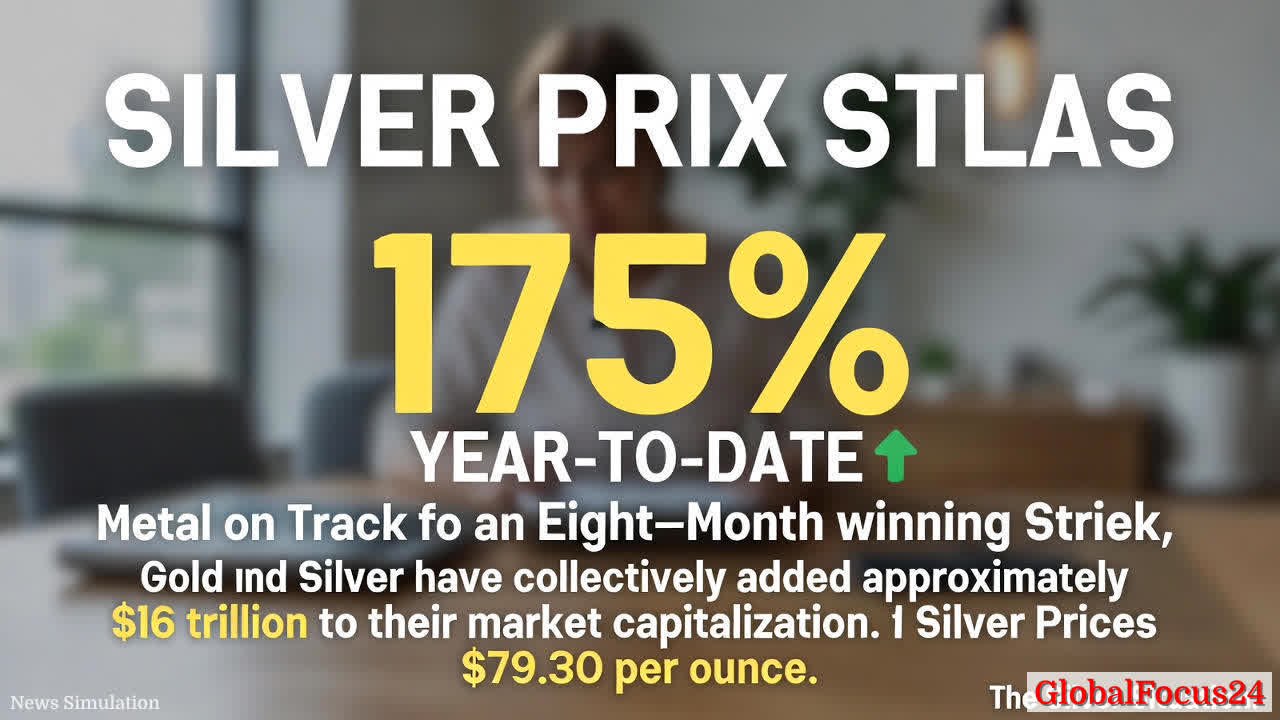
Silver prices have exploded higher in 2025, rising roughly 175% year-to-date and delivering the strongest performance in nearly half a century. The metal trails its more famous counterpart, gold, but together the precious metals have helped propel global commodities higher and contributed to a dramatic expansion in asset valuations across markets. As prices approach multi-decade highs, investors, miners, and policymakers are reassessing risk, supply chains, and long-term strategic reserves in a year defined by monetary policy shifts, renewed demand from industrial sectors, and a global search for hedge assets.
Historical trajectory and context To understand the current rally, it helps to look back at pivotal moments in silver’s price history. In the late 1970s, silver experienced a dramatic run driven by inflationary pressures, speculative interest, and macroeconomic uncertainty. The metal briefly touched prices that would be remembered as benchmarks for the era, before easing in the early 1980s as the inflation environment cooled and the market adjusted after sharp, rapid moves. A similar, though not identical, pattern emerged around the 2011 commodity spike, when silver briefly surpassed levels that had previously seemed unattainable, before stepping back on a longer-term trajectory dictated by supply and demand fundamentals, risk appetite, and currency dynamics.
Fast forward to 2025, and the silver market has found new catalysts. The year has been characterized by a complicated interplay of inflation readings, central bank policy signals, and a broad rotation into hard assets. While gold has often claimed the spotlight as a barometer of fear and wealth preservation, silver’s dual role as both an industrial metal and a store of value has amplified its appeal. Markets have simultaneously priced in the potential for sustained demand from sectors ranging from electronics to solar energy, where silver’s high conductivity and reliability remain important. The resulting price action has created a multi-year rally that bears the imprint of historical precedents while being driven by contemporary forces.
Economic drivers and sectoral impact The surge in silver has structural underpinnings that transcend mere speculative fervor. Several key dynamics help explain why the metal has exhibited such resilience and momentum in 2025:
- Industrial demand and technology: Silver’s unique properties make it indispensable in photovoltaic cells, electronics manufacturing, and communications infrastructure. As global investment in renewable energy and digital technologies accelerates, demand for silver as a critical component has grown in tandem with the push toward decarbonization and connectivity. This industrial backbone provides a relatively stable substrate for price support even when other assets move on sentiment alone.
- Monetary policy and inflation expectations: With central banks navigating a complex inflation landscape, investors have increasingly sought hedges and stores of value that can perform across multiple regimes. Silver’s status as a tangible asset with a long history of monetary significance has contributed to its appeal as a diversification instrument within broader portfolios. The price action reflects, in part, a reallocation into assets perceived as resilient in the face of macro uncertainty.
- Supply dynamics: Silver supply is moderated by mining activity and by the gradual evolution of production costs. Any disruption to primary silver mining regions or disruptions in supply chains can create a scarcity effect that nudges prices higher. In addition, silver’s role as a byproduct of other mining operations can complicate supply responses to changing demand conditions, making the market sensitive to shifts in the broader mining sector.
- Investment channels: Exchange-traded products, futures markets, and private allocations have provided accessible avenues for investors to express views on silver’s trajectory. The convergence of demand from institutional portfolios and individual investors has amplified price movements, especially during episodes of heightened risk aversion or speculative appetite.
Regional comparisons and geographic nuances Silver’s performance in 2025 has been broadly strong, but regional dynamics have produced nuanced outcomes:
- North America: As a leading consumer and industrial hub, North America has seen robust activity in sectors that rely on silver-intensive technologies, including solar energy projects and electronics manufacturing. Investment flows into precious metals often reflect a blend of safe-haven demand and speculative positioning in a market that remains highly liquid and accessible to a wide range of participants.
- Europe: European markets have mirrored global macro trends while contending with policy shifts and energy transition investments. The combination of high energy costs, persistent inflation concerns, and policy incentives aimed at decarbonization has supported continued demand for silver in industrial applications and investment products.
- Asia-Pacific: The region’s growth trajectory, industrial output, and expanding middle class have contributed to sustained demand for silver-bearing products. In particular, electronics production and solar deployment in key economies have served as durable sources of consumption, reinforcing price support.
- Emerging markets: In many developing economies, silver and other precious metals act as a hedge against currency volatility and inflation. The appeal of tangible assets with a track record of liquidity and universal recognition remains a factor in capital allocation decisions, even as local conditions vary.
Market sentiment and public reaction The public narrative around silver’s 2025 rally emphasizes both opportunity and caution. Investors often view silver as a hybrid asset—an element of a diversified portfolio that can provide upside during risk-on phases while also offering protection when inflation or macro uncertainty intensifies. The broad enthusiasm has spurred media attention and public discourse about the role of precious metals in modern portfolios, prompting both seasoned investors and newcomers to analyze price channels, supply constraints, and the interplay with gold.
From a practical standpoint, miners and refining operations have benefited from higher realized prices. This can translate into stronger earnings for producers, potential investments in exploration and development, and improved project economics for future supply. However, the sector remains sensitive to price swings and macroeconomic conditions, which can influence capex plans, labor costs, and project timelines.
Price trajectory and potential scenarios As silver trades near notable milestones—approaching levels once seen decades ago—the market participants weigh a range of possible paths forward. Several scenarios could shape the trajectory:
- Sustained rally driven by industrial demand: If solar, electronics, and other silver-intensive sectors maintain robust growth, price support could persist. This scenario would be reinforced by limited new supply and continuing investor interest in hard assets.
- Normalization after a price spike: Markets sometimes experience a consolidation phase following rapid gains. In this case, prices could retrace a portion of the gains as speculative positions unwind or as macro conditions stabilize. The speed and depth of any retracement would depend on broader risk sentiment and the health of global demand.
- Policy and macro risk: Changes in inflation trajectories, currency moves, or shifts in monetary policy could alter demand dynamics for precious metals. Under a more favorable macro environment for risk assets, some investors might rotate away from hard assets; conversely, a renewed inflation scare could lift silver again.
- Supply-side developments: Discoveries, improved mining efficiency, or new regional production could alter the supply outlook. If supply growth accelerates, price pressure could ease, whereas constraints could keep prices elevated.
Implications for investors and policymakers For investors, the silver rally underscores the importance of a well-rounded approach to portfolio construction. Diversification, risk tolerance assessment, and an understanding of silver’s dual nature as both commodity and asset class are essential. Market participants may consider a blend of physical holdings, exchange-traded products, and futures instruments to manage exposure, liquidity needs, and time horizons. Risk management remains critical in a market known for volatility and rapid price moves.
For policymakers, the silver market can serve as a bellwether for broader inflation expectations and industrial activity. A sustained rise in metal prices can influence input costs across manufacturing sectors and, by extension, consumer prices. Policymakers might monitor metal concentrations in supply chains, energy costs, and investment incentives that affect production and demand in sectors reliant on silver.
Historical parallels and long-term takeaways While no single period perfectly mirrors another, the 2025 surge in silver evokes patterns from the late 1970s and early 1980s, as well as more recent commodity cycles. The enduring thread is the interplay between monetary policy, inflation expectations, industrial demand, and the willingness of investors to allocate capital to tangible assets. The long arc of silver’s price remains linked to fundamental forces—supply constraints in mining, evolving technology needs, and the global appetite for diversification in uncertain times.
Closing perspective The year’s remarkable ascent for silver reflects a convergence of demand from industry, investment, and strategic reserves. As prices approach levels not seen since historical peaks, the metal’s role in global markets remains multifaceted: a barometer of macro sentiment, a critical industrial input, and a portable store of value. Market participants will watch closely how ongoing economic developments, technology adoption, and policy choices unfold—recognizing that silver’s current run is part of a broader story about resilience, adaptation, and the enduring appeal of tangible assets in a rapidly changing world.