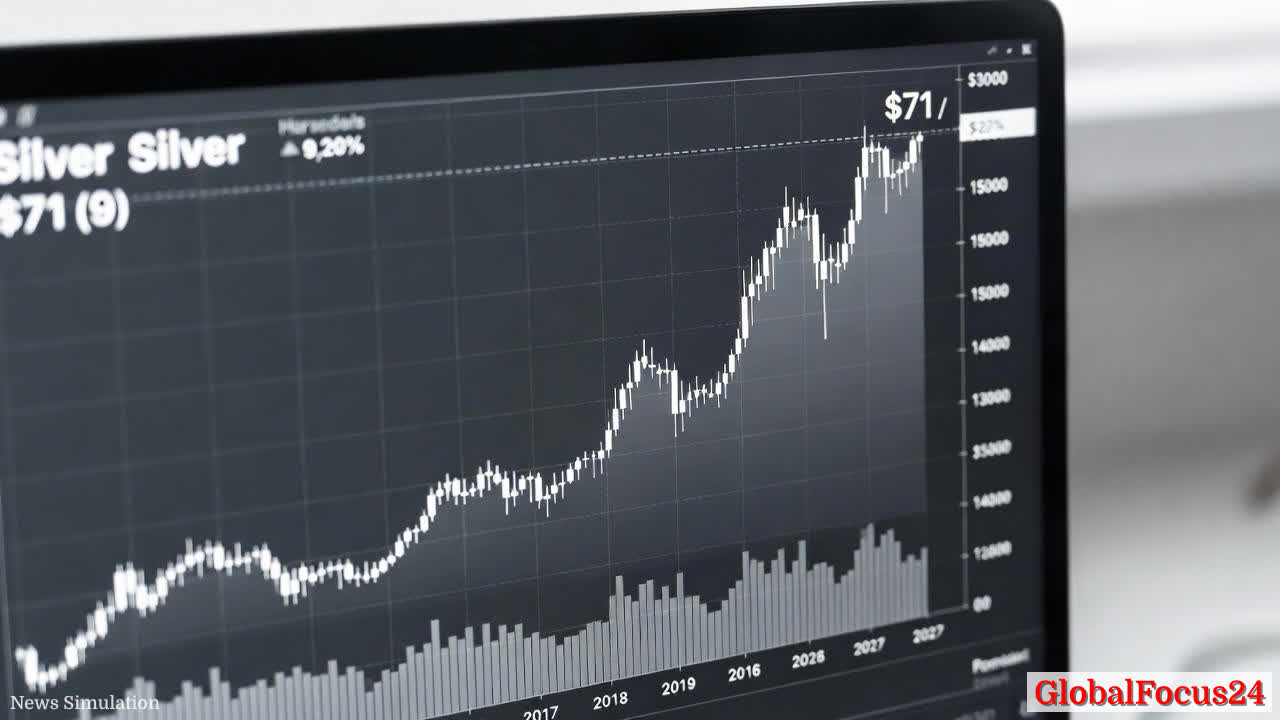
Silver Surges to Record $71 per Ounce Amid Historic Rally in Precious Metals Market
A vivid wave of demand across retail investors, industrial users, and risk-conscious savers has propelled silver to an all-time high, with prices today touching $71 per ounce. The milestone marks one of the most dramatic runs in the history of the metal, reflecting a convergence of macroeconomic uncertainty, supply constraints, and evolving investment habits that have reshaped both the precious metals market and broader financial landscapes.
Historical Context: Silver’s Unique Role in Markets Silver occupies a distinctive niche among precious metals. Unlike gold, which has long been viewed as a store of value and a safe-haven asset, silver blends monetary allure with industrial utility. Its dual identity as an investment and a critical input for electronics, solar panels, medical devices, and chemical processes means that silver price movements often reflect both macroeconomic sentiment and industrial demand cycles.
Historically, silver has experienced volatile but pronounced bull markets. Episodes of rapid appreciation have frequently occurred during periods of economic stress, currency devaluation, or heightened inflation expectations, when investors seek tangible assets with potential upside across multiple sectors. The current rally echoes those patterns, amplified by contemporary factors such as supply disruptions in mining, geopolitical frictions affecting global trade, and shifts in central bank policy that influence sentiment toward precious metals.
Macro Drivers: Why Silver Is Rallying Now Several interlinked forces are converging to push silver to record levels:
- Inflation and Real Yields Rising inflation erodes purchasing power, prompting investors to seek assets with inflation-hedging properties. In an environment where real interest rates remain relatively low or negative, non-yielding assets like physical silver can become more attractive as a store of value and a diversifier within portfolios.
- Industrial Demand Strength Silver’s industrial applications are broad and expanding, particularly in clean-energy technologies, electronics, and medical equipment. The acceleration of green-energy initiatives, including solar photovoltaic installations and advanced manufacturing, has sustained demand for silver inputs. This structural demand helps support prices beyond purely speculative buying.
- Investment Flows and Market Structure Exchange-traded products, futures markets, and centralized depositories have facilitated rapid allocation into silver by a wide range of investors. Small retail buyers increasingly participate in precious metals markets, while institutional investors diversify portfolios with silver as a hedge against system-wide risk. This broad participation can magnify price movements during periods of shifting sentiment.
- Supply Constraints Mining output is subject to cyclical and geologic limits, and disruptions—whether from labor strikes, environmental restrictions, or geopolitically driven supply chain challenges—can tighten available inventory. Refined silver inventories tracked by exchanges and manufacturers have shown tighter conditions relative to historical norms, contributing to upward price pressure.
Regional Comparisons: Silver Markets Around the World Silver prices and dynamics exhibit regional variations driven by local demand patterns, currency movements, and tax frameworks:
- United States and Canada Investor demand has been robust in North America, with households increasingly viewing silver as part of a diversified risk management strategy. Online platforms and bullion dealers report sustained activity across coins and bars, while industrial buyers continue to secure supply for electronics and solar sectors.
- Europe European buyers have shown persistent interest in silver as a portfolio hedge amid ongoing geopolitical uncertainties and energy price volatility. Central banks maintain careful monitoring of precious metals macro indicators, given their potential implications for monetary policy and financial stability.
- Asia-Pacific The region has emerged as a pivotal center for silver consumption, driven by manufacturing demand, electronics production, and a growing consumer segment seeking wealth preservation assets. Price sensitivities in major economies like China and India reflect demand from both industrial sectors and retail investors.
- Latin America Silver mining remains integral to several economies, contributing to export earnings and local employment. Currency movements and domestic inflation influence local pricing and procurement decisions for both industrial users and investors.
Economic Impact: What the Rally Means for Markets and Businesses The surge in silver prices reverberates through multiple layers of the economy:
- Mining and Supply Chains Producers may adjust output in response to favorable price signals, balancing the potential for higher revenue against the costs of sustaining operations. Suppliers of related materials and services also experience shifts in demand, potentially influencing wages and investment plans within mining regions.
- Manufacturing Costs Industries that rely on silver input costs—especially electronics, solar energy components, and medical devices—may see rising production expenses. Companies often seek to manage margins through efficiency gains, hedging strategies, or alternative materials where feasible.
- Investment Landscape The precious metals complex gains renewed attention as a potential safe-haven or diversification tool during market stress. Financial advisors may adjust client allocations, and wealth managers monitor sentiment indicators that track momentum in silver and other metals.
- Policy Considerations Policy makers and regulators may observe how a volatile commodity cycle interacts with inflation dynamics, currency stability, and financial market resilience. These observations can inform broader conversations about commodity markets, investment incentives, and energy transition strategies.
Public Reaction and Behavioral Trends Investor psychology has been a powerful driver of the current move. The narrative of a “store of value” amid uncertain economic conditions resonates with savers who seek to protect purchasing power. At the same time, the industrial case for silver grounds the move in practical utility, tempering the risk of purely speculative fever. Public sentiment—ranging from cautious diversification to exuberant speculation—plays a crucial role in sustaining momentum until supply-demand fundamentals reassert balance.
Historical Milestones Compared To gauge the significance of a $71 per ounce price, it helps to place it in context with previous peaks and price cycles. Silver has experienced several dramatic highs, often tied to financial stress or spikes in inflation expectations. While past spikes have proved episodic, the persistence and breadth of today’s rally—spanning industrial demand and investment flows—underscore a broader structural shift in how markets value precious metals within diversified portfolios.
Key Takeaways for Stakeholders
- The silver market is navigating a complex blend of inflation dynamics, industrial demand, and supply constraints that collectively push prices higher.
- Industrial users should monitor supply chain developments and potential price volatility that could affect procurement budgets and project timelines.
- Investors may view silver as part of a balanced approach to risk management, combining both speculative upside and tangible value traits.
- Governments and regulators could watch how commodity cycles influence inflation indicators, investment decisions, and currency stability.
Conclusion: A Moment in a Longer-Term Narrative The record run in silver prices reflects more than a single-day surge. It highlights how a broadening set of factors—macroeconomic uncertainties, robust industrial demand, and evolving investment behaviors—can converge to redefine the value proposition of precious metals in the 21st century. As markets absorb today’s milestone, participants will watch for signs of consolidation, new supply signals, and shifts in demand patterns across regions. The metal’s trajectory over the coming months will depend on how inflation expectations evolve, how central banks calibrate policy, and how quickly the global economy can adapt to changing technological and energy trends.