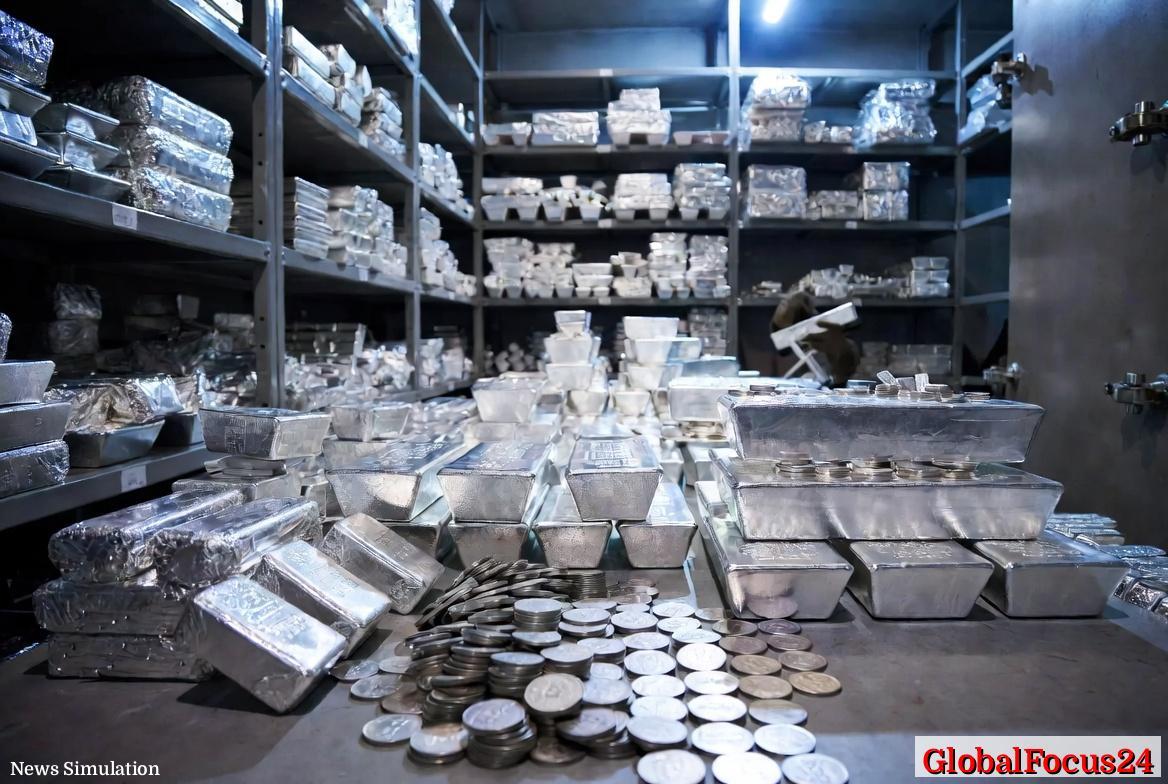
Global Silver Market Faces Sixth Consecutive Deficit as Supply Tightens and Investment Demand Surges
Structural Deficit Deepens in 2026
The global silver market is heading toward its sixth consecutive year of structural deficit, underscoring a prolonged imbalance between supply and demand that is reshaping pricing dynamics and investor behavior. In 2026, the deficit is forecast to widen by 15% year-over-year, reaching approximately 46 million troy ounces. This continued shortfall highlights mounting pressures within the physical silver market, where available inventories are steadily declining.
Since 2021, cumulative depletion of global silver stocks has reached an estimated 762 million troy ounces. This sustained drawdown reflects years of underinvestment in mining capacity, coupled with persistent demand across both industrial and investment sectors. Analysts warn that the pace of inventory erosion is increasing the likelihood of a liquidity crunch, particularly in physical markets where immediate delivery is required.
Market participants are increasingly monitoring above-ground stock levels as a key indicator of future price volatility. With fewer reserves available to absorb shocks, even modest disruptions in supply or spikes in demand could have outsized effects on market stability.
Supply Constraints Weigh on Market Balance
Silver supply is projected to decline by 2% in 2026, reversing gains seen during the previous year when elevated prices encouraged higher output. Mining companies, responding to cost pressures and uncertain global economic conditions, are scaling back production commitments made during last year’s rally.
Primary silver mining remains geographically concentrated, with significant output from countries such as Mexico, Peru, and China. However, these regions face ongoing challenges including regulatory shifts, labor disruptions, and declining ore grades. In Latin America, which accounts for a substantial share of global production, political and environmental considerations have slowed project development timelines.
Secondary supply, derived from recycling, has also failed to compensate for reduced mining output. While higher prices typically incentivize recycling activity, structural limitations—such as collection inefficiencies and technological constraints—have capped potential gains. As a result, total supply growth remains constrained at a time when the market is already under strain.
Industrial Demand Weakens Amid Global Uncertainty
Industrial fabrication demand for silver is expected to decline by 3% year-over-year, falling to its lowest level in four years. This contraction is largely attributed to slowing global economic growth and reduced manufacturing activity, particularly in sectors heavily reliant on silver such as electronics, photovoltaics, and automotive components.
The ongoing conflict involving Iran has introduced additional uncertainty into global markets, contributing to higher energy prices and disrupted trade flows. These factors have dampened industrial output in key regions, including Europe and parts of Asia, where manufacturing sectors are sensitive to both energy costs and geopolitical instability.
Silver’s role in renewable energy technologies, especially solar panels, has been a major driver of industrial demand in recent years. However, short-term headwinds—including supply chain bottlenecks and reduced capital investment—are tempering growth in this segment. While long-term prospects for silver in green energy remain strong, near-term demand is expected to remain subdued.
In comparison, industrial demand trends in other precious metals markets, such as platinum and palladium, have shown similar sensitivity to macroeconomic conditions. However, silver’s dual role as both an industrial and investment asset makes its demand profile uniquely complex.
Investment Demand Rebounds Strongly
In contrast to weakening industrial use, investment demand for silver is experiencing a notable resurgence. Coin and bar purchases are projected to increase by 18% in 2026, driven primarily by renewed interest in the United States. Retail investors are returning to physical silver as a hedge against economic uncertainty, inflationary pressures, and financial market volatility.
This shift reflects a broader trend seen across precious metals markets, where tangible assets are gaining favor amid concerns over currency stability and geopolitical risks. In the U.S., rising demand for silver bullion coins and bars has been supported by improved availability and competitive pricing, following supply disruptions in previous years.
Institutional interest in silver-backed exchange-traded products (ETPs) has also shown signs of stabilization after periods of outflows. While not matching the surge seen in physical investment, these instruments continue to play a role in shaping overall demand dynamics.
Historically, periods of strong investment demand have coincided with tightening supply conditions, amplifying price movements. The current environment appears to be following a similar pattern, with investment inflows offsetting declines in industrial consumption.
Historical Context of Persistent Deficits
The current streak of structural deficits marks one of the longest periods of sustained imbalance in the modern silver market. While deficits have occurred intermittently in the past, they were typically short-lived and resolved through increased production or reduced demand.
In the early 2000s, for example, deficits were largely driven by rapid industrial expansion in emerging markets. However, these were eventually offset by significant increases in mining output and recycling activity. The present cycle differs in that supply-side responses have been slower and less effective, allowing deficits to persist year after year.
The depletion of above-ground stocks has also reached levels not seen in decades. Unlike gold, which is often held for long-term investment and central bank reserves, silver is consumed in industrial processes, making stock replenishment more challenging.
This structural shift suggests that the silver market may be entering a new phase characterized by tighter supply conditions and greater sensitivity to demand fluctuations.
Regional Market Dynamics and Comparisons
Regional trends are playing a significant role in shaping the global silver market. North America, particularly the United States, is emerging as a key driver of investment demand, while industrial activity in Europe and Asia is facing headwinds.
In Asia, countries such as China and India continue to influence both supply and demand dynamics. China remains a major consumer of silver for industrial applications, though its economic slowdown is impacting overall demand. India, traditionally a strong market for silver jewelry and investment, has shown mixed trends due to currency fluctuations and shifting consumer preferences.
Latin America, as a leading production hub, is grappling with operational challenges that are limiting output growth. Compared to other mining regions, such as Africa and Australia, Latin America’s regulatory environment has introduced additional uncertainties for producers.
These regional disparities highlight the complexity of the global silver market, where localized factors can have far-reaching effects on overall balance.
Price Implications and Market Outlook
With supply tightening and investment demand strengthening, market conditions have rarely been tighter. Prices are expected to remain supported in the near term, with potential for increased volatility as inventories continue to decline.
The risk of a physical market squeeze is becoming more pronounced, particularly if demand accelerates unexpectedly or supply disruptions intensify. Traders and analysts are closely watching inventory levels and delivery premiums as indicators of market stress.
At the same time, the interplay between industrial and investment demand will be critical in determining price direction. A recovery in global economic activity could revive industrial consumption, further tightening the market. Conversely, prolonged economic weakness may limit demand growth, even as supply constraints persist.
In comparison to gold, which often serves as a benchmark for precious metals, silver’s price movements tend to be more volatile due to its smaller market size and dual demand drivers. This characteristic makes silver both an opportunity and a risk for investors seeking exposure to commodities.
Long-Term Outlook for Silver Market Stability
Looking beyond 2026, the outlook for the silver market will depend on several key factors:
- The pace of mining investment and development of new projects.
- Technological advancements in recycling and material efficiency.
- The trajectory of global economic growth and industrial activity.
- Continued interest in silver as a store of value.
The transition toward renewable energy and electrification is expected to support long-term demand, particularly in solar and battery technologies. However, meeting this demand will require sustained investment in supply infrastructure.
As the market navigates these challenges, the balance between supply and demand will remain a central focus for industry stakeholders. The ongoing deficit underscores the need for strategic planning and adaptation in a rapidly evolving global landscape.
With inventories already significantly depleted and supply growth constrained, the silver market is entering a period of heightened sensitivity. How producers, investors, and policymakers respond to these conditions will shape the trajectory of the market in the years ahead.