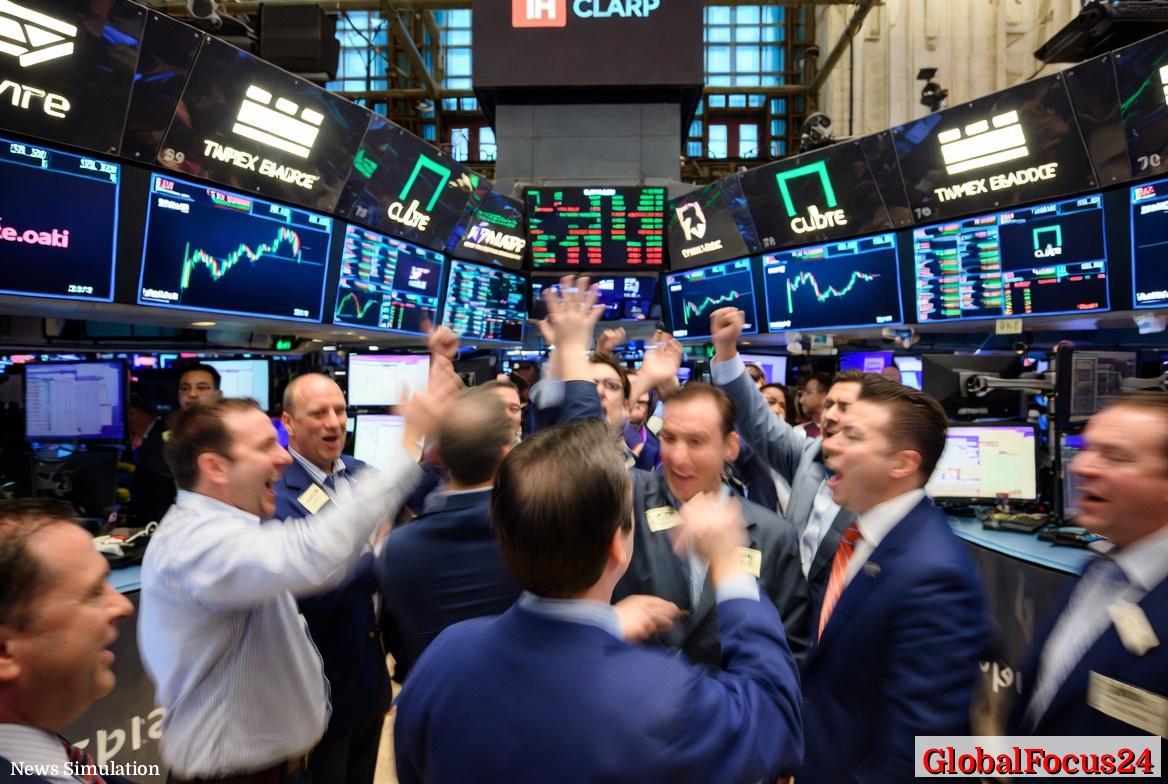
S&P 500 Surges to Record High, Marks Fastest Market Recovery Since 1982
Historic Rally Pushes U.S. Equities to New Peak
The S&P 500 has climbed to a new record high, completing one of the fastest recoveries in modern financial history. Since hitting its recent low on March 30, the benchmark index has added approximately $7.3 trillion in market value, underscoring the resilience of U.S. equities amid a volatile economic backdrop.
This sharp rebound ranks as the swiftest recovery since 1982, a period remembered for its own dramatic turnaround following a deep recession and high inflation. The current surge has reignited investor confidence, driven by a combination of improving economic indicators, corporate earnings strength, and renewed appetite for risk across global markets.
Market participants have pointed to broad-based gains across sectors, with technology, financials, and consumer discretionary stocks leading the charge. The rally reflects a rapid shift in sentiment, as investors moved from defensive positioning to aggressive buying in a matter of weeks.
Key Drivers Behind the Market’s Rapid Recovery
Several factors have contributed to the speed and scale of the S&P 500’s ascent:
- Strong corporate earnings reports that exceeded expectations across multiple industries.
- Stabilizing inflation data, which has eased concerns about prolonged monetary tightening.
- Continued consumer spending resilience, supporting revenue growth for major companies.
- Increased institutional investment flows returning to equities after a period of caution.
- Advances in artificial intelligence and technology sectors fueling optimism about long-term growth.
The convergence of these elements has created a powerful tailwind for equities, enabling the index to recover losses at an unusually rapid pace.
Historical Context: Comparing the 1982 Rebound
The last time markets experienced a recovery of similar speed was in 1982, when the U.S. economy emerged from a severe recession marked by double-digit inflation and high unemployment. At that time, aggressive monetary policy shifts and declining interest rates helped ignite a sustained bull market.
While the current environment differs in important ways, including a more globally interconnected economy and the dominance of technology-driven growth, parallels can be drawn in terms of investor psychology. In both periods, a turning point in economic expectations triggered a rapid reallocation of capital into equities.
However, today’s recovery has been amplified by structural factors such as algorithmic trading, exchange-traded funds, and the instantaneous flow of information. These elements have accelerated market movements, compressing what once took months or years into a matter of weeks.
Economic Impact of the $7.3 Trillion Surge
The addition of $7.3 trillion in market value carries significant implications for the broader economy. Rising equity prices tend to bolster household wealth, particularly for retirement accounts and investment portfolios tied to stock market performance.
This so-called “wealth effect” can translate into increased consumer spending, which remains a critical driver of U.S. economic growth. As asset values rise, individuals often feel more financially secure, leading to higher discretionary spending on goods and services.
Corporate America also benefits from elevated stock prices. Higher valuations make it easier for companies to raise capital through equity offerings, fund expansion projects, and pursue mergers and acquisitions. This dynamic can support job creation and innovation, reinforcing economic momentum.
At the same time, rapid market gains can introduce risks, particularly if valuations outpace underlying fundamentals. Analysts have noted that while earnings growth has been strong, the speed of the rally warrants careful monitoring for signs of overheating.
Sector Performance and Market Breadth
The recent rally has not been confined to a single segment of the market. Instead, it has demonstrated notable breadth, with multiple sectors contributing to the index’s gains.
Technology stocks have remained a dominant force, supported by continued investment in artificial intelligence, cloud computing, and semiconductor development. Major firms in this space have reported robust earnings and optimistic forward guidance, fueling investor enthusiasm.
Financial institutions have also benefited from improved market conditions, with stronger trading activity and stabilized interest rate expectations boosting profitability. Meanwhile, consumer discretionary companies have seen increased demand as spending remains resilient.
Energy and industrial sectors have participated as well, reflecting broader economic stabilization and steady global demand. This widespread participation has reinforced the strength of the rally, distinguishing it from narrower, more fragile market advances.
Regional Comparisons: U.S. Markets Lead Global Recovery
Compared to other major global indices, the S&P 500’s rebound stands out for both its speed and magnitude. European markets have experienced more moderate gains, influenced by slower economic growth and ongoing structural challenges in key economies.
In Asia, equity markets have shown mixed performance. While some countries have benefited from export-driven growth and technological innovation, others have faced headwinds related to domestic demand and policy uncertainty.
The U.S. market’s leadership reflects its unique composition, with a high concentration of globally dominant technology firms and a relatively strong consumer base. These factors have enabled it to outpace peers during periods of rapid recovery.
Global investors have increasingly allocated capital toward U.S. equities, viewing them as a source of both growth and stability. This influx of international investment has further supported the market’s upward trajectory.
Investor Sentiment and Market Psychology
The speed of the S&P 500’s recovery highlights the powerful role of investor sentiment in shaping market dynamics. Following the March 30 low, a shift in expectations prompted a wave of buying activity, as investors sought to capitalize on perceived undervaluation.
Momentum-driven strategies and algorithmic trading systems have amplified these movements, creating a feedback loop that accelerates gains. As prices rise, more investors are drawn into the market, further fueling the rally.
Retail investors have also played a notable role, with increased participation through online trading platforms contributing to higher trading volumes. This democratization of market access has added a new dimension to market behavior, particularly during periods of rapid change.
Despite the optimism, some market participants remain cautious, emphasizing the importance of monitoring economic data and corporate performance for signs of sustainability.
Risks and Considerations Moving Forward
While the record-setting rally underscores the strength of U.S. equities, it also raises questions about the durability of current valuations. Rapid recoveries can sometimes lead to periods of consolidation or increased volatility as markets adjust.
Key factors to watch include:
- Future inflation trends and their impact on monetary policy decisions.
- Corporate earnings sustainability in the face of evolving economic conditions.
- Geopolitical developments that could influence global trade and investment flows.
- Interest rate movements and their effect on borrowing costs and valuations.
Market analysts have noted that maintaining balance between optimism and caution will be essential as the next phase of the market cycle unfolds.
Broader Implications for the Global Economy
The S&P 500’s surge carries implications beyond U.S. borders, influencing global financial markets and economic sentiment. Strong performance in U.S. equities often serves as a benchmark for international investors, shaping capital flows and investment strategies worldwide.
Emerging markets, in particular, can be affected by shifts in U.S. market dynamics, as changes in risk appetite influence investment decisions across regions. A robust U.S. market can attract capital away from riskier assets, while also signaling confidence in global economic prospects.
At the same time, interconnected supply chains and multinational corporations mean that gains in U.S. equities can reflect broader global trends, including technological innovation and consumer demand.
A Defining Moment for Modern Markets
The S&P 500’s rapid ascent to a record high marks a defining moment in contemporary financial history. The combination of technological advancement, global capital flows, and evolving investor behavior has created a market environment capable of dramatic movements in short periods.
While comparisons to 1982 provide valuable historical perspective, the current recovery also highlights how modern markets have transformed. Speed, scale, and connectivity now play a central role in shaping outcomes, making today’s rally both a reflection of past patterns and a product of new dynamics.
As the market moves forward, the focus will shift from recovery to sustainability, with investors closely watching economic indicators and corporate performance to gauge the strength of the expansion.