Nasdaq Surge Fuels Near-Record Bullish Bets on U.S. Technology Stocks
Historic Rally Drives Surge in Options Activity
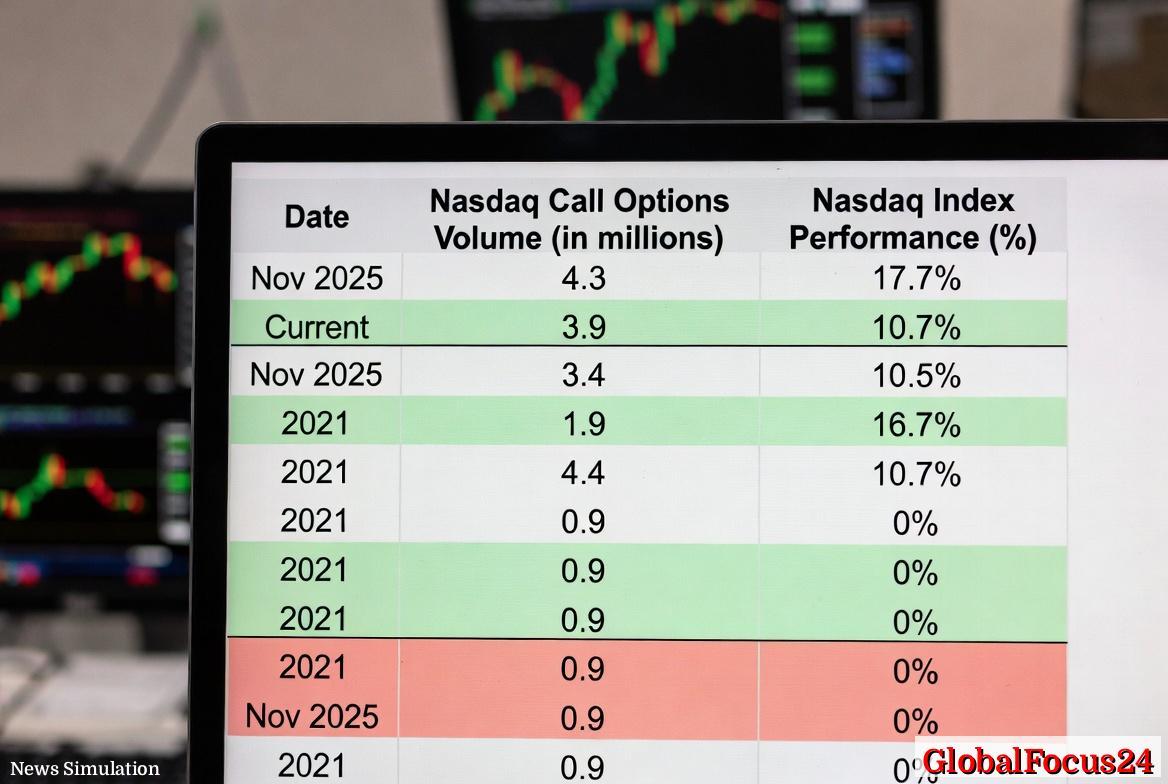
Bullish sentiment toward U.S. technology stocks has reached one of its highest levels in years, as investors pour into call options at a near-record pace. Daily trading volume in Nasdaq-linked call options has climbed to approximately 3.9 million contracts, marking the second-highest level ever recorded. The only higher figure came in November 2025, when volumes briefly peaked at around 4.3 million contracts.
This surge in options activity reflects growing confidence in the trajectory of major technology companies, which have led a powerful market rally. The Nasdaq Composite has now posted gains for 13 consecutive sessions, its longest winning streak since 2013. Over that period, the index has risen by 17.7 percent, placing it among the strongest short-term rallies seen in the past two decades.
The combination of sustained price momentum and elevated derivatives activity suggests that investors are increasingly positioning for further upside, even as valuations climb.
What Call Options Reveal About Market Sentiment
Call options give investors the right, but not the obligation, to buy a stock or index at a predetermined price within a specified time frame. A surge in call option volume is widely interpreted as a sign of bullish expectations, as traders anticipate higher prices ahead.
The current spike in Nasdaq call options is notable not just for its scale, but for its persistence. Volumes have more than quadrupled since 2021, indicating a structural shift in how investors are expressing optimism about technology stocks.
Several factors are contributing to this trend:
- Increased participation from retail investors using options to amplify returns.
- Institutional investors hedging or leveraging positions in high-growth sectors.
- The growing influence of algorithmic and quantitative trading strategies that incorporate options signals.
- Heightened interest in short-term tactical trades tied to earnings cycles and macroeconomic data.
This sustained activity underscores a broader transformation in market dynamics, where derivatives markets play a central role in shaping price movements.
Technology Stocks at the Center of Market Momentum
The recent rally has been driven largely by heavyweight technology companies, many of which have reported strong earnings and forward guidance. Advances in artificial intelligence, cloud computing, semiconductor innovation, and enterprise software have reinforced the sector’s dominant position in global equity markets.
Mega-cap firms continue to command significant investor attention due to their scale, profitability, and influence on major indices. At the same time, mid-cap and emerging technology companies have also benefited from renewed risk appetite, contributing to the breadth of the rally.
The Nasdaq’s 13-day winning streak reflects not just isolated gains, but a broad-based surge across multiple subsectors, including:
- Semiconductor manufacturers benefiting from AI-driven demand.
- Cloud service providers expanding enterprise adoption.
- Cybersecurity firms responding to rising digital threats.
- Consumer-facing technology platforms showing resilient user growth.
This widespread strength has reinforced investor confidence and fueled further speculative positioning.
Historical Context: Echoes of Past Tech Booms
The current surge in technology stocks and options activity invites comparisons to previous periods of market exuberance. During the late 1990s dot-com boom, technology shares experienced rapid gains accompanied by heightened speculative trading. More recently, the pandemic-era rally of 2020–2021 saw a similar explosion in retail trading and options volume.
However, there are key differences in the present environment. Today’s leading technology companies are generally more mature, profitable, and embedded in the global economy than many of their predecessors during earlier booms. Revenue growth is often supported by recurring business models, such as subscription services and long-term enterprise contracts.
Moreover, the infrastructure supporting modern trading—ranging from zero-commission platforms to real-time data analytics—has fundamentally changed how investors interact with the market. This has contributed to the sustained rise in options activity, making it a defining feature of contemporary market behavior.
Economic Drivers Behind the Rally
The surge in technology stocks is closely tied to broader economic conditions. Several macroeconomic factors have created a favorable backdrop for equities, particularly in growth-oriented sectors:
- Easing inflation pressures have reduced concerns about aggressive monetary tightening.
- Stable or declining interest rates have increased the present value of future earnings, benefiting high-growth companies.
- Strong corporate earnings have reinforced confidence in business fundamentals.
- Continued investment in digital transformation across industries has sustained demand for technology solutions.
These conditions have combined to create an environment where investors are willing to take on more risk, particularly in sectors perceived as long-term growth leaders.
At the same time, global capital flows have increasingly favored U.S. markets, which are seen as offering a combination of innovation, liquidity, and regulatory stability. This has further amplified demand for technology stocks listed on U.S. exchanges.
Regional Comparisons: U.S. Leads Global Tech Markets
The strength of U.S. technology stocks stands in contrast to more mixed performance in other regions. While global markets have participated in the broader equity rally, few have matched the scale and intensity of gains seen in the Nasdaq.
In Europe, technology stocks have lagged behind due to a smaller concentration of large-cap tech firms and slower growth in digital sectors. Asian markets, particularly in China, have experienced periods of volatility linked to regulatory changes and shifting economic conditions, which have tempered investor enthusiasm.
By comparison, the U.S. continues to dominate the global technology landscape, with its companies accounting for a significant share of global market capitalization. The depth of its capital markets and the strength of its innovation ecosystem have made it a focal point for international investors seeking exposure to high-growth sectors.
This divergence has contributed to a reinforcing cycle, where capital inflows support higher valuations, which in turn attract further investment.
Risks Beneath the Optimism
Despite the strong momentum, some market participants are cautioning that elevated levels of bullish positioning could increase vulnerability to sudden reversals. High call option volumes can amplify market moves, both upward and downward, as hedging dynamics come into play.
Key risks include:
- Potential shifts in monetary policy that could impact interest rates.
- Earnings disappointments that challenge high expectations.
- Geopolitical developments that disrupt global supply chains.
- Valuation concerns as price-to-earnings ratios expand.
Additionally, the concentration of gains in a relatively small group of large technology companies raises questions about market breadth and sustainability.
While current conditions remain supportive, the rapid pace of the rally has heightened sensitivity to any changes in underlying fundamentals.
The Role of Retail and Institutional Investors
The surge in options activity reflects participation from both retail and institutional investors, though their motivations often differ. Retail traders are frequently drawn to options for their potential to generate outsized returns with relatively small capital outlays. Social media and online trading communities have also played a role in popularizing options strategies.
Institutional investors, on the other hand, often use options for hedging or to fine-tune portfolio exposure. The interplay between these groups can create complex market dynamics, where short-term trading flows influence longer-term price trends.
The growing sophistication of retail investors, combined with the increasing accessibility of derivatives markets, has blurred traditional distinctions between these segments.
Outlook for U.S. Technology Stocks
As the Nasdaq continues its historic run, the outlook for U.S. technology stocks remains closely tied to both macroeconomic conditions and sector-specific developments. Continued innovation in areas such as artificial intelligence, automation, and digital infrastructure is expected to drive long-term growth.
At the same time, the elevated level of bullish positioning suggests that markets may be approaching a critical juncture, where sustaining momentum will require ongoing positive catalysts.
The current environment reflects a blend of optimism, innovation, and evolving market structure. Whether the rally extends further or faces a period of consolidation, the surge in call options activity underscores the central role of technology stocks in shaping the direction of global financial markets.