S&P 500 Reaches Record Close on Christmas Eve as Markets Rally
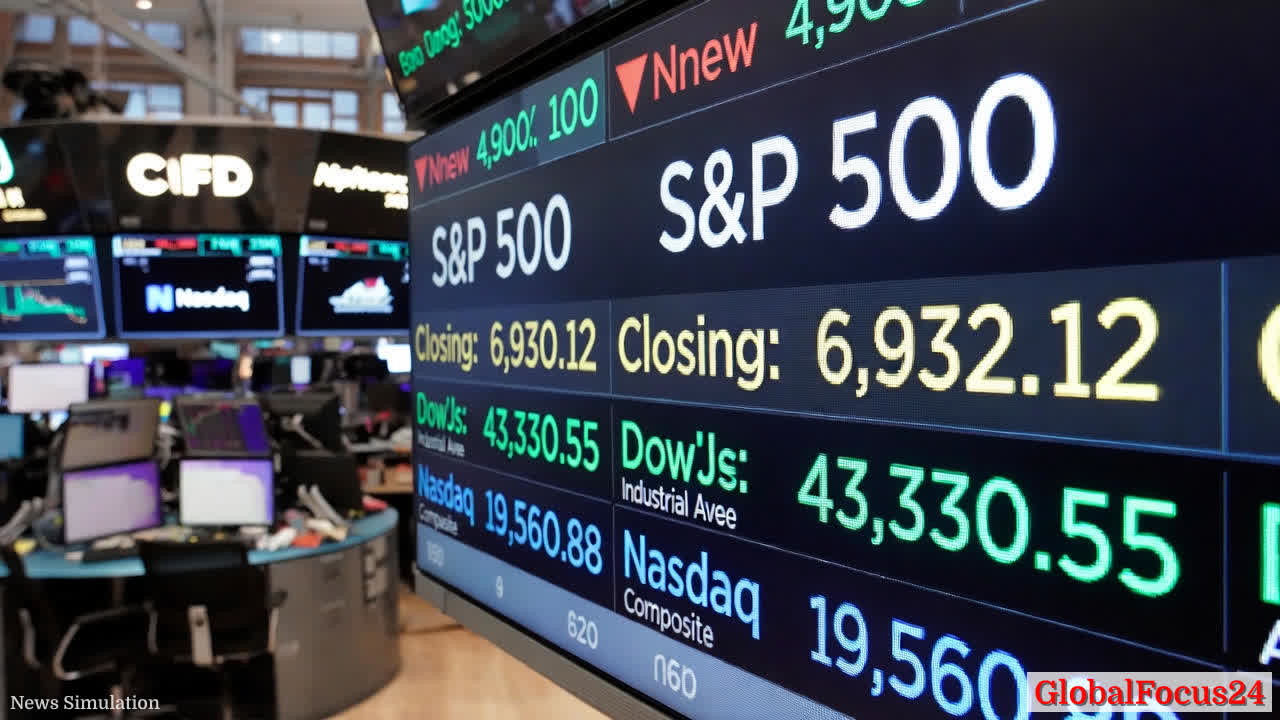
A holiday-shortened session propelled U.S. equities to fresh highs, with the S&P 500 closing at an all-time record and signaling sustained investor optimism into year-end. The broad index edged higher by 0.32% to finish at 6,932.12, marking another milestone for a market that has navigated volatility, inflation dynamics, and evolving monetary policy over the past year. The Dow Jones Industrial Average added 89.17 points, or 0.21%, to close at 43,330.55, while the Nasdaq Composite gained 60.25 points, or 0.31%, ending the session at 19,560.88. The confluence of favorable macro signals, resilient corporate earnings, and a lighter trading calendar helped lift these benchmarks to new heights, reinforcing a narrative of steady acceleration rather than sharp, episodic moves.
Historical context and broader market backdrop To understand the significance of a record close on Christmas Eve, it helps to recall the post-pandemic market cycle that has shaped U.S. equities since 2020. The S&P 500’s climb from the depths of the COVID-19 shock to multi-year highs reflects a combination of monetary policy accommodation, fiscal stimulus in earlier phases, and a gradual normalization of supply chains and demand dynamics. While inflation has cooled from its peak, the path of disinflation has been uneven, and investors continue to weigh the resilience of consumer spending, business investment, and global growth prospects. The December close sits within a longer arc of a market that has rewarded earnings growth and investor confidence when economic data aligns with the outlook for lower-rate environments and robust corporate resilience.
Economic momentum and key drivers Several factors underpinned the rally into the holiday week. First, near-term economic indicators suggested continued expansion in services and consumer activity, supported by a solid labor market and modest wage growth that keeps consumer budgets constructive. Second, corporate earnings season has continued to surprise to the upside in many sectors, signaling that companies have adapted effectively to the higher-for-longer interest-rate regime and ongoing supply chain normalization. Finally, a shift in investor positioning toward risk assets—combined with a seasonal penchant for end-of-year window dressing—contributed to a bid for equities as traders repositioned portfolios ahead of the new year.
Regional and sectoral insights Regional performance across the United States showed a broad-based uptick, with many large-cap names contributing to the indices’ performance. The technology and consumer discretionary sectors often lead in such environments due to earnings resilience and growth expectations, while financials can benefit from a steeper yield curve and improved interest income prospects. Energy and industrials also played supporting roles as macro conditions favored commodity price stabilization and capital expenditure activity. The diversification of leadership within the market underscores a broad-based recovery rather than a concentration of gains in a few industries.
Global context and regional comparisons On a regional basis, markets outside the United States have faced varied trajectories, influenced by differing inflation profiles, policy stances, and growth trajectories. In many advanced economies, central banks have continued to calibrate policy to balance inflation risks with cooling growth, while emerging markets have navigated currency volatility and capital flows. The U.S. market’s record close, in this sense, reflects a relative resilience that domestic policymakers and corporate managers have managed through a complex global backdrop. Comparisons with international markets highlight the interconnected nature of financial sentiment, where U.S. equity performance often serves as a benchmark for investor risk appetite and capital allocation decisions worldwide.
Public reaction and market sentiment Investor sentiment around the year-end rally has been characterized by cautious optimism. Many market participants view the new highs as confirmation of a durable earnings trajectory and the effectiveness of policy support in stabilizing financial conditions. Public reception has included a mix of enthusiasm for the market’s performance and prudent recognition of the need to monitor external risks, such as geopolitical developments, global growth surprises, and potential shifts in monetary policy posture. The psychological impact of record highs can influence consumer and business confidence, reinforcing a feedback loop where positive sentiment supports spending and investment activity.
Implications for investors and policymakers For investors, the record-close scenario underscores the importance of diversification and a disciplined approach to risk management as markets approach year-end and the new year. A broad-based equity strategy that emphasizes quality earnings, balance sheet strength, and sustainable cash flow remains a prudent framework in uncertain times. In terms of policy, the market’s trajectory suggests that current financial conditions are compatible with a gradual normalization path, provided that inflation remains on a downward trajectory and growth momentum persists. Market participants will monitor incoming data for any signs that could shift rate expectations or alter the balance between risk and reward in equity portfolios.
Historical performance and long-term considerations Historically, market records around holidays have occurred during periods of seasonal liquidity and investor optimism. While a single trading day or week cannot guarantee sustained gains, the persistence of higher highs over extended periods has often been associated with enduring improvements in corporate profitability and macro stability. Investors should balance enthusiasm for new highs with a focus on fundamental drivers: earnings quality, productivity gains, and the resilience of demand across consumer and business segments. As such, the latest close should be interpreted as a data point within a broader, multi-quarter performance narrative rather than a standalone conclusion about the health of the economy.
Technical outlook and potential scenarios From a technical standpoint, record closes can attract algorithmic and passive investors searching for momentum and trend-following opportunities. If the market sustains a constructive posture, key support levels and moving averages will be watched closely for potential pullbacks that would offer buying opportunities. Conversely, any signs of renewed inflationary pressure, unexpected geopolitical shocks, or weaker-than-expected earnings could trigger a period of consolidation or a re-evaluation of risk exposures. Traders and analysts will likely focus on leading indicators such as consumer sentiment, manufacturing activity, and service sector expansion as signs of whether the rally can extend into the first quarter of the new year.
Sector rotation and earnings context for 2025 As earnings season winds down, investors often assess how different sectors contributed to the year’s performance and how they might lead in the coming months. Sector rotation—shifting emphasis among technology, healthcare, financials, energy, and industrials—reflects changing expectations about growth, profitability, and interest-rate dynamics. A balanced view that recognizes both cyclical and secular drivers can help portfolios navigate potential volatility while still aiming for upside participation. For companies, continued emphasis on efficiency, innovation, and competitive differentiation remains crucial to sustaining earnings momentum in a high-rate environment.
Conclusion The S&P 500’s record close on Christmas Eve encapsulates a moment of confidence that extends beyond a single trading day. It signals a market that has absorbed a complex mix of policy signals, corporate resilience, and macro momentum, and then translated it into a forward-looking posture. As markets prepare for a new year, investors will weigh the durability of the current trajectory against potential headwinds, including inflation dynamics, global growth trajectories, and the evolving policy landscape. In this context, the latest performance serves as both a milestone and a reminder of the ongoing balance between risk and opportunity that characterizes modern financial markets.