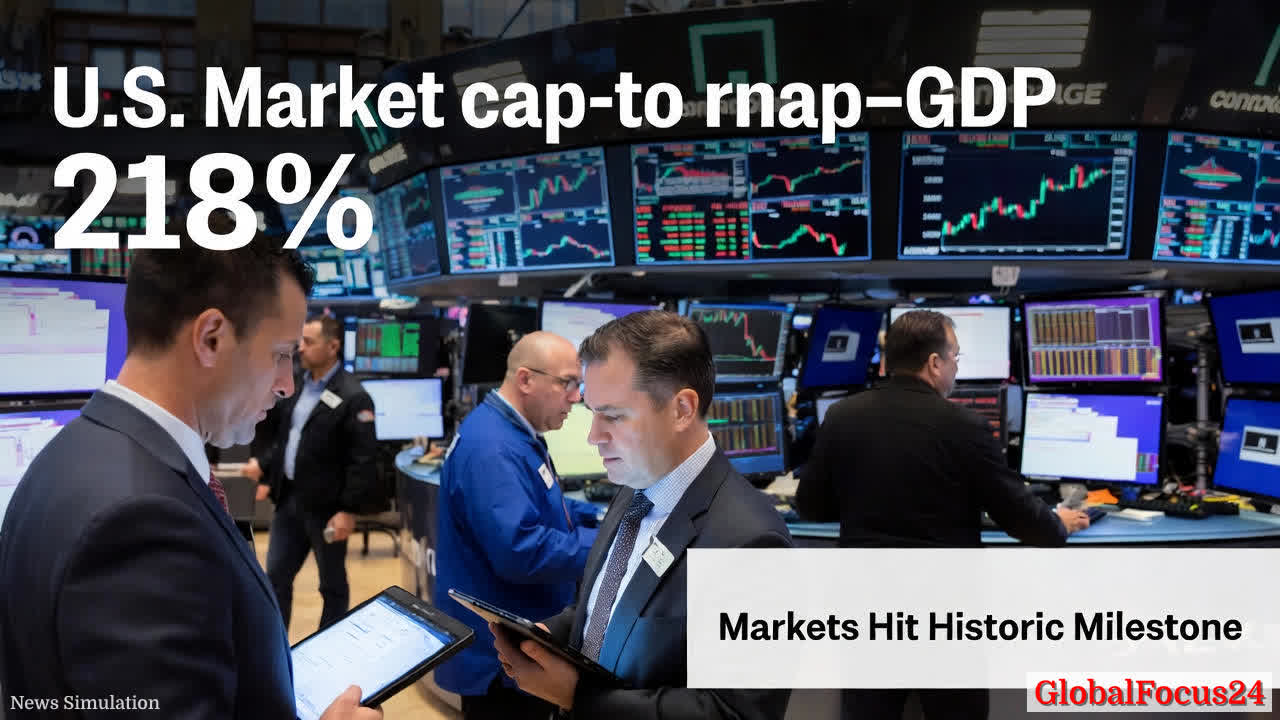
Markets Hit Historic Milestone as Stock Market Value Soars
The U.S. stock market has reached a historic milestone, with the market capitalization-to-GDP ratio climbing to a record level and signaling a dramatic shift in the relationship between equity valuations and the underlying economy. As investors digest the latest figures, markets are weighing the implications for financial stability, corporate financing, and consumer sentiment across regions that rely on capital markets for growth and retirement planning.
A Snapshot of the Milestone
Recent data show the aggregate value of publicly traded U.S. stocks has surged to an all-time high, lifting total market capitalization to roughly $68 trillion. At the same time, the broad measure of the economy’s size—Gross Domestic Product (GDP)—is estimated at about $31 trillion. In other words, the stock market value now stands at a multiple that eclipses the size of the entire U.S. economy, a phenomenon that has drawn attention from policymakers, economists, and market participants alike.
Over a relatively short span, the capitalization-to-GDP ratio has surged, widening the gap well beyond prior peaks. This divergence reflects a confluence of factors: resilient corporate profitability, sustained access to low-cost capital, structural changes in the economy, and shifting investor behavior that places a premium on growth opportunities and resilience in a world of evolving risk factors. While record highs in asset prices can reflect confidence in corporate earnings and innovation, they also raise questions about valuation discipline and the sensitivity of markets to future macroeconomic developments.
Historical Context: From Dot-Com to the Present
To understand the significance of today’s valuation landscape, it helps to place it in a broader historical arc. The late 1990s culminated in a technology-driven bubble whose burst in the early 2000s reminded markets of the dangers of exuberant pricing. The Dot-Com era taught investors that market optimism can collide with underlying economic fundamentals, leaving lasting lessons about risk management and diversification.
In the years after the Great Recession, markets recovered amid monetary easing and noble hopes for a new era of productivity. The post-crisis period saw a sustained rise in equity prices, aided by technology-driven earnings growth and favorable financing conditions. The current milestone follows a lengthy cycle of expansion, during which stock market capitalization grew more rapidly than measured economic output in several regions, underscoring a structural shift in how investors price future earnings and corporate leverage.
Economic Impact: Financing Real Economy and Innovation
The rising stock market valuation has several downstream effects on the broader economy. Corporations enjoy easier access to capital markets, enabling bigger buybacks, strategic acquisitions, and invest-to-grow programs. This can support innovation pipelines in technology, healthcare, and other high-growth sectors, potentially accelerating productivity gains and job creation in dynamic industries.
On the flip side, extremely elevated valuations can complicate capital allocation for smaller firms that rely on equity funding and face higher required returns from investors. For some companies, soaring stock prices may reflect speculative demand rather than immediate earnings power, which can increase the cost of capital if market sentiment shifts. In this environment, prudent financial management—balanced by disciplined capital expenditure and clear return-on-investment signals—remains essential for preserving long-term growth.
Regional Comparisons: Global Context and Domestic Implications
Viewed through a global lens, the United States’ equity market remains among the deepest and most liquid in the world, attracting international capital and contributing to national savings and investment cycles. Yet, the magnitude of the U.S. market relative to GDP is not entirely unique; other advanced economies have witnessed extended stretches of high valuations tied to monetary policy accommodations, aging demographics, and structural shifts toward knowledge-based industries.
In several regions, similar dynamics surface in different forms. For example, some markets have seen large capitalization indices driven by technology and healthcare, while others emphasize financials and industrials in response to export demand and global supply chains. These regional patterns influence exchange rates, cross-border investment flows, and the pace at which domestic industries access capital for expansion.
Policy Considerations: Monitoring Risk and Encouraging Stability
Policy makers and regulators are closely monitoring the implications of elevated market capitalization relative to GDP. The trajectory informs discussions about systemic risk, asset price volatility, and the resilience of financial institutions. While low interest rates and abundant liquidity have historically supported asset valuations, changing monetary conditions—such as gradual normalization or rate adjustments—could influence risk-taking behavior and the sensitivity of equity markets to macro shocks.
Additionally, corporate governance, transparency, and earnings quality continue to be central to maintaining investor confidence. Firms that demonstrate sustainable business models, clear capitalization plans, and prudent use of capital are better positioned to translate market valuations into meaningful long-term performance.
Public Perception and Investor Behavior: Reactions Across Communities
Public reaction to record market levels is nuanced. Some households view rising stock prices as a sign of economic strength and a path to improved retirement security, particularly for those with 401(k) plans and other equity-based savings. Others worry that valuations may outpace real earnings growth, potentially amplifying risks during a market correction or downturn.
Financial literacy remains a critical factor in how communities interpret market signals. Education about diversification, risk management, and long-term investment strategies helps households weather volatility and preserve financial well-being. For regions that rely heavily on equity-based savings, the connection between market performance and retirement readiness becomes a central concern for policymakers and financial professionals alike.
Industry Shifts: From Traditional to New Growth Vectors
The current valuation landscape reflects shifts in how value is created in modern economies. Sectors such as information technology, biotechnology, and green energy have produced durable earnings and growth prospects, attracting capital at a premium due to expected future cash flows. Simultaneously, traditional industries are adapting through digitization, efficiency improvements, and global integration, driving a broader spectrum of investment opportunities.
This environment also emphasizes the importance of corporate resilience, including supply chain diversification, cyber risk management, and environmental, social, and governance (ESG) considerations. Companies that embed resilience into their strategic planning may be better equipped to translate capital inflows into sustainable competitive advantages.
Conclusion: Navigating a Valuation Milestone
The stock market capitalization-to-GDP milestone marks a pivotal moment in financial history. It highlights the enduring relationship between market expectations and economic fundamentals, while underscoring the evolving role of capital markets in fueling innovation and growth. As investors, companies, and policymakers weigh the implications, the central question remains: how will this elevated valuation environment influence long-term economic momentum, consumer confidence, and the resilience of financial systems?
The next chapters will hinge on how well markets balance optimism with caution, how effectively capital is allocated toward productive investments, and how policymakers adapt to a landscape where equities carry significant influence over financial conditions. For regions relying on market-driven growth, this period serves as a reminder of the delicate balance between opportunity and risk, and the continuous effort required to sustain a healthy, inclusive economy.