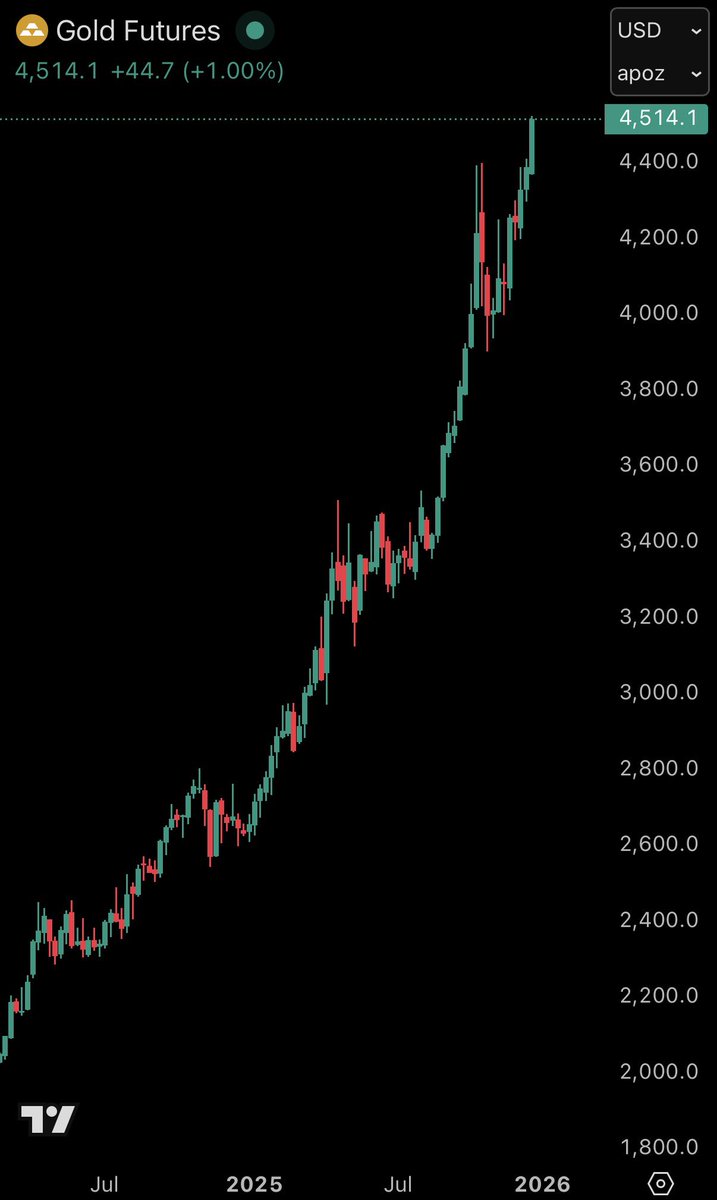
Gold Futures Surge Above $4,500 Per Ounce for First Time in History
In a landmark development for global commodities markets, gold futures pierced the $4,500-per-ounce threshold, marking a historic milestone that underscores persistent uncertainty in the global economy. As traders reacted to a constellation of macro pressures—from inflation skews and central-bank policy expectations to geopolitical tensions—the precious metal pushed higher, delivering a vivid signal about investor risk sentiment and the search for portfolio hedges in turbulent times.
A Historic Breakthrough in a Long-Running Trend
Gold’s ascent beyond $4,500 per ounce represents not merely a numerical high but a culmination of a multi-year, multi-faceted trend. Historically, bullion has served as a store of value and a safe haven during periods of economic strain. The current surge reflects traders’ perceptions of enduring uncertainty: elevated inflationary pressures, intermittent liquidity concerns in various markets, and questions about the pace and trajectory of monetary tightening in major economies. The move also resonates with the broader narrative of currencies facing headwinds amid shifting interest-rate expectations, which tend to tilt portfolios toward tangible assets with recognized liquidity and long-standing market depth.
From a historical vantage point, price benchmarks for gold have fluctuated with the rise and fall of central-bank balance sheets, global growth trajectories, and the repricing of risk across asset classes. The latest crossing above $4,500 reinforces gold’s role as a barometer of financial stress and macroeconomic uncertainty. It also cements its status as one of the most actively traded commodities on futures exchanges, where liquidity and volatility interact to shape day-to-day price discovery.
Economic Context and Implications
Several interconnected factors appear to be driving the current upsurge. First, inflation dynamics remain elevated in many regions, creating a persistent demand for hedges that can preserve purchasing power over time. Second, real interest rates—nominal rates minus inflation—have remained negative or near-zero in some jurisdictions, reducing the opportunity cost of holding non-yielding bullion for investors seeking to diversify risk. Third, geopolitical frictions, including regional conflicts and supply-chain disruptions, contribute to a mood of caution among market participants, prompting a tilt toward assets perceived as having enduring intrinsic value.
The momentum in gold prices is not occurring in isolation. It mirrors broader shifts within commodities markets, where energy prices, base metals, and agricultural commodities have exhibited volatility driven by policy signals, weather patterns, and demand cycles. The price reach of $4,500 per ounce thus should be interpreted within the broader context of commodity spot markets, futures curve dynamics, and industrial demand forecasts. Investors often weigh future supply constraints against demand prospects, and gold’s role as a financial asset with global acceptance remains central to those calculations.
Regional Comparisons and Market Nuances
Regional dynamics provide additional texture to the story. In some major economies, gold has historically been tethered to local inflation concerns and currency depreciation expectations. For instance, regions with higher inflationary pressure and volatile currency movements have shown a relatively stronger preference for bullion as a store of value, which in turn supports higher prices on futures and physical markets. Meanwhile, in economies where real yields have recently moved into positive territory, the pace of gold’s ascent may slow or stabilize as investors reallocate toward income-producing assets.
Across major markets, central-bank policy guidance continues to shape price expectations. Market participants closely monitor statements and minutes for clues about tightening or loosening cycles, as well as any indications of balance-sheet adjustments. The interplay between policy signals and market liquidity often results in a tug-of-war between growth optimism and risk-off sentiment, with gold acting as a calibrator of overall risk appetite.
Supply and Demand Considerations
Beyond macro indicators, supply-demand dynamics within gold markets influence price formation. Central-bank purchases, jewelry demand in key consuming regions, and investment demand from exchange-traded funds and futures market participants contribute to the complex mosaic determining bullion prices. The cost of mining, energy inputs, and regulatory factors also affect supply-side pressures, though gold’s long mine development cycle tends to create a smoothed supply response relative to more volatile industrial commodities.
From an investor strategy perspective, the break above major psychological levels can attract additional speculative activity while reinforcing the asset’s status as a strategic reserve within diverse portfolios. Market participants often juxtapose gold against other safe-haven assets such as government bonds or certain currencies, weighing liquidity, regulatory treatment, and cross-border transferability. The outcome of these deliberations frequently manifests in continued volatility as market participants test new price boundaries.
Market Reactions and Public Sentiment
Public sentiment around this historic milestone is likely to be a mix of awe, caution, and renewed attention to long-term financial planning. For households and institutions alike, the surge underscores the importance of considering diversification strategies that align with risk tolerance and investment horizons. Financial professionals may emphasize a balanced approach that includes both conventional assets and alternative strategies, ensuring resilience against a spectrum of economic scenarios.
In media coverage and analyst commentary, the narrative often centers on inflation expectations, currency stability, and geopolitical risk as the core catalysts for gold’s impressive run. Whiles spotlight the price record, the underlying drivers consist of a broader framework of macroeconomic pressures and market psychology that collectively push investors toward a perceived safe haven.
Technical Perspectives and Market Outlook
From a technical standpoint, traders will scrutinize the strength of the breakout, volume patterns, and the consistency of price action above notable moving averages. A sustained move above recent resistance levels could prompt algorithmic traders and hedge funds to recalibrate positions, potentially extending the rally if accompanied by continued risk-off demand. Conversely, any shift in macro signals—such as unexpectedly favorable inflation data, a shift in monetary policy expectations, or improved geopolitical stability—could prompt a retracement or consolidation phase.
Looking ahead, many market participants anticipate a period of heightened volatility as markets digest incoming economic data, central-bank communications, and evolving geopolitical developments. In such a landscape, gold’s role as a hedge or safe-haven asset remains central to portfolio risk management discussions. Investors may also evaluate dollar-denominated prices against local currencies, assessing currency risk and inflation hedging implications for international holdings.
Historical Context: The Long View
Gold’s journey to record-setting levels is not an isolated episode but part of a longer historical arc. The metal’s function as a monetary standard and a store of value across centuries has shaped its enduring appeal. Episodes of currency crises, sovereign debt struggles, and periods of rapid monetary expansion have repeatedly driven demand for gold as a resilient asset class. The current milestone adds a chapter to that ongoing narrative, illustrating how precious metals respond to macroeconomic stressors while adapting to evolving financial technologies and market infrastructures.
Increased liquidity in futures markets, advances in trading platforms, and the growing popularity of digital and tokenized forms of gold exposure have broadened accessibility for a wide range of investors. This liquidity, coupled with a globally integrated market, helps explain why a move above $4,500 per ounce can reverberate through portfolios across continents and time zones, influencing trading strategies, risk assessments, and long-term planning.
Operational and Regulatory Considerations
As prices reach record highs, regulatory and operational considerations come into play for market participants. Clearinghouses, margin requirements, and risk-management protocols must adapt to the heightened levels of volatility associated with unprecedented price benchmarks. Financial institutions and custodians may tighten controls to safeguard client assets, while exchanges may adjust circuit-breaker rules to prevent disorderly trading. These mechanisms are designed to maintain market integrity, protect investors, and ensure orderly liquidity in sessions characterized by rapid price movements.
Conclusion: A Moment of Significance in a Shifting Financial Landscape
The move above $4,500 per ounce signals more than a numerical peak; it reflects a broader shift in how investors evaluate risk, value, and resilience in uncertain times. As economic indicators evolve and geopolitical events unfold, gold’s enduring appeal as a hedge against inflation, currency fluctuations, and systemic risk remains central to strategic asset allocation. The price breakthrough invites market participants to reassess portfolios, revisit risk models, and consider the potential implications for sectors ranging from mining and commodities processing to financial services and wealth management.
In the months ahead, observers will watch how sustained inflation trends, monetary policy trajectories, and global growth patterns influence gold’s trajectory. The milestone sets a high bar for future performance, but it also reinforces gold’s status as a foundational element of diversified investment strategies in a complex, interconnected world. Public reaction may intensify as households and institutions recalibrate their financial plans in response to evolving market conditions, with the precious metal continuing to function as a tangible anchor in an increasingly volatile economic landscape.