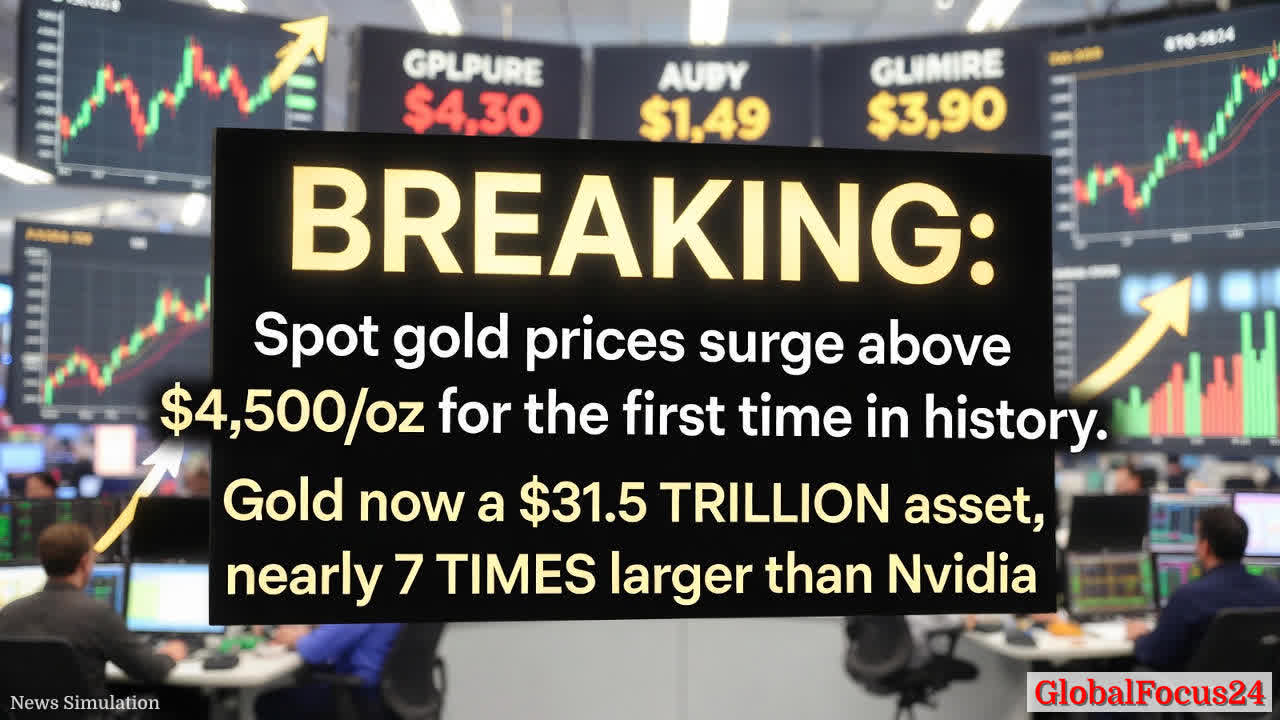
Spot Gold Prices Surge to Historic $4,500 per Ounce as Markets Weigh Economic Uncertainties
A dramatic move in the gold market has pushed spot prices above $4,500 per ounce for the first time in history, signaling a new milestone for a commodity steeped in centuries of financial significance. The unprecedented level comes amid a swirl of macroeconomic pressures, including persistent inflation jitters, signaling concerns about currency stability, geopolitical strain, and shifting central-bank policy expectations. As traders, investors, and policymakers digest the implications, the moment stands as a focal point for discussions about portfolio hedging, safe-haven demand, and the evolving role of gold in a diversified asset allocation.
Historical context and significance Gold has long served as a barometer of financial sentiment, a trusted store of value during periods of instability, and a proxy for risk aversion. The current breach of the $4,500 threshold follows a prolonged period of volatility across the global financial system, where inflationary pressures, commodity price cycles, and interest-rate expectations have repeatedly redefined the appeal of hard assets. In historical terms, gold’s role as a monetary and psychological benchmark has endured through multiple cycles: wars, recessions, currency crises, and shifts in monetary policy paradigms. The latest surge underscores a renewed emphasis on tangible assets in times when fiat currencies face renewed scrutiny as inflation expectations adapt to evolving economic data.
Economic drivers and market dynamics Several interlinked forces are driving the spike in spot gold prices. First, inflation remains a persistent concern in major economies, even as some regions experience tentative deceleration in consumer price data. Second, expectations for future monetary policy—particularly regarding interest rates, bond yields, and real yields—continue to influence gold’s relative attractiveness. Gold’s appeal often grows when real yields are negative or unattractive, as non-yielding bullion competes more effectively with other assets when inflation erodes the purchasing power of money. Third, geopolitical risk and supply-side considerations contribute to the bid for gold as a hedge against macroeconomic and political vagaries, even when traditional equities face volatility. Finally, demand patterns across central banks, jewelry producers, ETF holders, and retail investors shape both short-term momentum and longer-term price discovery in the gold market.
Regional comparisons and cross-market context The current price move resonates differently across regions, reflecting diverse macroeconomic landscapes and currency dynamics. In some economies with elevated inflation or weaker currencies, gold is perceived as an essential stabilizing asset, reinforcing demand and supporting higher local prices even as global benchmarks move higher. In other markets, central-bank purchases and diversified investment strategies moderate speculative surges, highlighting the nuanced balance between safe-haven appeal and opportunity costs in portfolios. Comparative analysis shows that price behavior in major gold-consuming regions often parallels shifts in energy and commodities markets, where risk sentiment, interest-rate trajectories, and exchange-rate movements collectively shape investor decisions. The breadth of regional responses underscores gold’s role as a globally tracked asset class with a wide spectrum of drivers beyond purely domestic factors.
Market infrastructure, liquidity, and price formation The magnitude of today’s price level reflects not only fundamental supply-and-demand dynamics but also the functioning of global gold markets and associated financial instruments. Spot gold markets operate across major trading hubs, with liquidity shaped by market participants including bullion banks, mining interest, jewelers, and a broad base of investors via exchange-traded products and futures markets. Price formation benefits from continuous trading, robust clearing infrastructure, and the integration of hedging instruments that allow participants to manage risk and express views on future price directions. While single-day records can attracts, the longer-term trajectory of gold prices will hinge on the balance of inflation expectations, real interest rates, and demand from official sector reserves and the private sector.
Implications for investors and portfolios For investors, the movement beyond $4,500 per ounce expands the context for portfolio construction and risk management. Gold remains a potential hedge against inflation and a counterweight to equity risk; it can offer diversification benefits when correlations with other asset classes shift in times of stress. The latest development invites a reassessment of allocation frameworks, especially for institutions and individuals seeking to preserve purchasing power or to mitigate currency risk. At the same time, higher prices can influence mining viability, production planning, and supply responses, which in turn affect market dynamics over the medium term. Investors may consider a layered approach, using a mix of physical gold, futures, and exchange-traded products to navigate liquidity, storage costs, and regulatory considerations.
Historical comparisons and longer-term trends Viewed through a longer lens, historical price trajectories of gold reveal recurring patterns in response to macroeconomic inflection points. Periods of heightened policy uncertainty, accelerated money supply growth, or sudden shifts in risk tolerance have historically coincided with durable demand for gold as a reliable store of value. The current price environment, characterized by heightened sensitivity to inflation metrics, central-bank commentary, and geopolitical developments, aligns with this established pattern. However, the pace and magnitude of the jump—while not without precedent in spikes observed during extreme periods—illustrate the evolving narrative around gold as both a traditional hedge and a modern investment vehicle with a broad and diverse investor base.
Impact on related sectors and broader financial markets Beyond the direct effects on bullion markets, the price surge reverberates across sectors connected to commodities and financial markets. Mining and exploration companies may experience shifts in equity valuations as the profitability of new and existing deposits responds to price signals. Jewelry manufacturers and retailers could encounter changes in demand dynamics, particularly if consumer purchasing power faces variable inflation pressures. Additionally, central banks and official institutions monitoring reserve management strategies may reassess diversification approaches in light of pronounced shifts in gold pricing. Banks and financial advisors may adjust risk management recommendations, including strategic asset allocation and hedging practices, to reflect updated expectations for inflation, real yields, and market volatility.
Public reaction and media framing Public sentiment around the milestone reflects a mix of awe, caution, and pragmatic consideration. For some investors, the ascent reinforces confidence in gold as a resilient asset during uncertain times. Others may view the surge as emblematic of broader market fragility or of structural shifts in monetary policy that favor tangible assets. Analysts and commentators typically emphasize a balanced view, noting that while gold can perform well in certain environments, its value should be weighed against other returns and risk factors in a diversified portfolio. As the narrative unfolds, consumers, institutions, and policymakers are watching for signs of how sustained or transitory this price level proves to be and what it signals about the trajectory of inflation, currency stability, and global economic health.
Policy context and central-bank considerations Central-bank policy remains a critical backdrop for the gold market. Expectations regarding interest rates, quantitative easing or tightening, and currency stability influence both demand for gold as an inflation hedge and the opportunity costs associated with holding non-yielding assets. As central banks respond to evolving data, the interplay between monetary policy and gold’s price will likely attract ongoing scrutiny from economists, market strategists, and policymakers. The broad consensus among market participants is that gold’s appeal persists as a hedge against uncertainty, while policymakers weigh the trade-offs involved in sustaining growth, controlling inflation, and maintaining financial stability.
Supply constraints and production outlook On the supply side, gold production dynamics—driven by mining costs, mine life, and exploration success—play a role in shaping price stability. While a price spike can incentivize incremental production and new investment in mining capacity, it can also introduce near-term constraints if energy costs and capital expenditure rise. The balance between supply responsiveness and demand momentum will influence the durability of the price level. Industry observers keep a watchful eye on geopolitical developments that might affect mining regions, supply chains, and environmental considerations, all of which could affect the pace of future gold discoveries and output.
Conclusion: a defining moment for a timeless asset The breach of the $4,500 per ounce mark marks a defining moment in the ongoing narrative of gold as a foundational asset in global finance. While the precise path forward remains uncertain, the current dynamic highlights gold’s enduring relevance as a hedge, a store of value, and a signal of risk tolerance in a complex and interconnected world. As investors and institutions digest the implications, the broader economy will watch closely to see how this milestone translates into broader financial stability, consumer confidence, and strategic decisions across markets. In the months ahead, the trajectory of inflation, central-bank policy, and geopolitical developments will continue to shape gold’s story—and its status as a trusted anchor in an ever-shifting economic landscape.