Surging Christmas Market Drives Global Trade Milestone as City Reasserts Its Holiday Frontier
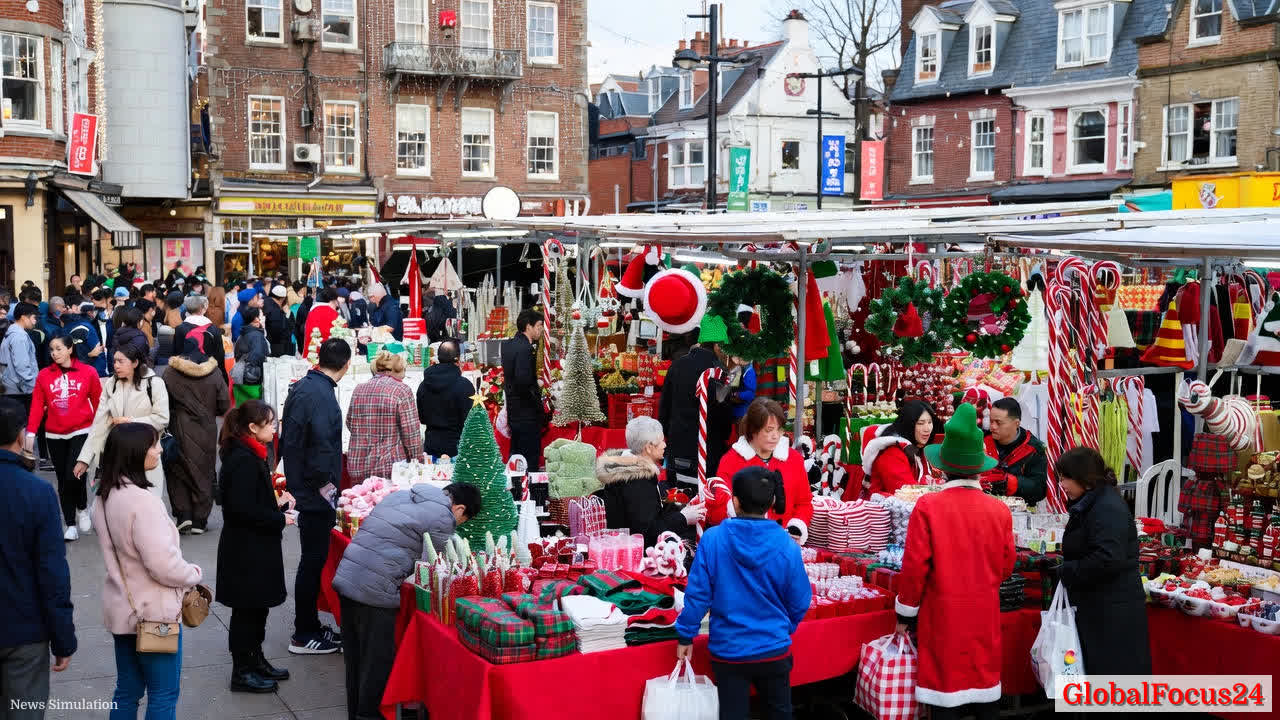
In a city famed as the world’s Christmas capital, the seasonal market has blossomed into a defining economic engine that extends far beyond festive cheer. An extensive array of stalls showcasing trees, ornaments, hats, wreaths, and candy canes has not only captivated visitors but also shaped the city’s commercial landscape in profound ways. This year, the market’s scale and sophistication contributed to a record-breaking trade surplus that exceeded $1 trillion, underscoring the metropolis’ central role in the global holiday goods trade.
A century-spanning tradition with modern ambitions The city’s Christmas market tradition stretches back generations, evolving from a neighborhood fair to a global showcase that draws producers, artisans, and buyers from continents away. Early traders focused on local crafts and basic seasonal wares, but as transportation networks expanded and consumer demand for authentic, high-quality holiday goods grew, the market transformed into an international hub. The modern market blends time-honored crafts with advanced logistics, digital marketplaces, and sophisticated branding, creating a seamless experience for visitors while enabling suppliers to reach a broader audience with greater efficiency.
Historical context is essential to understanding the market’s current magnitude. Post-war rebuilding eras, globalization waves, and the rise of e-commerce reshaped how holiday goods move from maker to shopper. The city benefited from proximity to major shipping routes, a skilled artisan base, and a culture that prizes festivity as economic activity. Over the decades, public investments in market infrastructure, security, and cultural programming helped sustain the market’s appeal, turning seasonal sales into year-round economic resilience for vendors who rely on the peak holiday period to sustain their operations.
Economic impact and supply chain dynamics The market’s expansive footprint is visible across multiple layers of the economy. First, the direct retail activity surrounding the stalls creates thousands of seasonal jobs, many of which transition into permanent roles in related sectors such as hospitality, logistics, and design. Second, the demand for raw materials—such as timber, glass, plastics, metals, and fabrics—fuels manufacturing activity both within the city and across its trade networks. Third, ancillary services including packaging, marketing, and transportation experience a surge in demand, further amplifying the market’s fiscal footprint.
One notable dimension of the market’s economic influence is the diversification of regional trade partnerships. Vendors source components from a wide geographic footprint, enabling a resilient supply chain that can absorb shocks in any single region. For instance, ornament producers might source glass components from one region, wood from another, and packaging materials from a third. This geographic dispersion helps cushion the market against localized disruptions while maintaining steady output during peak selling periods.
The reported trade surplus of $1 trillion marks a milestone that reflects not only festive demand but also strategic investments in production capacity and logistics. The city’s authorities have prioritized streamlined customs procedures for holiday-related goods, investment in cold-chain logistics for perishable items like certain confections, and enhanced inspection regimes to safeguard quality. These measures reduce bottlenecks, shorten lead times, and improve reliability, enabling vendors to meet rising consumer expectations for variety, authenticity, and timely delivery.
Regional comparisons illuminate how this market stacks up against peers When compared with other global hubs for seasonal goods, the city’s market demonstrates a distinctive blend of scale and cultural immersion. In some major ports or metropolitan centers, holiday markets are prominent but operate within more limited windows or rely heavily on imported products with less emphasis on artisanal production. The city’s market, by contrast, has been steadily expanding its domestic manufacturing ecosystem while attracting foreign producers who value its accessibility, skilled labor, and festive atmosphere. The result is a more integrated supply chain in which domestic and international players collaborate within a shared ecosystem that prioritizes quality, storytelling, and experiential shopping.
Regional analyses also reveal how consumer behavior influences market outcomes. Local residents maintain long-standing traditions of gift-giving and ceremonial decor, while visitors from neighboring regions seek authentic items and unique designs that symbolize the season. The convergence of these consumer segments sustains demand volatility yet drives innovation as vendors adapt offerings to evolving preferences—balancing classic motifs with contemporary styles, sustainable materials, and culturally diverse designs. This adaptability helps the market retain relevance across generations and economic circumstances.
Sustainability, quality, and the future of a festive economy Sustainability has become a central strategic concern for the market. Vendors increasingly emphasize responsible sourcing, reduced waste packaging, and the use of durable, recyclable materials. Consumers, too, show a growing preference for items with a longer life cycle and a clear provenance story. The market’s leadership recognizes that sustainable practices are not only ethically essential but also economically advantageous, because they open pathways to premium pricing, longer product life, and stronger brand loyalty.
Quality control remains a cornerstone of the market’s appeal. With thousands of items on display—from hand-painted ornaments and hand-tied wreaths to premium artificial trees and specialty confections—the market relies on rigorous supplier verification, standardized safety checks, and clear labeling. These safeguards protect consumers and empower vendors to compete on merit rather than price alone. In an industry where story and craftsmanship often drive purchasing decisions, the ability to communicate origin, material integrity, and production ethics becomes a differentiator that sustains long-term growth.
Looking ahead, the market’s trajectory appears aligned with broader macroeconomic trends. Global consumer demand for experiential retail—where shoppers seek immersive, memorable shopping experiences—supports continued investment in festive markets as cultural destinations. Digital integration, including mobile payments, augmented reality try-ons for ornaments, and online marketplaces tied to in-market experiences, promises to enhance customer engagement and extend the market’s reach beyond physical confines. As logistics networks continue to mature, the ability to synchronize production, distribution, and in-market sales will be critical to maintaining the market’s competitive edge.
Public reaction and cultural significance Public response to the market has been overwhelmingly positive, reinforcing the city’s identity as a beacon of holiday spirit and economic vitality. Residents celebrate the market as a seasonal renewal, a shared cultural experience that brings neighborhoods together and fosters cross-cultural exchange. Tourists often describe the market as both a sensory celebration and a practical marketplace where they can find meaningful gifts while supporting a wide range of makers. Local media coverage emphasizes the market’s role in boosting neighborhood economies, showcasing small vendor stories, and highlighting charitable initiatives that accompany the holiday season.
The market’s cultural impact extends beyond commerce. It serves as a living archive of holiday traditions, reflecting regional artistry, religious customs, and secular festivities. The stalls are more than storefronts; they are stages where artisans demonstrate techniques, where families share rituals, and where visitors encounter a curated panorama of seasonal iconography. In this sense, the market contributes to a shared cultural memory, strengthening social cohesion even as it drives substantial economic activity.
Operational best practices and logistical insights Behind the scenes, the market operates with a sophisticated blend of event management, supply chain orchestration, and customer service excellence. Event organizers coordinate vendor onboarding, safety protocols, crowd management, and traffic flow to ensure a smooth experience for shoppers, while city agencies monitor environmental impacts and noise levels to maintain a high quality of life for residents. Vendors rely on integrated inventory systems, demand forecasting, and strategic pricing to optimize sales during peak hours and across the market’s multiple zones.
Logistics play a pivotal role in sustaining the market’s scale. Efficient loading and unloading operations, accessible storage facilities, and reliable last-mile delivery networks enable vendors to restock frequently and offer fresh product selections. Seasonal inventory planning often requires close collaboration with suppliers to manage lead times, customization requests, and seasonal demand spikes. The coordinated effort of producers, distributors, and retailers ensures that the market can continuously refresh its offerings without compromising quality or safety.
Conclusion: a milestone that reflects resilience and opportunity The city’s Christmas market has evolved into more than a seasonal attraction; it is a multifaceted economic ecosystem that exemplifies how tradition, craftsmanship, and modern logistics intersect to create substantial value. The record-setting trade surplus underscores a robust global appetite for holiday goods and demonstrates how a well-managed market can stimulate employment, regional manufacturing, and cross-border trade. As the market continues to innovate—with sustainable practices, digital enhancements, and culturally rich experiences—the city is positioned to sustain its leadership in the global holiday goods trade and continue shaping the seasonal economy for years to come.
Would you like this article adapted for a specific publication style or audience, such as a trade journal, regional newspaper, or global business outlet?