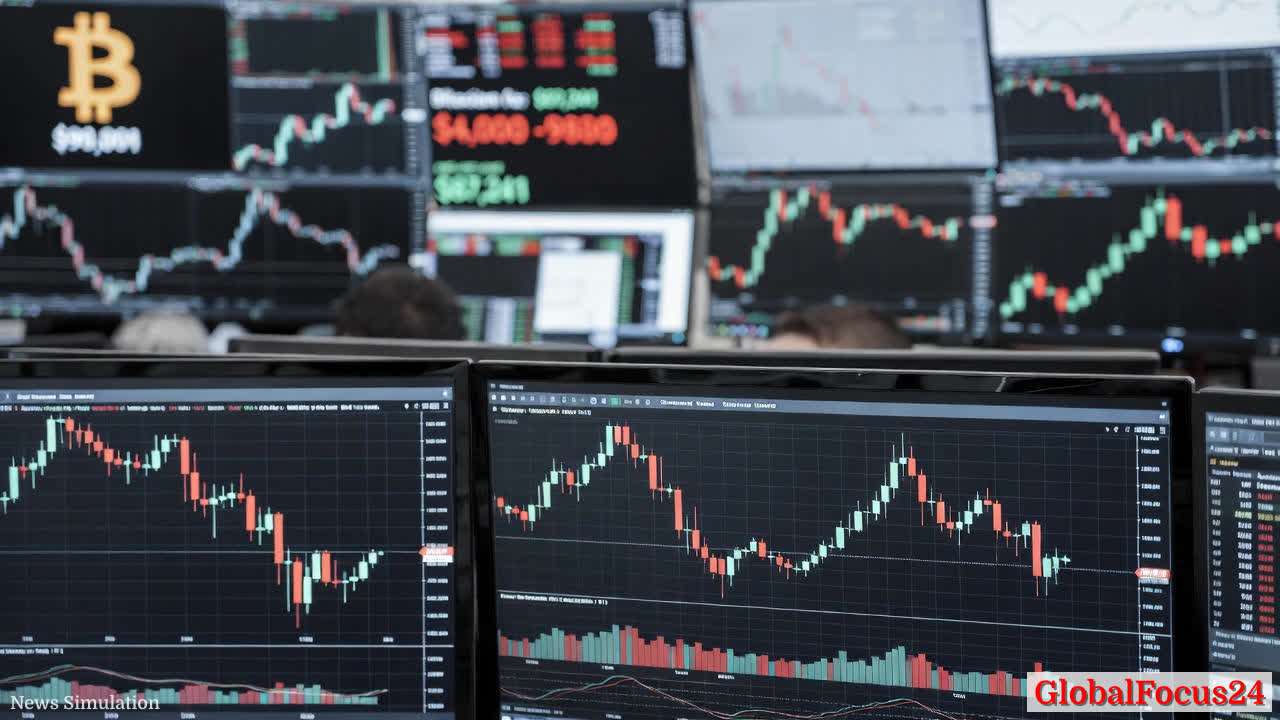
Bitcoin Plunges After Brief Reclaim of $90,000: Volatility Drives Losses in Six-Hour Window
Bitcoin experienced a notable price retreat on Monday, slipping roughly $4,000 within six hours after a brief surge above the $90,000 mark. The rapid reversal, which sent the price from just over $90,000 to about $87,241, underscored the persistent volatility that characterizes the compressed, high-leverage environment of crypto markets. The move contributed to the liquidation of an estimated $100 million in leveraged long positions, illustrating how swiftly sentiment can flip in digital-asset trading corridors.
Historical context: cycles of euphoria and correction in Bitcoin’s chronicles Bitcoin’s price history is punctuated by dramatic rallies followed by sharp pullbacks. The asset’s ascent to the $90,000 level in this cycle reflected renewed investor interest during a period of improving macro conditions and heightened institutional attention. Yet history has shown that price spikes of this magnitude often encounter substantial corrective pressure as speculative leverage, algorithmic trading, and rising risk aversion interact. In the broader arc of cryptocurrency markets, such episodes are not anomalies; they are emblematic of a market structure that remains influenced by liquidity dynamics, macros, and evolving regulatory signals.
The multi-year context: volatility, adoption, and the role of macro catalysts Over the past several years, Bitcoin has traded within wide bands as technology adoption, network fundamentals, and external financial conditions intertwine. Positive catalysts—such as corporate treasury purchases, growing institutional products, and mainstream acceptance—have historically accompanied rallies. Conversely, negatives related to regulation, energy policy debates, or shifts in interest rate expectations can accelerate downside moves. This latest dip, while short-lived in a single session, reflects an ongoing tension between the desire for mainstream legitimacy and the inherent risk profile that accompanies a decentralized, permissionless asset class.
Market microstructure: what drives rapid intraday moves The six-hour decline in Bitcoin’s price highlights several core drivers of intraday volatility:
- Leverage and liquidations: A significant portion of crypto trading occurs on margin-enabled platforms. When price levels move against long positions, automated liquidations can accelerate declines, amplifying final markdowns within a short time window.
- Order flow and liquidity gaps: Crypto markets can experience thin liquidity during certain hours or in specific venues. When price momentum builds, fewer resting orders can fail to absorb selling pressure, leading to sharper moves than in more deeply liquid traditional markets.
- Algorithmic trading: High-frequency and black-box trading strategies can exacerbate volatility as they react to price triggers and market signals in milliseconds, compounding momentum in unpredictable ways.
- Sentiment and risk-off dynamics: Investor psychology matters as traders reassess exposure, particularly those who use short-term horizons or search for capital preservation amid broader market turbulence.
Regional considerations: comparing market activity and risk profiles Different regions contribute to Bitcoin’s global liquidity quilt in distinct ways:
- North America: While institutional participation has grown, retail demand remains a key driver of day-to-day liquidity. Regulatory clarity and futures trading volumes continue to influence price dynamics, with many market participants fine-tuning risk controls in response to volatility.
- Europe: European exchanges contribute substantially to spot and derivatives activity. Regulatory developments, such as evolving oversight of custody solutions and market integrity rules, can affect investor confidence and the cadence of trading through European platforms.
- Asia-Pacific: This region often drives meaningful price discovery during certain sessions, with crypto exchange liquidity shaped by local demand cycles and, at times, by differing regulatory landscapes. Price movements in this region can have outsized effects on global sentiment due to cross-market arbitrage.
- Emerging markets: In several developing markets, crypto activity is increasingly integrated into broader financial portfolios as a hedge against local currency volatility. This integration can add depth to liquidity but may also introduce idiosyncratic risk factors tied to domestic macro conditions.
Economic impact: what the move means for investors, miners, and the ecosystem The immediate financial implications of a $4,000 intraday retreat extend beyond individual positions:
- For leveraged traders: Sudden liquidations can trigger cascading effects, forcing risk managers to reassess margin requirements and hedging strategies. The liquidity crunch can temporarily widen bid-ask spreads and reduce price transparency during the most intense moments of the move.
- For miners: Bitcoin’s price level interacts with mining economics, including energy costs, halving cycles, and network hash rate. While a short-term drawdown can elevate concern among miners with high marginal costs, longer-term profitability depends on cumulative price trends and uptime efficiency.
- For institutions and funds: Shorter-term volatility tests the resilience of diversified portfolios that include digital assets. Risk frameworks, stress-testing, and scenario planning are likely to be revisited as market participants evaluate exposure to speculative assets within broader asset allocation models.
- For merchants and consumer use: Price stability remains a concern for merchants accepting Bitcoin as payment. While many merchants are accustomed to volatility, sustained or repeated sharp swings can affect consumer confidence and pricing strategies.
Technical indicators and momentum signals: what traders watch In the wake of the recent move, several indicators tend to draw attention:
- Moving averages: Short-term moving averages can cross or diverge from longer-term gauges, signaling shifts in momentum that traders use to time entries and exits.
- Relative strength index (RSI): An elevated RSI can indicate overbought conditions that may precede a pullback, while a drop toward neutral levels can reflect renewed balance between buyers and sellers.
- Open interest: In futures and perpetual swaps, rising open interest during a rally followed by a rapid drop can signal a shift in the dominant market force from new capital inflows to profit-taking and liquidations.
- Volume patterns: A surge in volume during a reversal day can suggest conviction in the move, whereas light volume may point to a momentary anomaly or a lack of liquidity to sustain the move.
Regional comparison: how this episode stacks up historically When viewed against past episodes, the current six-hour decline bears similarities to earlier bursts of volatility tied to macro news, regulatorys, or shifts in liquidity. Historically, Bitcoin has exhibited a propensity to rebound after retracements, particularly when broader market conditions remain supportive and risk appetite returns. However, the pace and magnitude of future recoveries depend on a confluence of factors, including macroeconomic policy, capital market liquidity, and evolving investor sentiment toward risk-on assets.
Public reaction and sentiment dynamics Social media chatter, retail forums, and professional commentary often amplify both optimism and caution during rapid price moves. The immediacy of online platforms means that narratives—whether about technological breakthroughs, regulatory clarity, or market manipulation concerns—can shape short-term behavior. Public reaction to a sharp drop can range from renewed risk-awareness among casual observers to renewed enthusiasm from contrarians who view dips as opportunities, highlighting the emotional dimension of crypto markets that complements technical and fundamental analyses.
Longer-term implications for the crypto ecosystem Despite the near-term volatility, Bitcoin’s long-run trajectory remains a function of broader adoption, underlying network fundamentals, and the evolving regulatory framework that surrounds digital assets. As institutions gradually integrate digital assets into diversified portfolios and as cash management strategies evolve, Bitcoin could continue to consolidate gains seen in prior cycles. At the same time, ongoing debates over energy efficiency, security, and consumer protection will influence the pace and direction of mainstream acceptance.
What investors should monitor next To navigate ongoing volatility, market participants may watch:
- Liquidity metrics across major venues to gauge how easily positions can be entered or exited without triggering outsized price moves.
- Regulatory signals from key jurisdictions regarding custody, tax treatment, and consumer protections.
- Macro indicators such as interest rate trajectories, inflation data, and dollar strength, which historically correlate with appetite for risk assets.
- Network health metrics like hash rate, mining profitability, and transaction throughput, which can provide context about the underlying resilience of Bitcoin itself.
Conclusion: a reminder of the balance between opportunity and risk The six-hour swing that followed Bitcoin’s brief return above $90,000 underscores the dual nature of cryptocurrencies as both potential engines of innovation and instruments subject to rapid sentiment-driven price action. For investors, miners, and enthusiasts alike, the episode reinforces the importance of disciplined risk management, diversified exposure, and vigilant monitoring of both market microstructure and macro developments. In a market where gains can appear quickly and retreat just as fast, staying informed and prepared remains essential for weathering the next wave of volatility.
If you’d like, I can tailor this article to a particular audience (institutional readers, retail investors, or policymakers) or adjust the regional emphasis to highlight a specific market.