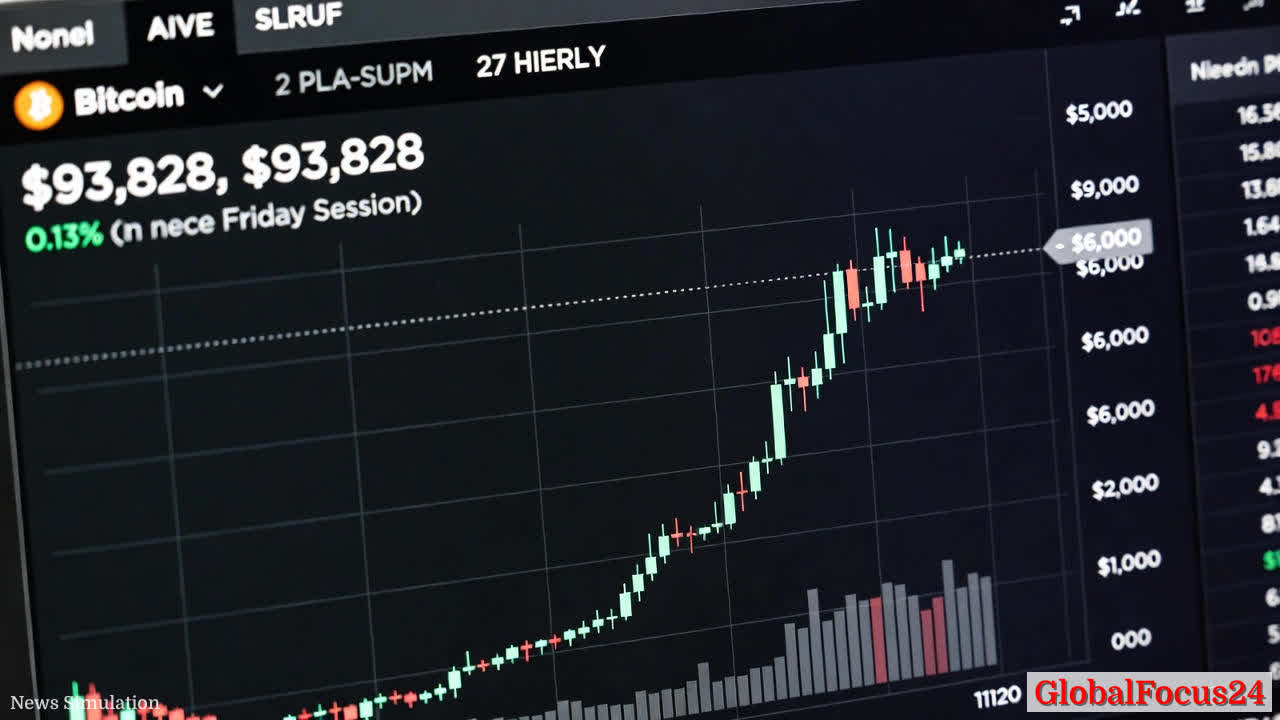
Bitcoin Surges Beyond $94,000 as Short Liquidations Rewrite the Market Thermometer
Bitcoin vaulted above $94,000 today, propelled by a wave of leveraged short liquidations that surpassed $200 million and reshaped intraday trading dynamics. The move channels a broader pattern of volatility that has characterized the cryptocurrency market over the past year, with price swings amplified by the interplay of margin calls, derivatives activity, and shifting macroeconomic signals. As the market digests this rapid ascent, analysts are weighing whether the momentum can endure in the face of persistent uncertainty across traditional and digital asset ecosystems.
Historical context and market backdrop
Bitcoin’s latest rally arrives within a longer arc of substantial volatility that has defined the asset since its 2020-2021 ascent. From the post-pandemic liquidity boom to the subsequent tightening cycles by major central banks, the crypto space has repeatedly experienced episodic surges followed by retracements. The current move, which briefly pushed the price above the $94,000 threshold, retraces a pattern observed in prior cycles: sharp, leverage-fueled rallies triggered by liquidations on bearish bets, followed by a cooling period as traders reassess risk, hedges, and leverage exposure.
In broader historical terms, Bitcoin has oscillated between speculative fervor and cautious adoption, with macro milestones often shaping price trajectories. The crosscurrents of institutional interest, retail participation, and evolving regulatory frameworks have consistently influenced market sentiment and liquidity provisions. The latest price action reflects the ongoing interaction of these forces, as well as the ever-present influence of derivative markets, where liquidations on short positions can rapidly accelerate price moves in either direction.
Economic impact and implications for traders
The immediate impact of the rally is multidimensional. For traders who held short positions, the forced unwinds translated into rapid capital losses, contributing to a sudden shift in market psychology from pessimism to renewed optimism. The sizable short liquidations underline the importance of margin discipline and risk management in highly leveraged conditions. As prices climb, market participants confront the twin realities of potential upside surprises and the risk of abrupt pullbacks if demand softens or external catalysts dampen momentum.
From a broader economic perspective, the Bitcoin price movement interacts with several macro factors. Global inflation trends, monetary policy signaling, and shifts in risk appetite influence the relative attractiveness of digital assets versus traditional stores of value and productive assets. While some investors view Bitcoin as a hedge against monetary expansion, others emphasize its high volatility and speculative characteristics. The balance between demand drivers—such as perceived scarcity, network security, and infrastructural maturity—and risk factors—such as regulatory scrutiny and technology risk—continues to shape pricing dynamics.
Regional comparisons and market structure
Across regions, liquidity and trading activity for Bitcoin have shown notable variation. In major financial hubs with deep derivatives markets, liquidity tends to support more pronounced price movements during periods of high leverage, as traders deploy complex strategies to capitalize on volatility. Conversely, in jurisdictions with stricter capital controls or more conservative regulatory environments, price discovery can appear more muted, with institutional players adopting cautious positions and longer time horizons.
Historically, the relationship between spot markets and derivatives has been a key driver of price behavior. When liquidations surge in the futures and perpetual swap markets, spot prices often respond as forced closures unwind. This interconnectedness underscores the importance of monitoring not just the current price level but also the open interest, funding rates, and the overall health of the market’s liquidity fabric. The current surge above $94,000 can thus be interpreted as a moment where leveraged positions—particularly short bets—are being resolved en masse, contributing to a rapid repricing that may serve as a precursor to a broader rebalancing.
Technological and governance dimensions
Technological advancements in the Bitcoin network and its surrounding ecosystem continue to influence market confidence. Improvements in scalability, security, and user experience across exchanges, wallets, and layer-two solutions help broaden participation and reduce operational friction. At the same time, governance dynamics—ranging from protocol upgrades to regulatory positions—shape the long-term risk landscape for investors. Market participants remain attentive to developments in custody infrastructure, compliance standards, and the interoperability of digital assets with traditional financial systems.
Public sentiment and risk considerations
Public reaction to the price movement has been a mix of cautious optimism and caution. Enthusiasts highlight the resilience of Bitcoin’s price action in the face of macro headwinds and continued interest from long-term holders. Critics emphasize that short-term volatility, rapid liquidations, and the potential for sudden reversals can undermine perceived stability and deter newcomers. This duality reflects the broader sentiment across financial markets, where risk tolerance fluctuates with evolving economic signals and policy expectations.
Longer-term outlook and policy context
Looking ahead, the trajectory of Bitcoin will likely be shaped by a confluence of factors: global macro conditions, regulatory clarity, and the maturation of the broader crypto ecosystem. If inflation pressures persist and central banks continue to adjust policy stances, digital assets may experience price discovery phases that test both investor appetite and risk controls. Regulatory developments, in particular, will continue to influence institutional participation, product innovation, and the overall integration of cryptocurrency markets with traditional financial infrastructure.
Market structure indicators to watch
- Open interest in major futures markets: Rising open interest alongside price increases can signal sustained momentum, while a sharp divergence may hint at a potential exhaustion point.
- Funding rates: Positive funding rates during rallies indicate that long positions are paying shorts, which can pressure the sustainability of the move if funding dynamics flip.
- Spot volumes and liquidity depth: Strong liquidity in spot markets supports orderly price formation, whereas thinning liquidity can amplify volatility during retracements.
- Derivatives activity by region: Regional disparities in derivatives trading can shed light on where risk concentrations are most pronounced.
Historical analogs and lessons for investors
Historically, large, rapid moves followed by reversals have taught investors the importance of diversification, disciplined risk management, and clear exit strategies. In markets characterized by high leverage and complex instruments, even seemingly well-founded bullish narratives can be upended by unexpected macro shifts or sudden shifts in liquidity conditions. The current episode serves as a reminder of the fragility of short-term momentum and the enduring need for strategic positioning that accounts for both upside potential and downside risk.
Conclusion: navigating volatility with clarity
Bitcoin’s ascent beyond $94,000, underpinned by substantial short liquidations, is a vivid illustration of the ongoing tension between fear and opportunity in digital asset markets. As traders gauge whether this rally can sustain itself, the broader audience—ranging from retail investors to institutional participants and infrastructure providers—will watch how liquidity evolves, how regulatory signals unfold, and how the market adapts to an environment of persistent volatility. In the near term, the price action may continue to hinge on the balance between demand catalysts and risk management discipline, with the potential for further volatility as new information enters the market.
Note: This article presents an objective, data-informed examination of price dynamics, liquidity, and market structure without endorsing any political or policy position. It integrates historical context, regional considerations, and economic implications to provide a comprehensive view of the current market moment.