)
Market Impact as Supreme Court Weighs Tariffs: An Economic and Regional Analysis
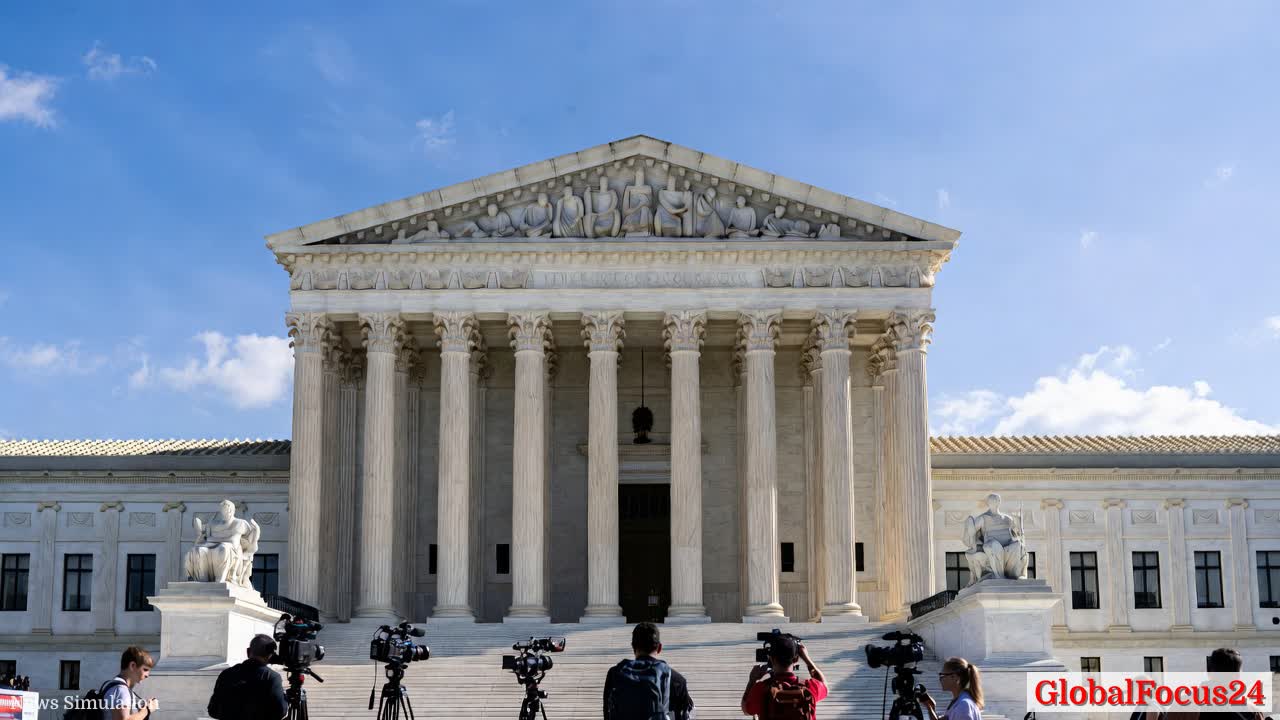
The anticipation surrounding a decision from the United States Supreme Court on President Trump’s tariffs has intensified in recent days, with observers weighing potential outcomes and their ripple effects across industries, regional economies, and global trade dynamics. While judicial outcomes are inherently uncertain, the case has already influenced market sentiment, investment planning, and policy discourse. This article provides a historical and economic context, examines regional implications, and situates the expected ruling within broader trends in American trade policy and global supply chains. It avoids political commentary and focuses on data-driven analysis, economic mechanisms, and comparable international experiences.
Historical context: tariff use and judicial oversight in U.S. trade policy Tariffs have long been a tool in the U.S. economic policy toolkit, used to protect domestic industries, penalize perceived unfair trade practices, or address national security concerns. The modern era of tariff action accelerated during the late 20th and early 21st centuries, often accompanied by complex trade negotiations and trade remedy investigations. The Supreme Court has historically served as a crucial arbiter in questions of executive authority, statutory interpretation, and the limits of unilateral tariff power. The expected ruling in this case anchors a broader ongoing debate about the balance between executive decision-making on trade and legislative or judicial checks on economic measures with wide-reaching consequences.
The mechanics of tariffs and their economic effects Tariffs function by imposing a cost on imported goods, which can influence consumer prices, producer decisions, and international sourcing strategies. When tariffs are levied, several channels interact:
- Price transmission: Tariffs can raise the landed cost of imported products, potentially leading to higher consumer prices. The extent of pass-through depends on market structure, competition, and elasticity of demand.
- Domestic substitution: Higher import costs may incentivize domestic producers to expand output or shift product mix, potentially supporting local jobs in certain sectors.
- Supply chain realignment: Tariffs can prompt firms to seek alternative suppliers, relocate production, or adjust inventories, affecting regional logistics hubs and industrial parks.
- Inflation dynamics: Depending on the scope and scale of tariffs, the macroeconomic effect can include upward pressure on inflation if price increases are broad-based and persistent.
Historical episodes offer a spectrum of outcomes. Some tariff actions have yielded temporary protections for specific industries, while others have contributed to longer-term trade frictions and retaliation cycles. The current case benefits from a robust data environment, with customs receipts, producer price indices, and consumer price data providing a granular view of tariff transmission in the near term.
Economic impact by sector and region Economic effects of tariffs are rarely uniform. Regional economies in the United States can experience divergent outcomes based on industry composition, exposure to imported inputs, and export markets. Key sectors frequently cited in tariff discussions include:
- Manufacturing and autos: Tariffs on inputs or finished goods can raise production costs, affect competitiveness, and influence investment in automation, reshoring, or diversification of supplier networks. Regions with dense manufacturing clusters may see more immediate near-term price pressures, even as producers seek efficiency gains to offset costs.
- Agriculture: Tariffs targeting agricultural products frequently elicit price and demand shifts in rural and agricultural hubs. Export-dependent farming communities may experience income volatility, prompting adjustments in crop planning and marketing strategies.
- Energy and materials: Tariffs on certain materials or industrial inputs can influence projects tied to construction, energy infrastructure, and capital goods markets, affecting regional activity where these inputs are concentrated.
- Consumer goods and retail: Pass-through to consumers can be more pronounced in metropolitan areas with diverse retail ecosystems, influencing household disposable income and typical consumer spending patterns.
Regional comparisons across the country reveal mixed results in past episodes. Some states with high exposure to import-dependent industries report short-term price pressures and shifts in employment patterns, while others benefit from diversified manufacturing bases or from new investment in domestic supply chains. In coastal ports and logistics hubs, tariff-related adjustments often intersect with global shipping cycles, affecting throughput, warehousing demand, and intermodal transport flows.
Global context and comparisons The United States is not acting in isolation. Tariff policy interacts with global supply chains, foreign currency dynamics, and partner nations’ responses. In several comparative cases internationally, tariffs or similar trade measures triggered adjustments in supply chains that favored more regionalized production networks and supplier diversification. Countries with robust domestic demand, flexible labor markets, and dynamic manufacturing ecosystems have shown greater resilience in the face of tariff-induced cost pressures.
Public reaction and market expectations Public sentiment around tariffs often reflects immediate price expectations and long-term economic confidence. Consumers and businesses weigh the possibility of price increases against potential gains from renewed or protected domestic industry activity. Investor behavior tends to respond to anticipated policy direction, with attention to corporate earnings projections, input cost trajectories, and inventory strategies. While volatility may spike around major announcements or rulings, informed market participants typically anchor decisions in forward-looking indicators such as supply chain resilience, capacity utilization, and commodity price trends.
Implementation timing and potential pathways If the Supreme Court issues a ruling favorable to the legality of the tariffs, immediate implementation steps would likely follow, subject to administrative processes and legal interpretation. Conversely, a ruling that narrows or overturns tariff authority could trigger policy revisions, renegotiations of trade terms, or legislative responses. In either scenario, the trajectory of tariff policy tends to influence business planning in the near to medium term, including capital expenditure decisions, supplier diversification, pricing strategies, and inventory management. The most salient questions for markets are the durability of any relief from tariffs, the scope of affected sectors, and the likelihood of alternative policy tools being deployed to achieve trade-related objectives.
Supply chain resilience and corporate strategy Tariffs often highlight the fragility of global supply chains and the need for resilience planning. Firms across sectors are increasingly adopting strategies to mitigate exposure to tariff risk, including:
- Diversification of supplier bases across regions to reduce dependency on a single country or supplier network.
- Nearshoring or reshoring initiatives to bring critical components closer to home markets, reducing transit times and exposure to cross-border policy shifts.
- Strategic inventory management to buffer against price volatility and tariff announcements, ensuring continuity of production and distribution.
- Investment in automation and advanced manufacturing to maintain competitive cost structures amidst rising input costs.
Economic indicators to watch As the ruling approaches or unfolds, several indicators can provide a compass for investors and policymakers:
- Producer price indices and import price indices: These reveal how costs for imported inputs move in response to tariff changes.
- Consumer price indices: These show how tariff dynamics translate into consumer-level inflation or price stability.
- Employment data in affected sectors: Tracking manufacturing and related industries helps gauge labor market resilience and regional impacts.
- Trade balance and current account data: Shifts in import volumes and export performance can illuminate broader macroeconomic effects.
- Business confidence surveys and purchasing managers’ indices (PMIs): Early signals of demand and supply chain health can foreshadow longer-term outcomes.
Public policy considerations and equity implications Tariffs intersect with issues of economic equity, regional development, and industrial policy. Policymakers often weigh the distributional consequences of tariffs, balancing support for vulnerable industries with potential costs to consumers and downstream sectors. In evaluating the net effect, it is important to consider both short-term market responses and long-run implications for innovation, competitiveness, and regional economic vitality. Regions with strong industrial bases may experience more pronounced resilience, while others could face heightened exposure to input cost increases and international demand fluctuations.
Historical analogs and lessons Lessons from past tariff episodes underscore the importance of credible policy design, transparent rationale, and predictable administration. Markets tend to respond most effectively when policy actions are anchored in clear objectives, accompanied by measurable benchmarks, and supported by complementary measures—such as investment in workforce development, infrastructure, or targeted support for affected communities. The outcome depends not only on the legality of the policy but on its administration, enforcement, and the broader economic environment in which it operates.
Regional storytelling: voices from communities and firms Across regions, businesses of all sizes have voiced a spectrum of perspectives. Manufacturers emphasize the need for stable planning horizons and access to affordable inputs, while retailers highlight the imperative of price stability for household budgets. Farmers discuss the vulnerability of export-dependent crops to sudden trade shifts, underscoring the demand for diversified markets and insurance mechanisms. Local economic development agencies monitor factory utilization rates, freight costs, and regional labor supply to anticipate where investment and job growth may emerge or retreat.
The path forward: interpretation and preparation Regardless of the ruling’s direction, companies and regions can prepare by strengthening supply chain visibility, conducting scenario planning, and maintaining flexibility in sourcing and pricing strategies. Public agencies can support resilience through investment in infrastructure, workforce training, and targeted assistance that reduces shock exposure in the most affected sectors. The narrative surrounding tariffs will continue to evolve as courts weigh constitutional and statutory questions, and as businesses adapt to a landscape where trade policy can shift with judicial and executive actions.
Why this matters now Tariffs matter because they influence the pricing of everyday goods, the cost structure of manufacturers, and the ability of regions to attract and retain investment. The potential ruling touches on fundamental questions about the scope of executive power in trade and the safeguards that ensure predictable economic policy. As markets absorb the legal reasoning and potential policy shifts, the real-world consequences will unfold across supply chains, employment, and consumer welfare.
Bottom line for stakeholders For businesses, the key takeaway is preparedness. Monitor input costs, assess supplier risk, and develop flexible procurement strategies. For policymakers, the emphasis should be on clarity, transparency, and complementary measures that support workers and communities while maintaining a fair and competitive market environment. For households, maintaining awareness of price trends and the broader macroeconomic backdrop can help manage expectations and plan budgets effectively.
Conclusion The Supreme Court's ruling on tariffs represents a pivotal moment with the potential to reshape cost structures for imported goods, influence corporate investment decisions, and alter regional economic dynamics. While the outcome remains uncertain, the case offers a lens into how legal frameworks intersect with economic policy to create a terrain where markets, communities, and industries must navigate a shifting balance of protection, competition, and resilience. As the decision approaches, stakeholders across the economic spectrum will be watching closely, calibrating strategies, and preparing for a range of possible trajectories in a global trading system that remains highly interconnected and ever-evolving.