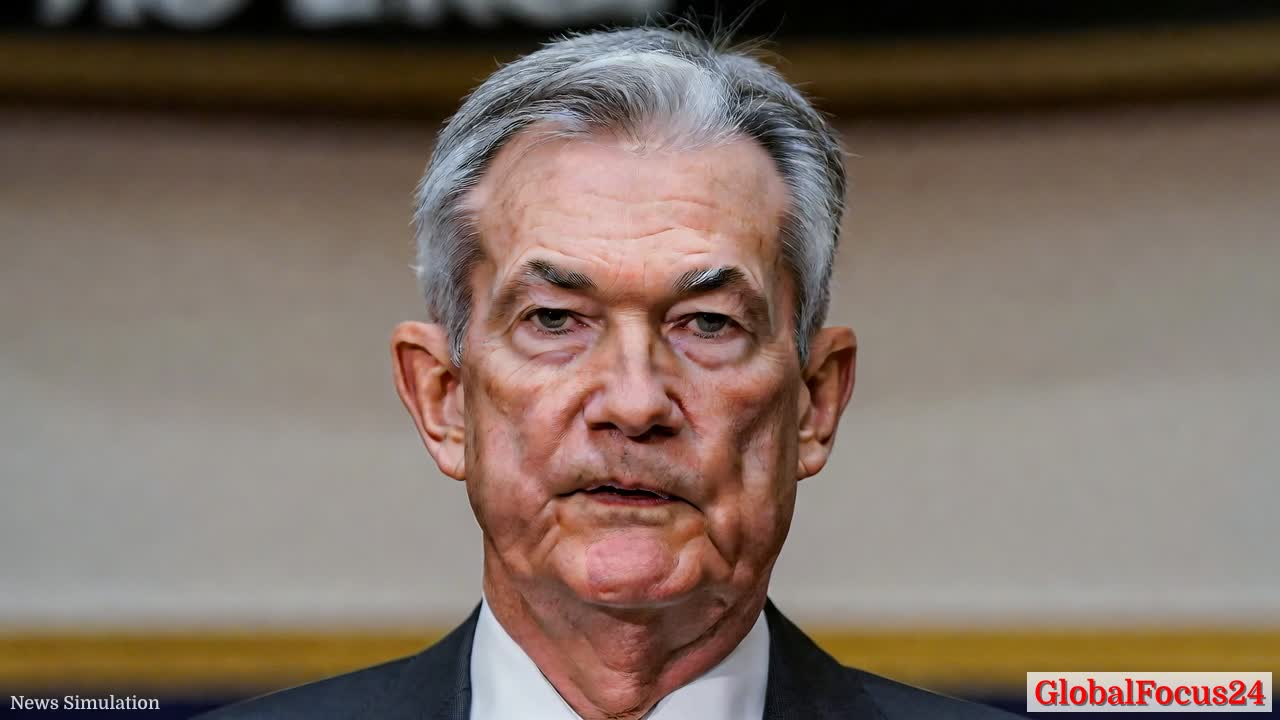
Powell Faces a Bold Turn: Federal Reserve Responds to Presidential Criticism with Direct clashes
The Federal Reserve, long recognized for its measured, data-driven approach to steering the U.S. economy, has entered a defining moment. A recent broadcasted exchange between Fed Chair Jerome Powell and the White House signaling a sharp departure from decades of understated diplomacy marks a turning point in how monetary policy and political rhetoric intersect at the highest levels of U.S. government. The two-minute response cited in recent coverage indicates a shift in tone and posture, with implications resonating through financial markets, labor dynamics, and regional economies across the country.
Historical context: inflation, independence, and the art of restraint
To understand the gravity of Powell’s move, it is helpful to revisit the Fed’s historical posture toward political pressure. Since the central bank’s modern inception in the late 1910s, the Fed has balanced independence with accountability, aiming to insulate monetary policy from short-term political incentives while acknowledging the broader economic environment shaped by fiscal decisions. In the post–Great Financial Crisis era, the Fed’s communication strategy evolved toward transparent, data-driven guidance designed to minimize surprises and reduce market volatility. The chair’s careful calibration of language — avoiding abrupt pivots and focusing on inflation trajectories, labor market conditions, and the path of interest rates — became a model of technocratic stewardship.
With inflation surges and policy normalization accelerating in the early 2020s, the Fed’s narrative increasingly intertwined with the broader macroeconomic picture: supply chain realignments, energy price volatility, and the shifting composition of consumer demand as households respond to policy changes. In this environment, the chair’s insistence on independence and commitment to a rules-based framework stood as a stabilizing anchor for financial institutions, businesses, and households navigating the costs and benefits of a rebalanced economy.
In the wake of the latest exchange, observers are reassessing that historical frame. Powell’s two-minute response—brief, pointed, and seemingly unreserved—signals a willingness to engage more openly with political critiques when they touch on credibility, policy effectiveness, and the central bank’s mandate to maintain price stability and maximum employment. The shift is not a rejection of the Fed’s core principles but rather a demonstration of readiness to defend the institution’s methods and remit in the face of intensified public dialogue about policy direction.
Economic impact: markets, credit, and regional resilience
The immediate market reaction to a more assertive Fed stance tends to be multifaceted. Financial markets absorb the news by recalibrating expectations for future rate paths, balance sheet dynamics, and the timing of policy normalization. Even when the central bank communicates with a calm, disciplined tone, revelations of stronger resolve or clearer urgency can introduce short-term volatility as traders reassess the degree of certainty surrounding inflation trajectories and employment prospects. In the longer horizon, such clarity can help reduce policy uncertainty, which historically supports investment decisions and hiring plans.
Labor markets are a central axis of the conversation around monetary policy. A more forceful policy stance, coupled with transparent communications, can influence hiring in both expected and unexpected ways. Businesses anticipate the cost of capital changing more decisively, which can affect expansion plans, wage negotiations, and the pace at which firms reallocate resources across sectors. Regions with job growth tied to cyclical industries—manufacturing, transportation and warehousing, tech-enabled services, and energy-related sectors—may experience varying degrees of resilience as firms adjust to new rate expectations and consumer demand patterns.
Regional comparisons illuminate how different economies feel the policy shift. In manufacturing-heavy regions of the Midwest, where capital-intensive investment often hinges on interest rate expectations, a stronger commitment to price stability can bolster long-run planning, even as near-term borrowing costs rise. Conversely, service-oriented metropolitan areas with elevated consumer spending may experience quicker normalization as job markets tighten and inflation cools, enabling households to reallocate disposable income toward experiences and services. The geographic distribution of inflation pressures—energy costs in the Southeast, housing affordability challenges in coastal markets, and commodity-linked price changes in resource-rich regions—will influence how sharply communities experience the ripple effects of policy signaling.
Historical parallels offer another lens for interpretation. The Fed’s steady, confidence-building communications in late-cycle environments have, in prior episodes, helped avert runaway volatility by aligning market expectations with policy intentions. The current moment—framed by heightened political rhetoric and calls for aggressive action in some quarters—tests whether a more forthright posture can sustain that alignment without provoking unintended credit tightening or retrenchment in investment.
Regional comparisons also underscore the differential burden of policy shifts. Historically, borrowing costs a few basis points higher or lower can have outsized effects on small towns dependent on local lending and small business finance. In regions where small manufacturers rely heavily on bank credit for equipment upgrades, the tempo of rate normalization matters for competitiveness and employment. In tech-centric hubs, the ability to attract investment can hinge on the perceived stability of the macroeconomic backdrop. The central bank’s communication strategy, therefore, extends beyond abstract economic models into the lived realities of communities that watch every quarterly report as a signal for their pocketbooks.
Policy implications: credibility, independence, and the pace of normalization
Powell’s more assertive public posture raises questions about the future pace of rate adjustments and the balance between inflation control and economic growth. The central bank’s credo—anchoring inflation expectations at a stable rate while supporting maximum employment—remains a guiding principle. The challenge is translating that credo into policy that can withstand political scrutiny while preserving independence. The two-minute response may be interpreted as a signal that the Fed intends to be more explicit about the risks to price stability should political pressures mount. If credibility is the currency of the central bank, then clear channeling of policy intent is essential to maintain it.
The economic outlook will hinge on several key variables: the trajectory of inflation, wage growth, consumer demand, and global supply dynamics. If inflation continues to decelerate toward the target range, the Fed could proceed with measured rate adjustments, cautious balance sheet management, and continued emphasis on forward guidance to minimize surprises. If inflation proves stubborn, more decisive actions could be warranted. In either case, the credibility of the central bank rests on consistent messaging, transparent assessment of risks, and a demonstrated willingness to adjust course as data evolves.
Public reaction and the broader information ecosystem
Public reaction to a more forceful stance by the Fed is likely to be mixed. Investors may applaud clarity and predictability, appreciating a clear framework for policy decisions. Consumers, while benefiting from a potentially cooler inflation environment, may feel a sense of short-term financial pressure as borrowing costs adjust. Businesses will monitor the exact timing of rate moves relative to their expansion plans, capital expenditures, and debt management strategies. In regions where households carry elevated debt loads or where housing costs are sensitive to mortgage rates, the mandate to control inflation resonates as a tangible safeguard for household balance sheets.
Media coverage and analyst commentary will continue to shape public perception. A self-reinforcing cycle can emerge: as the Fed communicates with greater precision, markets respond, and those responses feed into expectations, which in turn influence economic activity. The challenge for policymakers is to sustain a narrative that is both credible and accessible—explaining complex macroeconomic dynamics without encouraging knee-jerk reactions that could destabilize markets or slow the recovery.
Global context: inflation synchronization and cross-border effects
On the international stage, the Fed’s stance interacts with the monetary policies of other major central banks, including the European Central Bank and the Bank of Japan. In a globalized economy, divergence in policy paths can affect foreign exchange rates, international capital flows, and the competitiveness of exporters. If the Fed maintains a disciplined trajectory toward inflation stabilization, global markets may experience improved predictability, which can support international investment and trade. However, a faster-than-expected tightening cycle in the United States could attract capital away from emerging markets, potentially increasing borrowing costs for developing economies and affecting commodity demand worldwide.
Historical lessons from currency regimes and past cycles emphasize the importance of transparent, data-driven policymaking. The Fed’s ability to convey its assessment of risk, the likelihood of inflation persistence, and the expected pace of normalization can help dampen volatility across global markets. In regions with sizable exposure to U.S. dollar funding or to U.S. demand, the ripple effects of the Fed’s policy choices will be felt through export dynamics, import costs, and the broader confidence channel that underpins investment and employment decisions.
Looking ahead: what to watch in the coming quarters
- Inflation trajectory: The path of core andinflation will be the primary determinant of policy adaptability. A sustained deceleration toward target ranges would support gradual normalization, while persistence or resurgence could prompt a more aggressive response.
- Labor market health: Unemployment rates, wage growth, and participation rates will shape the balance between price stability and maximum employment. A cooling job market could allow for slower rate hikes, whereas a tight labor market with rising wages might necessitate further tightening.
- Financial conditions: Borrowing costs, credit availability, and asset prices will reflect evolving expectations. Tighter financial conditions can slow growth, while looser conditions may spur investment and consumption, influencing inflation dynamics.
- Global developments: Economic performance in major trading partners, geopolitical tensions, and commodity price shifts will interact with U.S. policy, affecting export competitiveness and inflation pressures.
- Regional resilience indicators: Housing affordability, small-business lending, and workforce development metrics will reveal how different communities weather policy shifts, offering a nuanced picture of the Fed’s broader impact.
Conclusion: a watershed moment for monetary policy and public dialogue
The central bank’s evolving posture comes at a moment when the political and economic landscape is unusually dynamic. Powell’s two-minute response signals more direct engagement with public discourse while preserving the core principles that have guided the Fed for decades. The implication is not a departure from independence, but a recalibration of how the Fed communicates its mandate in a climate of heightened scrutiny and rapid information flow. The United States stands at a crossroads where credibility, policy discipline, and the pace of inflation normalization will determine the speed and trajectory of the recovery, with regional economies watching closely and households feeling the repercussions in their daily lives.
As policymakers move forward, the challenge will be to maintain a steady hand in steering the economy toward stable prices and robust employment, even as political rhetoric intensifies and market expectations shift. The outcome will shape not only macroeconomic indicators but also the confidence with which communities plan for the future, invest in their localities, and navigate the evolving economic cycle that defines the next chapter of American prosperity.