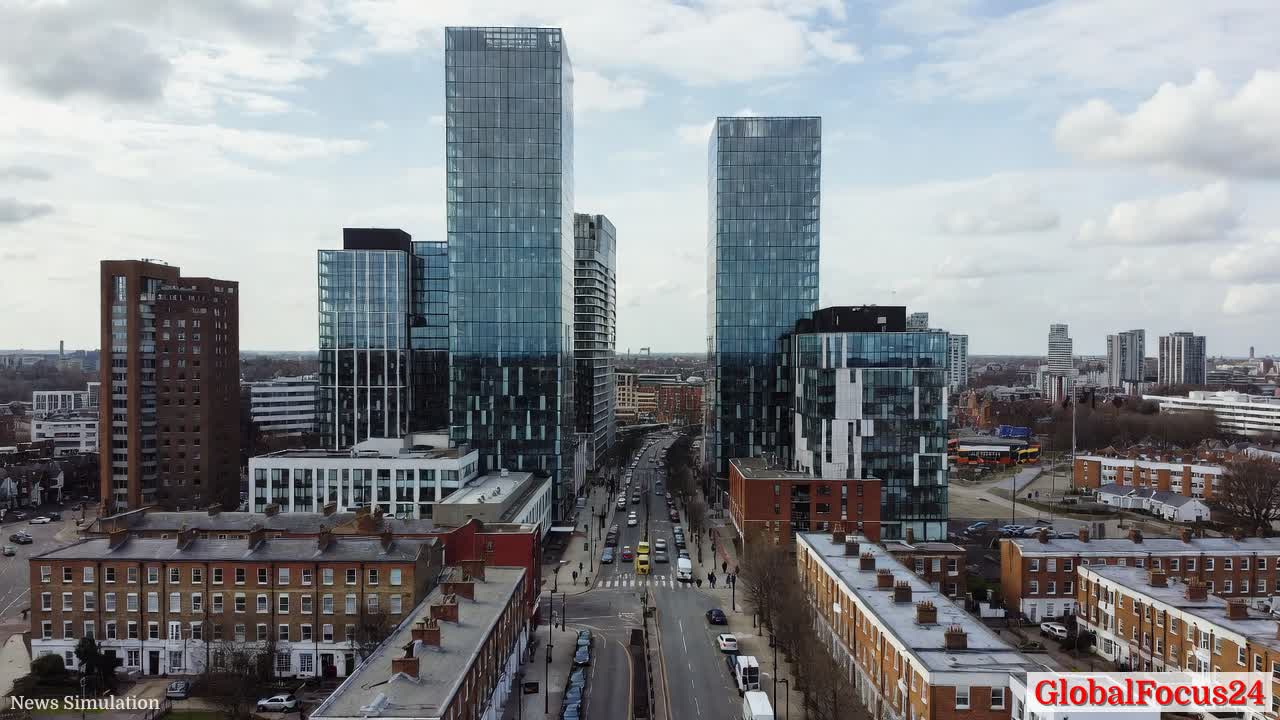
London’s Docklands: A Century of Regeneration, Risk, and Global Finance
London’s Docklands stand as a striking case study in how policy levers, market incentives, and urban imagination can rewrite a landscape. From derelict warehouses and decaying cranes to a gleaming financial hub, the transformation that unfurled in the late 20th century reshaped not only East London but also the capital’s role in the global economy. The story blends industrial decline, municipal experimentation, and international capital flows into a narrative with lessons for contemporary urban renewal, housing, and regional competitiveness.
Historical context: from imperial port to post-industrial vacancy
The Docklands’ decline began as the imperial economy shifted and containerization altered maritime logistics. The old port—built around timber, tobacco, sugar, and staple commodities—proved ill-suited to new shipping methods. By the 1960s and 1970s, East London faced a stark paradox: a geography ideal for movement of goods but a lack of modern infrastructure and investment. The result was a dramatic loss of port-related employment; estimates show tens of thousands of jobs disappearing as ships grew larger and docking technology advanced beyond the capabilities of the historic facilities.
Against this backdrop, policymakers sought to reframe the area’s purpose. The 1980s ushered in an era of deregulation, targeted incentives, and centralized decision-making designed to accelerate development. London’s Docklands were designated an enterprise zone, a policy choice meant to accelerate private investment by offering tax incentives, streamlined planning, and proximity to the City’s financial nerve center. The approach reflected a broader belief in market-led revitalization: to attract capital, reduce friction, and demonstrate that ambitious urban renewal could deliver rapid economic dividends.
Canary Wharf as a fulcrum of ambition
Central to the Docklands saga is Canary Wharf, the flagship project that reimagined a derelict port into a futuristic financial campus. The development faced severe headwinds, including the initial bankruptcy of a Canadian developer and local political pushback. Yet the project persisted, buoyed by a broader shift in the City’s regulatory posture—opening London to international investors and boosting foreign exchange activity. Canary Wharf’s rise helped reposition London as a competitor to other global financial centers and provided a visible signal that large-scale urban renewal could be compatible with stability, rule of law, and long-term planning.
By the early 1990s, Canary Wharf had begun to deliver critical infrastructure: transportation links, modern office towers, and a suite of tenants that handled substantial daily financial activity. One Canada Square, a 235-meter-tall beacon of glass and stone, became symbolic of a new era: a skyline that suggested not just commercial success but a renewed national confidence in Britain’s economic future. The district rapidly attracted major banks, asset managers, and professional services, creating a dense cluster effect that amplified productivity through proximity, knowledge spillovers, and specialized labor markets.
Economic impact: productivity, finance, and regional dynamics
The Docklands’ regeneration delivered tangible economic outputs across several channels. First, the creation of Canary Wharf and surrounding developments contributed to a significant shift in employment, with tens or hundreds of thousands of workers now commuting to the area for finance, professional services, and support functions. The concentration of financial activity supported high-value employment, drawing skilled labor from across London and beyond.
Second, the district reinforced London’s status as a global financial center. Daily foreign exchange turnover and interbank activity reached record levels, a reflection of a city that could simultaneously serve as a gateway for international capital and a platform for domestic institutions to scale their operations. The Docklands’ growth also had multiplicative effects through ancillary industries: real estate, construction, hospitality, retail, and transport infrastructure all benefited from the surge in demand and the need to support a modern, urban, finance-driven environment.
Third, the regeneration altered tax revenue dynamics and public spending considerations. Enterprise zones and incentives shifted some fiscal risk onto the public sector in exchange for accelerated private investment. In aggregate terms, the Docklands contributed to a broader rebalancing of the regional economy, sustaining growth in a part of London that had long suffered from diminished industrial activity. The district’s success helped validate the model of targeted incentives as a tool for urban renewal and economic diversification.
Regional comparisons: London’s Docklands and global peers
Viewed alongside other global financial hubs, London’s Docklands illuminate how regional context matters in shaping outcomes. In cities like New York, Singapore, and Hong Kong, the rise of financial districts often followed a combination of port trade heritage, regulatory evolution, and public-private partnerships. London’s approach—anchored in deregulation, tax incentives, and a deliberate separation of enterprise-zone reasoning from traditional local governance—presented a distinctive pathway. The Docklands benefited from a mature financial ecosystem in the City of London, enabling rapid integration with existing markets, a ready pool of professionals, and an established legal framework that undergirded cross-border finance.
Different urban environments worldwide illustrate that renewal strategies succeed most when they align with broader economic goals. For London, the Docklands became a symbol of the city’s capacity to reimagine space for growth, while maintaining an eye toward governance, infrastructure, and social considerations. The experience contrasts with places where renewals prioritized manufacturing it to be replaced by high-value services, sometimes at the expense of affordable housing and local community cohesion. In that sense, the Docklands story is part of a larger conversation about how cities balance ambition with inclusivity.
Urban design, housing, and social equity
Modern Docklands remain a magnet for high-end offices and luxury residences, with housing markets in adjacent neighborhoods reflecting strong demand from professionals and executives who work in the district. The presence of premium residential towers, swimming pools, and concierge services underscores the lifestyle appeal that accompanies major financial hubs. Yet the prosperity in the core area sits alongside persistent housing insecurity nearby. Adjacent social housing developments and benefit-dependent residents highlight enduring inequalities within a rapidly changing urban landscape.
This juxtaposition has sparked ongoing policy debates about housing affordability, inclusive growth, and spatial equity. Critics point out that a successful regeneration can still leave gaps for lower-income residents, underscoring the need for complementary investments in affordable housing, social services, and mobility options. Proponents emphasize the efficiency gains of agglomeration and the importance of maintaining a dynamic labor market that attracts talent to the region. The Docklands’ trajectory demonstrates that even as a district thrives economically, the broader urban fabric requires deliberate social investment to ensure lasting, equitable benefits.
Public sentiment and cultural recalibration
The transformation from a symbol of industrial decline to a modern financial district has shaped public perception in profound ways. The Docklands are often cited as evidence that bold policy experimentation, backed by private capital, can catalyze urban renewal. Yet the success story is not without public scrutiny: questions about housing affordability, traffic congestion, and access to opportunities for longtime residents persist. Balancing growth with social outcomes remains a central challenge for policymakers seeking to replicate or adapt the Docklands model in other contexts.
Environmental considerations have also entered the discourse. As cities push for sustainable development, the Docklands’ density and transit access offer potential advantages for reduced car dependency and increased walkability. Nonetheless, ambitious projects must navigate planning processes, environmental regulations, and community engagement to align short-term development with long-term resilience.
The legacy of deregulation and future prospects
The Docklands’ ascent is inseparable from a political and economic era that prioritized growth and market mechanisms. Deregulation, incentives, and confidence-building measures opened space for rapid development and international capital flows. The question for contemporary policy makers is how to retain the dynamism of that era while addressing modern concerns: housing affordability, climate resilience, income disparity, and social mobility.
Looking ahead, the Docklands’ trajectory suggests a future built on continued diversification rather than reliance on a single growth engine. Financial services will remain central, but the integration of technology, green finance, and innovation-led industries could broaden the district’s economic base. Infrastructure investments—ranging from transport networks to digital connectivity—will be essential to sustain competitiveness and quality of life for residents and workers alike.
Conclusion: a model that still matters
The Docklands story offers a powerful reminder of what decisive leadership, strategic incentives, and a willingness to reimagine underutilized space can achieve. It demonstrates how a city can convert abandoned infrastructure into a dynamic engine of growth, while also provoking important conversations about equity, housing, and sustainable development. Though the political climate around deregulation has shifted, the core insight remains relevant: place-based renewal, when anchored in credible governance and market opportunity, can unlock long-term value for a region and its people.
As London's Docklands continue to evolve, they remain a touchstone for urban economists, planners, and policymakers seeking to understand how to balance ambition with responsibility. The district’s history, from its industrial heyday to its current status as a financial powerhouse, underscores the enduring potential of well-timed policy interventions, resilient private investment, and a city’s capacity to reinvent itself in response to changing global currents.