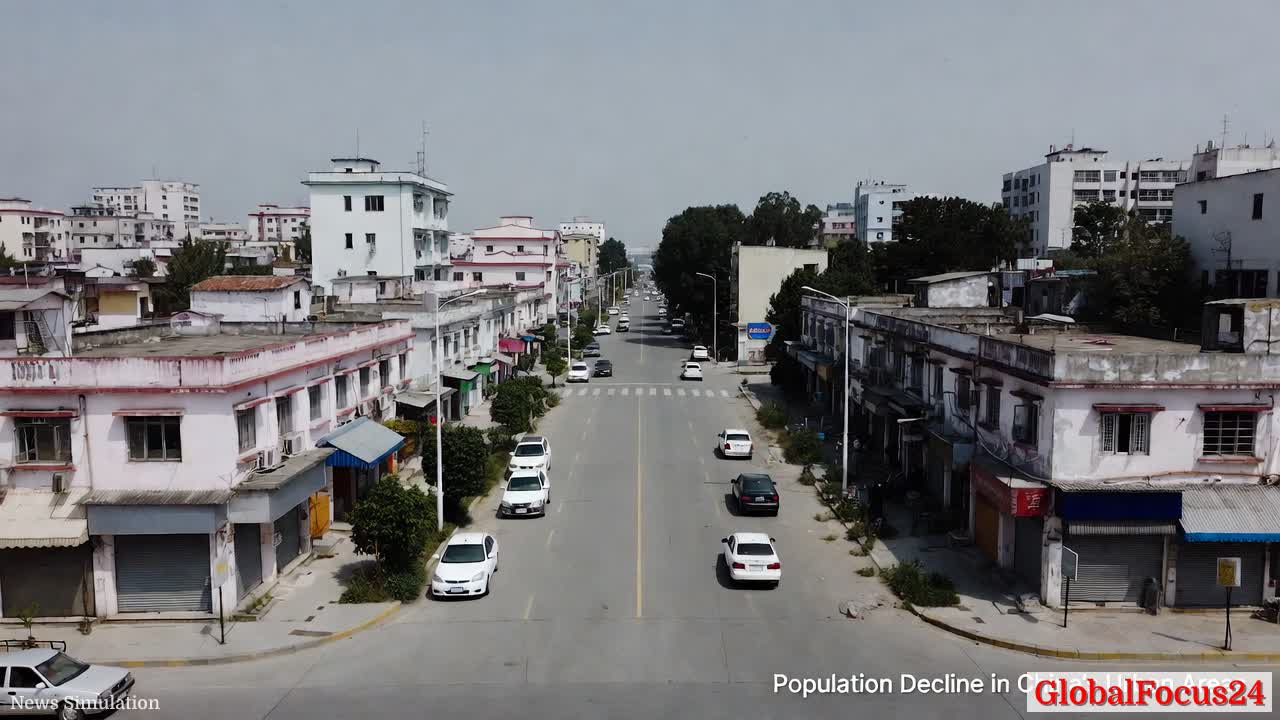
)China’s Urban Decline and the Toll on an Expanding Property Market: A Century-Long Challenge with Local and Global Echoes
The shrinking populations of China’s towns and cities are reshaping a century of growth patterns, underscoring a complex interplay between demography, real estate, and regional economies that could reverberate well beyond city borders.
Historical context: population shifts and the rise of urban China
- After decades of rapid urban migration, China’s urban population growth began to plateau in the late 2010s and early 2020s, as birth rates declined and internal mobility slowed. This shift marks a turning point in the country’s economic narrative, transitioning from a phase of accelerating urban expansion to one where the composition and function of cities are under reevaluation. The result is a landscape where many once-booming urban districts face aging housing stock, unused commercial space, and tighter municipal budgets due to slower tax receipts from real estate and related sectors.
- Historically, urbanization in China followed a pattern of investment-led expansion, with large-scale infrastructure and housing projects feeding growth in peripheral towns and mega-cities alike. When urbanization outpaced job creation or where housing supply outstripped demand, markets experienced volatility, underscoring the delicate balance between supply-side investments and actual demand from households and firms.
Economic impact: property markets, local governments, and broader growth
- The property sector has long been a linchpin of China’s economic model, supporting construction, steel production, and related services. A sustained decline in urban population could dampen housing demand, decreasing price growth and constraining the fiscal capacity of local governments that rely on land sales and property-related revenues to fund public goods and services. This could create a cyclical challenge: slower urban absorption slows construction activity, which in turn reduces employment in related sectors, creating more caution among developers and buyers. The broader consequence is a potential drag on GDP growth that historically relied on real estate and urban investment as major engines.
- Regions with diversified economies—where manufacturing, services, and innovation clusters anchor demand—may exhibit greater resilience. By contrast, cities whose urban growth depended predominantly on speculative real estate development could face sharper adjustments, including higher vacancy rates, weightier debt burdens, and pressure on municipal budgets to maintain infrastructure, schools, and healthcare services. This divergence among local economies highlights the importance of financial and planning prudence in supporting transitional urban systems.
Regional comparisons: echoes across Asia and beyond
- In neighboring economies and other populous regions, urban concentration often follows similar dynamics: rapid urbanization followed by aging populations and shifting demand for housing and commercial space. Comparing regional peers offers a lens into how different policy tools—such as housing market stabilization measures, urban renewal programs, and incentives for productive employment—can mitigate downturns in urban centers while sustaining growth in peripheral districts. The contrast emphasizes that urban health is not solely a demographic issue but also a policy, finance, and urban design question.
- Global cities that previously rode construction booms now confront the need to recalibrate growth strategies toward productivity, innovation ecosystems, and sustainable housing. The Chinese experience underscores a broader lesson: urban vitality depends on balanced demographics, employment opportunities, and the capacity to convert urban space into engines of inclusive economic activity—beyond the immediate surge of construction and land sales.
Societal implications: housing, consumer behavior, and public sentiment
- Housing markets reflect more than price indices; they mirror confidence. If towns and cities experience population declines, buyers and renters may become more selective, favoring locations with robust job prospects, reliable services, and long-term livability rather than speculative gains. This reality places emphasis on urban planning that prioritizes quality of life, efficient public transit, and access to affordable housing, so cities remain attractive to current residents and prospective newcomers alike.
- Public sentiment often tracks the pulse of local economies. Communities that see shuttered storefronts, vacant office spaces, and lagging social services may experience a sense of decline, even as national indicators suggest resilience in other sectors. The social dimension—ranging from school enrollment trends to community safety and cultural vitality—becomes a critical barometer of urban health and long-term sustainability.
Historical parallels: lessons from earlier urban cycles
- The trajectory of modern Chinese cities cannot be fully understood without acknowledging earlier patterns where rapid industrialization and urban growth produced both spectacular gains and notable misalignments. Historically, cities that rebounded from real estate corrections through diversification—toward advanced manufacturing, technology, and services—demonstrated greater resilience. This pattern suggests a path forward for cities grappling with population shifts: reimagine urban spaces to attract diverse employment opportunities, foster entrepreneurship, and improve livability to retain residents and attract new ones.
- Comparative histories across regions show that cities which shifted from land-price dependence to productivity-led growth tended to recover more robustly after downturns. This underscores the importance of policy instruments that encourage mixed-use development, transportation efficiency, and skills training aligned with evolving labor markets. In China’s context, aligning urban planning with demographic realities is essential for sustaining revenue bases and social services while preserving urban vitality.
Policy responses: steering urban futures
- Municipal strategies that prioritize urban renewal over new-build cycles can help revive neglected districts, reduce vacancy, and optimize land use. Programs that convert underused spaces into affordable housing, cultural hubs, or innovation campuses can re-energize neighborhoods and stabilize property markets by fostering steady demand rather than speculative spikes. Effective renewal often combines financial incentives, streamlined permitting, and robust public-private partnerships that tie investments to tangible community benefits.
- Housing policy targeted at affordability and accessibility is central to stabilizing urban centers facing population declines. Measures might include subsidized housing for middle- and lower-income households, zoning reforms to enable higher-density but well-designed developments, and incentives for landlords to maintain occupancy rates in aging housing stock. Such policy mixes aim to anchor communities, preserve tax bases, and sustain public services in the face of demographic shifts.
- Investment in regional diversification, including education, healthcare, and high-value industries, helps cushion cities from the direct impact of population decline. When municipalities cultivate clusters in technology, green energy, advanced manufacturing, or tourism, they create new demand for space and services that balance existing supply, fostering a more resilient urban ecosystem. The regional approach also supports intercity collaboration, enabling resource sharing and policy learning across districts with varying demographic trajectories.
Public reaction: voices from the street
- Residents often respond to urban change with a mix of concern and pragmatism. In cities facing vacancy pressures, neighborhood associations can play a pivotal role in advocating for targeted investments, improved transit links, and local safety initiatives. Community-led initiatives that repurpose vacant storefronts into pop-up markets, art spaces, or community cooperatives can demonstrate tangible value, helping to stabilize sentiment and encourage reinvestment. Public engagement becomes a critical element of successful urban reform, bridging policy intent with lived experience.
- Real estate professionals, developers, and financiers weigh risks differently across markets. In cities with strong diversification and visible demand signals, capital tends to flow toward projects with clear, near-term returns, while risk-averse lenders may tighten credit in markets showing population decline. A transparent, data-driven approach to underwriting—one that integrates demographic projections, employment trends, and infrastructure plans—helps align incentives across the market and supports more stable investment cycles.
Conclusion: a turning point with long horizon implications
- China’s towns and cities are at a crossroads where demographic realities intersect with economic trajectories and policy choices. The evolution from a growth-at-all-costs urban model toward a more balanced, productivity-focused urban system will require deliberate planning, targeted investment, and inclusive policies that preserve livability while encouraging economic diversification. The outcome will shape not only local communities but the broader national economy, influencing consumer behavior, investment patterns, and regional competitiveness for years to come.
- In this moment, regional comparisons illuminate paths to resilience: cities that adapt through renewal, affordability, and diversified industries may cushion the broader real estate cycle, while those dependent on land sales alone risk prolonged adjustment. The public discourse around urban health, finance, and social cohesion will continue to influence policy design, prompting a recalibration of expectations about what makes a city desirable, livable, and economically vibrant in the 21st century.
Citations
- Population trends, urban planning, and property-market implications are drawn from analyses of China’s demographic shifts, urban economics, and regional development patterns in recent studies and data reviews. These sources underscore the link between urban population changes and housing-market performance, illustrating how shifts in where people live influence local government finances, construction activity, and consumer demand.