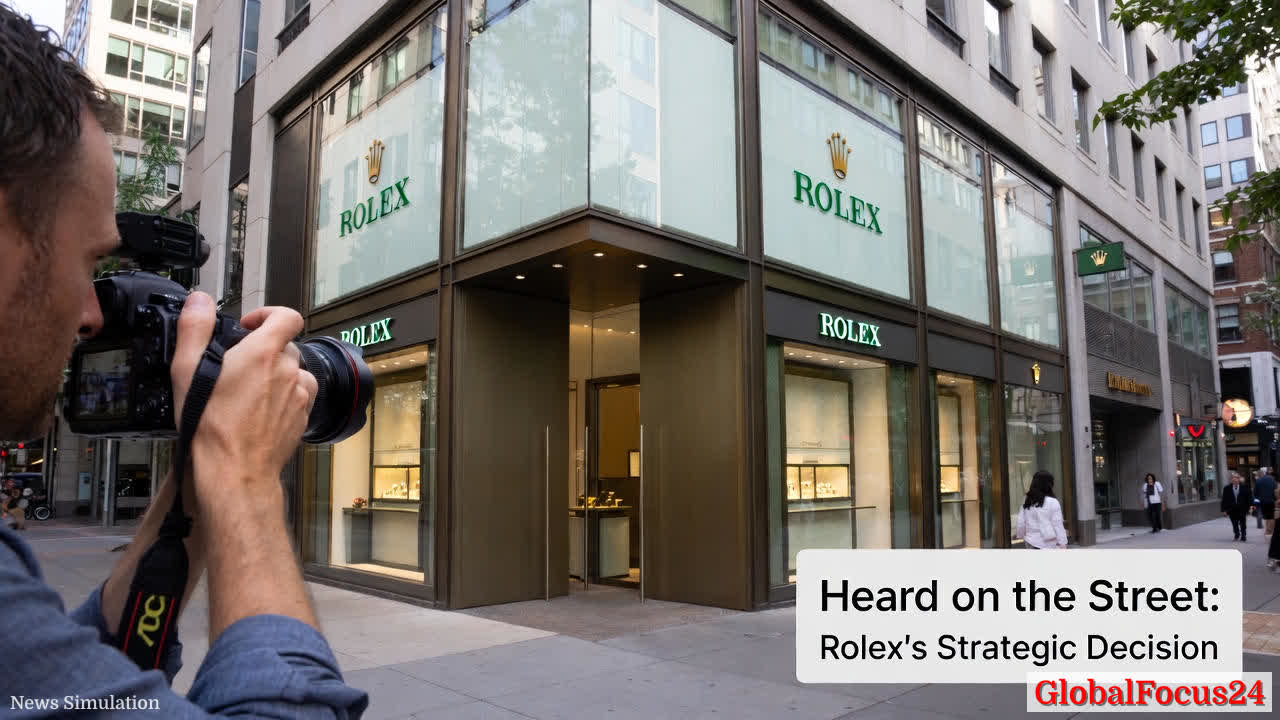
Rolex’s Secondhand Strategy: Balancing Exclusivity, Brand Value, and Market Dynamics
In the luxury watch industry, the tension between growth and exclusivity often defines strategic choices at the highest level. Rolex, a brand synonymous with precision, heritage, and understated prestige, has long leveraged a tightly controlled supply chain and a robust global resale ecosystem to protect its long-term brand equity. Recent industry discussions revolve around a provocative question: could Rolex unlock millions in additional profits by expanding its secondhand sales, or would such a move dilute the brand’s aura of scarcity? The prevailing viewpoint among analysts and brand executives alike is that the latter outcome is a real risk, and that restraint can be a more lucrative strategic choice over time. By prioritizing exclusivity and controlled liquidity in the secondary market, Rolex aims to sustain value, cultivate demand, and maintain a durable premium that transcends fashion cycles.
Historical context: the evolution of luxury watch pricing and scarcity
To understand Rolex’s strategic posture, it helps to review the historical arc of luxury watch pricing and the role scarcity plays in value creation. In the postwar era, high-end timepieces were primarily purchased for functional merit and status signaling within elite circles. Over decades, brands like Rolex established a reputation for durable craftsmanship, iconic designs, and a storied history of sponsorships and associations with adventure, exploration, and leadership. As demand rose, Rolex adopted a policy of deliberate production constraints, ensuring that supply did not outpace demand. The result was a marketplace where certain models consistently carried premium prices at launch, with secondhand markets reinforcing that perception of value through observed price stability and occasional surges driven by rarity.
The late 20th and early 21st centuries saw the emergence of global luxury consumers, new distribution channels, and an increasingly transparent secondary market. Buyers gained access to a wider array of models through gray-market avenues and established resellers, while primary manufacturers faced pressure to balance availability with the preservation of brand integrity. Rolex’s approach—steering production to preserve scarcity, supporting official pre-owned programs in some markets, and maintaining a disciplined stance toward aftermarket proliferation—has helped the brand sustain a multi-decade arc of value appreciation for many core models. This historical backdrop frames the current strategic question: is broader secondhand participation compatible with Rolex’s long-term brand architecture?
Economic impact: implications of constraining versus expanding the secondary market
From an economic perspective, the decision to limit direct involvement in secondhand sales can produce several effects:
- Price stability and premium retention: When a brand signals scarcity, the resale market tends to reflect higher expectations for future availability. Buyers may be willing to pay a premium for perceived rarity, which bolsters brand equity. For Rolex, this dynamic translates into reliable demand for sought-after models and consistent price floors in the secondary market, reinforcing the perception of value.
- Channel control and aftersales ecosystem: By keeping primary sales tightly managed and supporting authenticated resale channels, a brand can curate its entire aftersales experience. This includes maintenance, service quality, and assurance of authenticity, all of which contribute to customer trust and long-term loyalty. A robust, brand-sanctioned secondary-market framework can, in theory, extend the lifecycle of each timepiece while protecting the brand from counterfeit risk and diluted value.
- Investment narrative and consumer psychology: Luxury watches often function as alternative investments. The belief that certain models will appreciate over time drives demand, and the perception of scarcity is a key driver. If a brand were to relax its stance on secondhand distribution, the investment narrative could shift, potentially eroding the premium that investors place on new releases and discontinued models.
- Revenue versus value premium trade-off: Expanding secondhand sales could unlock additional revenue streams in the near term. However, the potential erosion of perceived exclusivity might reduce the price premium that sustains long-run profitability. In markets where brand equity is the primary asset, maintaining control over narrative and allocation can yield higher, more sustainable returns than maximizing immediate sales in the secondary market.
Regional comparisons: how other luxury groups balance primary and secondary sales
Examining strategies across the luxury sector provides a useful lens for assessing Rolex’s approach. Several high-profile brands have pursued varied models to manage scarcity, exclusivity, and resale dynamics:
- Established watchmakers with controlled pre-owned programs: Some brands operate official certified pre-owned (CPO) programs, which enable structured authentication, grading, and warranties. This approach preserves brand integrity while allowing resale to occur within a trusted framework, preserving price discipline and protecting brand value.
- Brands embracing broader aftermarket activity: Other luxury brands have found that limited participation in the secondary market can still support brand desirability if they maintain tight control over authentication, servicing, and model availability. The risk here is diluting the allure of rarity if too many units circulate rapidly.
- Market-driven dynamics in adjacent luxury segments: In categories like luxury cars and high-end jewelry, scarcity-driven pricing has proven to be a durable business model when brands maintain clear signals about exclusivity, production runs, and limited edition releases. The analogies highlight that value preservation often hinges on a balance between supply constraints, brand storytelling, and a reliable authentication framework.
Implications for consumers and markets
For collectors, enthusiasts, and new buyers, Rolex’s stance on secondhand sales influences several practical aspects:
- Access and waitlists: A controlled supply chain often leads to waitlists for popular models. This can heighten the appeal of certain references and incentivize patient, long-term ownership. For new buyers, the possibility of acquiring a coveted model through official channels may be more compelling when coupled with a strong official service network.
- Authenticity and risk: The secondary market is inherently more exposed to counterfeit risk and misrepresentation. A brand that emphasizes authenticity and offers consistent service standards can reduce risk for buyers who participate in or observe the secondary market.
- Depreciation versus appreciation: While many luxury watches historically appreciate in value for sought-after references, the degree of appreciation is influenced by brand perception, market liquidity, and macroeconomic factors such as exchange rates, interest rates, and consumer sentiment. A disciplined approach to secondhand channels can help preserve a more predictable depreciation curve for non-coveted models while preserving premiums on iconic references.
- Ownership experience: For owners, the value of maintaining a watch extends beyond monetary considerations. Regular servicing, access to authorized repair, and participation in exclusive events or communities can enhance the total ownership experience. A brand that carefully curates these benefits reinforces its status and the perceived value of its timepieces.
Public reaction and cultural resonance
The public narrative around a luxury brand’s approach to secondhand sales often reflects broader cultural expectations about exclusivity. In an era of democratized information and rapid online marketplaces, brands face heightened scrutiny over perceived fairness and accessibility. Yet, many consumers respond positively to a well-communicated strategy that emphasizes heritage, craftsmanship, and long-term value. When a brand's actions align with its stated mission—delivering enduring quality and reliability—public sentiment tends to stay favorable, even as discussions about pricing and availability intensify.
Operational considerations: maintaining the delicate balance
Implementing a strategy that relies on scarcity requires rigorous operational discipline. Key considerations include:
- Production planning and forecasting: Maintaining a predictable production cadence that aligns with demand, while preserving scarcity, is a complex optimization problem. It requires sophisticated forecasting, market intelligence, and tight collaboration with suppliers and manufacturers.
- Market intelligence and sentiment monitoring: Brands must assess global demand signals, including regional variations in appetite for specific models, to tailor allocation policies without triggering backlash.
- Authentication and servicing infrastructure: A robust framework for authentication, condition assessment, and authorized servicing underpins consumer trust in both primary and secondary markets. Investment in training, certification, and global service centers pays dividends in sustained brand health.
- Communication and narrative management: Transparent, credible messaging around scarcity and accessibility helps manage expectations. Brands that overpromise or misrepresent availability risk eroding trust and inviting negative publicity.
Conclusion: a strategic posture that favors long-term brand health
The prospect of monetizing secondhand sales through a broader or more aggressive approach poses clear trade-offs. While short-term revenue gains are tempting, the long-run value proposition for a brand built on scarcity, heritage, and reliability hinges on preserving an aura of exclusivity and ensuring the integrity of every timepiece and its provenance. Rolex’s perceived success in maintaining a strong premium across decades suggests that restraint in secondhand expansion can be a deliberate, strategically sound choice. By focusing on authenticating resale, upholding rigorous service standards, and managing production to sustain demand, the brand can reinforce its position as a trusted emblem of lasting value.
As markets continue to evolve, regional dynamics will shape how quickly or slowly any shift could occur. In regions with growing luxury consumer bases, such as parts of Asia and the Middle East, demand for iconic references remains robust, even as supply remains constrained. In Europe and North America, where aftermarket channels are well-established, consumers increasingly value the assurance that comes with official authentication and warranty coverage. These regional patterns underscore a core principle: durability of brand equity often trumps transient profit from expanding the resale channel.
In sum, the strategic choice to prioritize brand equity over immediate, broad-based secondhand profits aligns with a broader tradition in luxury branding. It emphasizes craftsmanship, rarity, and a trusted ownership experience that can sustain demand long into the future. For investors, collectors, and industry observers, the narrative remains clear: the enduring value of a timepiece lies not merely in its material components or its current market price, but in the story it tells, the trust it engenders, and the lifetime relationship it fosters between wearer and brand.