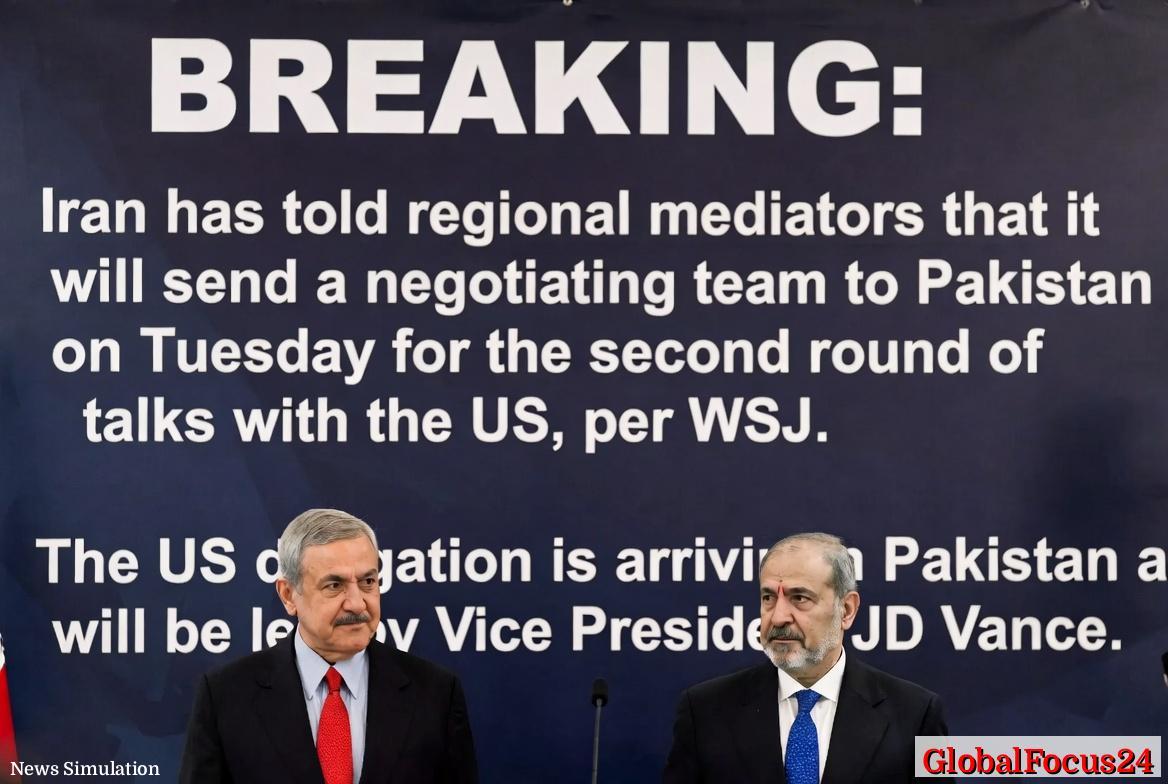
Iran Dispatches Delegation to Pakistan for Second Round of U.S. Talks as Vice President Vance Leads American Team
Renewed Diplomatic Effort in South Asia
Iran is set to send a high-level negotiating team to Pakistan on Tuesday for a second round of talks with the United States, marking a notable continuation of diplomatic engagement between the two long-time adversaries. The discussions, to be held on neutral ground in Pakistan, come as the U.S. delegation—led by Vice President JD Vance—arrives in the region, signaling a renewed push to address longstanding tensions through direct dialogue.
The choice of Pakistan as the venue underscores its strategic geographic and diplomatic position. Situated between the Middle East and South Asia, Pakistan has historically served as a conduit for backchannel communications and multilateral engagement. Hosting the talks reflects Islamabad’s ongoing effort to position itself as a regional mediator capable of facilitating sensitive negotiations.
Background of U.S.-Iran Relations
Relations between Iran and the United States have been strained for more than four decades, following the 1979 Iranian Revolution and the subsequent hostage crisis at the U.S. Embassy in Tehran. Since then, periods of heightened confrontation have alternated with cautious diplomatic overtures.
One of the most significant milestones in recent history was the 2015 nuclear agreement, formally known as the Joint Comprehensive Plan of Action (JCPOA). The deal placed limits on Iran’s nuclear program in exchange for sanctions relief. However, the U.S. withdrawal from the agreement in 2018 and the reimposition of economic sanctions led to a sharp deterioration in relations.
Efforts to revive or replace the agreement have been intermittent, often complicated by regional tensions, domestic political considerations, and broader geopolitical shifts. The current round of talks in Pakistan represents another attempt to stabilize relations and potentially lay the groundwork for future agreements.
Strategic Importance of Pakistan as Host
Pakistan’s role as host is not incidental. The country maintains diplomatic relations with both Iran and the United States, and its leadership has repeatedly expressed interest in promoting regional stability. Its proximity to Iran and its established ties with Washington provide a unique platform for facilitating dialogue.
In recent years, Pakistan has sought to expand its diplomatic footprint, engaging in mediation efforts across the Middle East and South Asia. Hosting U.S.-Iran talks enhances its international profile and aligns with its broader foreign policy objectives of balancing relationships with major global and regional powers.
The decision to hold talks in Pakistan also reflects a shift away from traditional negotiation venues such as European capitals or Gulf states. This change may indicate a desire by both parties to explore new diplomatic channels and reduce external pressures often associated with more conventional settings.
Economic Stakes and Sanctions Pressure
Economic considerations remain central to the negotiations. Iran’s economy has faced significant challenges due to prolonged sanctions, particularly those targeting its oil exports, banking sector, and access to international financial systems. Inflation, currency depreciation, and reduced foreign investment have compounded domestic economic pressures.
For the United States, the talks are part of a broader strategy to address nuclear proliferation concerns while maintaining leverage through economic measures. Any potential agreement would likely involve a calibrated easing of sanctions in exchange for verifiable commitments from Iran.
The global energy market also stands to be प्रभावित by the outcome of these discussions. Iran holds some of the world’s largest proven oil and natural gas reserves. A reduction in sanctions could lead to increased Iranian oil exports, potentially influencing global supply dynamics and pricing.
Regional economies are closely watching the talks. Countries in the Middle East and South Asia have a vested interest in stability, as disruptions can affect trade routes, energy supplies, and investment flows. Pakistan, in particular, could benefit economically from improved regional relations, including potential energy cooperation with Iran.
U.S. Delegation Led by Vice President JD Vance
The presence of Vice President JD Vance at the head of the U.S. delegation highlights the importance Washington places on the negotiations. High-level representation suggests that the talks are not merely exploratory but are intended to produce substantive outcomes.
Vice presidential involvement in diplomatic negotiations is relatively uncommon, typically reserved for moments of strategic significance. This move may reflect a coordinated effort within the U.S. administration to elevate the dialogue and demonstrate commitment to a diplomatic resolution.
The American delegation is expected to include senior officials from the State Department, national security advisors, and technical experts. Their focus will likely span nuclear policy, regional security, and economic frameworks.
Iran’s Objectives and Negotiation Strategy
Iran’s delegation is expected to prioritize sanctions relief and economic normalization. Tehran has consistently emphasized the need for tangible economic benefits as a precondition for any agreement. At the same time, Iranian officials have signaled a willingness to engage in dialogue, provided that their core interests are respected.
The negotiation strategy may involve incremental steps rather than sweeping agreements. Confidence-building measures, such as limited sanctions relief in exchange for specific actions, could serve as a foundation for broader progress.
Iran’s approach is also shaped by its regional relationships and domestic considerations. Balancing external diplomatic engagement with internal political dynamics remains a key challenge for its leadership.
Regional Reactions and Comparisons
The talks have drawn attention across the Middle East and beyond. Countries such as Saudi Arabia and the United Arab Emirates have closely monitored U.S.-Iran relations, given their implications for regional security. In recent years, some Gulf states have pursued their own dialogues with Iran, reflecting a broader trend toward de-escalation.
Comparatively, previous negotiation efforts have often taken place in European cities like Vienna or Geneva, where international institutions provide a structured environment. The shift to Pakistan introduces a different dynamic, potentially offering a less formal setting that could facilitate more flexible discussions.
South Asia’s involvement in such high-stakes diplomacy is relatively rare, but not unprecedented. Pakistan’s role in facilitating U.S.-China rapprochement in the early 1970s is often cited as a historical example of its capacity to host pivotal negotiations.
Security and Logistical Preparations
Security measures in Pakistan have been heightened ahead of the talks. Authorities have implemented extensive protocols to ensure the safety of both delegations, including restricted zones, increased surveillance, and coordination with international security agencies.
Logistical arrangements have also been carefully planned to accommodate the delegations and support staff. The choice of venue within Pakistan has not been publicly disclosed, likely for security reasons, but is expected to be a location equipped to handle sensitive diplomatic engagements.
Public and Market Response
Public reaction to the announcement of talks has been mixed but attentive. In Iran, there is cautious optimism that negotiations could lead to economic राहत, particularly in terms of reduced inflation and improved access to goods. In the United States, the talks are viewed through the lens of national security and foreign policy priorities.
Financial markets have responded with measured interest. Energy prices have shown slight fluctuations, reflecting anticipation of potential changes in supply. Investors are closely monitoring developments, particularly any संकेत of progress toward sanctions relief.
Outlook for the مذاکرات
The second round of talks in Pakistan represents a critical juncture in U.S.-Iran relations. While significant challenges remain, the continuation of dialogue indicates a shared recognition of the need for engagement.
Key issues on the agenda are expected to include nuclear program limits, sanctions frameworks, and mechanisms for verification and compliance. Progress in these areas could pave the way for more comprehensive agreements in the future.
The outcome of the talks will likely depend on the willingness of both sides to make concessions and build trust. While immediate breakthroughs are uncertain, sustained engagement could gradually reduce tensions and contribute to regional stability.
As delegations prepare to meet in Pakistan, the international community will be watching closely, aware that the implications of these discussions extend far beyond the negotiating table.