Iran Denies Pakistan Talks With United States as Tensions Undermine Diplomatic Outlook
Iran Rejects Reports of Renewed Negotiations
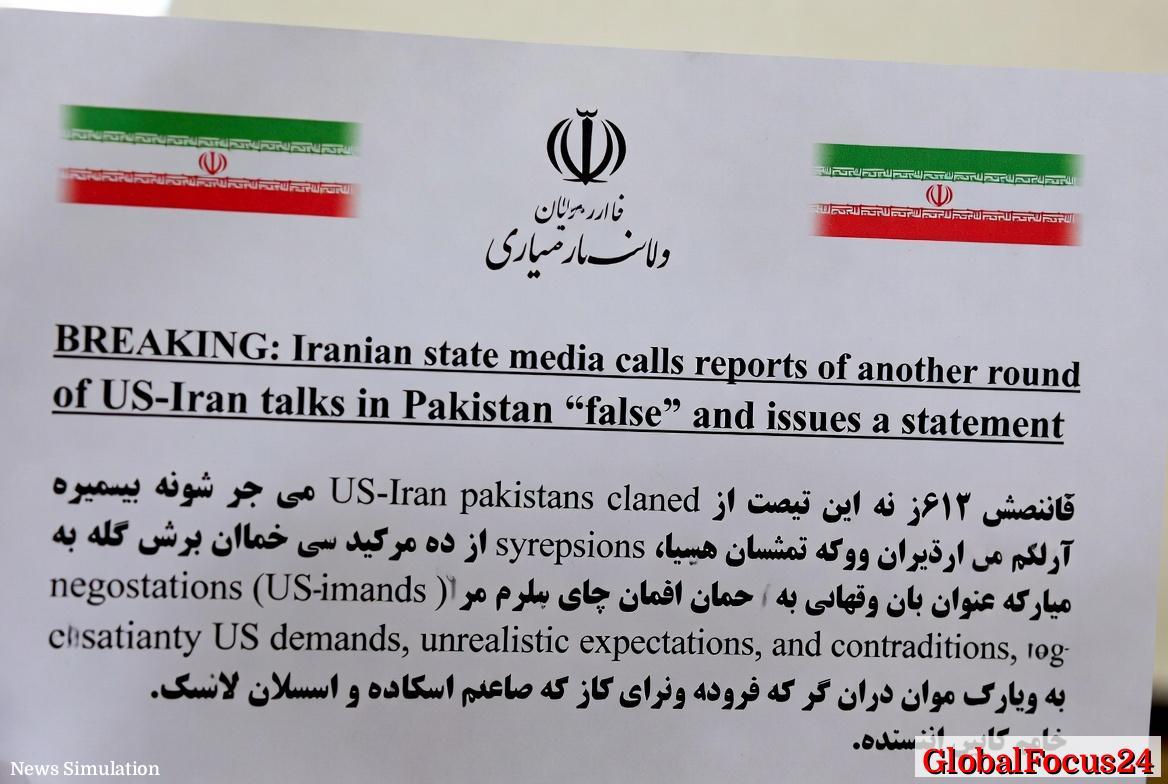
Iranian state media has firmly denied reports suggesting that a new round of negotiations with the United States is set to take place in Pakistan, calling such claims unfounded and misleading. In an official statement released through state channels, Iranian authorities dismissed the reports as part of a broader pattern of misinformation, asserting that no such diplomatic engagement is currently planned.
The statement emphasized that recent narratives surrounding potential talks do not reflect reality, describing them as speculative at best and deliberately deceptive at worst. Iranian officials accused the United States of promoting inaccurate accounts to shape international perception and increase pressure on Tehran during an already fragile period of strained relations.
Key Points of Contention Between Tehran and Washington
Iran’s statement outlined several core grievances that it says have stalled any meaningful progress toward renewed dialogue. Among the primary concerns cited were:
- Excessive demands from the United States that Tehran views as incompatible with prior agreements.
- Frequent shifts in Washington’s negotiating positions, creating uncertainty and undermining trust.
- Contradictory messaging from U.S. officials, which Iran says complicates diplomatic clarity.
- Continued use of threatening rhetoric, which Iranian leaders argue discourages constructive engagement.
The statement also pointed to what it described as a “blame game” being perpetuated by U.S. officials, suggesting that public disclosures about supposed talks are intended to portray Iran as unwilling to negotiate.
Dispute Over Naval Activity and Ceasefire Terms
A significant element of Iran’s criticism focused on ongoing U.S. naval activity in the region. Iranian officials characterized the presence of U.S. forces as a “naval blockade,” alleging that it violates the terms of an existing ceasefire framework. This claim reflects broader tensions over maritime security in strategically vital waterways, including the Persian Gulf and surrounding shipping lanes.
From Tehran’s perspective, the continued military posture of the United States contradicts diplomatic overtures and signals an unwillingness to de-escalate. The statement argued that such actions not only breach agreements but also contribute to an atmosphere of mistrust that makes negotiations increasingly difficult.
The United States has not publicly confirmed Iran’s characterization of its naval operations, but the issue underscores how security dynamics remain deeply intertwined with diplomatic efforts.
Historical Context of U.S.-Iran Negotiations
The current standoff is rooted in decades of complex and often adversarial relations between Iran and the United States. Diplomatic ties were severed in 1979 following the Iranian Revolution and the subsequent hostage crisis at the U.S. embassy in Tehran. Since then, periods of cautious engagement have alternated with heightened confrontation.
One of the most significant milestones in recent history was the 2015 Joint Comprehensive Plan of Action (JCPOA), commonly known as the Iran nuclear deal. Under the agreement, Iran accepted restrictions on its nuclear program in exchange for sanctions relief. However, the U.S. withdrawal from the deal in 2018 and the reimposition of sanctions marked a turning point, leading to renewed tensions and a breakdown in trust.
Efforts to revive or replace the agreement have faced repeated setbacks, with both sides accusing each other of failing to meet obligations or negotiate in good faith. The latest dispute over alleged talks in Pakistan reflects this broader pattern of stalled diplomacy.
Pakistan’s Role as a Potential Mediator
Pakistan has historically maintained diplomatic relations with both Iran and the United States, positioning it as a potential intermediary in regional disputes. Islamabad has, on occasion, facilitated dialogue or served as a channel for communication between adversarial parties.
Reports suggesting that Pakistan could host new talks likely stem from its strategic geographic and political position. However, Iran’s categorical denial indicates that, at least for now, such a role is not being actively pursued.
Regional analysts note that while Pakistan’s involvement could theoretically provide a neutral platform for dialogue, the success of any such initiative would depend heavily on the willingness of both Tehran and Washington to compromise—something that remains elusive.
Economic Impact of Prolonged Diplomatic Stalemate
The absence of progress in U.S.-Iran relations continues to carry significant economic implications, both domestically within Iran and across global markets. Sanctions imposed by the United States have restricted Iran’s access to international financial systems, limited its oil exports, and contributed to inflationary pressures within the country.
For global energy markets, uncertainty surrounding Iran’s oil production and export capacity remains a key factor influencing price volatility. Iran holds some of the world’s largest proven oil reserves, and any shift in its ability to participate fully in global markets can have ripple effects on supply dynamics.
In the broader Middle East, ongoing tensions also impact investor confidence and regional trade flows. Countries in the Gulf region, many of which have close economic ties to global energy markets, closely monitor developments in U.S.-Iran relations due to their potential influence on shipping routes and energy infrastructure.
Regional Comparisons and Diplomatic Trends
Compared to other geopolitical disputes, the U.S.-Iran relationship stands out for its combination of long-standing mistrust and intermittent attempts at negotiation. While some regional conflicts have seen gradual de-escalation through sustained dialogue, progress between Tehran and Washington has been more uneven.
For instance, recent diplomatic normalization efforts between certain Middle Eastern states have demonstrated that longstanding rivalries can be addressed through incremental confidence-building measures. However, such approaches have proven more difficult to replicate in the U.S.-Iran context, where broader strategic and ideological differences persist.
Additionally, other global powers have occasionally sought to mediate or influence the trajectory of U.S.-Iran relations. European nations, in particular, have played a role in facilitating nuclear negotiations, though their efforts have often been constrained by shifting U.S. policy positions and regional security concerns.
Public Messaging and Information Strategy
Iran’s characterization of U.S. statements as part of a “propaganda campaign” highlights the role of public messaging in modern diplomacy. Both countries have increasingly used media channels to shape narratives, signal intentions, and influence both domestic and international audiences.
This dynamic can complicate diplomatic efforts, as public statements may harden positions or create expectations that limit flexibility in negotiations. The dispute over alleged talks in Pakistan illustrates how conflicting narratives can quickly become a focal point of tension, even in the absence of direct engagement.
Information strategy has become a critical component of geopolitical competition, with governments seeking to control the narrative surrounding negotiations and disputes. In this context, the line between diplomacy and public relations often becomes blurred.
Outlook for Future Negotiations
Iran’s latest statement paints a pessimistic picture of the near-term prospects for renewed talks with the United States. By emphasizing unmet conditions and ongoing grievances, Tehran has signaled that significant changes would be required before it considers re-engaging in formal negotiations.
The reference to a “bleak” outlook suggests that both sides remain far apart on key issues, including sanctions, security concerns, and the terms of any potential agreement. Without a shift in approach from either party, the likelihood of meaningful progress appears limited.
At the same time, the history of U.S.-Iran relations indicates that periods of heightened tension can eventually give way to renewed dialogue, particularly when mutual interests align. Whether such a shift will occur in the current context remains uncertain.
Broader Implications for Regional Stability
The ongoing impasse between Iran and the United States continues to influence the broader security landscape of the Middle East. Tensions between the two countries often intersect with other regional dynamics, including conflicts, alliances, and economic partnerships.
Stability in key maritime corridors, such as the Strait of Hormuz, remains closely tied to the state of U.S.-Iran relations. Any escalation or miscalculation in these areas could have far-reaching consequences for global trade and energy supplies.
As diplomatic channels remain constrained, regional actors and international observers will continue to monitor developments closely. The denial of talks in Pakistan serves as a reminder that, despite periodic speculation about breakthroughs, the path toward sustained dialogue remains uncertain and fraught with challenges.