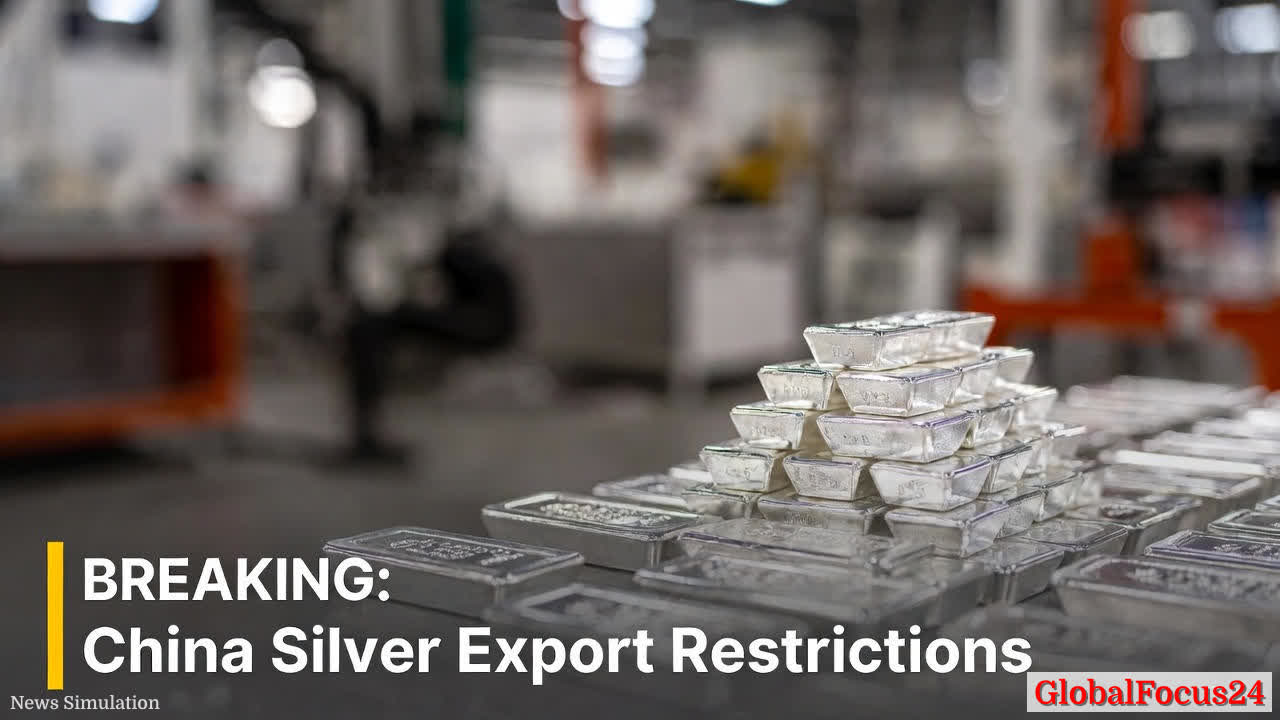
China Tightens Silver Exports: Licenses Required, Global Market Reacts
In a move poised to reshape the global silver market, China announced that starting January 1st it will impose export restrictions on silver, requiring special government licenses for all exports. The policy, described by authorities as a measure to manage strategic resources and stabilize domestic industries, signals a marked shift in the country’s role as a producer and trader of precious metals. As the world’s largest producer of silver in many recent years, China’s licensing regime is likely to influence supply dynamics, industrial demand, and price signals across multiple regions.
Background and Context
China has long been a pivotal player in the global metals landscape, leveraging its vast industrial base and sophisticated supply chains to influence prices and availability. Silver, unlike gold, is intensely tied to industrial usage—from electronics and solar photovoltaic cells to medical devices and automotive components. This duality means that export controls can have ripple effects beyond the traditional precious metals market, impacting manufacturing output, investment demand, and even technology sectors that rely on silver as a critical input.
Historically, silver markets have experienced periods of supply tightening and price volatility driven by a mix of mine production cycles, recycling rates, and policy changes in major consuming or producing nations. China's announcement arrives amid a broader regional and global context marked by steady demand for silver in renewable energy applications, jewelry, and industrial applications, as well as a continuing conversation about the balance between resource security and open trade.
China’s policy framework and the licensing mechanism are expected to operate through government channels that monitor export volumes, end-use constraints, and strategic reserve considerations. The licensing requirement introduces a bureaucratic layer that could affect export timing, pricing, and the availability of physical silver in international markets. Analysts anticipate that the policy could create a short-term supply constraint, particularly for traders who rely on timing and arbitrage between Chinese export windows and global spot prices.
Economic Implications for Global Markets
The immediate effect of licensing on silver exports is likely to be a tightening of available supply in international markets. Silver, unlike some other commodities, trades across a wide range of segments—industrial buyers seeking supply certainty, investors looking for hedges against inflation or geopolitical risk, and speculators betting on short-term price movements. When major producers impose export controls, the balance between supply and demand can shift quickly, prompting price adjustments and re-hedging by market participants.
A key consideration for policy makers and market observers is how much of China’s silver output is intended for domestic use versus export. If domestic consumption absorbs a larger share of production, it could reduce the pool available to international buyers, thereby supporting higher global prices. Conversely, if the licensing regime is designed to mitigate domestic shortages by allocating licenses to high-priority sectors, the market could see a measured impact with potential relief for some parallel markets.
In the longer term, the licensing regime may encourage restructuring within the silver value chain. For example, manufacturers might adjust procurement strategies, seek alternative materials, or invest in recycling to minimize exposure to export controls. Financial markets could respond with revised risk premia for silver-related instruments, including futures and exchange-traded products, as market participants reassess the currency and policy risk embedded in silver supply chains.
Regional Comparisons and Global Impacts
China’s move will likely be felt differently across regions depending on exposure to Chinese metal flows and the maturity of local markets. In Asia, where demand for silver in electronics and solar technologies is robust, manufacturers could experience tighter input availability, potentially raising production costs and influencing pricing strategies. South Asia and Southeast Asia, with growing manufacturing bases, may experience indirect impacts through higher subcontracting costs or delayed shipments.
In Europe and the Americas, silver markets are historically more diversified in terms of supply sources, recycling, and refinery capacity. While Chinese exports have not always constituted the majority of global silver shipments, any sustained reduction in flow from China can intensify price discovery pressures and prompt buyers to seek alternative suppliers or accelerate stockpiling. Central banks and institutional investors, already wary of inflation and currency depreciation, could view tighter supplies as a signal to adjust allocations toward real assets or other precious metals.
Industrial demand—particularly in photovoltaic manufacturing, electronics, and medical devices—remains a critical anchor for silver prices. If the licensing regime coincides with rising use of silver in renewable energy infrastructure, the net effect on prices could depend on whether the market can reallocate supply from other regions or rebalance through heightened recycling activity and improved efficiency.
Implications for Investors and Businesses
For investors, the export restriction underscores the importance of monitoring policy developments in major producing nations as part of a broader risk management framework. Price volatility can increase in the near term as traders adjust expectations to account for potential supply constraints and shifting arbitrage opportunities. Diversification across physical metal holdings, futures contracts, and exchange-traded products may appeal to risk-conscious portfolios seeking to navigate the evolving landscape.
Manufacturers dependent on silver for critical components should assess supply chain resilience. Strategic sourcing, supplier diversification, and long-term procurement contracts could help mitigate potential disruption. Recycling programs may gain greater emphasis as companies seek to recover silver from end-of-life products and manufacturing scrap, thereby reducing reliance on newly mined or exported material.
Market participants with exposure to the Chinese market should prepare for possible shifts in pricing, contingent licensing approvals, and administrative timelines. Transparent communication with suppliers and customers about license status and export readiness will be essential to avoid delays that could ripple through supply chains. Banks and financing institutions may also adjust credit terms or risk assessments to reflect the evolving regulatory environment around silver.
Historical Context: How Exports Have Shaped Prices
To appreciate the potential trajectory, it helps to examine how past export controls in other commodities have affected markets. When governments limit the export of strategic inputs, markets tend to react through a combination of price spikes, inventory rebuilds, and substitution effects. In many cases, producers respond by reallocating production toward domestic markets or by accelerating investment in domestic refining and processing capacity to diversify away from international dependence.
The silver market’s sensitivity to industrial demand means that any policy restricting export can have outsized effects on price signals. Silver is often seen as a barometer for both industrial momentum and risk sentiment in financial markets. While gold may attract attention as a traditional safe haven, silver’s price dynamics are more closely tied to real-economy indicators such as manufacturing activity, solar deployment, and electronics production.
Public Reaction and Industry Perspectives
Public and industry responses to export restrictions typically reflect a mix of concern and careful analysis. Industrial users worried about supply certainty may advocate for predictable licensing processes and clear criteria to minimize disruption. Traders and investors will be watching license allocation, processing times, and potential exemptions that could shape short-term liquidity.
Environmental and social considerations may also enter the dialogue, particularly if supply constraints incentivize longer shipping routes, higher energy consumption, or increased reliance on recycled material. Regulators often balance economic efficiency with strategic safety, weighing national interests against the benefits of open global trade.
Policy Trajectory: What Comes Next
With the January implementation date approaching, industry participants will be keenly focused on the practical details of the licensing regime. Key questions include the scope of licenses, the types of end-use constraints that might apply, and the criteria for prioritizing certain exports over others. Observers will also look for guidance on appeals processes, timelines for license approvals, and any potential temporary exemptions to avoid unintended disruption for critical supply chains.
Intergovernmental coordination may play a role as well. Export controls in one country can influence trade flows and policy responses in others, potentially triggering regional adjustments in pricing, stockpiling, and investment plans. In this context, market participants will need to stay attuned to official statements, regulatory updates, and industry associations’ guidance to anticipate and respond effectively.
Conclusion: Navigating a New Export Regime
China’s decision to require licenses for all silver exports marks a significant development for the global metals market. While the policy’s full economic impact will depend on licensing details, enforcement, and how adjacent industries adapt, the potential for tighter global supply is clear. As prices in key markets react and buyers seek alternatives, the situation will test the resilience and adaptability of supply chains around the world.
For businesses and investors, this moment underscores the importance of proactive risk management, diversified sourcing strategies, and robust contingency planning. The broader takeaway is not a forecast of perpetual scarcity but a reminder that policy levers in major producing regions can tilt the balance of supply, demand, and price in ways that ripple across economies and affect everyday production costs for consumers.
In the weeks ahead, analysts will parse license data, shipment figures, and refinery outputs to assess the policy’s effectiveness and its longer-term implications for the silver market. While uncertainty remains, one constant endures: markets respond to policy signals, and those signals—from licensing frameworks to end-use allocations—will shape the rhythm of silver for years to come.