Xiongan New Area Gains Momentum as Relocations Accelerate
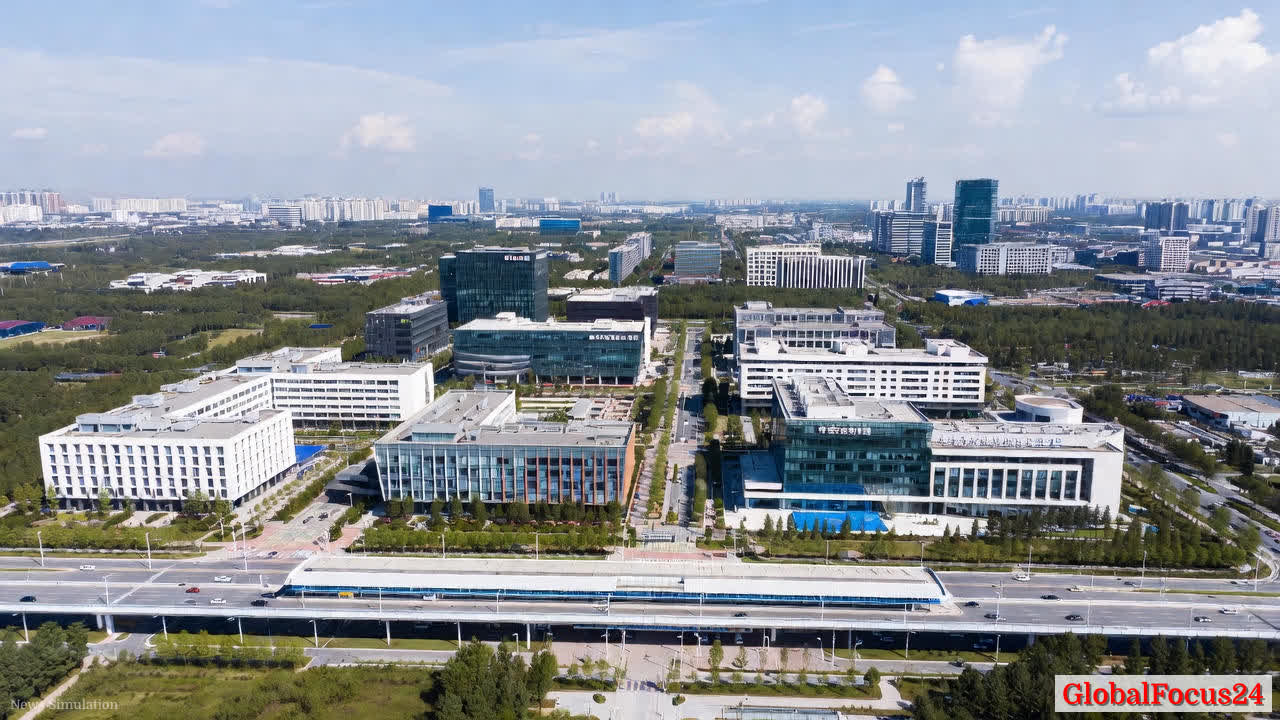
Xiongan New Area, a planned city positioned 125 kilometers south of Beijing, is accelerating its development trajectory eight years after its 2017 announcement. With investments surpassing 835 billion yuan ($116 billion), the initiative aims to ease Beijing’s urban pressures by creating a modern, climate-conscious urban center designed to attract talent, industry, and institutions. The current phase features a growing government district, data-forward infrastructure, and a budding ecosystem of education and healthcare facilities, signaling a shift from blueprint to tangible urban life.
Historical context: from bold vision to phased implementation
The conception of Xiongan New Area emerged during a period of intensified urban planning in China, when the government signaled a willingness to relocate nonessential functions away from Beijing to alleviate congestion, pollution, and housing pressures. The project, announced in 2017 as a national strategy, encompassed a swamp-to-city transformation: environmental restoration, extensive green space, and a move to build a new administrative and economic hub with modern logistics and digital infrastructure. Early expectations framed Xiongan as a catalyst for balanced regional growth, a test bed for sustainable urban design, and a magnet for high-tech industries and research institutions.
Over the years, the pace of construction has reflected the complexities of large-scale state-led development. Initial milestones included the consolidation of government offices, the completion of core transportation links, and the establishment of foundational data centers and commercial districts. The plan has evolved to emphasize a merit-based residency framework, new social security and housing policies, and targeted incentives intended to attract professionals, students, and state-owned enterprises (SOEs) to relocate important functions away from the capital.
Current development snapshot: infrastructure, institutions, and population dynamics
The core district of Xiongan is taking shape as an administrative and economic center, with new government offices forming the spine of daily governance and civic services. Modern data centers have emerged as a notable pillar of the city’s economy, reflecting a broader nationwide push to expand cloud computing, digital services, and data storage capacities. Surrounding business districts are actively attracting corporate tenants, startups, and service-oriented firms that rely on centralized governance, streamlined permitting, and a favorable tax or incentive regime.
On the educational and healthcare front, branches of top-tier hospitals, universities, and high schools are diversifying the city’s service offerings. The influx of educational institutions is driving a young, skilled resident base while providing accompanying demand for housing, transportation, and ancillary services. Medical campuses and affiliated clinics are expected to improve regional access to healthcare, serving not only Xiongan’s residents but nearby counties that previously faced longer travel times for essential services.
Population trends illustrate a modernization strategy with carefully managed growth. The official population estimate reached roughly 1.4 million by the end of the previous year. A notable contributor to this figure was the relocation of more than 100,000 university students from Beijing campuses in early 2024, a move designed to seed the urban environment with a young workforce and to diversify the city’s intellectual capital. Authorities have set a target to cap population growth at about 5 million by 2035, signaling a deliberate attempt to prevent speculative expansion and to maintain a manageable urban scale.
Policy framework: residency, housing, and social services
To attract residents and workers, Xiongan has implemented a merit-based residency framework that diverges from traditional household registration (hukou) restrictions. This approach prioritizes skilled professionals in growth sectors such as artificial intelligence, biotechnology, fintech, and related advanced services, while also granting preferential status to employees of major SOEs and high-achieving students. The residency framework is complemented by attractive mobility incentives designed to accelerate settlement and integration within the new urban ecology.
Among the incentives are five years of complimentary public transport for qualifying individuals, a regional pension scheme requiring employer contributions, and a controlled housing allocation system that uses lotteries to distribute opportunities. These measures are designed to balance affordability with mobility, ensuring that housing markets remain stable while housing demand stays aligned with actual growth in the labor force.
Housing and land policies are calibrated to curb speculative behavior. Purchases are restricted to qualified workers and individuals who meet certain social-security payment thresholds, aiming to align demand with sustainable income levels and to minimize market volatility. Restrictions on ownership of multiple properties and limits on land leases further aim to stabilize prices and ensure equitable access for the emergent resident base.
Economic and regional impact: spillovers, industrial clustering, and regional comparisons
The Xiongan project is positioned to revive regional development corridors by creating a new epicenter for state-driven investment, high-tech industries, and financial services. The presence of data centers and modern office spaces positions the area to attract cloud services, digital infrastructure providers, and technology firms seeking proximity to the political capital while benefiting from lower operating costs and modern urban amenities.
Investments in Xiongan correlate with broader economic strategies to diversify away from a Beijing-centric economy. By offering a fresh urban framework, the area could foster industrial clustering in AI, biotech, fintech, and related sectors, attracting both domestic firms and international partners seeking a more favorable regulatory or labor environment. As a regional example, Xiongan is often compared with other capitals-adjacent or new-city initiatives globally that blend governance, infrastructure, and living standards to shift growth toward peripheral regions. The measures taken—residency reforms, housing rules, and targeted incentives—illustrate a holistic approach to urban transformation that goes beyond mere construction to address labor mobility, talent retention, and long-term demographic balance.
Regional comparisons help contextualize Xiongan’s trajectory. In neighboring provinces and similar national-level projects, the balance between public investment and private sector participation remains a central determinant of success. Some regions emphasize private-led development to stimulate market-driven growth, while others rely more heavily on government-directed projects, with success tied to administrative efficiency and integrated service delivery. Xiongan’s emphasis on a merit-based residency model, public transport subsidies, and a pension framework reflects a hybrid strategy that seeks to blend top-down planning with market-based incentives. The effectiveness of these policy levers will likely hinge on execution, urban livability, and the ability to convert relocated functions into lasting economic activity.
Public reaction and social considerations: benefits, concerns, and local sentiment
Public sentiment regarding Xiongan’s development is mixed, reflecting the tension between macro-scale ambitions and local realities. On one hand, residents and businesses acknowledge the potential for improved public services, better infrastructure, and enhanced access to technology-driven industries. The emergence of a modern city center with government bodies, hospitals, universities, and data centers signals a new era of urban life with broader opportunities.
On the other hand, critics point to perceived inequities in access and benefits. Local residents from the area’s original rural communities describe a disconnect between the project’s high-profile ambitions and the everyday realities of displaced livelihoods and the complexities of new regulations. Some factory closures triggered by environmental compliance measures have disrupted traditional work, with compensation packages that some residents deem insufficient or misaligned with long-term needs. The housing allocation system, while designed to curb speculation, can also feel opaque or restrictive for those navigating the transition, particularly for long-time residents who do not meet the precise eligibility criteria.
The social fabric of Xiongan is being rebuilt around a new urban identity. In addition to housing and mobility incentives, cultural and social infrastructure—such as community centers, recreational facilities, and public parks—plays a crucial role in shaping the city’s attractiveness. Public feedback mechanisms and ongoing policy refinements will likely influence the pace and inclusivity of growth, ensuring that the city evolves into a place where long-term residents can thrive alongside newcomers and professionals.
Environmental context: sustainability and urban resilience
Xiongan’s development framework emphasizes environmental stewardship and sustainable urban design. The broader goals include preserving green spaces, integrating water management systems, and reducing the carbon footprint per capita through energy-efficient buildings and transport options. The city’s data centers and administrative campuses are complemented by plans for clean energy use, waste management improvements, and green mobility networks.
The environmental dimension is not without challenges. Large-scale relocation and construction can strain local ecosystems, necessitating careful monitoring and adaptive management. Authorities have indicated that environmental compliance and sustainable practices will be central to project milestones, with ongoing investments aimed at balancing growth with ecological preservation. These considerations are particularly salient as the region navigates climate resilience, flood risk management, and the long-term health of surrounding rural communities.
Operational milestones and the road ahead
Looking ahead, Xiongan’s leadership has signaled a continued focus on expanding infrastructure, attracting institutional investors, and broadening the mix of services offered within the new urban core. Operational milestones include the completion of additional government facilities, expansion of healthcare and higher education footprints, and the further growth of tech-enabled business districts. The government’s commitment to controlled population growth and measured housing distribution will shape the pace of expansion, ensuring that the city scales in a sustainable, inclusive manner.
The broader national context also shapes Xiongan’s timeline. As China continues to urbanize and pursue regional balance, the project serves as a case study in how large-scale state-led urban planning can be integrated with market dynamics, talent flows, and social policy reforms. The balance between top-down directives and bottom-up demand will determine whether Xiongan can sustain momentum, attract ongoing investment, and transform from a vision into a vibrant, livable metropolitan area that complements Beijing’s global role without becoming a mirror image of the capital.
Conclusion: a city in flux, with implications beyond its borders
Eight years after its inception, Xiongan New Area stands as a distinctive experiment in modern urban development. Its progress reflects a careful blend of administrative ambition, economic stimulus, and social policy innovation designed to catalyze regional growth while defending livability and affordability. While early relocations of state-owned enterprises, universities, and health institutions signal concrete gains, the ultimate measure of success will be whether the city can sustain a robust private sector, maintain housing affordability, and preserve the social fabric of its evolving communities.
As Xiongan’s story unfolds, it provides a lens into how modern megaprojects are navigated within a complex web of policy objectives, regional dynamics, and public expectations. The coming years are likely to reveal how effectively the area can transform from an aspirational blueprint into a functioning, dynamic urban ecosystem that supports a diverse mix of residents, workers, students, and visitors while contributing meaningfully to the broader economic landscape of northern China.