India Poised for Fourth-Largest Economy: A Nation at a Crossroads of Growth, Poverty, and Opportunity
India's trajectory toward becoming the world's fourth-largest economy signals a historic milestone in global economic dynamics. The emergence of a diverse and rapidly expanding market, powered by a youthful population, ongoing reforms, and a booming tech ecosystem, positions the nation as a key driver of global growth. Yet beneath thenumbers lies a complex landscape where extraordinary potential coexists with persistent poverty, regional disparities, and social challenges. This article examines the historical context, the economic forces at play, regional comparisons, and the multifaceted implications of India's ascent on the world stage.
Historical context: tracing the arc of India's growth The story of India's economy over the last seven decades has been one of transformation tempered by episodic turbulence. Post-independence planning and gradual liberalization gave way to a new era in the early 1990s, when market-oriented reforms unlocked a broader array of opportunities. Since then, services, information technology, manufacturing, and digital innovation have expanded the economy's footprint. The country accumulated a robust service sector that became a global hub for software development, business process outsourcing, and innovation-enabled services. Alongside this, an array of regional manufacturing clusters developed, spanning automotive, textiles, pharmaceuticals, and consumer electronics.
The historical context also includes the growing emphasis on physical and digital infrastructure. Investments in roads, railways, ports, and energy networks have sought to knit together a vast and diverse geography. Large urban centers emerged as engines of growth, while rural regions retained a stubborn poverty burden that persisted despite overall gravity toward higher GDP figures. The decade of high-growth phases, punctuated by periods of slowdown, reflected both the resilience of the economy and the fragility that can accompany rapid expansion.
Economic drivers shaping the ascent Several interlocking engines propel India toward a fourth-largest global economy ranking. The following forces are central to the current growth narrative:
- Demographic dividend and labor force expansion: India is home to one of the youngest populations in the world. A large, working-age cohort creates opportunities for domestic consumption growth, labor-intensive manufacturing, and innovation-led sectors. This demographic advantage can translate into sustained growth if employment opportunities keep pace with population growth and if skill development programs align with market needs.
- Services-led growth and digital transformation: The services sector, particularly information technology, business process outsourcing, and fintech, has been a stable backbone of growth. The ongoing digital revolution—encompassing mobile connectivity, e-commerce, and cloud-based services—has amplified productivity across industries and expanded access to finance, healthcare, and education. Digital public infrastructure, such as biometric identification and digital payments ecosystems, has reinforced financial inclusion and transaction efficiency.
- Manufacturing acceleration and export diversification: Initiatives to boost manufacturing—such as policies encouraging domestic value addition, export-oriented strategies, and investment in manufacturing corridors—aim to diversify the economy beyond services. This diversification supports resilience against sector-specific shocks and creates employment opportunities in regional hubs.
- Infrastructure and energy transition: Infrastructure investments, including logistics corridors, port modernization, and energy networks, underpin competitiveness and regional integration. At the same time, India’s push toward renewable energy, battery storage, and grid modernization aligns with global decarbonization trends, though it also requires careful planning to manage energy demand, costs, and reliability.
- Investment inflows and policy reforms: The pull of a growing market, coupled with ongoing regulatory reforms, has attracted both foreign direct investment and domestic capital. Reforms focused on ease of doing business, insolvency resolution, and sector-specific incentives have improved the investment climate, while ongoing governance improvements aim to reduce red tape and enhance transparency.
Regional contrasts and comparative dynamics India’s ascent to the fourth-largest economy is not occurring in a vacuum. It unfolds amid a backdrop of regional and global dynamics that shape its relative position and practical implications.
- Regional peers: China, the United States, the European Union, and other rapidly developing economies remain pivotal reference points. India’s growth model emphasizes domestic consumption and services, contrasting with China’s export-led, manufacturing-heavy trajectory in previous decades. This distinction affects trade patterns, supply chains, and technological collaboration across regions.
- Urban-rural divide: Greater prosperity tends to concentrate in metropolitan and peri-urban areas, where infrastructure and job opportunities are more abundant. Rural regions often contend with limited access to quality education, healthcare, and reliable electricity. Bridging this gap will be crucial for inclusive growth and social stability.
- State-level variation: India’s federal structure means growth outcomes can vary significantly by state. Some states have cultivated favorable investment climates, robust human capital, and strong manufacturing ecosystems, while others grapple with resource constraints and governance challenges. The overall national trajectory depends on the degree to which successful state models can be scaled and replicated.
- Global competition for supply chains: As geopolitical shifts rewire global supply chains, India has opportunities to position itself as an alternative to other manufacturing hubs. This includes attracting electronics, automotive, and pharmaceutical sectors by offering skilled labor pools, policy incentives, and a relatively large domestic market.
Economic impact and societal implications The transition toward greater economic size has wide-ranging implications, touching employment, inflation, public finance, and social welfare programs. Several key areas deserve attention:
- Employment and wage climate: A larger economy can generate substantial job opportunities, especially for young workers entering the labor force. However, the quality and stability of jobs, wage levels, and access to upskilling opportunities will determine whether the growth translates into rising living standards for a broad swath of households.
- Inflation dynamics and monetary policy: As a developing economy with a growing fiscal footprint, India’s inflation trajectory and monetary policy stance influence consumer prices, investment incentives, and the cost of capital. Central bank policy, exchange-rate considerations, and supply-side constraints all intersect with growth prospects.
- Public finances and social programs: Expanding GDP provides a broader tax base and greater fiscal capacity for social investments. Government programs focused on health, education, rural development, and social protection have the potential to translate economic growth into tangible improvements in living conditions, provided funding is sustained and efficiently allocated.
- Regional development strategies: To counter urban concentration, targeted investments in infrastructure, rural connectivity, and local entrepreneurship are essential. Policies that promote inclusive growth—such as microfinance, skill development, and support for small and medium-sized enterprises—can broaden the benefits of macroeconomic expansion.
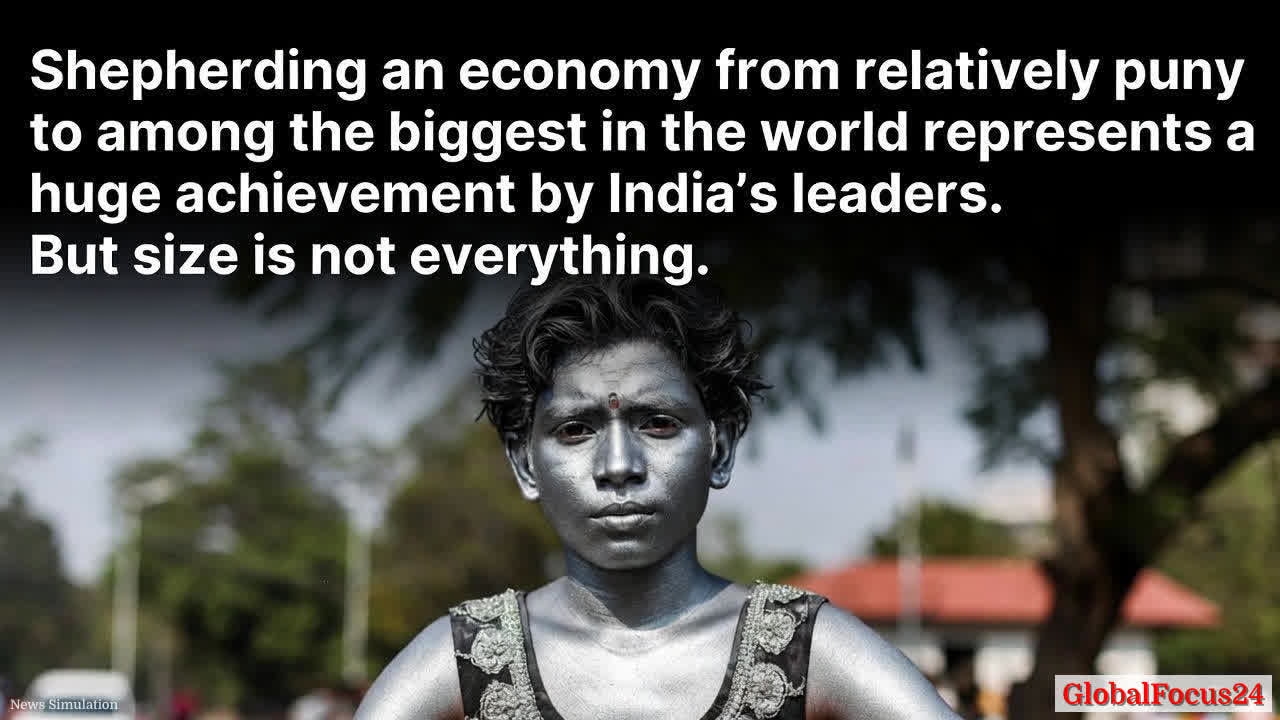
Cultural and qualitative dimensions Beyond the numbers, India’s economic evolution is deeply intertwined with cultural and social transformations. The juxtaposition of rising urban affluence with enduring poverty highlights contrasts that shape public perception and policy priorities. Everyday scenes—street performers in silver-painted costumes, bustling markets, and bands of young people leveraging digital tools—reflect a society in flux: highly entrepreneurial, technologically adept, and simultaneously vulnerable to shocks in health, education, and opportunities.
Public sentiment and social resilience often hinge on the availability of opportunity. When communities witness incremental improvements in education, healthcare, and infrastructure, confidence in economic growth tends to strengthen. Conversely, if growth fails to touch marginalized communities, disparities can fuel social tension and erode trust in institutions. Policymakers face the challenge of translating macroeconomic gains into tangible, local benefits.
Regional comparisons: a look at neighboring economies To contextualize India’s trajectory, it helps to compare with regional economies that share similar developmental paths or are navigating comparable constraints.
- Southeast Asia corridor: Several Southeast Asian economies have pursued manufacturing-led growth alongside services expansion. The experience demonstrates the importance of reliable logistics, skilled labor, and consistent policy environments in turning potential into sustained output. India’s momentum in digital services and its expanding regional market could complement these dynamics through trade, investment, and technology exchange.
- South Asia peers: In neighboring South Asian economies, growth patterns reveal a mix of rapid urbanization and persistent development challenges. Shared learnings include the value of targeted health and education spending, investment in basic infrastructure, and the need for governance reforms to maximize the impact of capital deployment.
- Global comparators: When stacked against developed economies, India’s growth rate, demographic tailwinds, and evolving productivity profile present a different but complementary narrative. The country’s resilience during global shocks—such as commodity price swings or financial cycles—depends on diversification, domestic demand resilience, and prudent macroeconomic management.
Sustainability and long-term outlook Looking ahead, the sustainability of India’s growth depends on managing energy demand, resource use, and environmental impact. The country’s renewable energy ambitions—supported by solar, wind, and hydro projects—seek to decarbonize electricity generation while expanding access to power. Achieving reliable energy supply at a reasonable cost is essential for industrial expansion and the modernization of services sectors. Equally important is managing water resources, urban air quality, and biodiversity conservation in the face of rapid urbanization and industrial expansion.
Public health and education investments remain foundational. A healthier, better-educated workforce is more productive, innovative, and adaptable to the changing demands of a knowledge-based economy. Policymakers face a continuous balancing act: allocating finite resources to high-impact interventions while maintaining macroeconomic stability and competitive incentives for private investment.
Conclusion: positioning for a balanced, inclusive future India’s rise to one of the world’s largest economies embodies a paradox familiar to many developing nations: rapid expansion and rising aspirations meet persistent poverty and unequal access to opportunity. The coming years will test the country’s ability to translate macroeconomic gains into inclusive growth that uplifts the most vulnerable communities, while sustaining momentum in innovation, manufacturing, and digital services.
For India to realize its full potential, continued reform, investments in people, and strategic infrastructure development must proceed in tandem. The synergy between a dynamic services sector, a competitive manufacturing base, and a robust digital economy offers a pathway to durable prosperity. As the nation navigates this pivotal period, the focus will be on how well policy choices translate into real-world improvements in health, education, and living standards—measured not only by GDP, but by the everyday realities of citizens who observe the evolution of their country with cautious optimism and vigilant hope.
Follow-up considerations for stakeholders
- Policymakers and regulators: Prioritize reforms that enhance ease of doing business, strengthen financial inclusion, and sustain infrastructure investments while ensuring fiscal discipline.
- Businesses and investors: Seek opportunities in high-growth sectors such as green energy, advanced manufacturing, and technology-enabled services, guided by transparent governance and predictable policy signals.
- Civil society and communities: Advocate for inclusive growth, ensuring that rural and marginalized populations gain access to education, healthcare, and economic opportunity as the economy expands.
If you’d like, I can tailor this article to a specific region within India, add expert quotes or data visualization descriptions, or adjust the focus toward a particular industry sector such as technology, manufacturing, or energy transition.