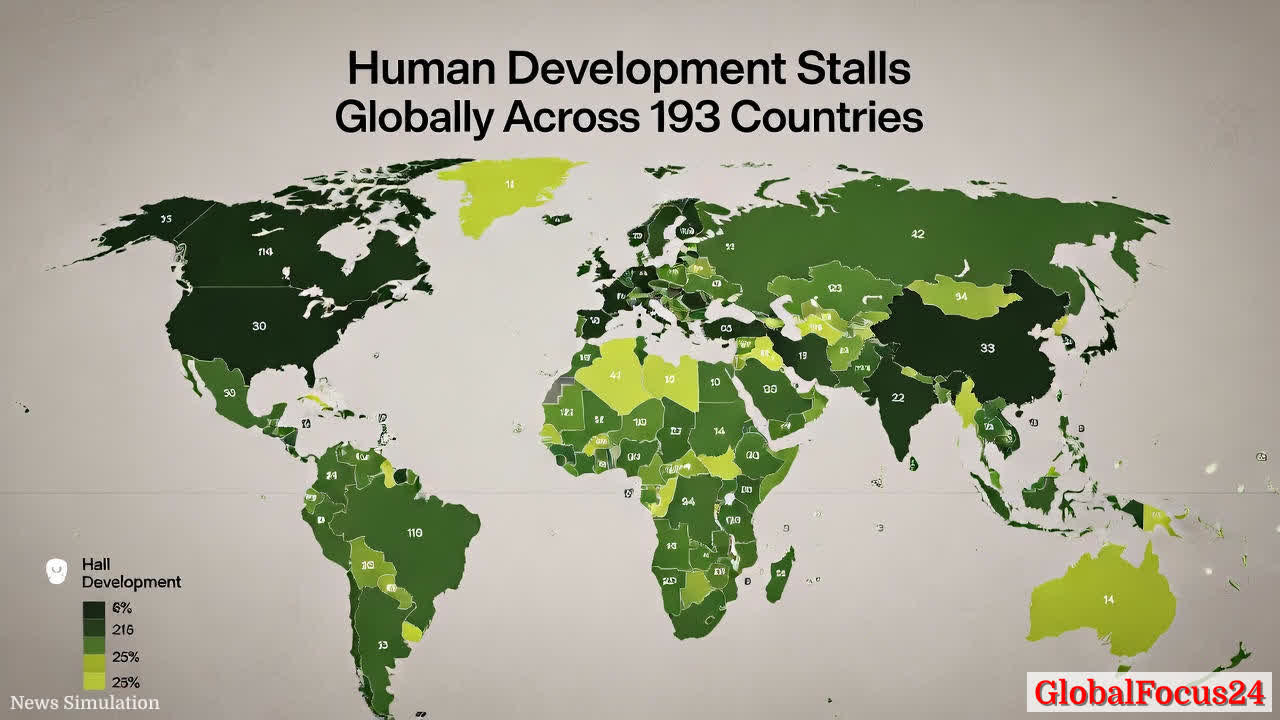
Human Development Stalls Globally Across 193 Countries
A comprehensive ranking of 193 countries reveals that human development is stalling almost everywhere, marking a significant slowdown in progress. The assessment highlights challenges in key areas that have traditionally driven improvements, signaling a critical juncture for global advancement.
Historical context roots the current slowdown in a decades-long arc. After rapid gains in the late 20th century, driven by expanding access to education, healthcare, and economic opportunity, growth under the Human Development Paradigm began to plateau as the world confronted uneven globalization, aging populations, and environmental strain. The latest evaluation, compiled by a cross-disciplinary team of researchers, policymakers, and statisticians, traces the interruption of momentum to a confluence of structural pressures: persistent income inequality, uneven education quality, and widening regional disparities that leave vast swaths of the population without the support systems that once propelled nations forward.
Economic realities illuminate the stakes. Growth slowdowns ripple through labor markets, public budgets, and social safety nets. In many regions, the cost of living has risen faster than wages, shrinking real incomes and dampening consumer confidence. This dynamic compounds the difficulty of funding essential services such as primary education, maternal health, and clean water infrastructure. The resulting trade-off between short-term fiscal restraint and long-term human capital investment presents a central policy dilemma for governments across income levels. When households struggle to meet daily needs, demand for healthcare and education often recedes, creating a feedback loop that inhibits productivity and stymies long-term development gains.
Regional comparisons reveal a nuanced landscape. In parts of East Asia and the Pacific, nations with strong investment in education and health systems show resilience in certain metrics, yet aging populations and shifting labor demands temper progress in others. South Asia presents mixed outcomes, with pockets of rapid improvement alongside regions where access and quality gaps persist. In Sub-Saharan Africa, the picture remains notably uneven, with some countries achieving notable gains in life expectancy and schooling while others face entrenched barriers tied to poverty, conflict, and infrastructure gaps. The Americas report a broad range of experiences, from urban centers with robust human development indicators to rural areas where access to essential services remains a critical challenge. Europe continues to exhibit advancements in health outcomes and education, though fiscal pressures and demographic shifts test the sustainability of gains.
Education, health, and living standards—traditionally the pillars of human development—are showing parallel signs of stagnation. Enrollment rates at various levels of schooling have plateaued in several regions, and while literacy and numeracy skills remain strong in many contexts, the quality of education—measured by outcomes such as average test scores and completion rates—varies widely within and between countries. Health indicators, including life expectancy and access to medical services, reveal progress in some areas but lag in others where systemic barriers, transfers of care, and affordability limit access. Living standards, closely tied to household income and resilience against shocks, reveal that many communities still face precarious housing, inadequate sanitation, and rising energy costs, all of which undermine long-term well-being.
A closer look at demographic trends helps explain the broad stall. Countries navigating aging populations confront higher demands on pension systems, healthcare infrastructure, and workforce participation rates. Meanwhile, youth bulges in other regions create pressure to expand education, job opportunities, and vocational training to prevent a mismatch between skills and labor market needs. Migration flows, urbanization, and climate-related displacement further complicate the development landscape, affecting both the availability of human capital and the equity of service delivery. Policymakers are tasked with balancing short-term fiscal constraints with ambitious long-term investments that would yield dividends in healthier, more educated, and economically secure societies.
Public health resilience, a critical barometer of development, informs the current assessment’s trajectory. The pandemic era looms large in retrospective analyses, underscoring the importance of robust health systems, pandemic preparedness, and universal access to essential medicines. Even as some regions have made strides in vaccination coverage, maternal health, and child survival, disparities persist that compound economic vulnerability. Environmental factors—air quality, water security, and exposure to extreme weather—pose escalating risks to health and productivity, prompting calls for integrated approaches that align climate adaptation with health infrastructure planning.
Economic productivity emerges as a core determinant of momentum in the human development index. Countries that align education and health improvements with labor market needs tend to sustain more durable gains. Vocational training, apprenticeships, and STEM education are highlighted as pathways to increase employability and drive innovation. Conversely, regions that rely heavily on commodity cycles or struggling manufacturing sectors face volatility that disrupts investment in human capital. The resulting uncertainty can deter households from pursuing higher education or long-term health investments, further entrenching inequality and slowing progress.
Policy responses that show promise center on targeted, data-driven approaches. Early interventions in early childhood development—such as quality preschool programs, nutrition initiatives, and parental support—yield outsized returns in cognitive development, school readiness, and long-term health. Strengthening primary healthcare networks improves disease prevention and management while reducing catastrophic health expenditures. Expanding access to affordable, high-quality education—especially in math, science, and digital literacy—helps prepare the workforce for evolving job markets. Social protection measures, including unemployment insurance, conditional cash transfers, and housing assistance, can stabilize households during shocks while preserving investment in human capital.
Regional case studies illustrate effective strategies and shared obstacles. In one country, a successful push to universal primary education accompanied by community-based health outreach led to measurable gains in literacy and immunization rates within a decade. In another, a comprehensive reform of pension and healthcare financing reduced future fiscal pressures and freed resources for preventive services and school quality improvements. Yet in both narratives, the urgency to address regional disparities remains clear: rural areas, marginalized communities, and informal sectors continue to lag behind national averages, signaling that inclusive growth must accompany aggregate progress.
A look at the infrastructure dimension reveals a similar pattern. Reliable electricity, clean water, and digital connectivity are foundational to development outcomes but remain unevenly distributed. Regions with robust infrastructure investment report clearer improvements in health and education indicators, demonstrating a tangible link between physical capital and human development. The digital divide, including access to broadband and affordable devices, complicates attempts to close skill gaps and expand opportunities in rural and underserved communities. Policymakers increasingly recognize that modernization plans must integrate digital inclusion with traditional infrastructure to maximize social and economic returns.
Public sentiment and social cohesion influence the pace of development as well. High levels of trust in institutions, effective governance, and transparent public services correlate with better program uptake in education, health, and social protection. Conversely, persistent corruption, bureaucratic bottlenecks, and inconsistent service delivery can erode confidence and dampen participation in development initiatives. In many regions, civil society, private sector partners, and international collaborations play pivotal roles in delivering services, funding innovation, and catalyzing reform. The assessment suggests that collaborative approaches—combining public policy with private investment and community participation—are more likely to sustain momentum in the face of budgetary constraints.
Regional comparisons also reveal the influence of macroeconomic stability on human development trajectories. Countries with prudent fiscal management, stable inflation, and accessible credit tend to sustain long-term investment in education and health. By contrast, economies experiencing volatility or heavy debt burdens often struggle to maintain essential social programs, even when short-term growth rates appear favorable. This relationship underscores the importance of sound macroeconomic governance in enabling durable improvements in human development.
The implications for policy design are clear. Governments aiming to rekindle momentum should prioritize investments that yield durable human capital gains. Multi-year planning horizons that coordinate health, education, and labor market reforms tend to outperform isolated initiatives. Data-driven evaluation frameworks enable authorities to identify high-impact interventions, reallocate resources efficiently, and scale successful programs. Equally important is building resilience to future shocks—economic, health-related, or environmental—through diversified investment and social safety nets that protect the most vulnerable populations.
Public and private sector partnerships emerge as a recurring theme in best-practice scenarios. Sustainable development often requires coordinated actions across sectors, from deploying digital infrastructure to expanding healthcare delivery networks and improving educational quality. Private providers can complement public systems by introducing innovations, expanding access in underserved areas, and driving cost efficiencies, provided that regulatory safeguards and quality standards remain strong. International collaboration, including knowledge-sharing and technical assistance, also contributes to accelerating progress, particularly in lower-income countries that face resource constraints.
As the world grapples with the stall in human development, observers emphasize the urgency of seizing concrete opportunities for improvement. The current assessment serves as a diagnostic tool, highlighting where progress has stalled and where momentum remains achievable. The path forward hinges on aligning short-term fiscal realities with long-term commitments to children, families, and communities. By focusing on foundational services, inclusive growth, and resilience-building, nations can reignite upward trajectories in health, education, and living standards.
In sum, the stall in human development across 193 countries signals a critical inflection point for global progress. The breadth of the challenge calls for coordinated action, sustained investment, and a shared commitment to elevating the well-being of people around the world. The opportunity lies in translating insight into measurable, lasting improvements that empower individuals to lead healthier, more educated, and more secure lives. As governments, communities, and markets align to accelerate human development, the payoff extends beyond statistics—reaching into the everyday realities of families striving for better futures.