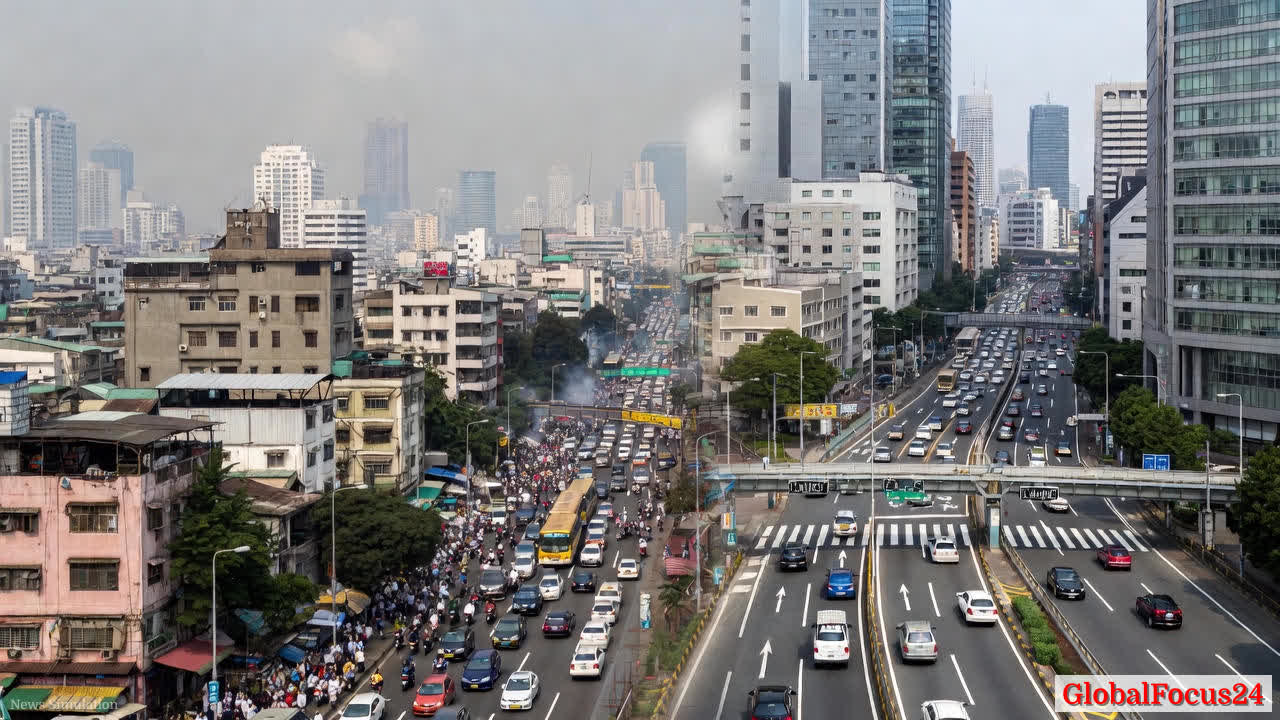
Paving Paradise Why Many Asian Megacities Are Miserable Places And Why Tokyo Is No Longer the Most Populous
A new United Nations dataset has reconfigured the global map of urban density, redefining the world’s largest cities by counting sprawling metropolitan footprints beyond official municipal borders. The result is a dramatic reshuffle: Jakarta, Indonesia, now sits at the top of the megacity ladder with about 42 million residents, followed closely by Dhaka, Bangladesh, at roughly 37 million. Tokyo, once the unquestioned heavyweight, drops to third place with an estimated 33 million people. Delhi and Shanghai round out the top five, each hovering near 30 million. The reshuffle casts a stark light on Asia’s explosive urban growth while laying bare the complex challenges that come with it.
Historical context: the rise of megacities and the endurance of urbanization The emergence of megacities in Asia is not a sudden phenomenon. In the second half of the 20th century, a combination of rural-to-urban migration, industrialization, and technological progress transformed sprawling regions into dense urban ecosystems. Tokyo has been a benchmark for concentrated urban life since the postwar boom, while cities such as Jakarta and Dhaka expanded rapidly through a mix of informal settlements, planned districts, and car-dependent suburbs. The UN’s shift to include sprawling peri-urban areas in population counts reflects a long-standing reality: people live and work far beyond the red lines that define city hall jurisdictions.
This broader lens matters because it reframes the scale of needs and the potential solutions. When millions carry out daily life across a mosaic of districts, corridors, and satellite towns, the challenge becomes not merely ensuring a single municipal service but coordinating a regional network of utilities, transport links, housing, and public health resources. The new rankings put a spotlight on how governance, planning, and investment decisions ripple through entire urban ecologies, affecting everything from air quality to access to affordable housing.
Economic impact: growth, productivity, and the cost of livability Megacities drive economic activity at scales unseen in smaller urban centers. They concentrate talent, capital, and markets, enabling economies of scale in services and infrastructure. Yet the UN’s recalculated rankings also underscore a paradox: the very conditions that fuel growth can erode productivity and long-term competitiveness if not managed carefully. Overcrowding and traffic congestion, for instance, impose direct costs on businesses in the form of lost time, higher logistics expenses, and reduced labor market participation. They also raise the cost of living, which can deter investment if wages fail to keep pace with rents and everyday expenses.
In Jakarta, the surge in population is tightly coupled with mobility bottlenecks. The city’s urban corridor stretches across municipal boundaries, creating a patchwork of commuter patterns that strain bus rapid transit, rail links, and feeder networks. The result is longer commutes, higher fuel consumption, and more pollutant emissions, all of which erode air quality and public health, especially for vulnerable communities on the urban fringe. Dhaka faces a similar dynamic, where rapid expansion outpaces the construction of reliable mass transit and adequate housing. The consequences touch every sector—from manufacturing logistics to service-sector employment—stressing social safety nets and widening income disparities.
Tokyo’s relative resilience in this landscape offers an instructive contrast. Even as Tokyo’s metro region eclipses 30 million residents, its urban management—characterized by integrated transit, land-use coordination, and systematic public services—helps contain congestion and preserve livability. Shanghai, too, demonstrates how strategic planning, large-scale investment in infrastructure, and efficient service delivery can sustain a high standard of living despite massive scale. These cities illustrate that population size alone does not determine quality of life; governance, urban design, and inclusive policy choices play decisive roles.
Regional comparisons: what makes some megacities work
- Infrastructure integration: Cities that synchronize transport, housing, and utilities across district boundaries tend to sustain higher livability. When bus networks, subways, and rail lines link outlying towns with central business districts, congestion pressures soften and economic zones stay productive.
- Housing policy: Availability, affordability, and predictability in housing markets shape long-term growth. Regions with robust housing supply policies, not just centralized development plans, tend to lower informal settlements and reduce displacement risks.
- Public health and environment: Air quality, water security, and access to green spaces influence workforce health and productivity. Megacities that invest in clean energy, waste management, and urban forests often experience better health outcomes and lower healthcare costs over time.
- Governance and coordination: Overlapping jurisdictions can either hinder or help growth. Strong regional coordination—through metropolitan governments, intermunicipal agreements, or multi-agency bodies—tends to improve service delivery, reduce duplication, and accelerate capital projects.
Livability metrics and public sentiment: the human face of a megacity Beyond numbers and GDP, the lived experience of residents matters. In many fast-growing Asian metros, overcrowding translates into longer commutes, crowded public spaces, and strained public services. Traffic congestion remains a dominant concern, as does air pollution that travels through neighborhoods and affects daily life. Yet even in crowded conditions, public sentiment can be buoyed by visible improvements: safer streets, more reliable electricity, cleaner water, and the steady expansion of health clinics and schools.
In Dhaka and Jakarta, residents highlight a paradox: the same cities that generate enormous economic activity also host volatility in daily life, from sudden flood events to heat extremes and limited access to affordable housing. Public reactions to these conditions are nuanced—demanding accountability and better services while recognizing the broader economic importance of their cities. In contrast, Tokyo’s residents frequently point to the sustainability of daily routines, the predictability of transit, and the perceived safety net of high-quality public services as reasons for continuing confidence in a closely managed urban system.
Policy implications: steering megacities toward sustainable growth
- Invest in regional transportation networks: A connected transit ecosystem reduces congestion, lowers emissions, and expands access to jobs across the metropolitan area.
- Scale housing supply with infrastructure: Align housing development with water, sanitation, and transport capacity to prevent supply bottlenecks and ensure equitable access.
- Enhance resilience to climate shocks: Flood protection, heat mitigation, and climate-adaptive urban design lessen vulnerability for the urban poor and protect long-term investments.
- Strengthen governance mechanisms: Metropolitan authorities or cross-boundary planning bodies can streamline decision-making, improve transparency, and accelerate major infrastructure projects.
Public reaction and future outlook: a changing urban horizon As megacities navigate the pressures of rapid growth, public voices increasingly emphasize not just the quantity of residents but the quality of urban life. Residents want reliable transit that gets them to work quickly, clean air that protects health, and housing that is affordable for families rather than a perpetual premium product. In many cases, the distinction between prosperous core districts and underserved peripheries is widening, spurring calls for more inclusive planning that prioritizes social equity.
Economists and urban planners watch the numbers with a careful eye. The new population rankings suggest that policy levers, not merely demographic inevitability, will determine whether these megacities can sustain growth without sacrificing livability. If urban planners can orchestrate coordinated investments across transportation, housing, water, and energy systems, Asia’s megacities could continue driving regional prosperity while improving the daily lives of millions.
Global context: how Asia’s megacities compare to peers Asia’s megacity phenomenon stands in contrast to urban growth patterns in other regions. In Europe and North America, metropolitan areas tend to expand more slowly and are often supported by stronger institutional frameworks and more mature housing markets. In Africa and Latin America, megacities are expanding rapidly as well, but with different governance models and infrastructure challenges. The UN data reveal a trend that is proportionally similar across fast-developing economies: urban sprawl and the need for holistic planning are universal concerns, even as local conditions vary.
Conclusion: a critical moment for urban management The updated megacity rankings—placing Jakarta at the forefront, followed by Dhaka, with Tokyo, Shanghai, and Delhi trailing close—signal a pivotal moment for urban policy in Asia. Massive populations converge at the crossroads of opportunity and strain, underscoring the importance of resilient infrastructure, inclusive housing, and effective governance. The path forward is not simply about accommodating more people but about designing cities that work for them: where transit is reliable, housing is achievable, and public services meet the daily needs of residents who contribute to the region’s economic dynamism. If these megacities can translate scale into systemic improvements, the next chapters of urban life in Asia may redefine what it means to live well in a crowded city.