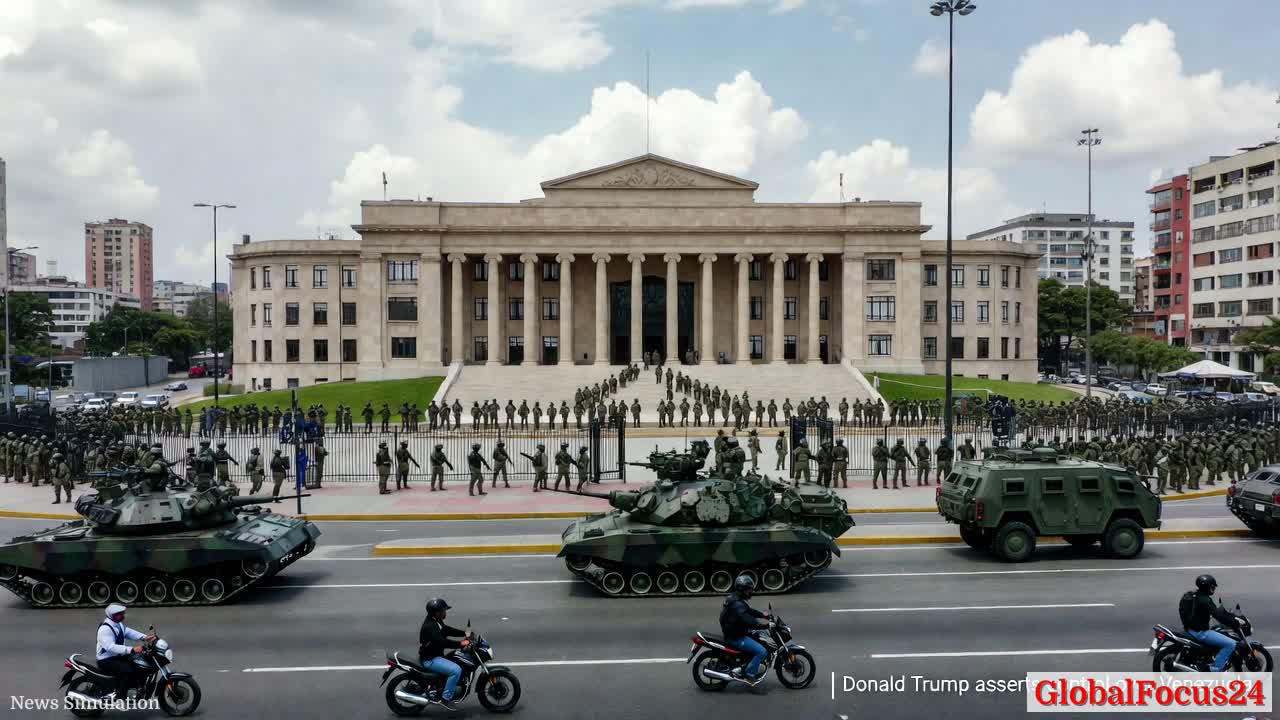
Trump’s Hemisphere Gamble: A New Chapter in Americas’ Geopolitics
The claim of American dominance across the Western Hemisphere, voiced in the wake of a rapid raid against Venezuela’s leadership, has thrust a high-stakes test of foreign policy, energy security, and regional cohesion onto a stage crowded with competing powers and fragile economies. The operation—hastily framed by supporters as a decisive move to restore oil flows and stability—has reverberated across Caracas, Washington, and capitals from Mexico City to Brasilia. It also raises urgent questions about sovereignty, the durability of regional institutions, and the economic calculus of oil in a world still adjusting to price swings, sanctions, and shifting supply chains.
Historical context: oil, power, and external influence in the Americas Oil has long been a central thread in the story of Venezuela’s political economy and of external involvement in the region. In the 1990s and early 2000s, Venezuela’s vast reserves positioned it as a pivotal, if volatile, energy actor. The country’s political leadership used oil as a strategic lever in domestic policy and international diplomacy. Over the last decade, external constraints—particularly sanctions, price volatility, and management challenges—altered the balance: production fell, revenues shrank, and social programs frayed while external powers watched. The raid’s proponents argue that reestablishing access to energy resources could stabilize markets, but history warns that quick fixes in tumultuous environments often collide with complex political economies, local loyalties, and long-term development needs.
Regional comparisons illuminate both opportunity and risk
- In neighboring states with large oil sectors, supply dynamics matter for domestic price levels and public sentiment. Countries with integrated energy sectors and diversified economies—such as Colombia and Brazil—have competing pressures between encouraging investment and maintaining social stability. A shift in oil supply from Venezuela, if durable, could influence regional price signals, investment risk assessments, and energy diplomacy.
- Central America and the Caribbean face different incentives: energy diversification, resilience against price shocks, and the imperative to sustain trade routes and port access. Any disruption to Venezuelan crude or refined products could ripple through refining capacity, export logistics, and regional power relations, underscoring the interconnectedness of the Western Hemisphere’s energy landscape.
- In the broader global context, China and Russia—historical lenders and suppliers to Venezuela—stand to recalibrate their engagement with Caracas and with other Latin American partners. If a new government assumes control and seeks new terms, creditor economies could reshape financing packages, with implications for inflation, debt sustainability, and social programs.
Economic impact: oil, investment, and the road to recovery The economic logic of restoring oil flows is straightforward on the surface: stabilize government finances, ease shortages, and reduce price pressures for American and regional consumers. Yet the path from raid to robust production is fraught with obstacles:
- Infrastructure and investment needs: rebuilding exploration and production capacity requires decades-long commitments, large-scale capital, and stable policy environments. Past expropriations and political interruptions have left a legacy of caution among international investors, meaning that any new government would need credible guarantees of property rights, predictable regulations, and transparent governance.
- Market confidence and financing: global buyers of oil operate under complex risk assessments. A transitional government would need to demonstrate commitment to openness, contracts that protect investors, and a clear framework for debt and fiscal management. Without these signals, even a favorable oil outlook may fail to translate into durable investment.
- Domestic demand and social resilience: as in many oil-rich economies, revenue volatility can strain public services and social programs. Any stabilization plan must balance energy sector reforms with social protection, food security, and job creation—areas where Venezuela’s citizens have waited for relief amid years of hardship.
Public reaction and regional sentiment Within Venezuela, views on the raid are divided. Some segments of the population express relief at the prospect of an end to a prolonged crisis and the potential return of energy supplies. Others fear foreign intervention and the erosion of sovereignty, recalling past episodes where external actions sparked domestic upheaval or long-term instability. In larger regional circles, opinions vary by country, reflecting divergent historical experiences with foreign involvement, economic interests, and domestic political calculations. Several governments have urged restraint and respect for sovereignty, while others eye the consequences for regional security architectures, migration patterns, and bilateral cooperation on energy, trade, and security.
Policy implications for the United States and the region
- Sovereignty and international law: the legality and legitimacy of unilateral military action on another country’s soil are contested topics in international norms. The immediate regional reaction emphasizes the importance of legitimate processes, transparent criteria for intervention, and avenues for peaceful transition that minimize civilian harm and avoid entrenching conflict.
- Alliance dynamics and regional institutions: the operation tests the resilience of regional mechanisms such as the Organization of American States and regional economic blocs. If a credible, inclusive transition plan emerges, it could serve as a test case for cooperative governance and crisis management. If not, the episode may strengthen skepticism toward external interventions and underline the need for multilateral diplomacy and consensus-building.
- Energy diplomacy and supply chains: the prospect of reactivating oil production in Venezuela intersects with global energy markets, refining capacity, and transportation networks. Coordinated discussions with Caribbean and Latin American partners about energy security, subsidies, and price stabilization mechanisms could help mitigate volatility and prevent a race to unilateral solutions.
Regional comparisons and strategic signaling Venezuela’s crisis has amplified the broader debate about great-power competition in the Western Hemisphere. For allies and neighbors, the central questions include: how to balance credible deterrence with respectful partnership; how to align economic policy with social needs; and how to preserve regional autonomy in a landscape where major powers pursue strategic influence through oil, finance, and technology.
China and Russia, long-standing creditors and partners to Caracas, are watching closely. Their response will influence the post-crisis trajectory: whether loans reorganize under new terms, debts are renegotiated, or alternative paths to development are pursued. In Latin America’s evolving map, the balance between markets, sovereignty, and social welfare will shape future collaborations with both traditional Western partners and rising regional influencers.
Public information, transparency, and the media environment will also shape outcomes. Accurate reporting, open channels for dialogue, and verification mechanisms can help reduce misperceptions and build trust between the Venezuelan people, their institutions, and international partners. In an era where energy markets are globally networked, the pace of information and the quality of data will influence policy choices at every level—from local governance to international diplomacy.
Outlook: navigating a fragile moment with prudence and preparation The immediate aftermath of a bold move in Venezuela tests the resilience of institutions, markets, and communities. The question for policymakers is not only whether oil can again flow to stabilize economies, but whether the region can forge a durable, peaceful path through a period of upheaval. Achieving this requires a balanced approach that emphasizes:
- Clear, lawful authority and inclusive transition processes that minimize disruption to civilians and institutions.
- Transparent energy-sector reforms paired with guarantees for private investment, fair compensation, and a credible plan for long-term growth.
- Robust regional collaboration to address humanitarian needs, migration, and economic development, ensuring that solutions benefit the broadest possible spectrum of populations.
- A commitment to human rights, rule of law, and civil liberties, ensuring that security measures do not erode the freedoms that sustain open societies.
Public reception and forward-looking measures will shape the long arc of this episode. Citizens across the Americas crave stability, predictable governance, and meaningful improvements in daily life. The best answers will blend practical energy policy with durable political arrangements that reflect the diverse voices of the region, rather than a single approach dictated from abroad. In a world where oil remains a powerful economic lever, the imperative is to align energy needs with democratic governance, social equity, and sustainable growth.
If there is a singular takeaway from this moment, it is this: in the long run, resilience comes from inclusive institutions, transparent management of natural resources, and regional cooperation that respects sovereignty while recognizing shared interests. The road ahead will test the ability of governments, firms, and citizens to work together amid volatility—yet it also offers an opportunity to redefine how the Western Hemisphere secures its energy future, preserves stability, and advances prosperity for all.