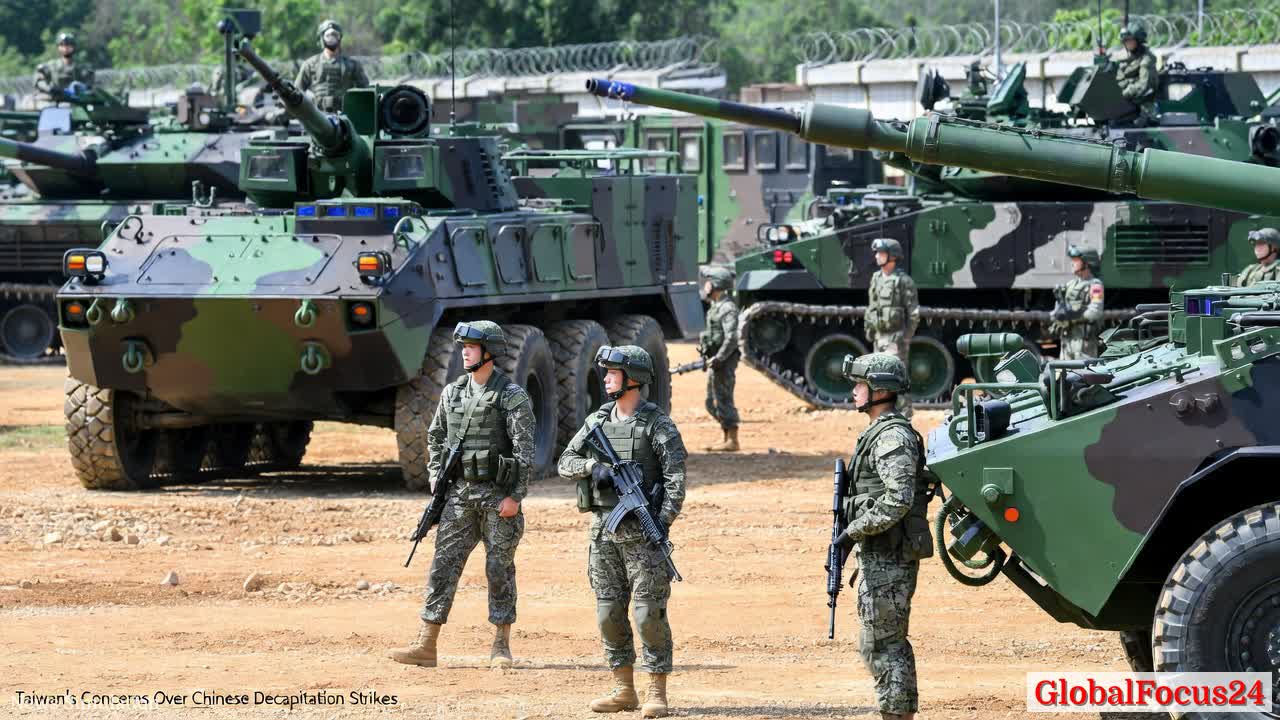
)Taiwan’s Defense Puzzle: Strategic Imperatives, Economic Ripples, and Regional Comparisons Amid Alarming Threats
Taiwan’s security landscape sits at the confluence of history, technology, and regional power dynamics, producing implications that extend far beyond the island’s shores. The core concern remains clear: how a modern, well-equipped defense apparatus can deter, deterabilize, and respond to coercive pressure in a tense cross-strait environment. This article examines historical context, the economic impact of defense postures, and how Taiwan compares with regional peers in terms of capabilities, strategy, and resilience.
Historical Context: From Cold War Legacies to Modern Deterrence
- The seeds of Taiwan’s current defense posture were planted in the aftermath of World War II and the subsequent Cold War era, when cross-strait tensions solidified into a persistent security dilemma. The legacy of maritime and air power competition in the Asia-Pacific shaped a doctrine centered on deterrence, asymmetric capabilities, and rapid mobilization. This historical backdrop helps explain why Taiwan prioritizes early warning, integrated air defense, and robust supply chains for its armed forces. The evolution from limited, conscript-heavy forces to more professionalized, technologically advanced units reflects broader shifts in regional security thinking that emphasize speed, precision, and resilience.
- In recent decades, Taiwan has consistently balanced modernization with the realities of limited strategic depth. This has driven investments in smart munitions, stealth platforms, cyber defense, and anti-access/area-denial (A2/AD) capabilities designed to complicate an adversary’s planning and timing. Historical patterns show that credibility of deterrence often hinges on the ability to mobilize, adapt, and sustain operations under potential countermeasures from rival powers. The trajectory mirrors broader regional trends where states seek to offset superior adversary advantages through innovative force design, persistent intelligence, and resilient logistics networks.
Economic Impact: Defense Spending as a Driver and Constraint
- Taiwan’s defense expenditures reflect a dual-edged impact on the economy. On one hand, sustained investment in modern weapons, training, and maintenance creates demand across high-tech sectors, stimulates domestic innovation, and supports skilled employment. These investments ripple through partner industries, from semiconductor supply chains to precision manufacturing, underscoring defense as a catalyst for strategic industries and export competitiveness. On the other hand, the financial resources allocated to security can constrain civilian spending, social programs, and long-term growth if not managed with efficiency and clear national priorities. The balancing act between deterrence credibility and fiscal sustainability is a central theme in any robust defense strategy.
- The regional economic impact of heightened security commitments is multifaceted. Increased spending on air defense systems, naval assets, and rapid-response forces can attract foreign investment in defense corridors, technology transfer, and specialized maintenance ecosystems. Conversely, heightened risk perception can influence insurance costs, foreign direct investment, and tourism, potentially dampening short-term economic activity in vulnerable periods. Policymakers routinely weigh these costs against broader national objectives, such as preserving democracy, maintaining supply chain resilience, and protecting critical infrastructure.
Regional Comparisons: Capabilities, Strategies, and Resilience
- Capability breadth and modernization: Taiwan’s armed forces are widely regarded as among the most capable in the region, particularly in terms of training, air defense, and precision strike potential. While not identical to any single peer’s portfolio, Taiwan integrates advanced fighters, missile systems, radar networks, and cyber defense to create layered deterrence. Compared with regional neighbors, the emphasis is on rapid mobilization, joint operations, and integrated sensor-to-shooter connectivity, aiming to complicate potential adversaries’ calculations.
- Threat perceptions and strategic posture: The historical focus on decapitation and rapid seizure scenarios has driven a defensive mindset oriented toward redundancy, mobility, and endurance. The presence of sleeper capability concerns, including the possibility of compromised personnel or covert networks, adds a layer of complexity to force protection and counterintelligence efforts. While such concerns are not unique to Taiwan, they shape risk assessments, guard routines, and the design of civilian-musp defense coordination, reinforcing the need for continuous vigilance and robust partner engagement.
- Regional comparisons in deterrence dynamics: Across the Asia-Pacific, several states pursue deterrence through a combination of enhanced readiness, alliance participation, and public messaging about red lines. Taiwan’s approach emphasizes deterrence through depth of defense, rapid-reaction forces, and steadfast readiness in a contested information space. In nearby regions, nations with similar security challenges balance modernization with alliance-based deterrence, yet maintain distinct emphases on economic integration and supply chain resilience as part of national security planning. These differences illustrate how geography, industrial base, and alliance networks shape each country's security calculus.
Public Reaction and Societal Implications
- Public sentiment around defense readiness tends to reflect two realities: urgency and resilience. In times of heightened tension, communities rally around civil defense preparedness and education campaigns designed to foster readiness without inducing panic. Public perception often correlates with media coverage of near-term security events, which can amplify concerns about potential escalation while also reinforcing confidence in government resilience and the capabilities of the armed forces.
- Community resilience extends beyond military readiness. Critical infrastructure protection, emergency response coordination, and civilian-military partnerships become central to societal stability. This broader approach helps ensure continuity of everyday life, economic activity, and social cohesion even amid geopolitical stress, reinforcing the social contract that sustains national security over the long term. The public’s support for ongoing modernization and readiness programs tends to stabilize expectations and foster a shared sense of national purpose.
Historical Context and Economic Interplay: A Holistic View
- The interdependence of history, defense policy, and economic outcomes is evident in how security choices shape growth trajectories. Historical lessons about deterrence effectiveness, alliance reliability, and technological innovation inform today’s decision-making. As defense modernization advances, the related industrial base expands, offering opportunities for domestic firms and international partners to contribute to a shared security framework that also fosters regional stability beyond Taiwan’s borders.
- The regional security architecture in the Asia-Pacific continues to evolve, with Taiwan playing a pivotal role as a technologically advanced, strategically positioned actor. Its defense strategy, anchored in credible deterrence, is part of a broader mosaic that includes alliances, joint exercises, and supply chain diversification designed to reduce systemic risk. As global demand for advanced defense technologies remains robust, Taiwan’s procurement and development efforts are likely to influence regional procurement patterns, research collaborations, and technology spillovers that affect neighboring economies and defense sectors.
Operational and Tactical Dimensions: Readiness in Practice
- Training regimes and doctrine: The professionalization of armed forces has intensified, emphasizing joint operations, intelligence sharing, and interoperability with potential partners. Training programs increasingly incorporate scenario-based exercises that simulate complex, multi-domain campaigns, reinforcing readiness for integrated air, land, sea, cyber, and space operations. This approach aims to shorten decision cycles, improve targeting accuracy, and ensure resilient logistics under pressure.
- Logistics and supply chain resilience: A critical success factor in any high-stakes defense posture is the ability to sustain operations under contested conditions. This includes diversified supply chains, domestic manufacturing capabilities for precision components, and robust maintenance pipelines for critical platforms. The emphasis on resilience extends to cyber and information security, ensuring that command-and-control networks remain robust against interference and deception.
- Civil-military integration: A whole-of-society approach increasingly underpins national security. Civil defense drills, critical infrastructure hardening, and public-private partnerships contribute to a more integrated security posture. This holistic approach not only enhances readiness but also fosters public confidence in the government's ability to manage risk and respond effectively to regional contingencies.
Implications for Investors and Partners
- For investors, the defense sector presents opportunities in high-tech manufacturing, semiconductors, and precision engineering, driven by sustained demand for advanced defense capabilities. The spillover effects into the broader tech ecosystem can stimulate innovation, attract talent, and foster export-oriented growth, particularly for companies with sophisticated supply chain solutions and resilient production capabilities.
- International partners play a crucial role in shaping regional security dynamics. Joint exercises, technology sharing, and supply chain diversification can bolster deterrence and resilience while supporting broader economic interdependence among regional economies. Collaborative research and regional standards development may also reduce friction and improve interoperability across allied forces, contributing to greater overall stability in the Asia-Pacific.
A Look Ahead: Navigating Uncertainty with Purpose
- The coming years are likely to feature sustained investments in defense modernization, coupled with ongoing efforts to strengthen economic resilience and regional cooperation. The interplay between deterrence credibility, alliance dynamics, and domestic policy choices will continue to define Taiwan’s security trajectory. As geopolitical tensions persist, the balance between military readiness and economic vitality will remain a central challenge for policymakers, businesses, and citizens alike.
- Public diplomacy and information integrity will increasingly influence regional perceptions. Transparent communication about defensive capabilities, strategic objectives, and crisis management plans can help reduce misperceptions and miscalculations. In this environment, credible messaging and demonstrated resilience become as important as hardware and training in shaping stability across the broader Indo-Pacific region.
Conclusion: A Continuously Evolving Security Equation
- Taiwan’s security landscape reflects a dynamic convergence of history, modern military technology, and economic realities that together shape a cautious but determined approach to deterrence. The region’s economic ecosystem benefits from robust defense-related innovation, even as civilian sectors adjust to the demands of a higher-security environment. Across comparisons with regional peers, Taiwan’s emphasis on integrated defense readiness, rapid adaptability, and industrial resilience emerges as a defining feature of its strategy to navigate ongoing geopolitical uncertainty.
- The broader lesson for regional stakeholders is that security and prosperity are interdependent. Strengthening defense capabilities can reinforce international confidence, while prudent economic policy ensures that investments in security do not come at the expense of long-term growth. As markets, alliances, and technologies continue to evolve, a steady focus on credibility, readiness, and resilience remains essential to maintaining stability in a complex, rapidly shifting regional landscape.