How a Taiwan Crisis Rechannels Japan’s Security and Economy
In the event of a broader conflict over Taiwan, Japan would confront a convergence of strategic, economic, and humanitarian pressures that extend far beyond the immediate theater. The region sits at a maritime crossroads where major trade routes intersect, making any disruption potentially global in its consequences. This article examines the geopolitical stakes, the logistical realities for Japan’s security posture, and the broader economic implications for Japan and its allies, with historical context and regional comparisons to illuminate how today’s tensions could unfold.
Historical Context: From Isolation to Integrated Alliance
Japan’s modern security framework rests on a half-century of deepening alliances, technological modernization, and a strategic shift toward integrated defense with the United States. After World War II, Japan rebuilt its economy around export-led growth while adopting constitutional limits on its military. By the 1990s and 2000s, Tokyo recalibrated its posture, aligning more closely with Washington through the U.S.-Japan Security Treaty and cooperative defense planning. The 2010s and 2020s saw Japan assume a more active regional role, expanding missile defenses, upgrading air and naval capabilities, and investing in forward basing and regional deterrence concepts.
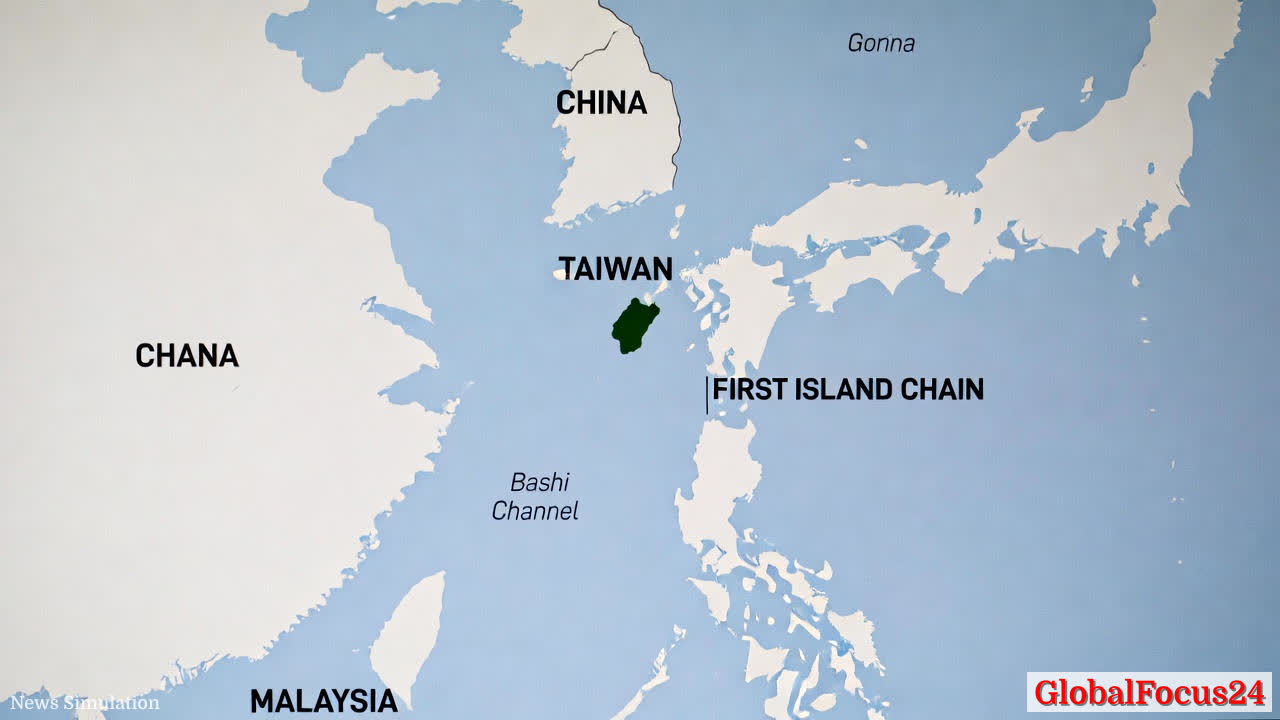
Taiwan’s strategic position has long influenced Japan’s defense calculations. Historically, Taiwan has functioned as a buffer in the First Island Chain—a string of archipelagos and islands that, in the view of many regional security assessments, helps constrain naval movements and power projection. When tensions rise around Taiwan, Japan faces a cascade of operational and diplomatic questions: How would Washington and Tokyo coordinate to deter aggression? What are the risks to Japanese civilians and infrastructure? How would supply chains and energy flows respond to disruption in adjacent sea lanes?
Geography and Maritime Security: The Chokepoints That Move Markets
Taiwan sits at a critical maritime crossroads where the East China Sea, South China Sea, and Pacific Ocean converge. The region contains key chokepoints—narrow passages that facilitate trillions of dollars in global trade each year. The Bashi Channel, for example, is a vital conduit for shipping between the Pacific and the South China Sea, linking major economies to global markets. A disruption in these corridors would reverberate through supply chains, affecting manufacturing hubs in East Asia and beyond.
A hypothetical scenario in which Taiwan’s status shifts—whether through coercive measures, blockade, or force—would likely force a rapid reallocation of naval and air assets in the region. The Ryukyu Islands, including Okinawa and Yonaguni, sit in close proximity to Taiwan and form a critical layer of Japan’s defense perimeter. The distance from Taiwan to Yonaguni is approximately 70 miles, with Okinawa about 370 miles away. These proximity figures are not just lines on a map; they translate into the time it takes to deploy interceptors, ferries of airpower, or surface ships in response to an incursion.
Japan’s Defensive Architecture: Bases, Missiles, and Early Warning
To understand potential outcomes, it is essential to map Japan’s defensive architecture. The country hosts a network of bases and facilities that would be central to any allied response or defensive posture in a Taiwan contingency. Misawa, in the north, provides air defense and power projection capacity. Yokota, near Tokyo, serves as a major hub for U.S.-linked air operations in the region. Kadena on Okinawa is a cornerstone for air operations in the western Pacific, while Yokosuka operates as a critical naval hub housing U.S. Navy components, including the Seventh Fleet. Each installation has strategic value in terms of sortie generation, logistics, and command and control.
Missile defense and long-range strike capabilities are integral to Japan’s deterrence. Japan has invested in various air and missile defense assets, including electronic warfare systems and surface-to-air missiles designed to intercept incoming threats. The evolving landscape also includes longer-range, extended-reach missiles designed to counter advancing threats and to deter potential aggressors at greater distances. These capabilities are complemented by joint exercises with U.S. forces, which rehearse scenarios ranging from air superiority campaigns to precision strikes that would support allied objectives across multiple domains.
Regional Comparisons: Taiwan, South Korea, and the Philippines
Comparing regional dynamics helps illustrate why a Taiwan crisis would affect Japan in unique ways. Taiwan’s industrial base, semiconductor production, and advanced manufacturing are critical nodes in global value chains. In a conflict scenario, disruptions could ripple through supply chains that also affect Japan’s automotive, electronics, and machinery sectors. South Korea shares a reliance on sea lanes and military alliance commitments with the United States, highlighting a broader pattern of extended deterrence in East Asia. The Philippines, with its archipelagic geography and contested maritime zones, represents another piece of the strategic mosaic in which U.S.-led security guarantees are tested.
For Japan, proximity matters. The Ryukyu chain creates a layered defense perimeter that provides early warning and reach for air and naval operations. In a crisis, Japanese forces could play a crucial role in air superiority, maritime blockade control, and forward logistics, while U.S. forces would rely on Japan as a staging and support hub. The interdependence among these nations underscores how a Taiwan crisis does not stay confined to one country’s borders; it becomes a regional security issue with global ramifications.
Economic Impact: Trade Flows, Energy Security, and Supply Chains
An interruption of East and South China Sea trade would reverberate beyond Japan’s shores. Japan’s economy is highly integrated with global supply chains, and many of its key industries depend on imports—energy, minerals, and intermediate goods—from a broad network of partners. A disruption in shipping lanes near Taiwan could drive volatility in commodity prices, increase insurance costs for shipping, and create bottlenecks in production lines. Even short-term disruptions could push manufacturers to adjust inventories, re-route shipments, or accelerate diversification of suppliers.
Energy security is another essential consideration. Japan relies heavily on imported fuels, though it has high energy efficiency and stockpiling mechanisms. In a crisis scenario, energy prices could surge, pressuring government policy to ensure stable supplies for households and industries alike. The economic impact would not be limited to Japan; regional markets would adjust in concert, with ripple effects across the Asia-Pacific and into global financial centers.
The Role of the U.S.-Japan Alliance: Deterrence, Ambiguity, and Coordination
The U.S.-Japan alliance stands as the linchpin of regional deterrence. The alliance has evolved from a Cold War framework to a deeply integrated security partnership that includes joint military planning, shared basing arrangements, and interoperable defense capabilities. In contemporary assessments, Washington has maintained strategic ambiguity about the specifics of defending Taiwan. Yet, practical considerations in a crisis would likely require Japanese involvement, given geography, force readiness, and the distribution of risk in the region.
Simulations and wargaming conducted by defense analysts consistently emphasize Japan as a pivotal element in maintaining air superiority and supporting broader operations. The logistical network would rely on Japanese bases for rapid air sorties, resupply, and communications. In return, the United States would depend on allied access to Japanese facilities and on Japan’s expertise in managing forward deployments in contested waters. The success of any allied response would hinge on close, real-time coordination and predictable rules of engagement that reflect alliance commitments and international law.
Public Reaction and Economic Preparedness
Public sentiment in Japan and in neighboring Asia varies, but the prevailing tone emphasizes resilience and the importance of defense readiness. Governments have emphasized the need to maintain stable markets, protect critical infrastructure, and ensure civilian protection. Preparedness programs—ranging from civil defense drills to resilience planning for supply chains—are part of ongoing governance efforts. The public reaction to any escalation would be shaped by communication strategies that aim to provide accurate information, minimize panic, and reinforce confidence in regional alliances and national defense capabilities.
In parallel, policymakers would focus on economic stabilization tools, including strategic stockpiles, diversified import routes, and resilient logistical networks. Businesses would be urged to diversify suppliers and shore up inventories for critical components. Financial markets would scrutinize risk assessments and adjust to new geopolitical realities, with insurers and shipping companies recalibrating coverage and routes in response to perceived risk.
Strategic Outcomes: What It Would Mean for Japan
A scenario in which Taiwan changes hands or is otherwise destabilized would reframe Japan’s security calculus. The First Island Chain’s containment would face new pressures, potentially broadening China’s maritime reach and altering the balance of power in the western Pacific. For Japan, this would translate into several core considerations:
- Security commitments: Japan would reassess its alliance posture, deterrence capabilities, and readiness to engage in collective defense under an evolving regional threat environment.
- Territorial exposure: The proximity of the Ryukyu Islands to potential conflict zones elevates the importance of missile defense, civil defense, and rapid-response capabilities.
- Economic resilience: Japanese industry would prioritize supply chain diversification, domestic production of critical components, and strategic energy planning to mitigate external shocks.
- Diplomatic leverage: Japan would navigate allied diplomacy to align regional partners, manage risks, and sustain international support for a rules-based order in the region.
Conclusion: The High Stakes of a Taiwan Crisis for Japan
A crisis over Taiwan would not be a distant, abstract confrontation for Japan. It would directly challenge the country’s security architecture, economic stability, and regional leadership role. The geographic realities—from Yonaguni to Okinawa, and from the Senkaku Islands to the wider maritime theater—make Japan a critical stakeholder in any contingency planning. The United States relies on Japan for forward presence, logistical hubs, and credible deterrence, while Japan depends on the alliance to reinforce its security and to uphold a stable regional order that supports trade, maritime safety, and global markets.
As regional tensions evolve, the imperative for clear, coordinated, and transparent defense planning grows stronger. For policymakers, business leaders, and the broader public, the focus remains on resilience: maintaining open sea lanes, securing energy supplies, and strengthening alliances that deter aggression while preserving the norms and systems that underwrite international commerce. The stakes are high, but so too is the opportunity to reinforce a stable, rules-based order in the Asia-Pacific that benefits economies and peoples across the region and around the world.